

In 1980, before Tsui Hark was famous for classics like Peking Opera Blues (1986) or Once Upon a Time in China (1991), his earliest success in Hong Kong cinema, Don’t Play with Fire (1980) (also known as Dangerous Encounters of the First Kind), was heavily censored by the British government. The movie was deemed too violent and was butchered before its release into a more “acceptable” format.
Tsui’s original cut of the film was found decades later, however, and, along with a full 2K restoration of the theatrical version, has been re-released on Blu-ray by Cult Epics. The restored theatrical version of Don’t Play with Fire is screening in select theaters.
While the restored director’s cut represents Tsui’s original vision for the film and has a superior sense of plotting and characterization to the theatrical version, it is the latter which is most publicly available to watch, and is formally the subject of this review.
Censorship forced challenging changes to the opening of Don’t Play with Fire, but the movie thrives anyway.
However, it cannot go without being noted that the first five minutes of Tsui’s version of Don’t Play with Fire is a far more cohesive setup. The censored cut removes dialogue and scenes showing the movie’s characters perpetrating the movie theater bombing that initially opened the film. The British government didn’t appreciate how it evoked the anti-colonial 1967 Hong Kong riots, even though actual footage from the riots remained in the film’s conclusion upon initial release.
In the theatrical release, the initial bombing becomes a strange afterthought and non sequitur. The theatrical version also adds an extensive Interpol sub-plot that feels exciting when it opens the movie with intrigue, guns, and international politics, but quickly feels tacked on and disconnected from the rest of the movie.
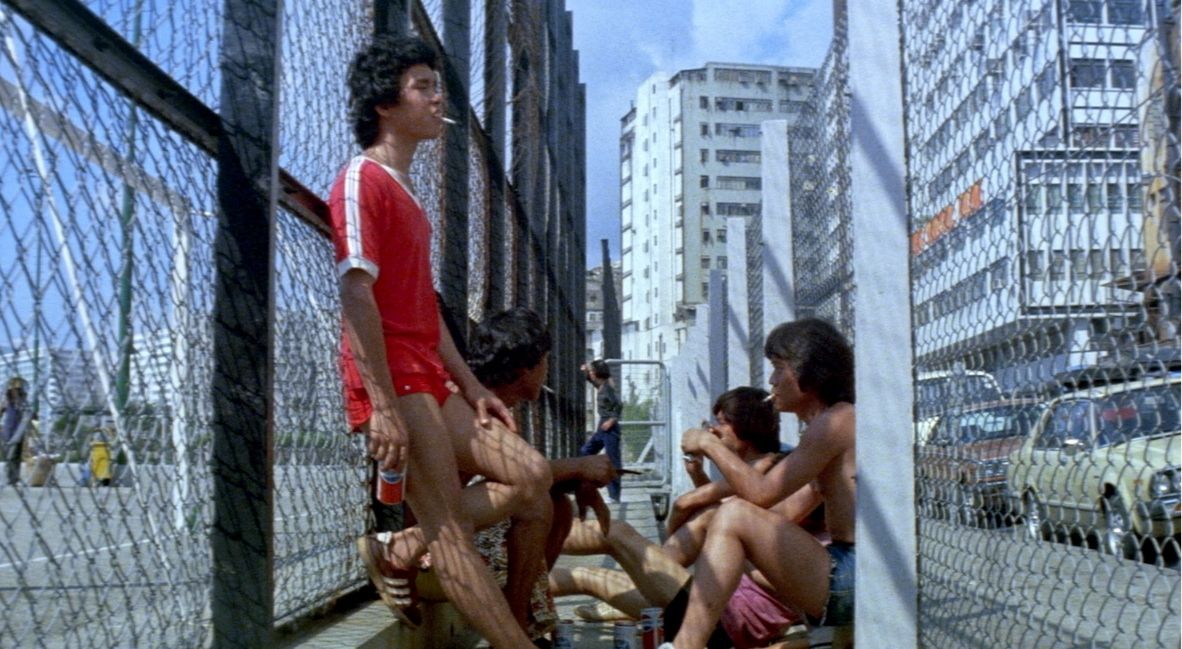
In the most publicly available version of Don’t Play with Fire, and in general, the film opens with three threads that will soon tie themselves together. First, there are three disaffected boys. They’re not complete degenerates. They’re not gang members, but rather layabouts who get into trouble just for the sake of it.
One of the boys gets a bit of extra characterization, showing that he comes from an extremely wealthy family that expects him to become a lawyer and carry on the family’s wealth. He clearly isn’t interested.
Don’t Play with Fire is a sharp image of privileged, disaffected youths.
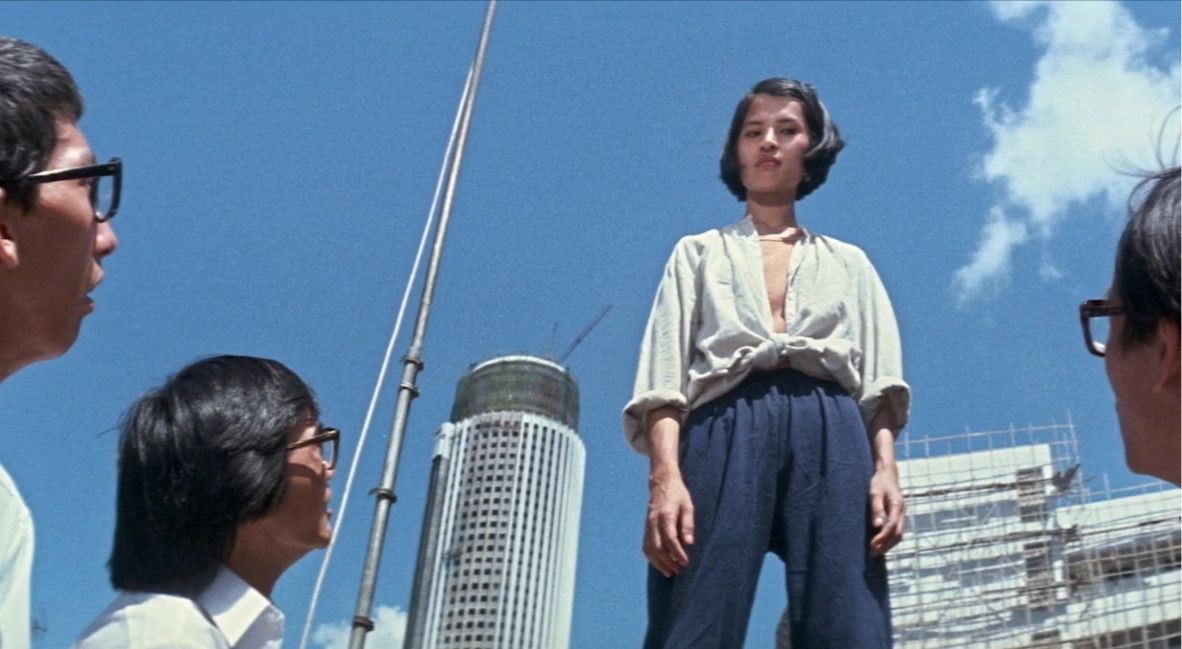
The second thread is an international smuggling operation involving Americans, Japanese Yen, and an Interpol team in Hong Kong that wants to make sure it stops the criminal enterprise so they can satisfy their European allies. The third thread is Wan-Shu (Chen-Chi Lin).
She, like the boys, is utterly disaffected. When she’s first introduced, she’s stabbing mice with pins just to watch what happens. Her older brother, Tan (Lo Lieh), is a police officer who tries to keep her out of trouble, but is far too harsh on her and isn’t particularly successful.
When the boys one night accidentally hit and kill a man while driving, Wan-Shu witnesses the incident and blackmails the boys into spending time with her and committing more violent crimes. They hold people up, set off bombs, and ultimately become entangled with the foreign smugglers, taking the kids far beyond what they thought they could handle.
You can feel the complicated politics with every scene.
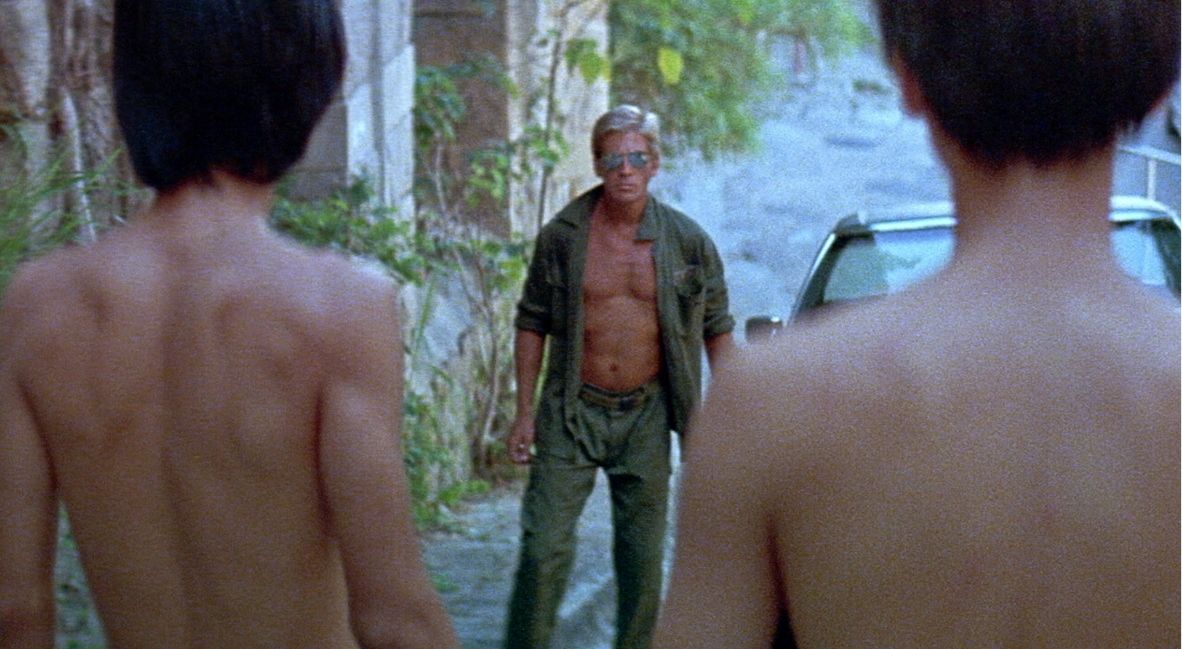
There’s no doubt that the movie stumbles somewhat at the start. It’s not clear enough who the different players are or what motivates them. Fortunately, long holds on the setting and frantic, shaky close-ups quietly provide the context the censors removed. After a quieter, slightly confusing first act, Don’t Play with Fire’s politics come into clear resolution, and its stark violence starts cooking with gas.
Unlike the U.S., where director Tsui studied film in the 70s and from which his movie’s gangsters hail, and unlike the U.K., whose colonial rule over Hong Kong was set to expire in the following decade, the economy in Hong Kong was booming in 1980. But capitalist booms always come with vast economic stratification.
Don’t Play with Fire is built nicely upon these contradictions. One youth’s wealth and another’s relative poverty don’t change the way they both feel trapped and crowded into a no-win scenario. Their island and their people were stuck between powers and influences, none of which were their own.
Director Tsui Hark builds a scaffolding of contradictions to blow up by the end.
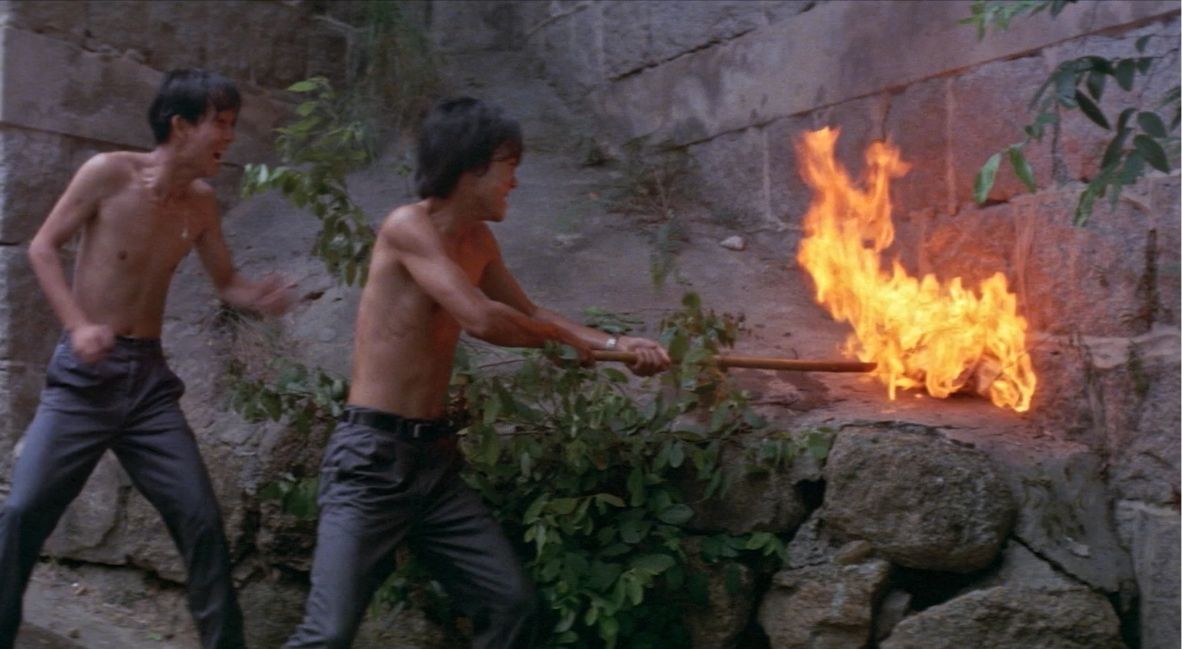
They’re ruled by a European colonial power they had to appease, as represented by the Interpol interstitials and the way they talk about the American smugglers as if they’re more of a threat to their allies than to their own country. They’re isolated from their Japanese neighbors whose money is at the center of the plot and whose tourists become victims of the characters’ plots. And the Americans are just straight-up the enemy.
While mainland China is never mentioned or alluded to, the 1967 riots that inspired Don’t Play with Fire were led by Communist sympathizers. So when even the Hong Kong police fail to protect the characters and stop the violence, it’s no wonder that its protagonists feel listless and hopeless. The overcrowded cities aren’t safe, and yet, there’s nowhere to go, either.
And yet, it doesn’t seem like you’re meant to sympathize with the characters either. They’re privileged and selfish, make terrible decisions just because they think they can, and when things get blown way out of proportion, they suffer severe consequences for it.
When they hang out, it’s always in wide-open spaces, not the small apartments laid all on top of each other they’re trying to escape from. They do escape. All of the time. So while Tsui is putting on a show of how legitimately conflicting life in Hong Kong may be, he’s also chastising the people complaining about it.
A potent lead and strong point of view make Don’t Play with Fire a great gem of the early Hong Kong New Wave.

When it comes to the action, things need to ramp up there, too. There are some middle-of-the-road tricks in the first half of the movie, bolstered by some fire play and a nasty bit of animal cruelty. As the movie progresses, however, the action blows up exponentially.
There are violent deaths, some depicted right on screen, others obscured for extra dramatic effect. By the time the violence reaches its climax, it’s nearly enough to make you forget the duller scenes it took to get there.
Often, the indoor and nighttime scenes are simply too dark to see characters’ faces well, which is a shame, because a few major moments take place in the dark. But overall, the movie does well not only showing the action in full view, but amplifying it by cutting to more shocking angles than you would anticipate.
There are clearly seams in the opening of Don’t Play with Fire left behind by its censorship. But even so, it remains an exciting thriller with a potent lead actress and a strong point of view. It’s a gem of the early Hong Kong New Wave well deserving of its re-entry into public viewability.
Don’t Play with Fire is playing now in select theaters.
Don't Play with Fire (1980)
-
Rating - 7/107/10
TL;DR
Don’t Play with Fire is an exciting thriller with a potent lead actress and a strong point of view.