

It once seemed that a film could get greenlit just for being set in World War I or II, easy enough Oscar bait on the heels of Saving Private Ryan or the popularity of HBO’s Band of Brothers. But other historical conflicts, by comparison, feel largely abandoned by cinema, and it’s rare to get a historical war drama set before the 19th century. Paul Greengrass rectifies this oversight by capturing the 1381 Peasants’ Revolt in the grim, socially relevant drama The Uprising (2026).
Last captured onscreen in a 1969 BBC special starring Anthony Hopkins, the 1381 Peasants’ Revolt was an English uprising protesting socioeconomic and political conditions following the Black Death. In the decades following the plague, King Richard II (Woody Norman) imposed heavy taxes on the lower classes to fund the English war effort during the Hundred Years’ War.
Andrew Garfield stars as Ploughman, known only by his job title because “it is what I am.” He’s one of thousands of people suffering under the King’s oppressive taxes. When the King’s forces come to collect more taxes in Ploughman’s impoverished town, Ploughman incites a violent show of defiance.
Greengrass’ depiction of faith in The Uprising (2026) challenges the audience.

Word of Ploughman’s actions spread quickly across the country in The Uprising (2026). Though Ploughman himself is fictitious, he encounters several real members of the Revolt, including Wat Tyler (Cosmo Jarvis), whose name later became synonymous with the conflict, sometimes called “Wat Tyler’s Insurrection.” Ploughman also meets John Ball (Jamie Bell), a traveling priest who preaches that the King’s oppressive policies are unbiblical. Ploughman, Tyler, and Ball lead rebels to London to appeal to the King, believing they can convince him to withdraw the forced tax increases.
Their issue is that their King is a teenage boy. Vividly portrayed by the masterful Woody Norman, Richard II is young and impressionable, growing up in a time when kings were believed to be God’s divinely appointed representatives. While Richard’s mother, the Countess of Kent (Katherine Waterston), tries to guide her son to be a just, merciful ruler, the King’s council is led by greedy treasurer Robert Hales (Tom Hollander), who believes the uprising will threaten his own position in court. The King is caught between a fascinating divide in The Uprising (2026), swayed by his subjects’ plight yet believing himself their ruler as ordered by God.
Greengrass’ depiction of faith in The Uprising (2026) challenges the audience to consider what role faith plays in a conflict where both sides claim God champions their cause. Though all the rebels, especially Ball, insist God meant for them to be free, the Sixth Commandment (“Thou shalt not kill,” for those of you not up on your Sunday School) is lost on most.
Violence is not only a given, but actively sought, on all sides. Thomasin McKenzie‘s Alyce, a former nun, is anchored by a deeply personal quest for gruesome justice. While The Uprising (2026)’s conflict is, outwardly, about socioeconomic war, it’s just as much about the intersection of God and godlessness.
The Uprising (2026)’s grim reality is distressingly real, in part because it was shot on location.
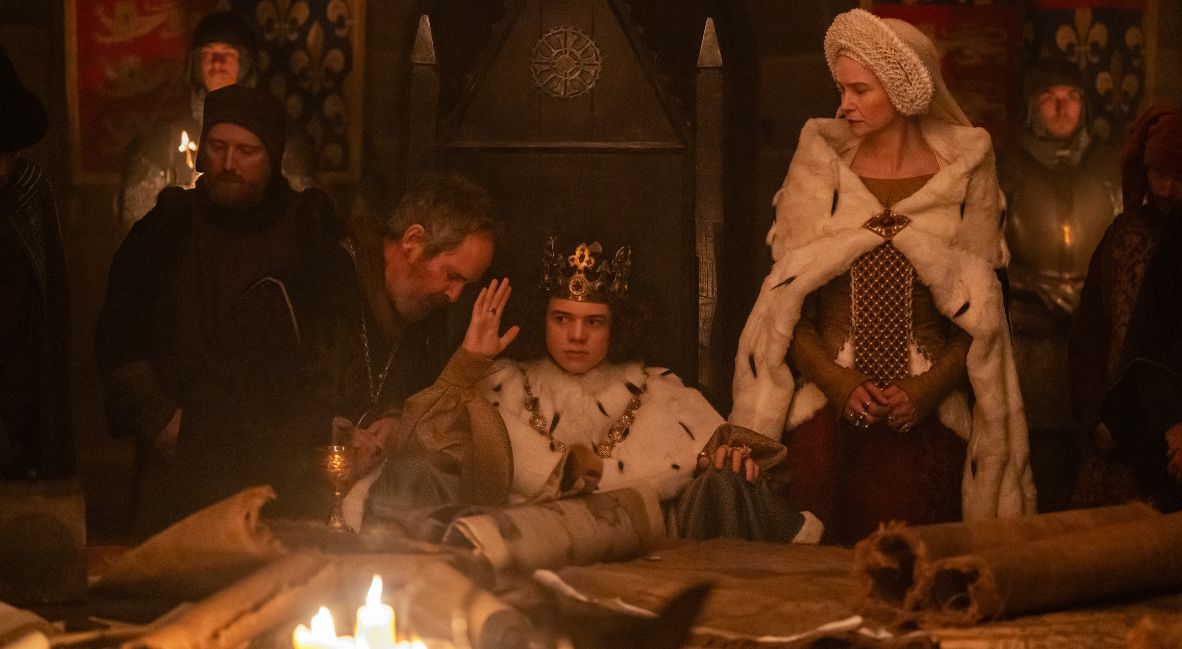
Greengrass’ signature shaky-camera cinematography, a hallmark as ubiquitous as JJ Abrams’ use of lens flares, is unsurprisingly utilized here. In The Uprising (2026), the quieter, talkier moments, like the royal council’s meetings, are distractingly shot with shaky cam, drawing attention away from the council’s inhumane, flippant discussion of the working class.
But that same shaky-cam technique, shot by cinematographer Pål Ulvik Rokseth, is tremendously effective in the brutal battle sequences, capturing the desperation and violence of the moment. The brutality is palpable and gritty, paired with the naturalistic, earthy tones of the color grading.
It’s almost novel to see a battle scene that’s not wrought with CGI backdrops, an issue that plagues even historical dramas these days. The film’s grim reality is distressingly real, in part because it’s been shot on location. The Uprising (2026) is a convincing case for realism and practicality; its gruesome makeup and effects hammer in the devastation of the battles between rebels and the royal army.
Andrew Garfield’s commitment to carrying Ploughman’s grief and anger in The Uprising (2026) is evident.
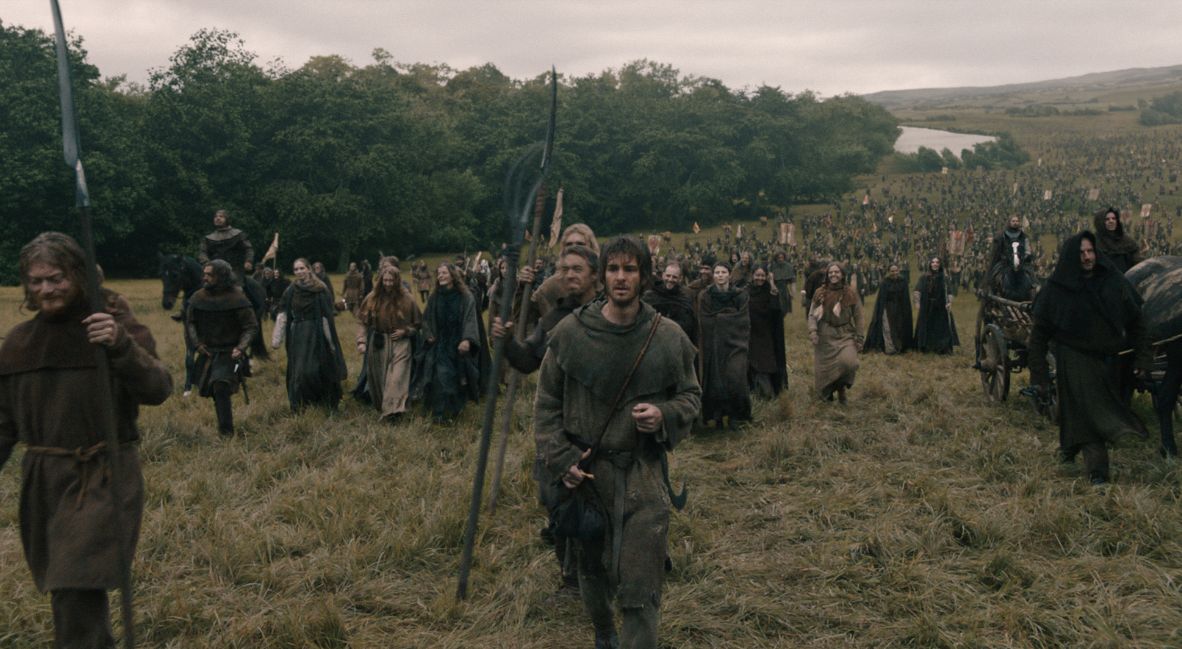
Its cast, for the most part, succeeds, as do the technical aspects of The Uprising (2026). Andrew Garfield’s commitment to carrying Ploughman’s grief and anger is evident, but Greengrass’ screenplay loses Ploughman in the shuffle amid the historical figures. Ploughman grapples with the loss of his wife and children, all dead due to the plague, but is so subdued compared to loud insurrectionists like Tyler and Ball. It doesn’t help that Tyler and Ball really existed. Attempts to make Ploughman’s plight resemble Robin Hood, whether implicitly or explicitly, are too subtle to resonate.
Norman is a particular standout in The Uprising (2026), with King Richard II transforming from an easily swayed boy into a young man whose convictions are grounded in the spiritual destiny of his kingship. Waterston holds her own against Norman and the Hollander-led royal court, as her Countess has to walk the line between being the King’s mother and loyal subject. Bringing subtlety to the Countess’ merciful convictions, where others want violence or egotism, makes her a gentle but noticeable contrast against the men of The Uprising (2026).
The Uprising (2026) illuminates an under-acknowledged part of history in cinema. Greengrass, directing from his own screenplay, is certainly the right person to tell this tale. Bringing a keen sense of action and drama here, as he has in his slew of prior docudramas, The Uprising (2026) is a plea for justice for the impoverished. The King, Hales, and the royal court are portrayed as hoarding wealth for power and influence in the aftermath of a widespread illness. Their lives are impacted little, and they regard the peasants’ suffering as a mere inconvenience.
It’s no wonder Greengrass saw political parallels from that time to our own. The Peasants’ Rebellion may have been over 600 years ago, but it’s still eerily relevant, long after the credits have rolled.
The Uprising (2026) releases in theaters on September 10, 2026.
The Uprising (2026)
-
Rating - 8/108/10
TL;DR
Bringing a keen sense of action and drama here, as Greengrass has in his slew of prior docudramas, The Uprising (2026) is a plea for justice for the impoverished.