Tight Lettuce is one of those films that can easily render one emotional. Directed by Harrison Houde, who co-wrote the screenplay with star Dakota Daulby, this drama with darkly comedic undertones wears its heart on its sleeve as it tackles the more intimate impact of fentanyl use. While it may embrace the absurd at moments, make no mistake, the darker beats hit hard with an unmistakable reality.
Based on a true story, Tight Lettuce follows Joel (Dakota Daulby) and his father, Bodo (Emmanuel Bilodeau), at a particular crossroads in life. Joel is getting ready to relocate his life to Australia with his partner, but he can’t stop worrying about his father. Bodo is astoundingly charming and is deep in the trenches of heroin and fentanyl addiction, and rehab is the furthest thing from his mind. Joel, though, is hopeful and tries all manner of methods (one of which is morally dubious despite its intent) to nudge his father in a healthier direction.
This is not an easy journey, however, and for those hoping for a happy ending, you may want to look elsewhere. Instead, Tight Lettuce offers a heightened version of an all-too-familiar reality, and it is all the better for it in its final moments. From overdoses to the chaotic mood swings that can sometimes accompany prolonged drug use, to the things lost along the way, for Joel, Bodo, and those within their orbit, the audience is not spared from the cyclical ups and downs of addiction or the limited options available to actually help.
The brief pockets of absurdity and levity offer hope before the reality comes crashing home.
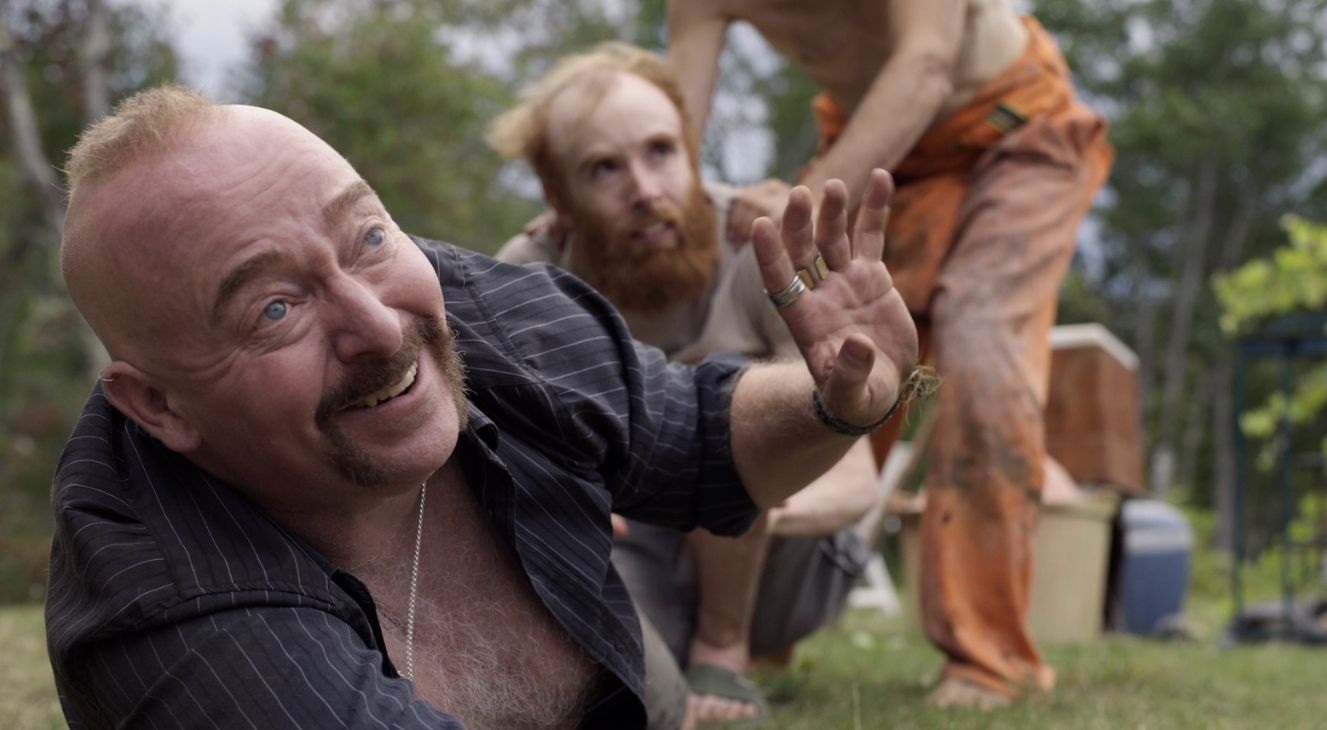
What is arguably the most daring (and will likely be the most discussed) is the decisions Joel makes throughout. His perspective is laid out clearly by the end, but anyone familiar enough with addiction will see the desperation that slowly winds its way through Joel’s thought process. Through his body language and shifts in tone throughout Tight Lettuce, Daulby demonstrates the gradual chipping away of Joel’s hope as he tries to fix his father. And when left with nothing, the question posed at the end hammers home the weight of the situation.
As the charismatic Bodo, Emmanuel Bilodeau is a scene-stealer, and he has to be to set the bar from the beginning. Anyone who meets Bodo in person would likely say he’s charming and enigmatic, and this is the impression viewers get at the beginning of Tight Lettuce. With time, the cracks begin to show, and the behavioral shifts can be so subtle at times that you might just miss them if you aren’t paying attention. It’s the brief moments of self-awareness that bubble up that add to the feeling of a man drowning with no life preserver.
These shifts in mood and tone are so naturally delivered by Bilodeau, even when the scene calls for peak physical absurdity, that they’re arguably a masterclass in tackling mania in a character. This becomes more apparent in the end credits of Tight Lettuce. Some might argue that Bilodeau’s take on Bodo is too unrealistic until you see the actual footage of the man he’s portraying featured at the end of the film. The mannerisms are spot-on in a way that’s almost eerie once you start to pick them apart.
Joel and Bodo’s uneven relationship rightfully carries the weight of Tight Lettuce.
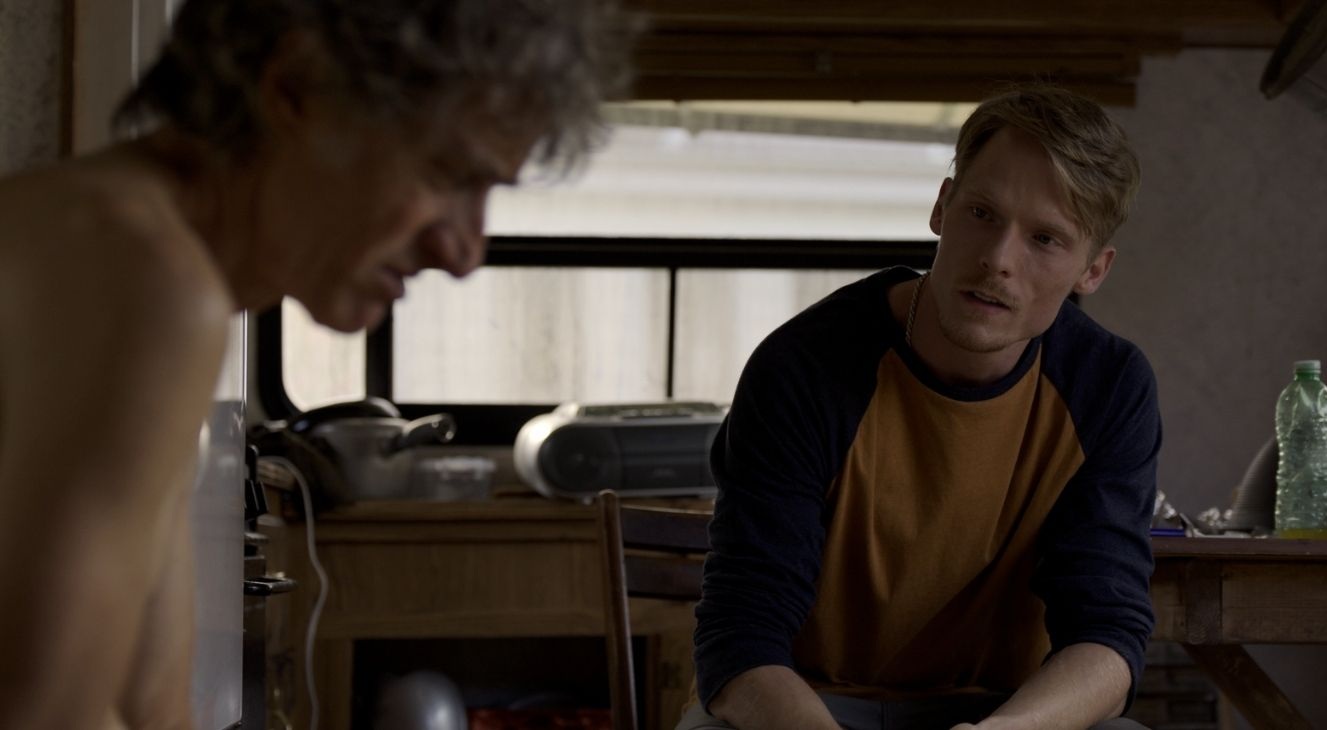
The relationship between the parentified son and the deteriorating father is the driving force of Tight Lettuce, but it’s the balancing act between the good times and the bad that brings everything together. It not only helps with the film’s pacing, even when a few scenes run just a smidge too long, but also reinforces how and why a person gets trapped in the cycle. When the high highs can no longer gloss over the low lows, that’s when relationship breakdowns kick in, as does the isolating aftermath that follows.
There are no easy answers in Tight Lettuce, and that’s honestly fitting given the subject matter. It’s never as simple as just quitting, and we see that through Joel’s and Bodo’s experiences together. Joel would do anything for his father. Therein lies the undercurrent of tragedy. For the parentified son or daughter, it’s not always reciprocal, and with no one to turn to, you’re left grasping at straws, wondering what to do next.
For all its pockets of joy and silliness, Tight Lettuce never strays from crafting a realistic, layered portrayal of addiction and its impact on the individual and those around them. The home movies Joel records capture a snapshot in time, an homage to his father, but also to the rare moments not swept up by Bodo’s next fix. As the credits begin to roll, the shadow the film casts looms. It is a snapshot, but also a reminder of humanity, both the good and the bad, and what gets lost along the way.
Tight Lettuce can make for tough viewing at times, but the questions it poses about choices, familial responsibility, and what else one can do with limited options leave much food for thought in the end.
Tight Lettuce had its world premiere at the 2026 Fantasia International Film Festival.
Tight Lettuce
-
Rating - 8.5/108.5/10
TL;DR
Tight Lettuce never strays from crafting a realistic, layered portrayal of addiction and its impact on the individual and those around them.