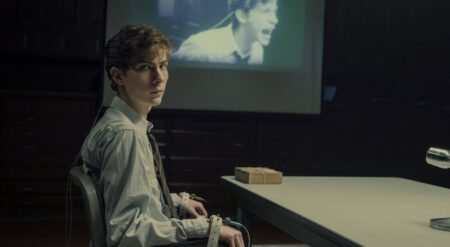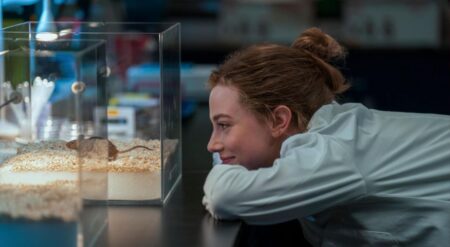


My Dearest Señorita (Mi Querida Señorita) (2026) is less a remake of Jaime de Armiñán’s 1972 revolutionary classic of the same name—they are more in conversation with one another. The original Oscar-nominated movie broke boundaries, becoming the first queer Spanish film post-Franco and one of the first films about the intersex experience. Renowned actor José Luis López Vázquez played Adela, a 43-year-old woman who discovers that she was actually “born a man.” Adela becomes Juan, and he leaves his small town for the big city to discover who he truly is.
The new version, directed by Fernando González Molina and written by Jaime de Armiñán, updates the timeline to 1999-2000, where a newcomer to the screen, Elisabeth Martínez, takes on the role of 25-year-old Adela. This Adela comes from a conservative household, teaches at Sunday school, and works in her father’s antique shop, restoring old paintings and clothes.
My Dearest Señorita (2026) is a truly deep exploration of what it’s like to be intersex.

Adela knows there’s something different about her. She’s taller and stronger than other girls, has been told she can never conceive, and since she was a teenager, her mother has instructed her to take estrogen pills. But Adela has no idea why. She confides in her one true friend, the priest José María (Paco León), while struggling to understand her attractions to both the local banker boy and her grandmother’s physical therapist, Isabel (Anna Castillo).
It isn’t until her grandmother reveals that such traits run in her family that Adela visits a doctor and learns that she is intersex. The details therein are shocking, confusing, and upsetting. Adela leaves home, feeling betrayed by her parents for hiding this from her, and no longer at home in her own body.
When the movie jumps to several months later, Adela is now A.D., who finds himself amidst wonderfully odd and queer company. They help shepherd him through discovering for himself who he actually is and what relationship he wants to have with his body.
Pain and bliss are both a part of life.

My Dearest Señorita is equal parts a powerful odyssey through the pains of having a physical body that can’t seem to align with your sense of self and gender, and a celebration of the self-love and queer community that can make that dysphoria bearable.
Anybody who experiences any kind of gender dysphoria, regardless of the permutation, will see themselves in Adela/A.D.’s struggles and their joys. There are completely heartwrenching moments of familiar instinctive self-flagellation, and there are moments of euphoria to remind you that everything can and will be okay.
The original version of My Dearest Señorita was led by a male actor, but it never felt inauthentic. The language for queerness was still nascent in the popular lexicon, and the movie reads cleanly as a trans tome of self-discovery. Even in 1972, it had the wisdom to recognize that clear categories of identity are useful, surely, but not necessary to living a fulfilled life. 2026’s My Dearest Señorita builds on that exploration by lending authenticity to its central role and letting you deeper inside the character’s experience.
La Querida Señorita (2026) is a much more authentic experience than the 1972 version.
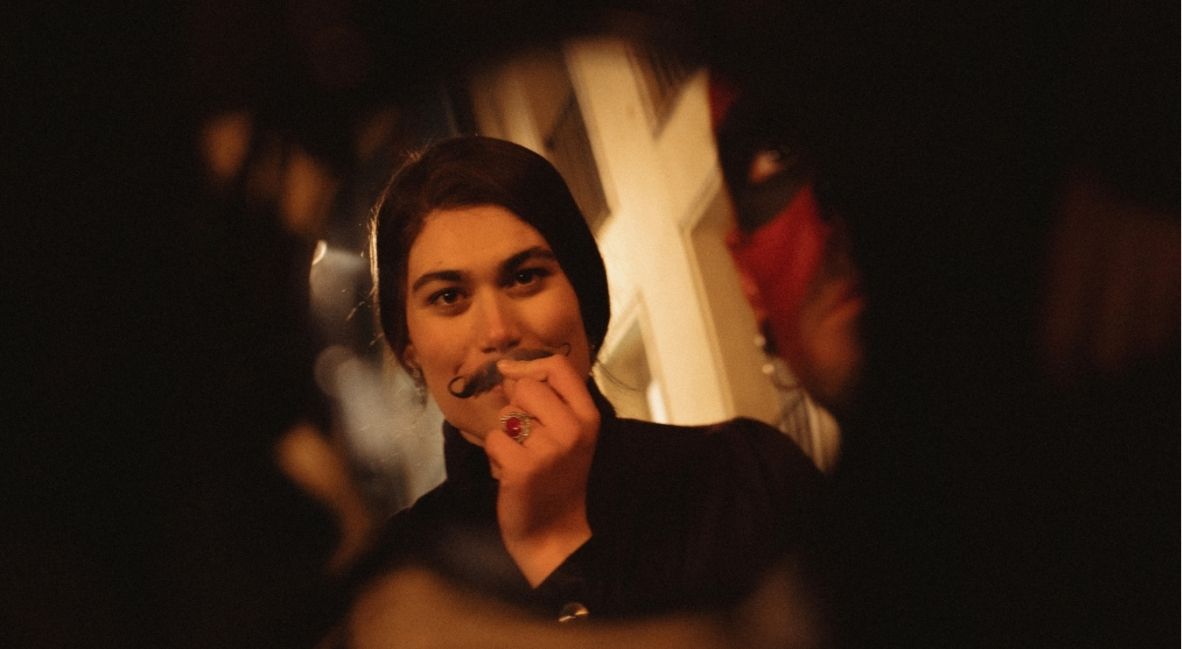
Casting an intersex actor as Adela/A.D. isn’t just great for representation’s sake; it’s great for the conversation the movie is having. As outsiders looking in, it’s not our business to understand Adela’s anatomy or anything else about her body she doesn’t outwardly express. Yet, where the 1972 movie revealed no details about Adela’s anatomy, the 2026 version gives a complete explanation.
On one hand, providing these details quiets those who would spend the whole movie simply wondering, because our binary-thinking brains cannot help it. On the other hand, providing the specifics actually helps normalize Adela/A.D., and coming right out with it in the doctor’s office, instead of finding out later during a more intimate scene, makes the information feel matter-of-fact rather than potentially fetishizing it or at least overemphasizing it.
And yet, there is still plenty that is kept private, especially as far as how alike Elisabeth Martínez may or may not be to her character. It creates an extra layer of safety for the journey the character is going through to draw such clear lines between what you are free to know and what is none of your business.
The side characters are significantly expanded in the 2026 version.

The sideplot with the banker is the most direct parallel to the 1972 film, but with a slightly different relationship that helps color Adela’s queerness a little more. The priest, A.D.’s roommates, and his new employer become much fuller characters as a result.
Each of those characters adds to the rich tapestry of A.D.’s queerness in distinct ways that their original counterparts hardly did. And the way they are woven into the plot now is much better dramatically. The stakes are more real, and the struggle to overcome everyday challenges on top of the existential ones is far more engaging.
My Dearest Señorita was a story well worth modernizing. Approaching it with a modern queer sensibility makes for a powerful conversation about where we have been and where we can still go in the journey to accept and be accepted for who we are, even when who we are changes every day and is impossible to define.
My Dearest Señorita (2026) is streaming now, exclusively on Netflix.
My Dearest Señorita (2026)
-
Rating - 7.5/107.5/10
TL;DR
My Dearest Señorita was a story well worth modernizing.