
Following the success of her Oscar-winning film, Coda, it is clear that director Siân Heder knows how to shoot a crowd-pleaser. Being Heumann is just that. While the film tackles the severity and strain of the attempts to pass regulations for Section 504 of the Rehabilitation Act of 1973, protests that paved the way for the Americans with Disabilities Act, it does so with a sunny disposition and plucky, spirited gumption that speaks to the ferocious positivity and action this group of people needed to force their way into gaining basic rights.
A key line in the middle of Being Heumann illuminates the film’s greatest message and the power behind activist Judy Heumann’s (Ruth Madeley) efforts. Mark Ruffalo’s Secretary of Health, Education and Welfare, Joseph Califano, argues to Congressman George Miller (Rob Delaney) that signing the bill is unnecessary because the cost outweighs the number of people it would positively affect. Miller responds that maybe that percentage only seems so small because so many people living with disabilities have nowhere to go when the U.S. infrastructure is made to keep them out, limiting them to their homes.
Just because an issue is not plain to see doesn’t make it less worthy of attention. It just means you’re averting your gaze from the problems at hand. Being Heumann, when it’s at its best and digging deep rather than keeping things easily digestible, explores that truth and the need to look beyond your own perception of the world.
Based on the novel Being Heumann: An Unrepentant Memoir of a Disability Rights Activist by Judith Heumann, the story takes place over the course of a few weeks. Judy, along with a group of activists, stages a protest meant to span multiple cities across the U.S. Faced with opposition, the group occupies a federal building in San Francisco, refusing to leave until Califano signs the bill that will protect people with disabilities.
Being Heumann is a detailed portrait of a landmark movement.
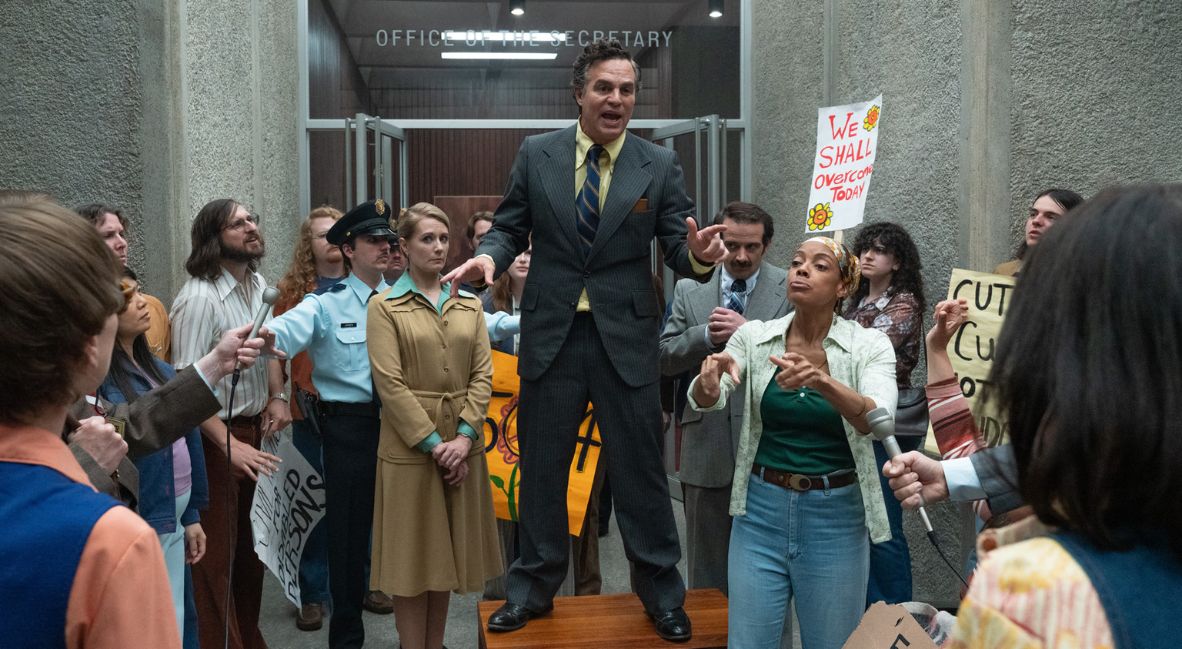
These protections seem obvious – accessibility features that include things like sidewalk ramps – but Califano can’t get over the hurdle of numbers. He says it’s too progressive and the minority too small to justify the spending. He thinks it’s too radical. From the streets of New York City to the halls of federal buildings to Washington, D.C., Being Heumann traces Judy’s path of defiant progress, demanding the rights so freely given to others.
Being Heumann focuses on the character-driven story at the forefront. It finds its strength in the ensemble beyond Judy. While Judy herself is an indomitable figure, with Madeley delivering a profound, magnetic performance that makes it clear she’s a born leader, the cast around her makes it more than just a biopic.
The diverse range of the characters’ needs, and the rights they seek, is one of the film’s most interesting elements. It’s a little heavy-handed, yes, but considering a world in which certain ableist slurs are popping back up in the lexicon after having, perhaps naively, been believed to be dead and buried as of the early 2010s, that is necessary pressure. Less cloying and more deliberately speaking to the widest audience possible when discussing the different needs between those with different disabilities and how their wants sometimes fail to meet in the middle (the necessity of sidewalk ramps versus the dangers of them, for instance).
Madeline Delp and Antwan Tolliver are just two standouts of many in a vast ensemble.
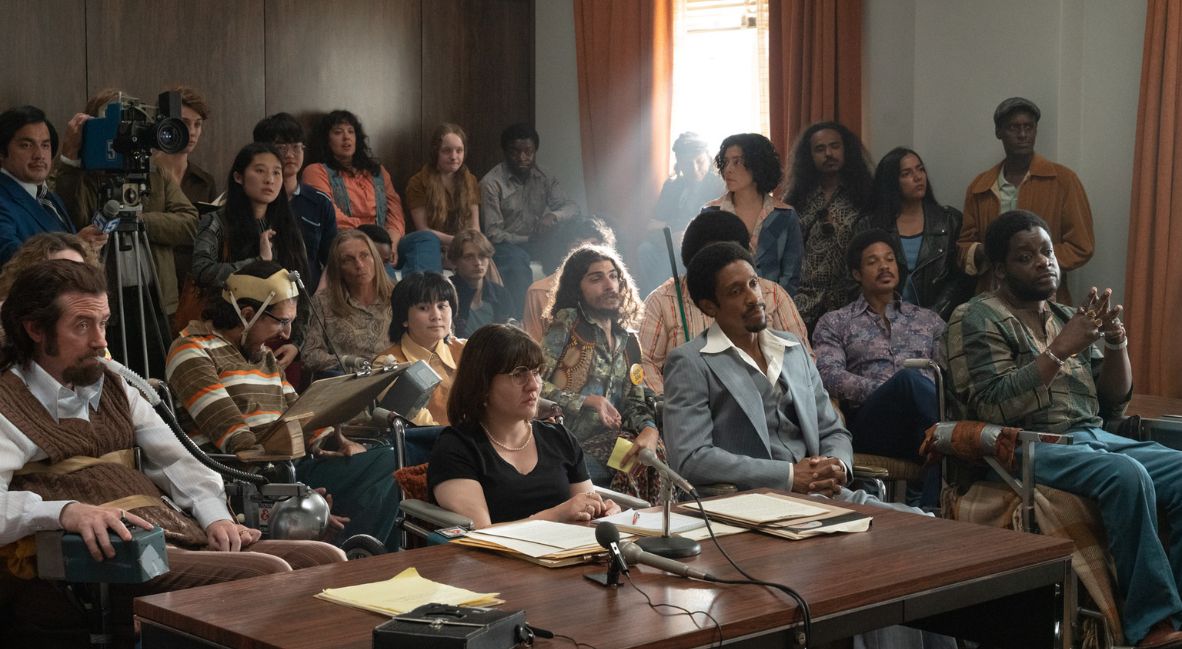
Characters like Madeline Delp’s Kitty Cone, Antwan Tolliver’s Black Panther member Brad Lomax, and Andrew Pilkington’s Hale Zukas offer different approaches to disability rights activism. Brad provides interesting insight as someone who once saw power through a different lens and had to adapt once his multiple sclerosis progressed. Pilkington is a welcome source of levity, offering asides and poignant insights into why the world looks at them and fears a similar outcome.
In Kitty’s case, she locks horns with Judy, the two adopting different leadership styles while sharing the same righteous defiance. Kitty doesn’t want to put anyone in danger, understanding that each person present has different needs and not every body can withstand the same strain. Judy, meanwhile, is so caught up in her (valid) anger at how long things have been drawn out that she struggles to understand why everyone isn’t immediately hopping on board with her plans.
That helps distract from Being Heumann’s overt sweetness and sing-along moments of euphoric triumph. Because Judy, self-admittedly, is a bit of an ass. It takes someone like her to get things done, but it also humanizes her beyond being just an icon. And that makes her interesting. It does absolutely nothing to invalidate her pain or desires; instead, it makes her a more fully fledged character who is easy to root for.
Heder has something of a straightforward approach to filming, though there’s an extra emphasis put on where the camera is leveled to make sure every character is in frame. The styling is superb, bringing the stylized ’70s to life, from Judy and Kitty’s pearls to Delaney and Dylan O’Brien’s handlebar mustaches and wide-fit suits.
Ruth Madeley shines with necessary vibrancy as the guiding focal point of Being Heumann.
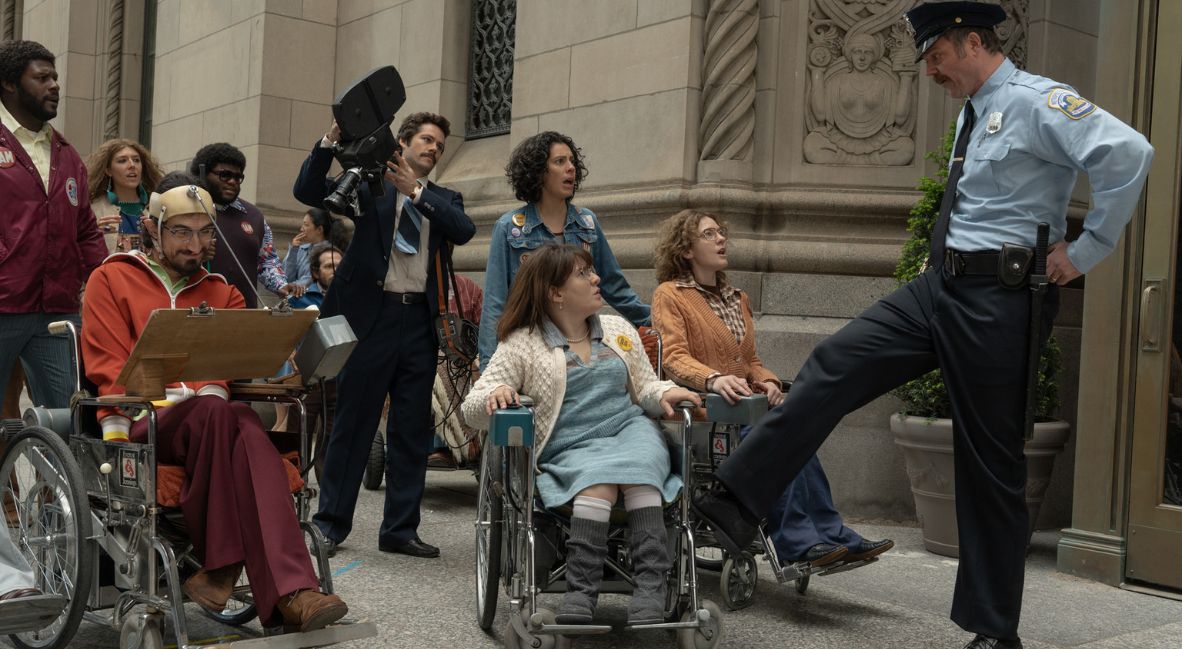
Being Heumann is entertaining throughout, although it struggles with some clunky dialogue and poor pacing. Other than Judy’s edge, the film is a soft and contained story, brightly lit and positive even when the group is facing such enormous prejudice and inhumane treatment. The film didn’t need to embrace grit to be higher quality, but it can’t shake the “for everyone” veneer that puts it squarely in the crowd-pleaser bucket, for better or worse.
It’s nice enough but there’s too much of a formula here. Effective without offering anything fresh in terms of form or style. The story is new, yes. And the film is an engaging watch for most of its runtime (before the multiple endings slow things down) There’s no glaring flaws, just nothing all too exciting beyond the story itself.
Led by a charismatic performance by Ruth Madeley, Being Heumann tells a remarkable story. It’s good. It just doesn’t quite reach the level of greatness its subject achieved. Still, the story itself is so compelling and vital that it’s hard to complain when Heder has, for the most part, created a film tailored for mass appeal without shying away from the herculean efforts depicted. It’s entertaining and enlightening in equal measure.
Being Heumann played as part of the 2026 Toronto International Filmis Festival and premieres November 6, 2026.
Being Heumann
-
Rating - 7/107/10
TL;DR
Led by a charismatic performance by Ruth Madeley, Being Heumann tells a remarkable story. It’s good. It just doesn’t quite achieve the level of greatness that its subject was able to reach.