

In his latest exploration of grief and loneliness, director Andrew Haigh finds his greatest plane of solitude in A Long Winter. Based on the short story by Colm Tóibín, the film mirrors the story’s brevity, losing itself in the characters’ meandering wanderings after the cataclysmic event that sets it in motion. That said, as with all of Haigh’s work, the film comes alive through its rich, grainy texture, handsome set designs and costuming, and an overwhelming sense of familiarity among the characters. For better or worse, this family has, for a while, had only one another to interact with.
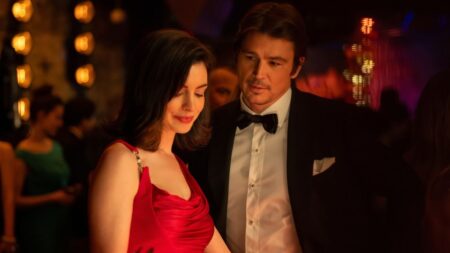
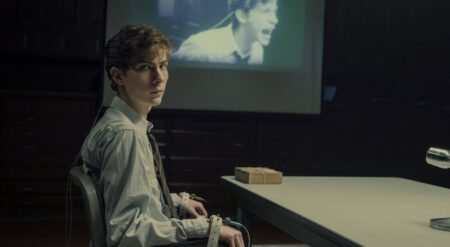
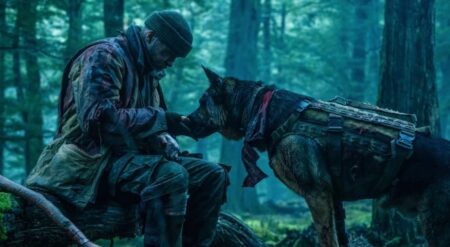
In his tremendous debut, Weekend, Haigh committed himself to the intimacy of flesh against flesh, of two lone souls seeking comfort in one another’s physical company. 45 Years follows the disillusionment of a long-lasting marriage, poking at the cracks that would make even the most enduring crumble. Lean on Pete embarks on a voyage in the forgotten U.S. divots, where families and children are left to fend for themselves. In the devastating All of Us Strangers, Haigh weaves together familial heartache and mournful yearning as one man reckons with past, present, and future.
A Long Winter combines the core elements of all four films. It blends the solitude and initial sparks of attraction in Weekend, the disillusionment with family and relationships in 45 Years, the foretold American Dream and its decimation in Lean on Pete, and the ghosts of All of Us Strangers. Shot beautifully by cinematographer André Turpin (which is where the film seemingly gains a certain Xavier Dolan texture, having worked on his film Mommy), the tactility of the world is immediate. But despite its velvet appearance, striking Rocky Mountain setting, and standout performance, the film struggles under the weight of one key component: a weak lead.
A not so perfect family takes center stage in Andrew Haigh’s latest.
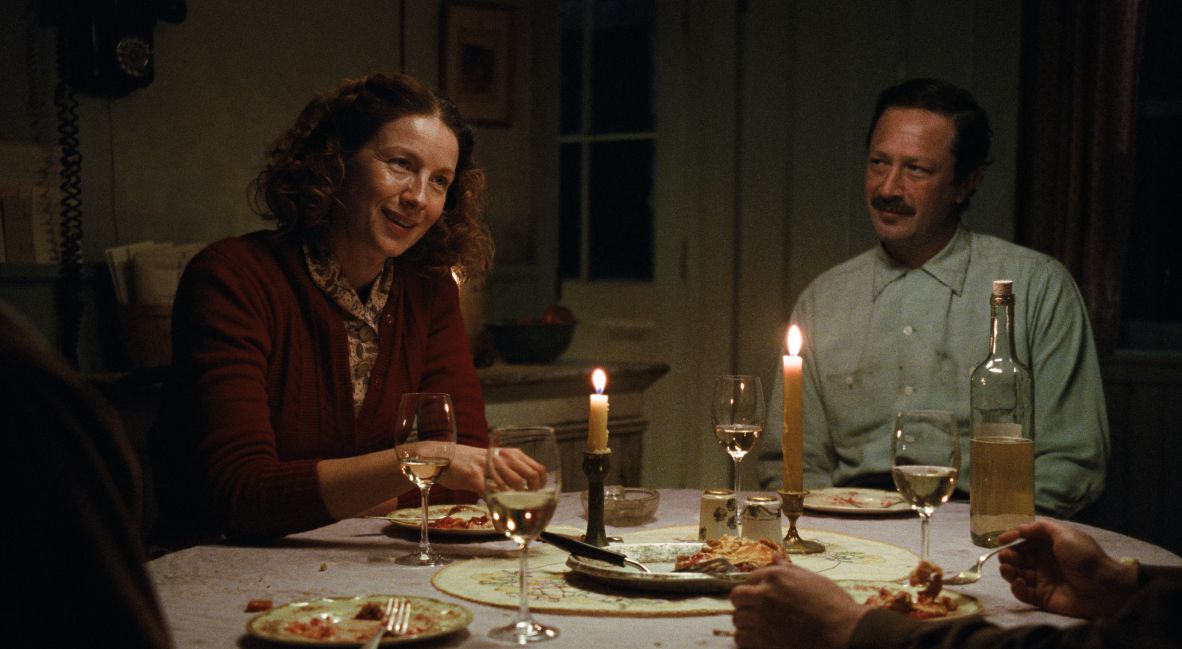
Taking place in 1951, it doesn’t take long to realize that the picturesque family at the center of A Long Winter is far from a happy one. While the eldest son, Mike (Fred Hechinger), seems naively content with the way things are, the same cannot be said for the rest of the family. His mother, Louise (Caitríona Balfe) sneaks away on grocery runs in town and suffocates under the immense solitude of their mountain home. His younger brother, Tommy (Kit Connor), can see the cracks and is heading off to his station in the Korean War, happier to talk with the rabbits and chickens they raise than to be in the house.
And the patriarch of the family, a former New Yorker, Lester (Ebon Moss-Bachrach) isn’t naive, but playing the fool for the sake of the dream he’s concocted. He’ll dance, bust out his fiddle, and work day and night to ensure the image he desired is present, ignoring the blistering anger his wife harbors.
There’s love in the family, but it’s torn and fragmented, Louise and Lester loving pieces of one another – pieces of who they once were when they were still idealized and young – and deeply, torrentially resentful of the rest. They’re pipes ready to burst, and it takes one push to send Louise packing, disappearing in the middle of the day to traverse the temperamental snowy wilderness of the Rockies.
In its best moments, A Long Winter embodies the fluidity of a painting.
As a set up it works and, in the lead up to her disappearance, the film soars through gorgeous, haunting direction and the clash of emotions and visuals. One sequence takes on dual meaning. The scene where Lester and Louise dance together as their sons watch, on the eve of Tommy’s departure, is, at first, loving and warm, backlit by the fire and the warbling vocals of the record chosen by Louise. But then, the camera pulls out to view the scene from outdoors, and the darkness surrounding the house encroaches on this moment of peace, hinting at future disturbances, the moment becoming an echo before the song has ended.
There’s just such a richness to Haigh’s work. He devours his subjects, taking in each breath, each blink, focused on the ugly contortions of our faces and the elegance of our bodies. A Long Winter believably transplants us to this place and time, as we withstand the unforgiving weather along with them as they traipse through the snow, boots crunching with such authenticity it had me full recoiling in my seat (it’s the equivalent of nails on chalkboard for this New Englander.) At times, it feels more like an oil panting in motion, each scene arriving with the same weight of canvas.
And that beauty – that ability to transport us so that we feel the wind as it rolls over Tommy and Mike as they stand on the ledge of their home – makes it so frustrating how much the lead character fails to drive the story. Mike is a vacant protagonist at best, aggravatingly obtuse at the worst. He, unlike Tommy, is content in their home. While he went away for school for a while, it was only as far as Idaho. He doesn’t mind that they don’t have friends, and that their way of life is already beginning to feel antiquated. Yes, he deals with his sexuality but even that is surface level.
Ebon Moss-Bachrach delivers a soulful and damaged performance.
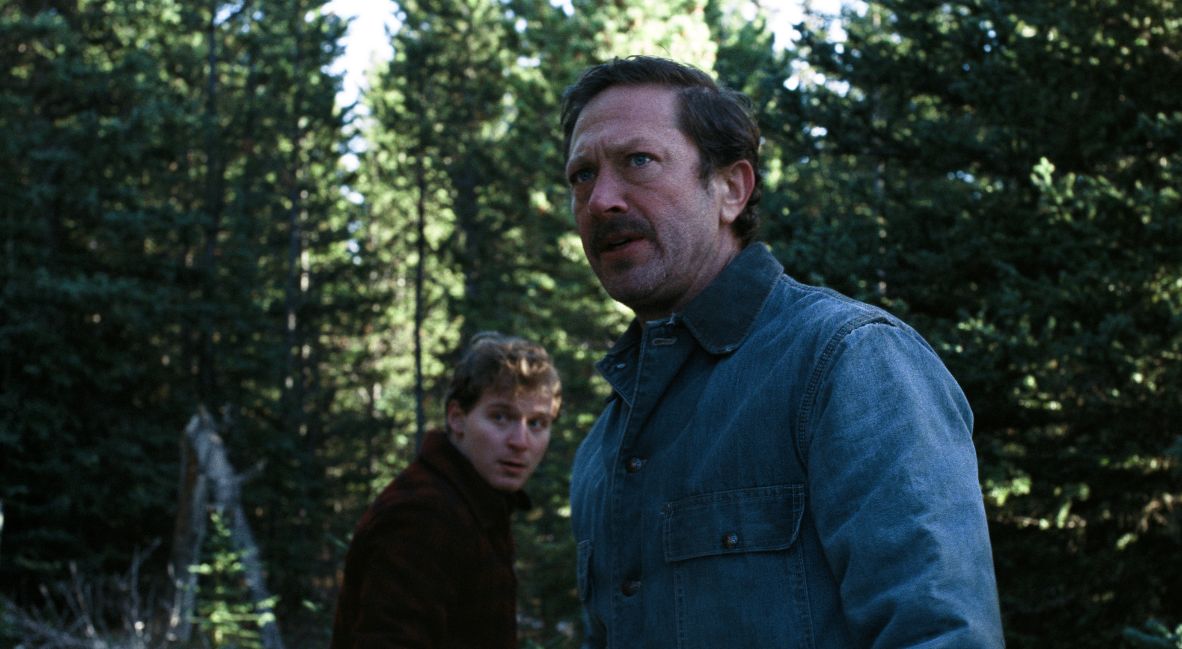
This is in part due to the writing that doesn’t feel the need to interrogate his bullheaded response to his mothers leaving and his fathers role in it. The character and, subsequently, the film, would be much better if it at least held him accountable for his brazen ignorance. Instead, we spend so much time watching him soak up what’s happening around him, slowly becoming more confident as those around him diminish. Hechinger’s easy going, boyish demeanor no doubt fits the role, but it needed more charisma to make us care in the face of the characters shortcomings.
But what makes it increasingly all the more damning is that he’s hardly the most interesting character in the film. Balfe leaves an impact as the acidic yet vulnerable Louise, the character offered more depth even in her absence. And Connor possesses a quiet sturdiness to him that lets him lead with an easy confidence. Even D’Pharaoh Woon-A-Tai, in a smaller role, arrives with a lived in history worth exploring. It’s Moss-Bachrach, though, who truly shines.
If nothing else, The Bear will always be celebrated for having introduced Ebon Moss-Bachrach to the world. He’s already proven himself a fantastic actor, his face malleable in a way that makes him suited to a Mike Leigh film. He’s expressive without overdoing it. His charisma befits a giant, making him obscenely watchable in each beat, a character so worth study it’s a shame he isn’t the focal point and, conversely, leaves us wanting more in the way good characters should.
Imperfect but immersive, A Long Winter casts an icy, haunting spell.
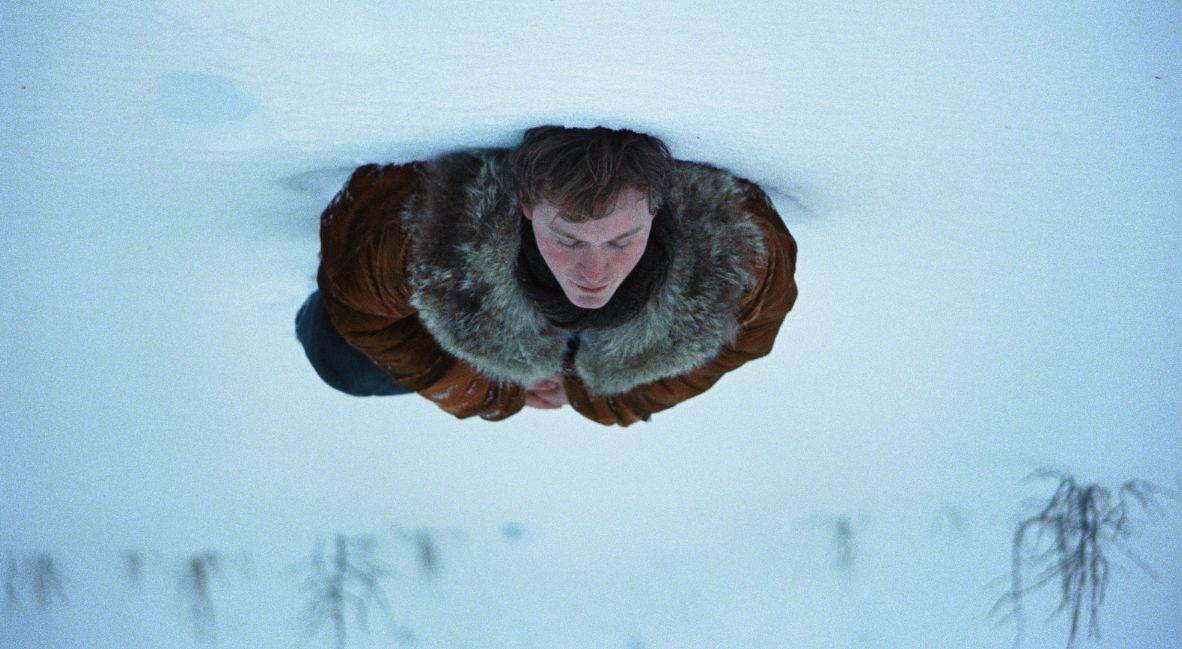
While Mike is a lackluster character, it doesn’t diminish from the overall effect of the film that sticks with you and begs for a rewatch. It’s a film that constructs itself out of the notes of time. From the constant, steady drip of the faucet to ensure the pipes don’t freeze, to keeping watch for the arrival of vultures as the snow melts, the passing of livestock, and the way Mike grows from boy to man in the frigid months, his breaths less labored, his posture sturdy, this is a story about how time passes us by, and how grief runs through it.
A Long Winter may not scale the heights of Andrew Haigh’s most impressive works, but it combines all of his most noteworthy elements to create something worthwhile and transportive. Moss-Bachrach is superb, himself worth it alone. Tender like a bruise, the film is another stitch in a modern masters oeuvre.
A Long Winter played as part of the 2026 Toronto International Film Festival.
A Long Winter
-
Rating - 7.5/107.5/10
TL;DR
A Long Winter may not scale the heights of Andrew Haigh’s most impressive works, but it combines all of his most noteworthy elements to create something worthwhile and transportive.