A child being taken is their parents’ worst nightmare. The pain and grief of being separated from a child is simply unimaginable. On the surface, Animals appears to be a fairly straightforward, even mediocre, kidnapping thriller, but as the story unfolds, it shows itself to be much more about the depressing state of American politics.
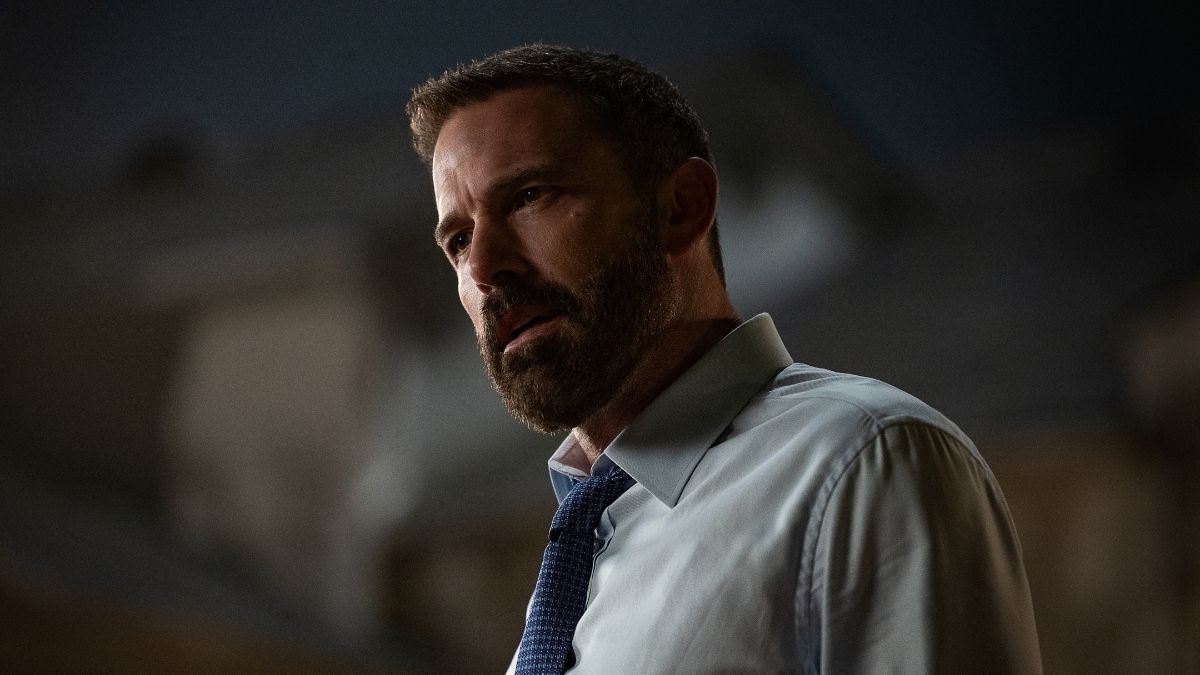
Director and co-writer Ben Affleck plays Mark Kimball, a mayoral candidate in Los Angeles. Despite spending every dollar he has and cutting ads partially in Spanish, Mark struggles to connect with the city’s Latinos. As he stands in his office talking to his campaign manager, Sam (Steven Yeun), he makes the decision to borrow against his inheritance, making the only physical asset he has left, his multi-million-dollar home. Worse, on Sam’s advice, Mark chooses not to discuss it with his wife.
His wife, Abigail “Abby” Kimball (Kerry Washington), is a psychiatrist who tells patients that they need honesty and self-examination in the office. Secretly, though, Abigail is having an affair with a handsome professor from UCLA. Both Mark and Abby are about to have their marriage tested in unimaginable ways.
Animals can’t help but be trapped by its limitations, but the exploration of its politics sparks interest.

It’s Halloween, and Mark’s son Denny (Christopher Woodley) has gone out trick-or-treating with the housekeeper Cecilia (Adriana Paz) and Hector (Jacob Estrada), the son of her fiancé, Ramon (Luis Gerardo Méndez). That night, the Kimballs receive a call that will forever change their life. Denny has been kidnapped, and the kidnappers want $7 million in ransom. Having spent all their money on the campaign, Mark is forced to admit to Abby that they simply don’t have $7 million.
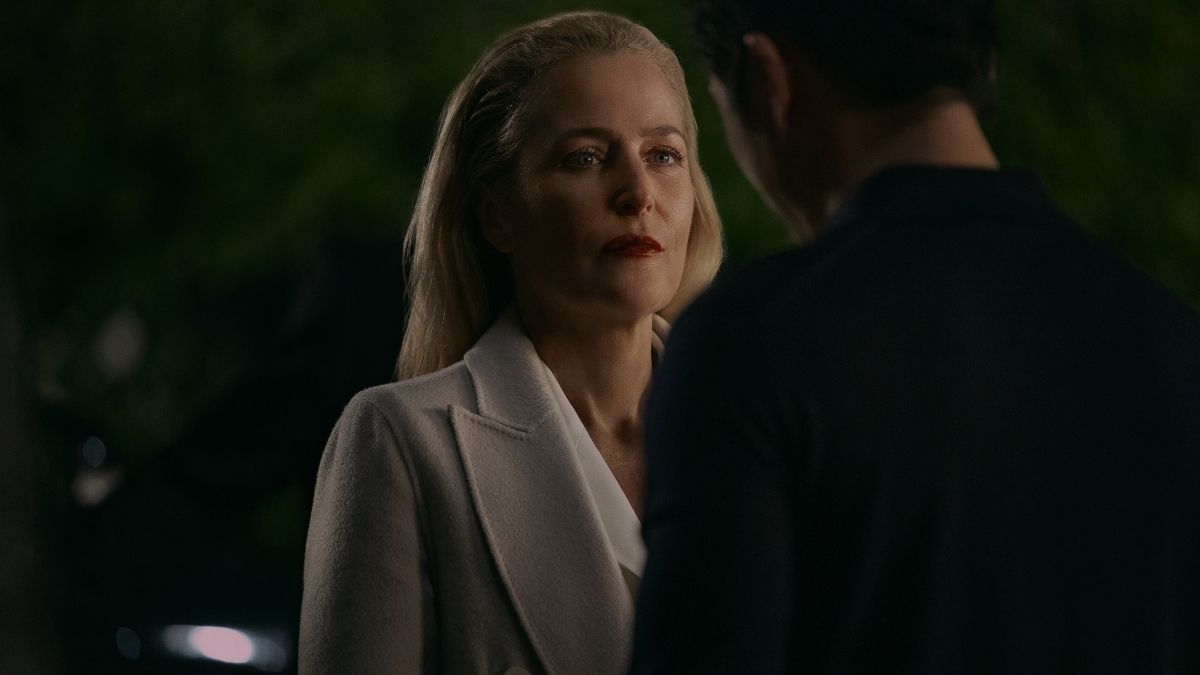
Sam says he can help with a nuclear option but that it will be very costly. When they agree, Sam calls in Dayle Burton (Gillian Anderson). Dayle comes bearing cash and, more importantly, strategy. She offers her guidance for the entire ordeal, becoming both a political strategist, knowing that whatever happens here will affect his campaign, and a hostage negotiator, though she never actually speaks to the kidnappers herself.
Animals, at least on the surface, has a bit of a mundane premise: a politician’s child is kidnapped, but Mark isn’t the Liam Neeson of this film. That role belongs to political operative Dayle Burton. As the film goes on, the stakes change quite considerably. What first feels like a child’s life in the balance becomes the life of a child who is also an important political football.
Animals doesn’t shy away from showing people as resources first, mere pawns in a game of politics.
Had Animals not taken a swing in that direction, the film would be boring at best. Instead, what we get is a story that shows the lengths people are willing to go to protect the ones they love. We also see the seedy underbelly of politics, where people are resources first and people, if it’s not terribly inconvenient, second.
Gillian Anderson’s Dayle captures that sentiment quite beautifully. She’s cold, calculating, and incredibly intelligent. She understands the kidnappers better than they understand themselves. Every piece of advice she gives the Kimballs is done with an understanding of the stakes and the emotional weight, and yet is done without any emotional tie to it.
Early in the film, the Kimballs are horribly shaken as any family would be. One of the biggest problems in these films is normally how quickly grief turns into determination. Yes, adrenaline can explain some of that, but Animals does a fantastic job of making the audience sit in that chaos longer than the genre normally demands. There’s crying, yelling, and blaming. It never feels exaggerated or overdone. If anything, it still feels like there’d probably be more, but Animals chooses to continue moving along.
As a couple in denial of their marriage’s collapse, Ben Affleck and Kerry Washington are great to watch.
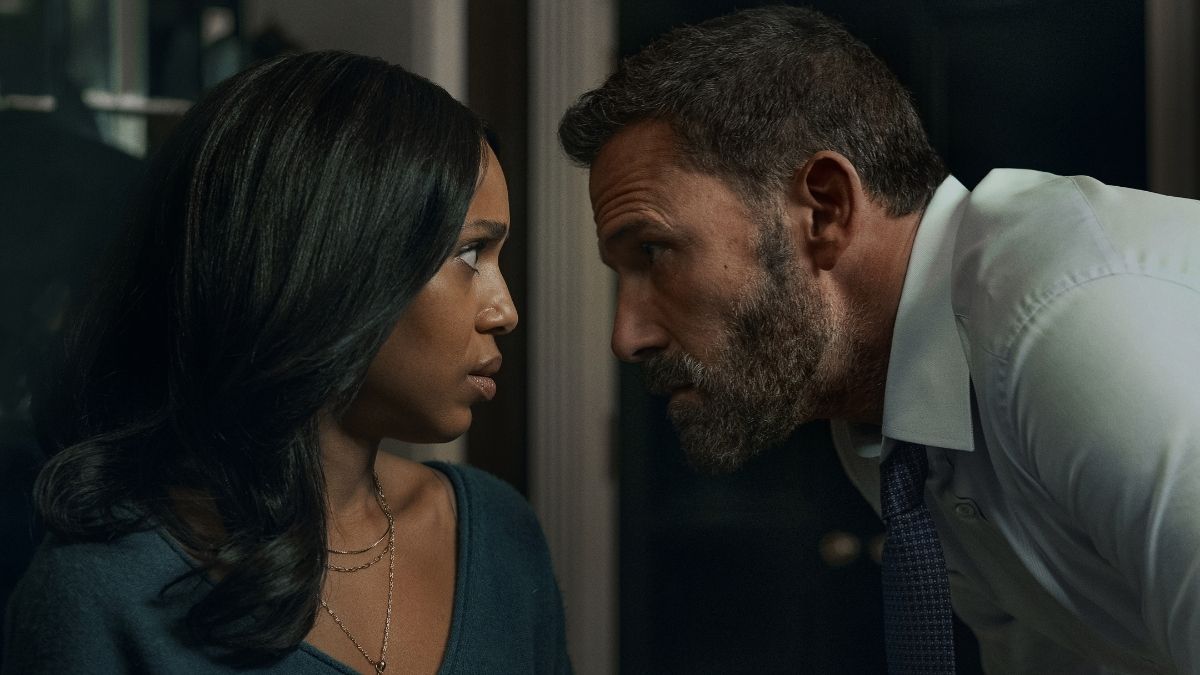
Ben Affleck and Kerry Washington play dysfunction well when they’re together, but they shine even more on their own. Washington’s Abby isn’t terribly sympathetic, thanks to her infidelity and lies on more than one occasion. Still, she very clearly spends the entire film in a state of panic and worry.
By comparison, Affleck’s Mark is faithful and overly naive about the state of his own marriage. Still, Mark is not a perfect husband either. Aside from taking all of the money spent on his campaign without including his wife in the decision, Mark is mean, condescending, and worries more about optics than about people. He even stops Ramon from getting work that he could have provided, because he doesn’t want to be seen as a lawless mayor.
All of these “animals,” as the film’s title suggests, must work together to save the life of a young boy. Unfortunately, the storytelling falls apart the more it leans into its commentary. We’re never given any meaningful reason as to why the kidnappers targeted the Kimballs. We know that they’re willing to use Mark’s candidacy to get what they want. We know Dayle is willing to do the same thing for her own financial benefit.
The kidnapping plot falls apart due to threadbare motivations and reasoning.
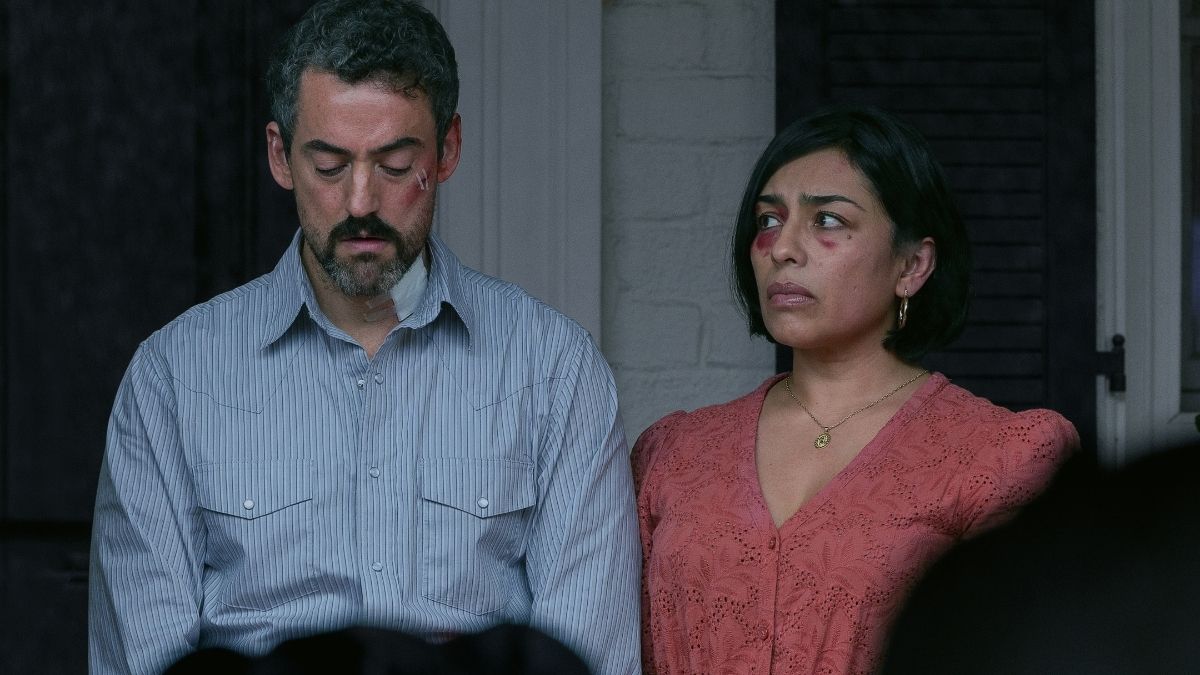
It’s unfortunate because there are several good ideas just waiting to be explored as to the who and the why, but Animals never takes any of those avenues. In the villain’s monologue, he vaguely mentions being wronged by Mark in the past, but beyond that, there’s nothing to go on.
As written, the commentary is simply better than the story because at least it has something worth listening to. But the wrinkle in that is that a story should never take a backseat to the lesson it’s trying to convey. Animals puts a unique commentary on a tired movie trope and gives us phenomenal messaging but an unoriginal story to deliver it.
The commentary is stronger than the overall plot in Animals, and that’s a shame.
Shakespeare, through his character Hamlet, makes the point, to paraphrase, that storytelling and acting should hold up a mirror to ourselves and make us think. Animals tries to do this, but without a compelling reason to stay interested, the commentary lands on deaf ears.
Animals certainly has a lot to say about American politics, and Affleck should be commended for the well-thought-out commentary that it points to. Additionally, stellar performances by Affleck, Washington, and Anderson are the backbone of the entire film. Still, a lackluster story that’s been told before may not be enough for everyone to stick around until the ending credits. That’s a shame because Animals is at its best, or maybe its worst, when it delivers the ending’s powerful indictment of the political system in the United States.
Animals is streaming now, exclusively on Netflix.
Animals
-
Rating - 6.5/106.5/10
TL;DR
Animals certainly has a lot to say about American politics, and Affleck should be commended for the well-thought-out commentary that it points to. Still, a lackluster story that’s been told before may not be enough for everyone to stick around until the ending credits.