
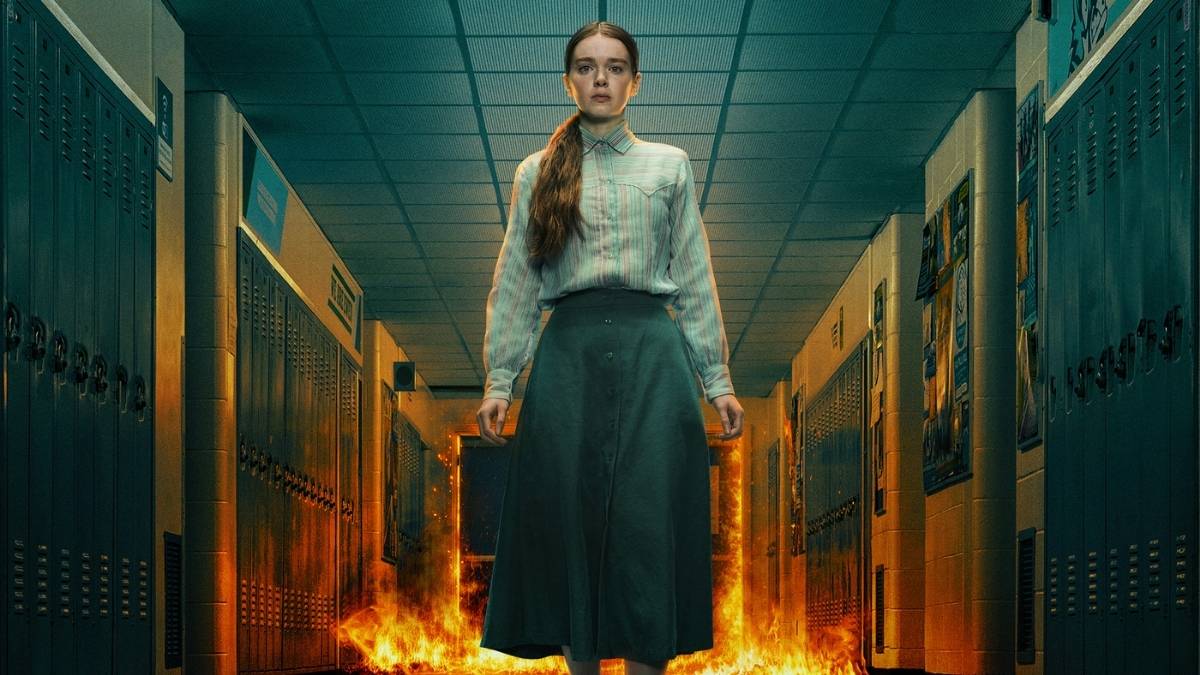
Reimaginings, like Carrie (2026), are always tricky, especially when you’re building on the bones of something with high expectations. Showrunner Mike Flanagan knows this more than anyone when it comes to adapting Stephen King’s works. Given the most daunting task of tackling the prolific horror writer’s beloved Carrie, one of King’s shortest novels, into an eight-episode series, Flanagan expands and pulls at the source material to deliver something unexpected, and while there are some surprising swings taken, they don’t always hit.
The opening episode leans into the novel’s epistolary nature, using a mixture of newsreels, documentary segments, and the like to showcase what tragedy has befallen the town of Chamberlain. The name on everyone’s lips is Carietta “Carrie” White (Summer H. Howell), and everyone remaining after the incident has something to say about her. Eventually, the documentary interview shifts to Sue Snell (Siena Agudong), who takes the interviewer (and the audience) back to when Carrie entered the town’s lives.
Carrie and her mother, Margaret White (Samantha Sloyan), have been living off the grid, unknown to the town, until their home is searched after the death of Ralph White (Tahmoh Penikett). Threatened with the State removing her daughter unless Carrie enrolls in Thomas Ewen Consolidated High School and Margaret gets a job to prove they have income, Margaret acquiesces. This decision ultimately opens Carrie, who is bright-eyed and full of curiosity, to the world, and what she encounters in school is arguably soul-crushing.
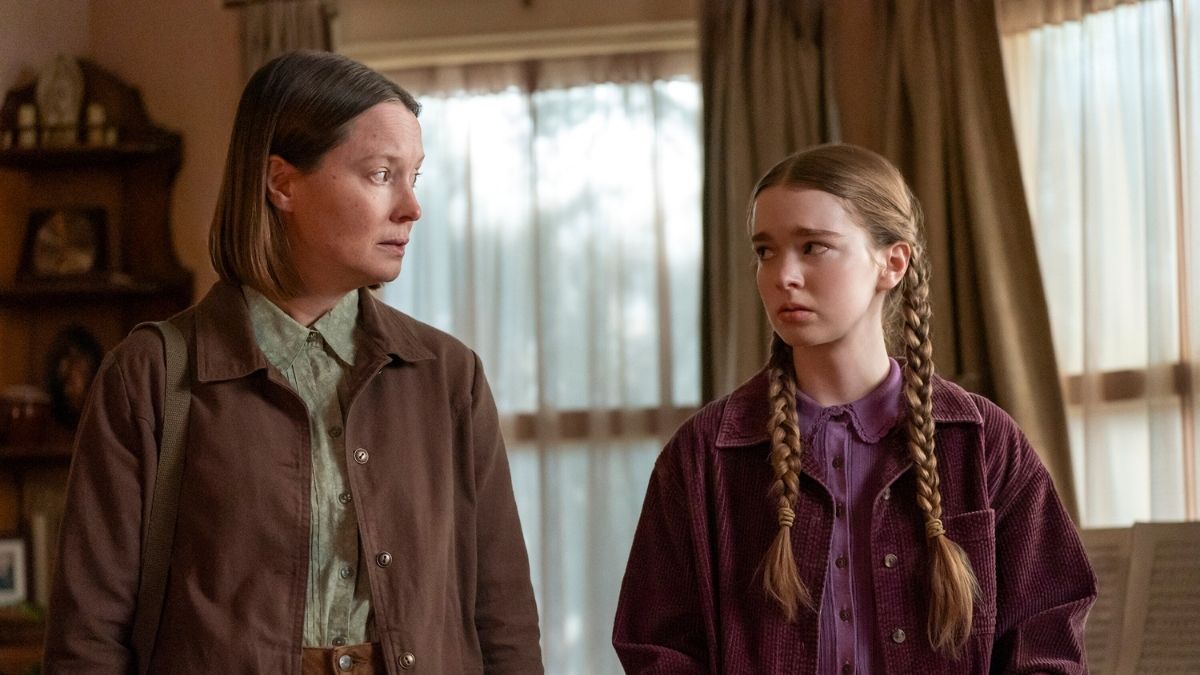
Carrie and Margaret’s relationship is more grounded, but the iron grip of control remains.
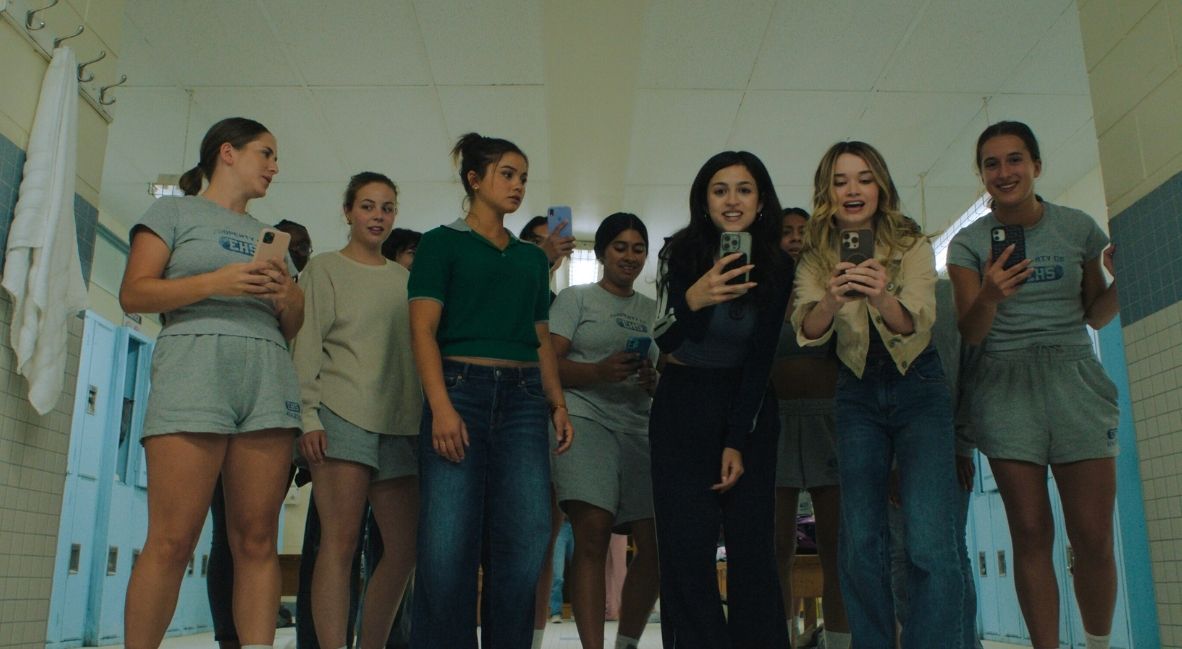
This is partly because of the extensive bullying Carrie faces due to her awkwardness and ignorance of the world, but also because of the ringleader, Chris Hargensen (Alison Thornton), who sees the teenager as an easy target to take out her frustrations on. Setting the series in the present day adds more areas for Flanagan to explore in the realms of bullying, as social media and its reach and influence play a larger factor in how much worse bullying is today.
Everything is recorded, and Mike Flanagan uses that fact to show that not just the teenagers at school, but the faculty as well, are forced into a terrible headspace because of social media use. While Carrie is the initial target for the bullying, it quickly grows to touch everyone in the community, and the effects of prolonged exposure to bullying are felt deeply and intensely when one person’s actions go too far. The aftermath forces uncomfortable conversations in Carrie (2026), but they are necessary for the characters and for the audience as well.
The exploration of bullying, particularly how others influence and are influenced, opens up a broader conversation surrounding power and control. Anyone can be a bully, and Mike Flanagan never shies away from showing that every character is capable, especially when anonymity is a factor. However, it reminds us that kindness is, in fact, a choice, as is violence. That is what makes the final episode jarring because some storytelling risks undermine the key choices the titular character is known for.
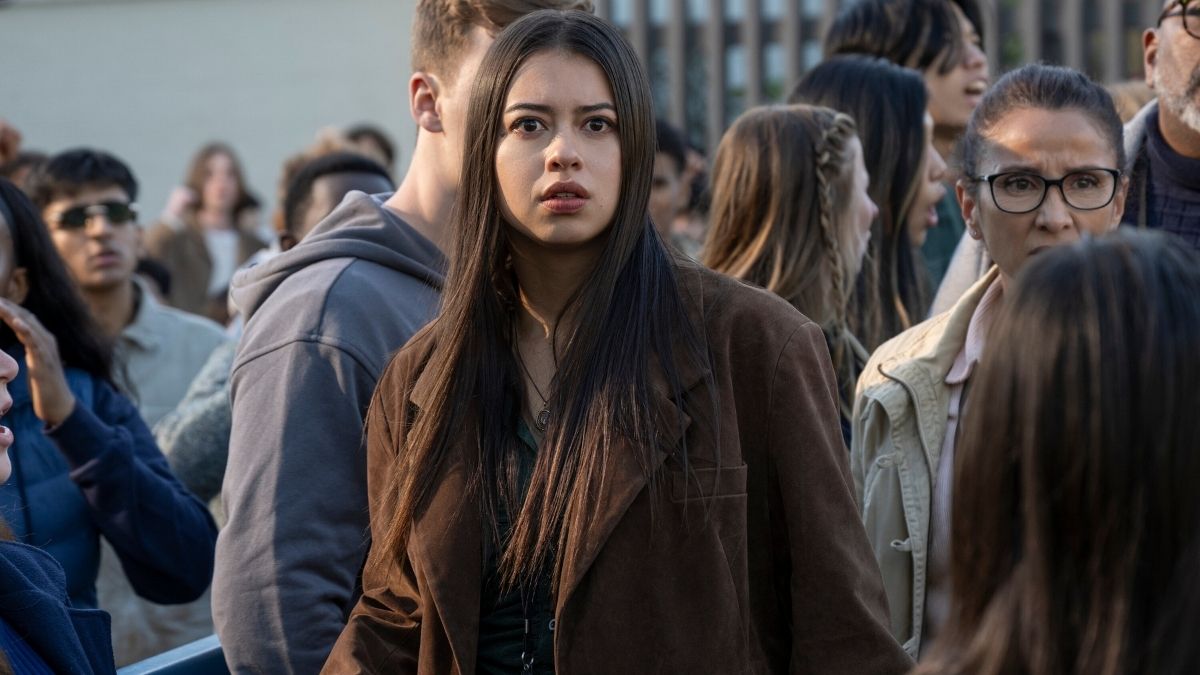
The present-day update on bullying in Carrie (2026) greatly intensifies how inescapable it is.
Flanagan and the team use the eight episodes to explore themes and ideas the Stephen King novel itself touches on, leaning heavily into the drama genre. However, there’s not enough on the page to fill out the episode order, which affects the pace and flow of the series and results in some drag. Knowing there wasn’t enough to work from, the writers wove in new additions to the story and the overarching universe.
Unfortunately, the newer additions don’t always work, and this shows itself in what will certainly be considered a controversial finale for Carrie (2026). Again, it is a reimagining, which means creative allowances are made and, to Flanagan’s and the subsequent screenwriting room’s credit, they pluck little-explored moments from the original novel and subsequent King works to expand and explore this world. The novel’s ending letter comes to mind, tying together with Flanagan’s decision to lean into the briefly referenced “TK” gene from the material.
However, the new characters’ influence in the finale is where things take a turn for the handling of Carrie (2026). Mostly, it alters key moments in Carrie’s legacy, removing the titular character’s agency in ways that ultimately undercut the overt tragedy of her story. With specific character-beat changes and the revised finale, the question remains: “Was Carrie the best avenue to introduce this broader, bigger world?”
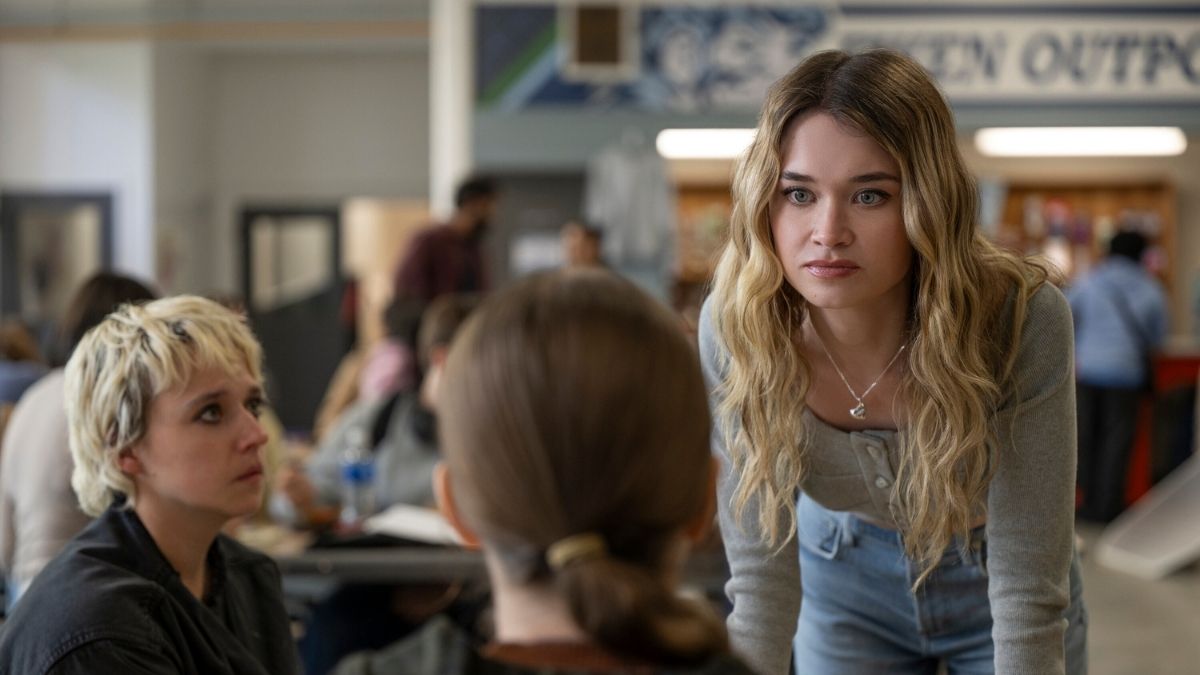
The expansion into Chris’s life adds depth to her inevitable downward spiral.
Without going into specifics and based on knowledge of the Stephen King universe, one could argue yes. However, the execution of these newer elements and the complete alteration of the story push this reimagining into more wishful thinking, almost on the verge of Fanfiction territory. In the end, that, plus the overall execution of these newer additions, makes this iteration of Carrie harder to digest, and even easier to reject.
It’s a shame since the cast of Carrie (2026) is incredible. Summer H. Howell plays Carrie, remarkable, earnest, and full of curiosity. This Carrie has a thirst for knowledge and wants to learn more about the outside world, which makes her school experiences even more brutal. The systems in place make it almost inescapable, but once she realizes what power she has on her own and through her mother’s activism, she finds her strength. Carrie also finds a variation of her shadow self, which Howell lets us see through her eyes.
As the big bad bully, Chris Hargensen, Alison Thornton infuses layers of vulnerability amidst the more unpleasant, catty sides of Chris’s personality. With Flanagan having more room to expand on characters’ backstories and perspectives in Carrie (2026), characters like Chris can be less one-dimensional in their evil. At every step of Chris’s journey, there are moments when she can make the right choice, the kinder choice, and she seldom does. With Carrie threatening her fragile ego, Chris can’t help but spiral until the very end.
The teachers finally get their time to shine in Carrie (2026).
Most surprising in the characterization on the page is Flanagan’s interpretation of Margaret White. Gone are the overt dramatics of a religious zealot. In its place is a character grounded and understated, one who is fully self-righteous, yes, and who uses the fear of the outside world and damnation to keep Carrie to heel. Yet, Samantha Sloyan brings out a surprising fear of failure and a loss of control in her approach to Margaret, and ultimately, makes it clear how much Margaret actually loves Carrie in the end.
The expansion into the teachers’ lives in Carrie (2026) is a fun addition, but it also lets Flanagan and the team explore how absolutely screwed those who work in education are. Oftentimes, unfortunately, we as a society forget teachers are people, and as a profession, their work is taken for granted. It’s only getting harder thanks to combative parents, social media/cellphone use, and the intricacies of bureaucracy that ultimately hurt more than help. In this, the cast and Flanagan both work in tandem to bring these teachers and administrators to life and punctuate the uphill battle the adults face before tragedy hits hard.
In the end, Carrie (2026) is a reimagining, and its strongest parts lie in its embrace of the source material and what the cast delivers. What will haunt this series are its newer story elements, many of which are challenging for those who love the novel and its subsequent adaptations, as well as for those who understand the overarching Stephen King universe. But what will ultimately make or break the series is whether viewers accept the drastic changes to specific characters’ fates. That alone is enough to put anyone familiar with the source material off.
Carrie (2026) is now streaming exclusively on Prime Video.
Carrie (2026)
-
Rating - 6/106/10
TL;DR
In the end, Carrie (2026) is a reimagining, and its strongest parts lie in its embrace of the source material and what the cast delivers. What will ultimately make or break the series is whether viewers accept the drastic changes to specific characters’ fates. That alone is enough to put anyone familiar with the source material off.