

There’s a deceptive plainness to The Last Blossom, the debut feature film from Baku Kinoshita, the director behind the cult favorite anime series, Odd Taxi. From the character designs to the traditional aesthetic, the film has a classic feel as the story slowly unravels.
That it all surrounds itself with a slightly unlikely, fantastical note is beside the point. Or, maybe, it is the point. Because, at the heart of the stripped-down story about a man in his final days seeking personal freedom is a note of unlikely magic. A human life pulling on a thread of the unlikely and the unusual, looking for an extraordinary cap to an otherwise humdrum life of regrets.
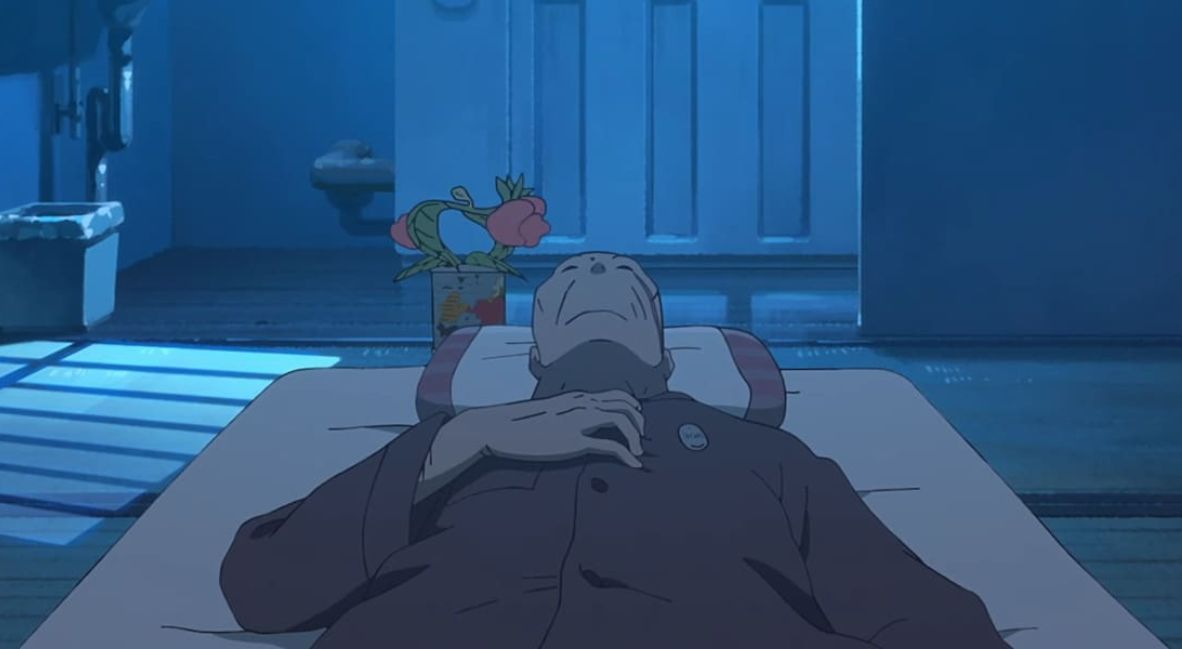
Directed by Kinoshita and written by Kazuya Konomoto, the film opens on an older man, serving a life sentence for murder and robbery. As he dies, his only companion is a single balsam flower that helps him reflect on the last years of his life before imprisonment. Most specifically, the significance of his last summer of freedom in 1986.
Minoru Akutsu (Kaoru Kobayashi / Junki Tozuka) is an unassuming protagonist. A low-level yakuza member, he lives a relatively quiet life by the seaside, impressed by his boss Tsutsumi (Hiroki Yasumoto)’s seeming generosity. His feeling of being indebted is just one sign of what’s to come. But it’s Nana (Hikari Mitsushima / Yoshiko Miyazaki) and her young son, Kensuke (Natsuki Hanae), who make the greatest impact on him.
Emotionally deep, Baku Kinoshita’s The Last Blossom is about life, love, and bad choices.
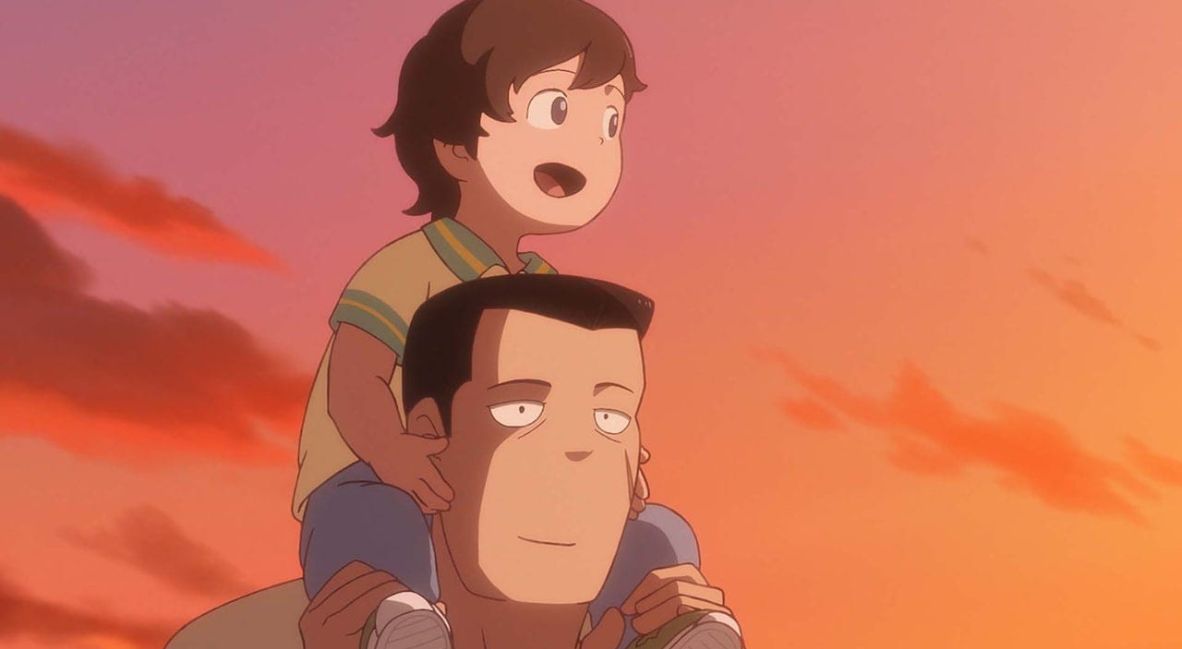
Kensuke isn’t his son, and Nana isn’t his wife. But they’re a family, and while Akutsu’s reserved capacity for emotional honesty limits him in expressing as much, it’s evident in the early days of easy summer. We watch Nana and Akutsu unpack their belongings to get comfortable in their new home, and their playfulness suggests the comfortable warmth they share, even without saying much.
And it’s there that that “plainness” makes sense. It’s not that the story in and of itself is ordinary – there’s a talking flower after all. But the plain surroundings, the ordinary faces, all of it speaks to the humanity of the story. A home built by making music with mundane, everyday tasks.
And it’s why, by the time the major plot development takes place in The Last Blossom and Akutsu’s fate is sealed, the unfair devastation lingers. Because, yes, as the Hōsenka Flower (Pierre Taki) frequently remarks, Akutsu made a lot of mistakes in his life.
And Akutsu can admit that his life in the yakuza means that, to a degree, he doesn’t deserve to walk in the sun. But there was a chance in his life with Nana and Kensuke, and Tsutsumi stripped that from him the moment he saw an opportunity to gain something for himself.
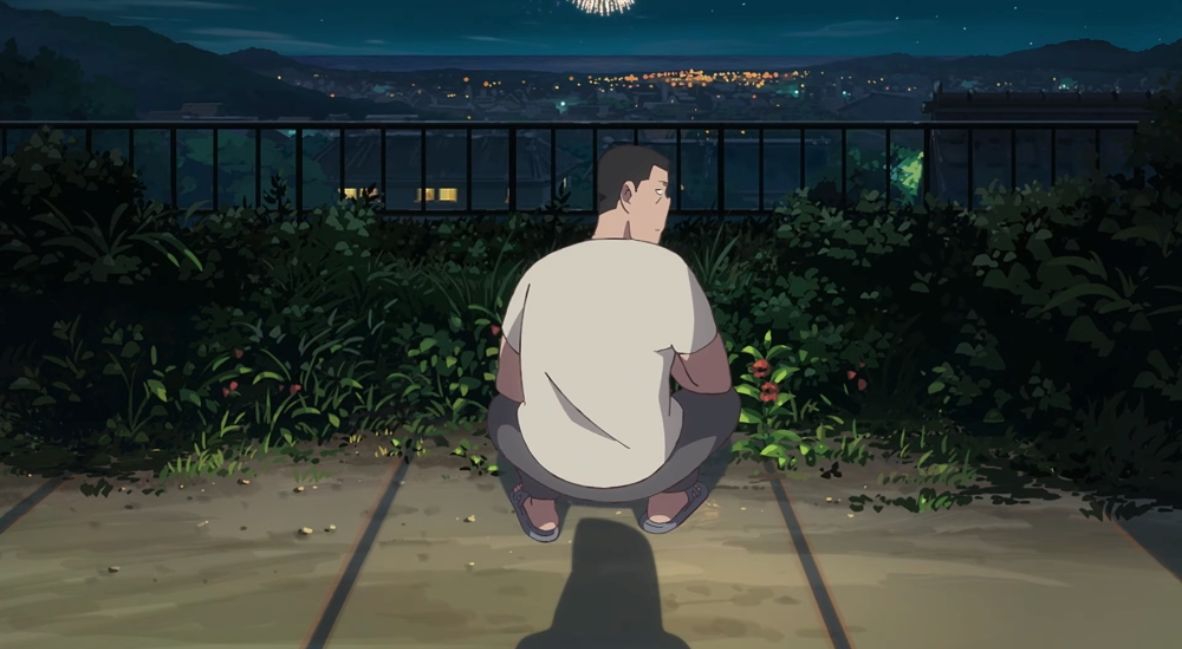
Tsutsumi is the big bad in The Last Blossom, an imposing force aided by the distinctive drawl of Yasumoto’s performance. He takes advantage of Akutsu’s loyalty and his silent love for his would-be family and, when Kensuke’s health suffers, sinks his claws in to ensure Akutsu stays in line.
As Akutsu discusses his life with the flower, the story details the specifics of his regrets, desires, and his last-ditch effort to turn a new page and earn a late-in-life comeback. Considering only newborns and people close to death can hear the flower, the specifics of that comeback remain vague.
The soft, rounded character designs recall work from the ‘90s, giving it a timeless edge that fits a film set in the ‘80s with bulky yakuza suits and analog tech. There’s a lack of polish to The Last Blossom that gives it the grainy texture of an older film, tactile in a way that feels especially true to the world.
Despite the simplicity of the character designs themselves, there’s an abundance of color. The city streets and suburban, coastal life are given equal opportunities to shine. The details bring it all to vibrant life, as much focus is put on the overgrown lawn and the busy but tidy interior of Nana and Akutsu’s home as there is on a pivotal moment of bloodshed and violence.
The loneliness and regret are only possible because of the love in Akutsu’s life.
The film’s greatest accomplishment, beyond its other impressive notes, is how quiet it is without feeling subdued. The story has immense emotional potency, as one man’s life of solitude and isolation bears fruit and blooms into life.
At times it feels impossibly bleak until you realize the lengths to which Akutsu will go to ensure the livelihood and happiness of the people he holds most dear, who understands that, even if his time is over, it doesn’t mean he can’t pass off one final act of love.
Driving home the idea of the integrity of memory and how it’s through memories that we survive, The Last Blossom is an unassuming gem. Thoughtful in its meditations on a single life’s effect on others and the way a man’s decades of deep-rooted loneliness might blossom into something unexpectedly beautiful- a weed that produces a bud- it’s an assured achievement from a filmmaker who has already established a distinctive visual style.
The Last Blossom has a limited theatrical run in the United States.
The Last Blossom
-
Rating - 8/108/10
TL;DR
Driving home the idea of the integrity of memory and how it’s through memories that we survive, The Last Blossom is an unassuming gem.