
As workers’ rights continue to face an onslaught of attacks and institutional breakdowns, and class disparities are at an all-time high, many artists are taking to exploring these realities in their work. Writer/director Lee Chang-dong‘s Possible Love is one such exploration, where he dives into the loss of self after job loss, the need for connection, and the complicated emotions that arise when people on uneven playing fields come together on a project that, in some ways, is just as exploitative as the very companies that exploit low-income workers.
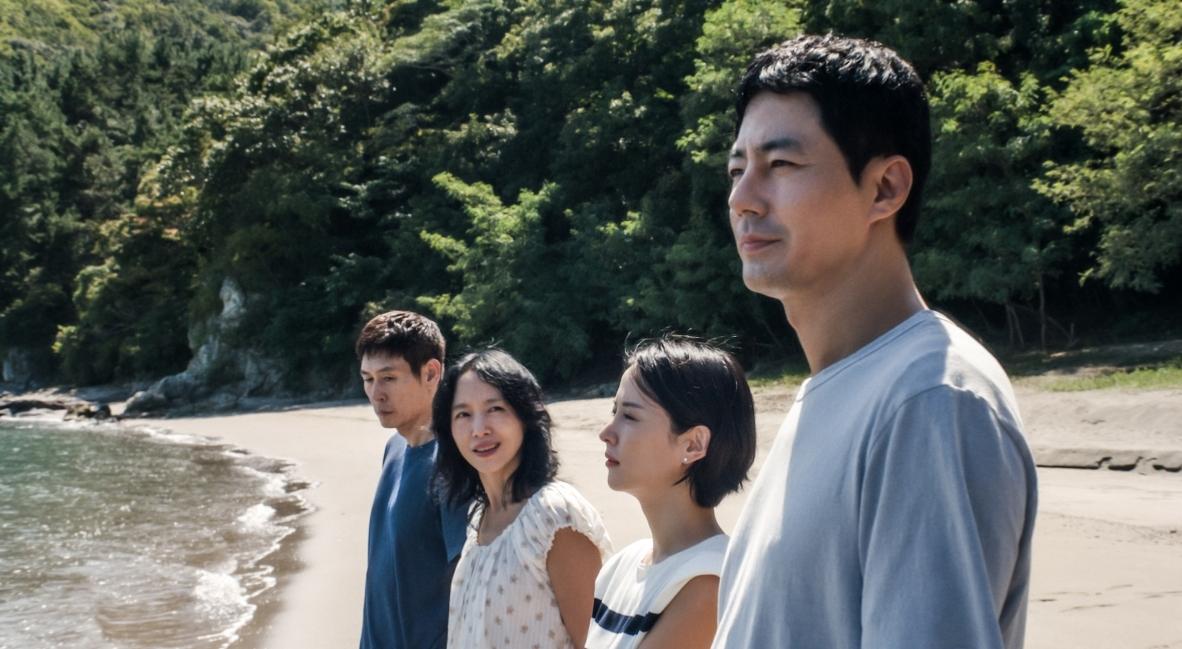
Possible Love focuses on two families from incredibly different backgrounds. Mi-ok (Jeon Do-yeon) and Ho-seok (Sul Kyung-gu) are a long-time married couple, with Ho-seok unemployed after a layoff and Mi-ok working at a surgical mask production plant. At the beginning of the film, both are traveling to the funeral of one of Ho-seok’s former colleagues, who was also part of the layoffs and could not emotionally recover from it. In a single scene, Lee Chang-dong establishes the severity of what happened before revealing the layers of the layoff.
At the funeral, Mi-ok and Ho-seok are introduced to a budding documentarian, Ye-ji (Cho Yeo-jeong), and her trust fund baby-turned-investor husband, Sang-woo (Zo In-sung). Ye-ji is hoping to shine a spotlight on laborers, specifically the company that let go of Ho-seok (more likely due to the high-profile nature of the strike that impacted it). Mi-ok jumps at the opportunity to participate, and throughout Possible Love, something close to friendship sparks between her and Ye-ji, with unspoken benefits handed to Ye-ji’s project.
The class differences between Mi-ok and Ye-ji are clear from the start through speech and styling.
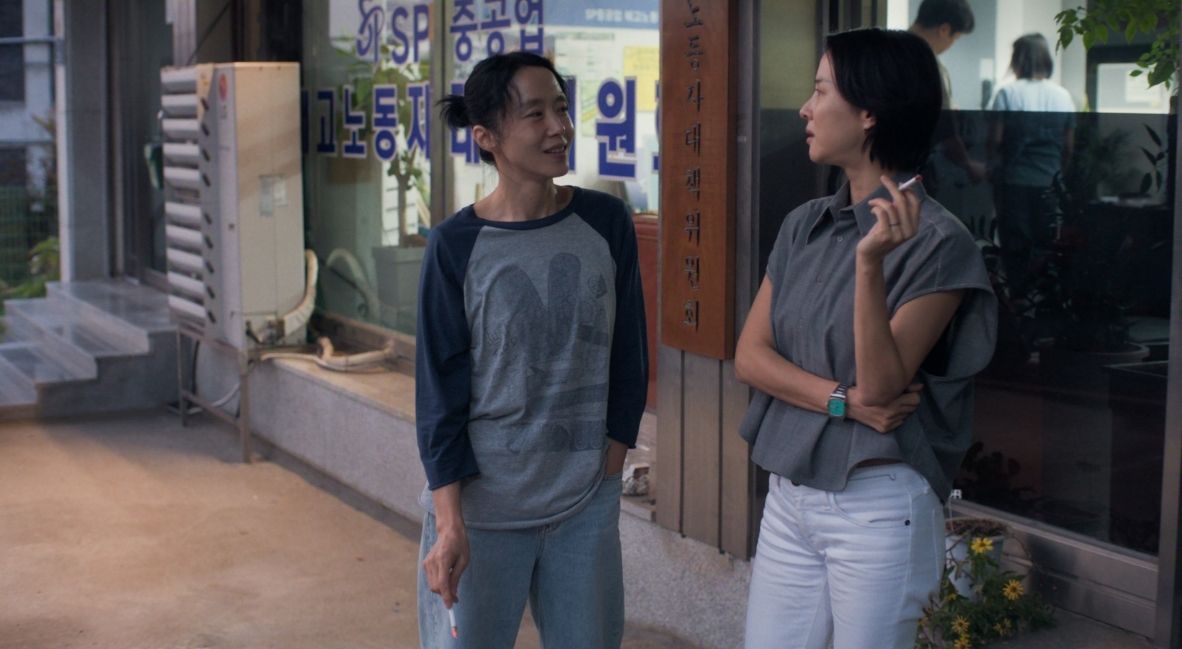
To an outsider, the differences between the two families are clear, but so is the bond forged by Mi-ok’s helpfulness toward Ye-ji, who needs this connection to make her documentary work. In the beginning of Possible Love, there’s no sense that Mi-ok is being exploited in any way. She’s giving information willingly, happy to do so if it means getting the story of what happened to her husband and his colleagues out there. And, for a time, it looks like the two women may develop a friendship that stands the test of time.
Lee Chang-dong slowly folds in little details that carve out the gap between the two, with the power shifting little by little under the guise of camaraderie. It evokes the quote that starts the film, “Thou shalt not covet,” as Mi-ok starts to want what Ye-ji has. From Ye-ji’s clothing to the slight attention of Ye-ji’s husband (who makes no secret of, through passive-aggressive and aggressive comments, that he holds Mi-ok in low regard), the desire for a life that is so far out of reach is nurtured and uplifted further by Jeon Do-yeon’s open and honest performance.
As for Ye-ji, Cho Yeo-jeong plays into the character’s good heartedness, which makes the emerging entitlement to capture her subjects in every moment, even the most private, more damning. The character is a brilliant example of those ignorant of their own privilege until her husband and even Mi-ok remind her. Cho Yeo-jeong plays this aspect of Ye-ji straightforwardly, without reservations or second-guessing.
The cast of Possible Love leave a mark throughout their distinctive characters.
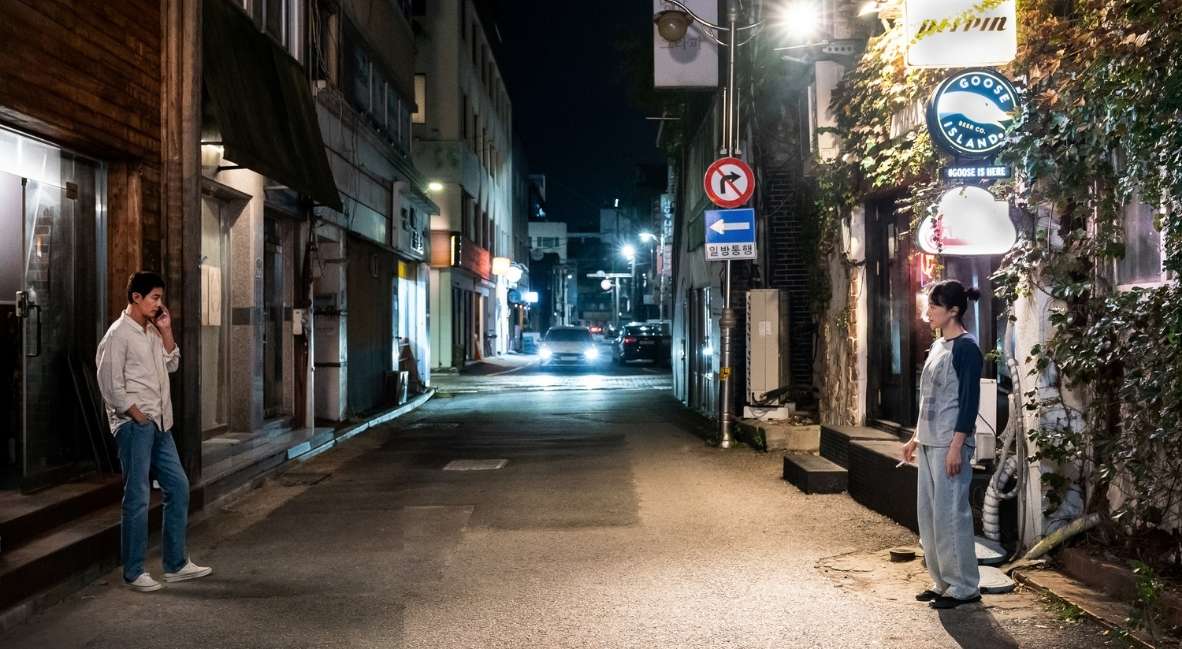
This is a character who believes wholeheartedly in what she is trying to accomplish but doesn’t understand how her filming borders on, and even ventures into, exploitation, especially when she can’t find footage that will help her craft the narrative she wants.
While the two women are more extroverted, the two men are the quieter of the bunch. For Ho-seok, the quiet masks a trauma that he can’t find the words for, with alcohol being the only mechanism through which any sort of relief can be felt. He is a broken man, and he knows it. The way Sul Kyung-gu carries himself as Ho-seok reveals more of Ho-seok’s story than any words can. By the time he is willing to open up, the emotional outpouring is sheer devastation.
Despite his shorter screen time, Zo In-sung’s Sang-woo makes a notable impression in the second half of Possible Love. He’s unapologetic about his wealth and privilege, a stark contrast to his middle-class wife, whom he reminds her of it. He’s not wholly comfortable, though, until he’s within the confines of his home. Here, the class difference grows stark, with his upbringing revealing a level of wealth that Mi-ok and Ho-seok will never attain. Zo In-sung embraces the unlikable parts of Sang-woo’s personality and brings it to life.
The anxieties and pressures Mi-ok and Ho-seok face are exactly what audiences are waking up to.
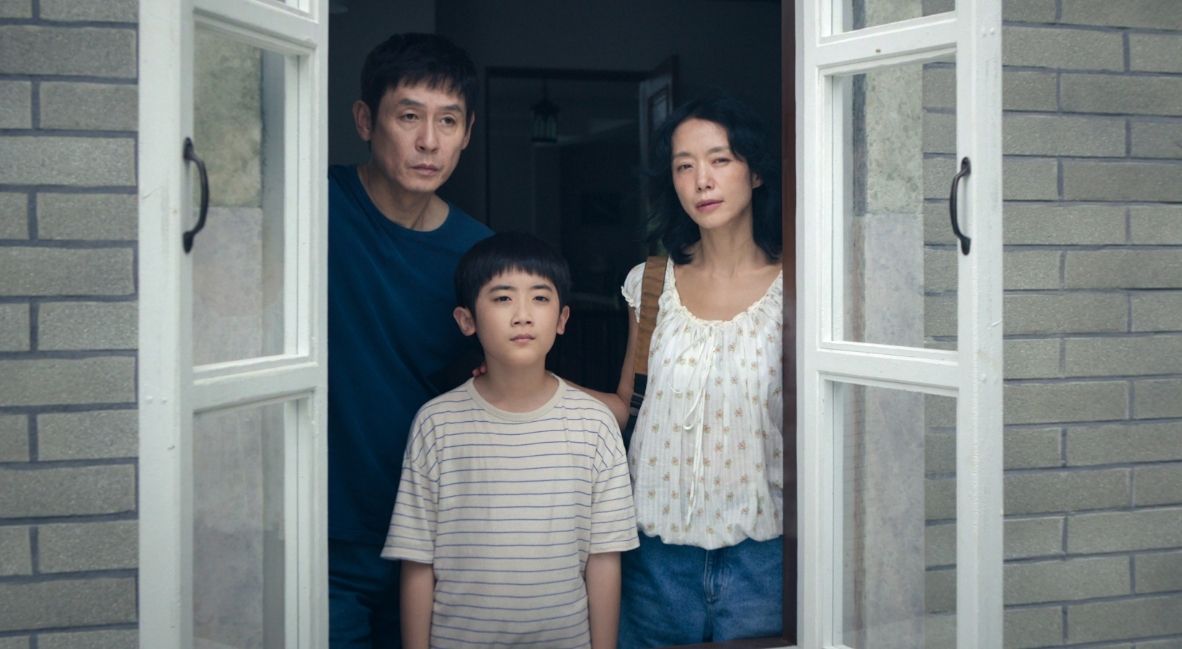
An odd addition is Mi-ok and Ho-seok’s socially awkward son, Cheol (Jung Seop), who lurks in the background, watching and taking everything around him. It’s almost easy to dismiss him, and at times, you almost forget he’s even there until the camera pans to him. However, his inclusion in the third act opens up broader lessons for Mi-ok and the audience. His interactions with Sang-woo’s house attendant (and apparently, his friend who can be summoned by a whistle) show Mi-ok how, in just a generation, opportunities are likely unachievable for her son.
And that’s the thing about Lee Chang-dong’s approach to the subjects interwoven in Possible Love. From innocuous lines of dialogue to how people are placed in the frame to how the simple act of playing with a hose can be twisted upside down, the intention behind every detail builds a multilayered thesis on disparity, the future of the working class, and then some. With each viewing, you discover more, and each aspect adds depth and weight.
Possible Love is another thought-provoking masterpiece from Lee Chang-dong. There is no doubt it proves the time between this picture and Burning (2018) was well worth the wait. A hefty character-driven film with so much to say about an incredibly relevant and increasingly depressing state of workers’ rights, Possible Love is a film that will stand the test of time and be one many will revisit time and time again.
Possible Love played as part of the 2026 Toronto International Film Festival. The film will have a limited theatrical run starting October 23, 2026, before streaming exclusively on Netflix on November 6, 2026.
Possible Love
-
Rating - 9.5/109.5/10
TL;DR
Possible Love is another thought-provoking masterpiece from Lee Chang-dong. There is no doubt it proves the time between this picture and Burning (2018) was well worth the wait.