Writer and director Cristian Mungiu has a lot to say in the quietly hostile Fjord. Fjord, packed with judgment and ire for its two-plus-hour runtime, simmers. And simmers. And simmers some more in its contempt for polite, progressive society and overwhelming belief that we’ve become a culture of reactionaries who exist in a world of hypocrisy.
As the story unfolds, we get caught up in that belief as we watch a family unravel while neighbors and community members seem intent on misunderstanding and manipulating them. It’s hard not to feel for the family at the center, even as the contempt grows sour as Fjord progresses.
The mountainous ranges that surround the Norwegian town that Lisbet (Renate Reinsve) and Mihai Gheorghiu (Sebastian Stan) move to with their five children embody the glacial, isolated tone of the story where compassion is a mere performance, rather than felt. Having moved from Romania following the death of Mihai’s parents, they’re seeking a new life.
To an extent, at least. Because while they look into their new school, jobs, and friends, they’re still deeply rooted in their evangelical Christian lifestyle. A lifestyle that forbids phones and dance, that denounces anyone who doesn’t fall into a “traditional family” (a relationship between a man and a woman), and promotes daily Bible study.
Fjord is largely well-made and boasts a compelling narrative hook, with Sebastian Stan and Renate Reinsve at the center.
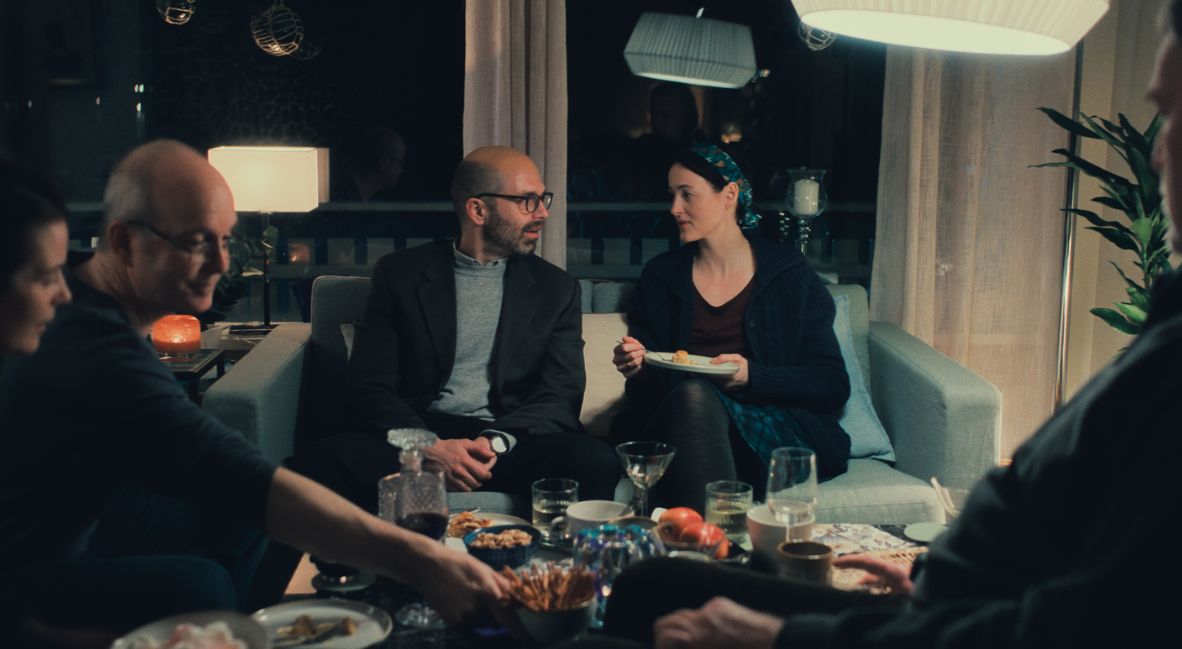
It is a kindling of otherness that ignites the moment the community sees fit to intervene. They can’t, technically, call child protection services because of different values. But when they notice bruises on the eldest daughters back and she admits that her parents have, in the past, been physical as a means of punishment (in their words, little slaps on the rear) the community runs with it.
Yes, they’re concerned over the children’s safety. But they’re also concerned about what the Gheorghiu’s influence could mean for a town and country known for being one of the happiest in the world. A fear of God’s might and refusing dance doesn’t exactly inspire a sense that all is well.
As a whole, Fjord is well made, operating within its crisp corners with a reverence for the nature surrounding the family and equal measures of mesmerized fear. When avalanches pour down the mountains that backdrop the school, one can’t help but imagine that, in some perverse fashion, this is meant to suggest the weight of God’s fist, or the destabilization of a family built on what they believe to be the “right” conventions.
The film over-explains its ideas to drive its multiple points home.
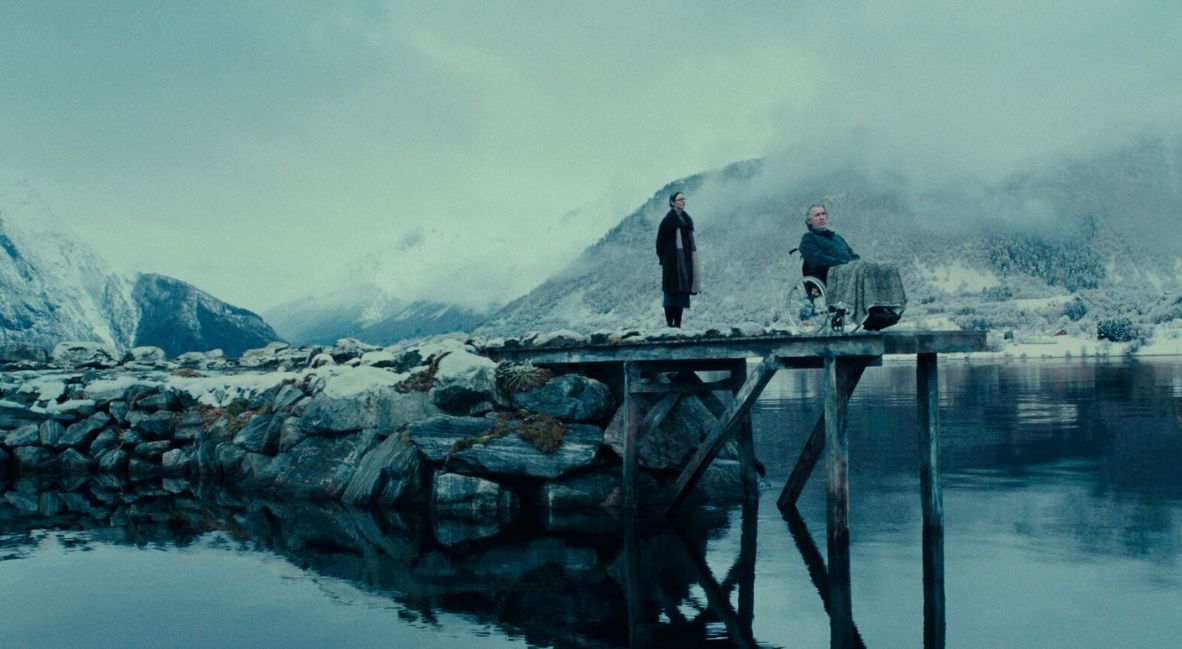
Cinematographer Tudor Vladimir Panduru captures the vast, isolating landscapes that host such ongoing tumult. Steady and serene on the outside, and more destructive as things crumble.
Mungiu also manages to elicit a low-thrumming sense of anticipation. Because of the stakes on the line and the mounting pressure as the community faces increased backlash from global evangelicals, every minor threat, every imposing framing where characters teeter on the edge (literal and otherwise), makes us hold our breath more.
We’re in a constant state of dread and waiting for the worst to happen. Be it an image of a baby carriage sitting on the edge of a cliff, kids driving boats at night, or leaping out of their bedroom windows to experience blips of youthful freedom, we wait for the catch. What too can befall this family? What should?
Those are the two questions that Fjord grapples with. That central discussion gives the film its greatest edge while also stifling its greatest potential. Because, ultimately, it feels too antagonistic to just be observational. And it’s the latter where the film might’ve succeeded, had it actually let the audience do the heavy lifting in trying to figure out whose side to take or, more importantly, if it’s really about sides at all.
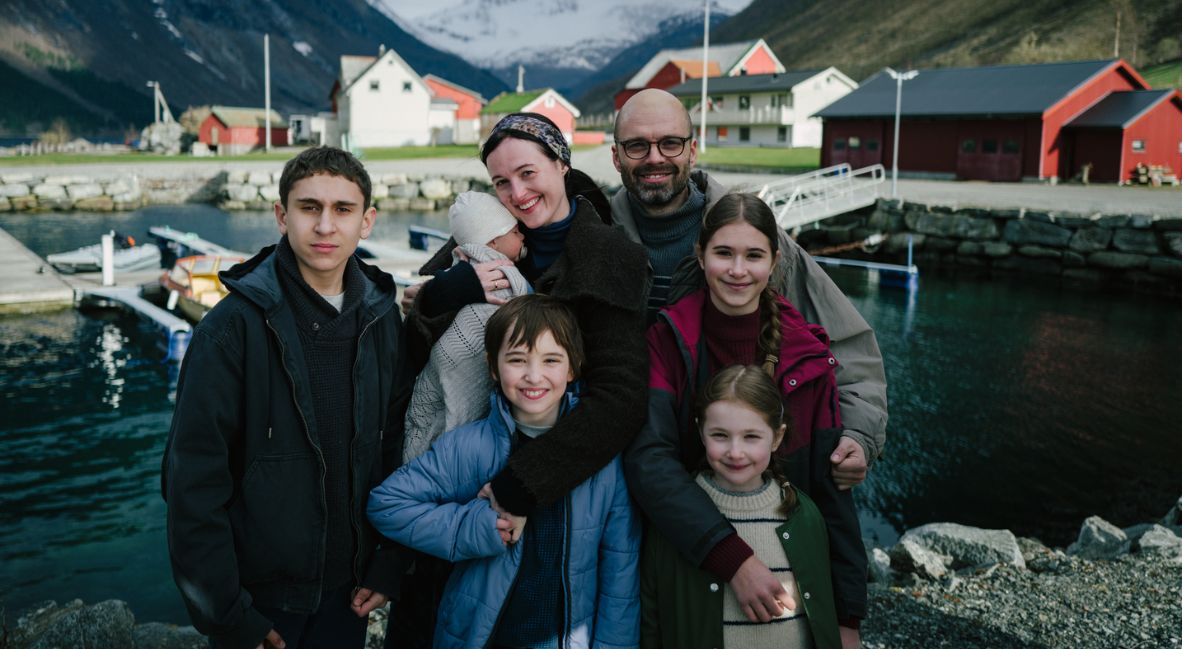
Fjord is a film destined to drum up the dreaded discourse. If you like the film, you endorse Gheorghiu’s beliefs and lifestyle. If you take umbrage with it, you’re misinterpreting the intent. That just because the Gheorghiu’s are the subject doesn’t mean the film believes progressive mindsets cause just as much, if not more, damage as conservative beliefs. The reality, in the best moments, is that it falls somewhere in between.
No, we might not want to grab a drink with Lisbet and Mihai, but it also seems outrageous that their children – including their breastfeeding infant – could be taken away from them so abruptly and without due course. Yes, it’s abhorrent that their taught religious beliefs inform the youngest daughter so much that she denounces a fellow student’s sexuality in front of her class.
But it’s also astonishingly aggravating to watch as the legal system goes out of its way to deny the family basic rights, misinterpreting their words, preying on Mihai’s language barrier and cultural identity, and using it as a means to progress their own vendetta.
From Sebastian Stan to the cinematography, the film has plenty of worthwhile elements despite lingering agitation.
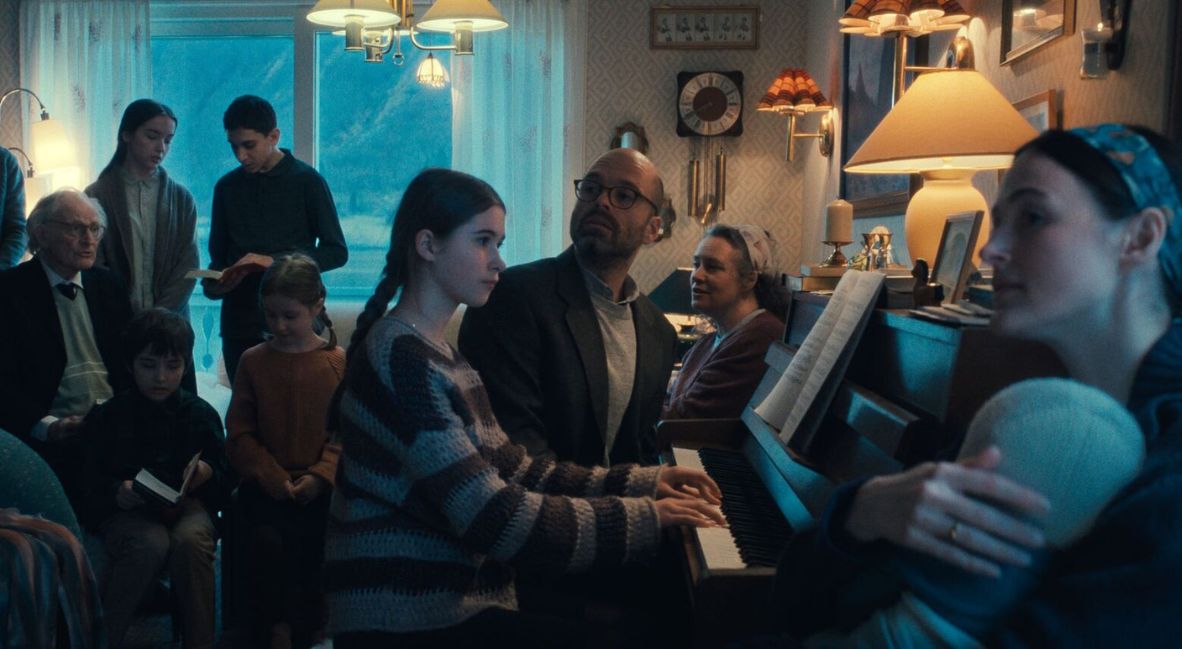
They’re both in the wrong and for different reasons. Gheorghiu’s beliefs are backward and harmful, conservative to the point of rallying a larger, anti-progressive movement that brings their hateful rhetoric to the school. But they were charged with supposed physical abuse that they fail to have substantial evidence for.
The problem with the film isn’t that it tries to balance both sides of the issue. More than anything, Mungiu’s contempt for one side comes through more clearly than the other, and even as the parents face more pointed scrutiny in the late stages, it feels too little, too late.
Fjord has all of the components of a compelling film, but it seems too aware of it. A film written with an air of the apolitical to the point of being smug. It’s not bad but falters under too fine an examination.
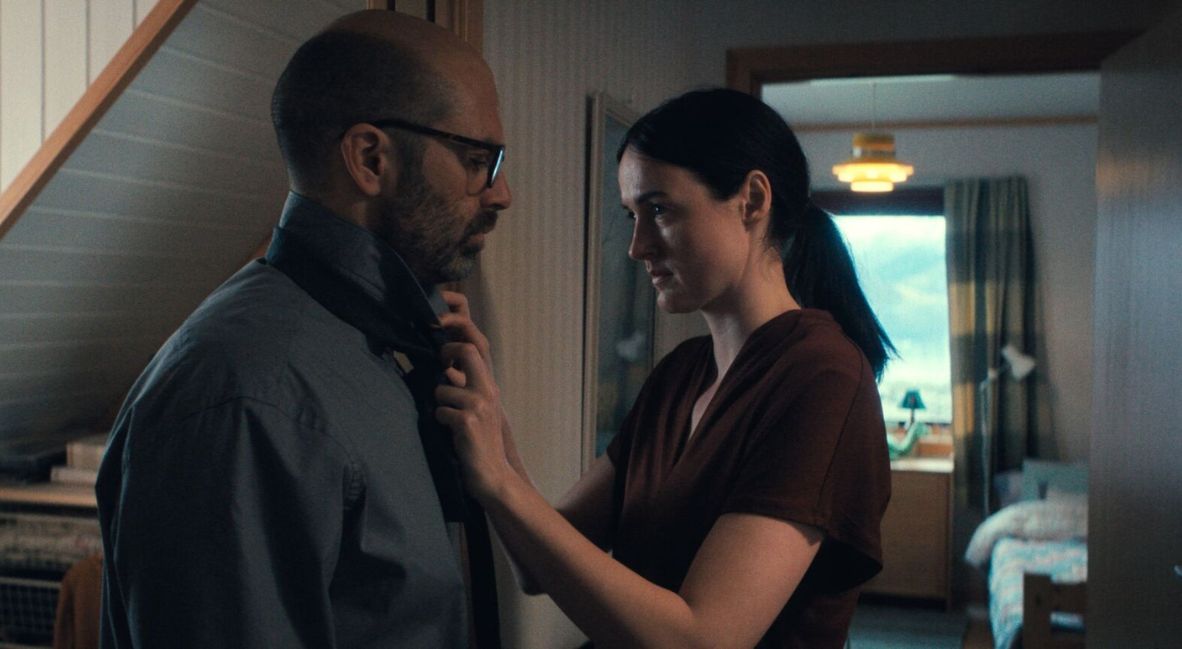
Stan delivers a fantastic performance, though the character himself loses ground as he lets a group of radicals dictate his moves, something that rings false to what we know of him at the start with his reserved stoicism. And Reinsve plays with familiar notes of her other, previous characters: a little willowy, a little doe-eyed, vulnerable. Lisa Carlehed as Mia, their neighbor, has one of the most interesting character trajectories, as she tries to defend her friends and later takes a hard look at herself to see what group she placed her face next to.
Fjord is a tricky, frustrating, yet engaging drama about the insidious ways in which we’re quick to label. The politics of the film will, no doubt, be divisive, something that can’t help but feel overly orchestrated. If the film’s mission was to spark debate, congrats. That said, a film isn’t good just based on the discussion alone, and, for all its big ideas and grouching and undeterred thematic tension, it feels oddly dispassionate for a film so ready to be about something.
Fjord played at the 2026 Toronto International Film Festival and premieres October 9, 2026.
Fjord
-
Rating - 7/107/10
TL;DR
Fjord is a tricky, frustrating, yet engaging drama about the insidious ways in which we’re quick to label. The politics of the film will, no doubt, be divisive, something that can’t help but feel overly orchestrated.