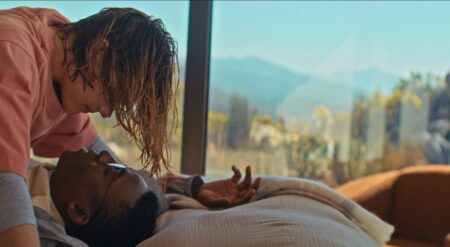


Hanna Bergholm’s Nightborn is one of those films that dives into the expectations of motherhood and how easily they are broken down when things don’t go the way as intended. Even as the slowly dawning realization that something might be wrong with the child grows, Saga (Seidi Haarla) is at the mercy of everyone’s commentary on childrearing, left to wonder whether it’s not the baby that’s different, but her instead. It’s a relatable anxiety, and one that Bergholm drew from her life to develop the basis of the film.
“When I got my first child,” Bergholm started. “I was surprised about these feelings that I thought I shouldn’t have, like when the baby was crying a lot. I felt so much rage toward the child, and I was confused that things didn’t go as smoothly and nicely as I had imagined.” These feelings alone, coupled with society’s expectations surrounding motherhood and the pressure to be a good mother, made a natural launching point for where to center Nightborn.
The inclusion of the vaihdokas (changeling) mythology offered a base to ground Nightborn in a folkloric horror realm, with trolls as the fae creature central to the film’s mythos. However, if anyone is expecting a scary troll to emerge from the forest, think again. The trolls’ design in the film is far more rooted in nature and subverts what audiences might expect when picturing a troll.
Nature plays a heavy role in Nightborn, influencing the story, setting, and visuals.
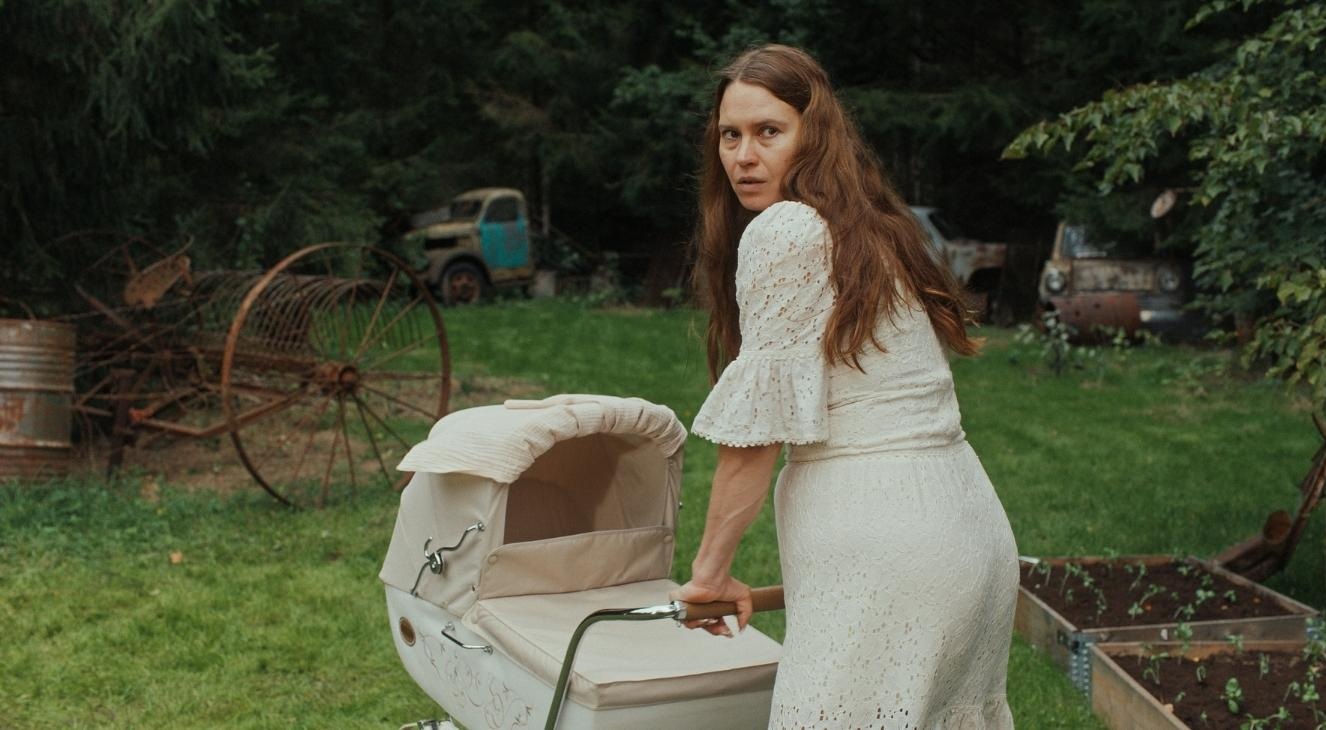
“In old mythologies, trolls lived in the forest. They were the guardians of the forest, you might say,” Bergholm explained. “When you go to the forest and when you start looking at the trees, you might start imagining faces there, [similar to how] you might start imagining things in the clouds. That was the starting point in imagining these kinds of troll creatures.”
This idea of nature and our connection to it quickly became an emerging theme in Nightborn, and how while we might believe that we are separate from the natural environment, humanity is intertwined with the natural world whether we care to admit it. “That was something I wanted to deal with in this film, both that we are part of nature and also that we tend to imagine things everywhere,” Bergholm explained. “[And that] we tend to very easily imagine what other people are like, and instead of actually facing that person as it is.”
The latter plays out in Nightborn as Saga navigates her feelings towards her newborn as well as the changing relationship between her and her husband, Jon (Rupert Grint). While Saga believes something is wrong, Jon believes everything is okay, taking in the advice and guidance of those around them. This push-pull dynamic is the foundation of much conflict between them, and with the child and its behavior central to their discourse, it opened up more ways for Hanna Bergholm to explore the grander concept of nature.
How the house is designed reflects not only Saga’s dreams but the rot at the core of her marriage.
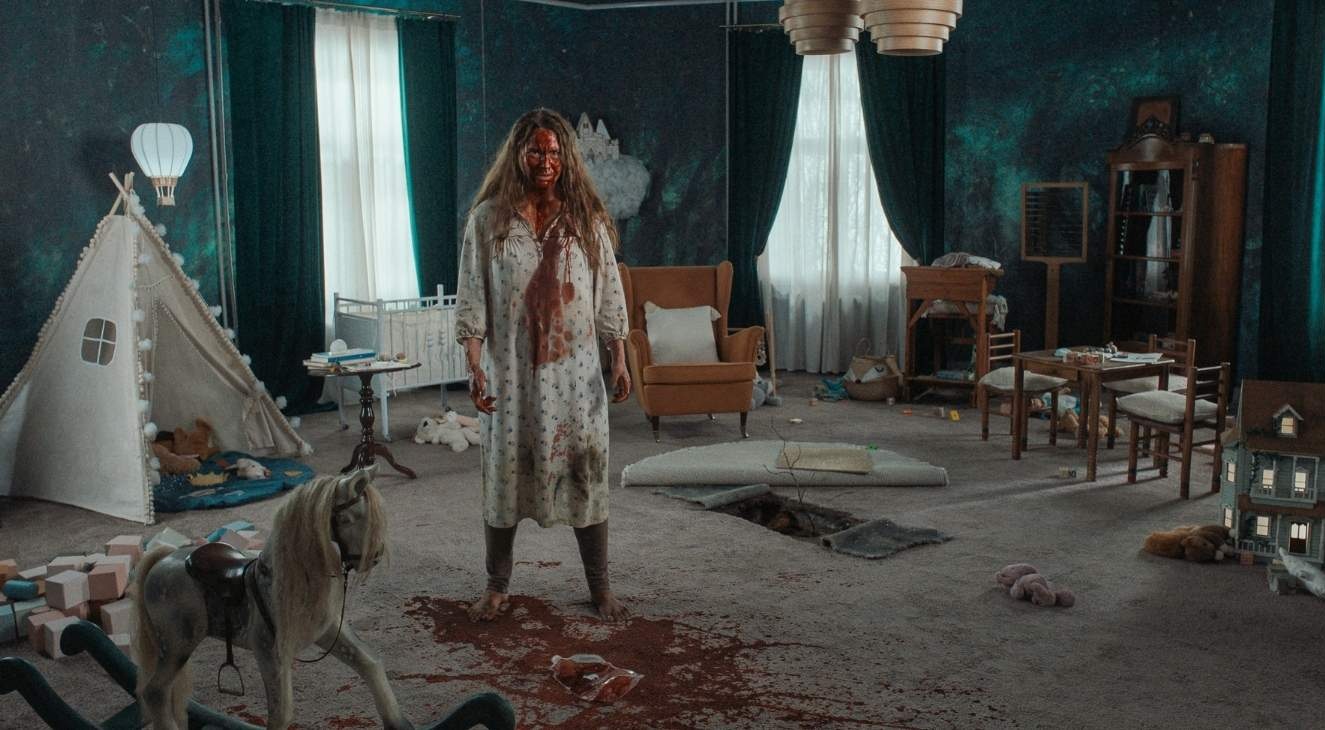
Nature also served as a visual source of inspiration for Bergholm in the design of the house within Nightborn. Reminiscent of the traditional witch’s home in a fairytale, the look and feel were completely customized to fit Bergholm’s vision: “The exterior was a facade that we built, and the interior was a studio because I wanted this house to have character of its own.” While the colors of the forest can be seen throughout the interior design of the home, the nursery took on a life of its own as the personification of Saga’s hopes and dreams.
“With this set design I wanted to protect her expectations and her need of building up certain dreams,” Bergholm explained, before pointing out something crucial in how the design reflects the darker desperation behind Saga’s goals. “The nursery is more scary than the child in a way because it’s very beautiful, but with all those porcelain dolls or whatever, how can a small baby then play there? It’s a little bit too much.” And this is one of many ways in which the appearance of the house is used to convey expectations vs reality in what’s going on in Saga’s life.
With the early birth of Saga and Jon’s child, the renovation of the decaying house doesn’t quite mesh up visually, creating a fascinating visual metaphor for the state of their relationship. “There’s something desperate about their way of trying to quickly renovate and build their life together,” She commented. “It doesn’t all go with the style of the house. They have cut a huge window in their living room, but we still never see outside.”
The metaphor at the heart of Nightborn is that nature always finds a way to push back in.
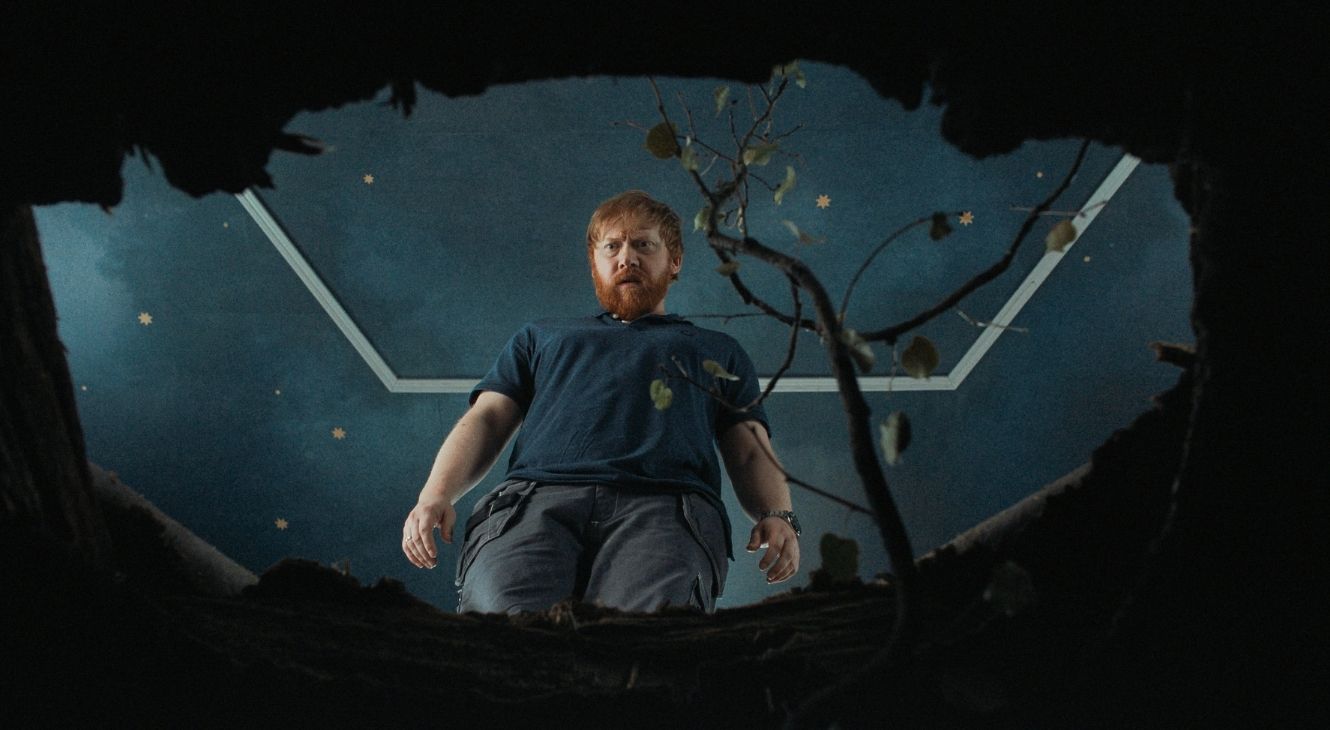
Nature cannot be denied, however, and in this case, glossing over the crumbling bits of the home served as a great way to look at their relationship: “The idea came that John has put this kind of wall-to-wall carpet everywhere on these rotten planks, and so underneath that, the nature starts to push through.”
If there is a takeaway from Nightborn, it might be a grander look at our need to control nature, especially when it pushes against our expectations. “You can look at it as a metaphor of our primal emotions that are pushing through, or a picture of how we try to control nature and keep it outside, and then it starts to push in,” Bergholm shared.
With the baby a prime character in Nightborn, the most delightfully surprising discovery is that Bergholm and the team relied on real babies and animatronics to bring the little tyke to life. Reuniting with Gustav Hoegen and his team, they crafted animatronic babies purely for practical reasons. “Real babies can’t do everything,” She stated. “[And] I wanted this particular child to have a very special way of moving.” Using a team of five puppeteers to move the animatronics around on set, Bergholm was able to create the movements she wanted.
With its dissection of early motherhood, unmet expectations, and a closer examination of what happens when we suppress our gut instincts, Nightborn taps into an all-too-real horror that is timeless for mothers everywhere: what if something is wrong with my child? And when the film comes out on Shudder, this universal fright will hopefully inch its way into viewers’ minds and spark conversations about parenting and what exactly is natural when it comes to the unpredictable nature of children.