

For some, motherhood is the dream, and when that dream is finally fulfilled, everything seems to slide into place. Until it doesn’t. This is the jump-off point in director Hanna Bergholm’s Nightborn, when the child at the heart of the story is born seemingly wrong, and suspicions mount. Building on the familiar vaihdokas mythology and the pressure-cooker environment society creates for new mothers, this sophomoric effort makes for a fitting companion piece to Hatching, but takes a more familiar, arguably safe storytelling route until its end.
In Nightborn, Saga (Seidi Haarla) has always dreamed of being a mother, and when she inherits her grandmother’s old house located in the middle of an isolated forest, it’s the perfect opportunity to build the fairytale family she wants. Accompanied by her British husband, Jon (Rupert Grint), they relocate to Finland. Not long after, Saga gives birth to her first child, who is born covered in hair and has a thirst for something more than mother’s milk.
Initially, the odd behavior from her son and Saga’s growing paranoia seem like typical new mother woes. Her baby has a voracious appetite, is sensitive to light, and, in general, just seems abnormal to Saga. It can easily be dismissed as post-partum depression. For the most part, the people around Saga don’t see what she sees. Instead, they offer reassurance that, over time, blurs into dismissal, creating a natural sort of tension. Her reality doesn’t match that of those around her, and yet all evidence points to something being wrong with her son.
Nightborn evokes a folksy fairytale aesthetic, from its color palette to the natural environment and its troll lore.
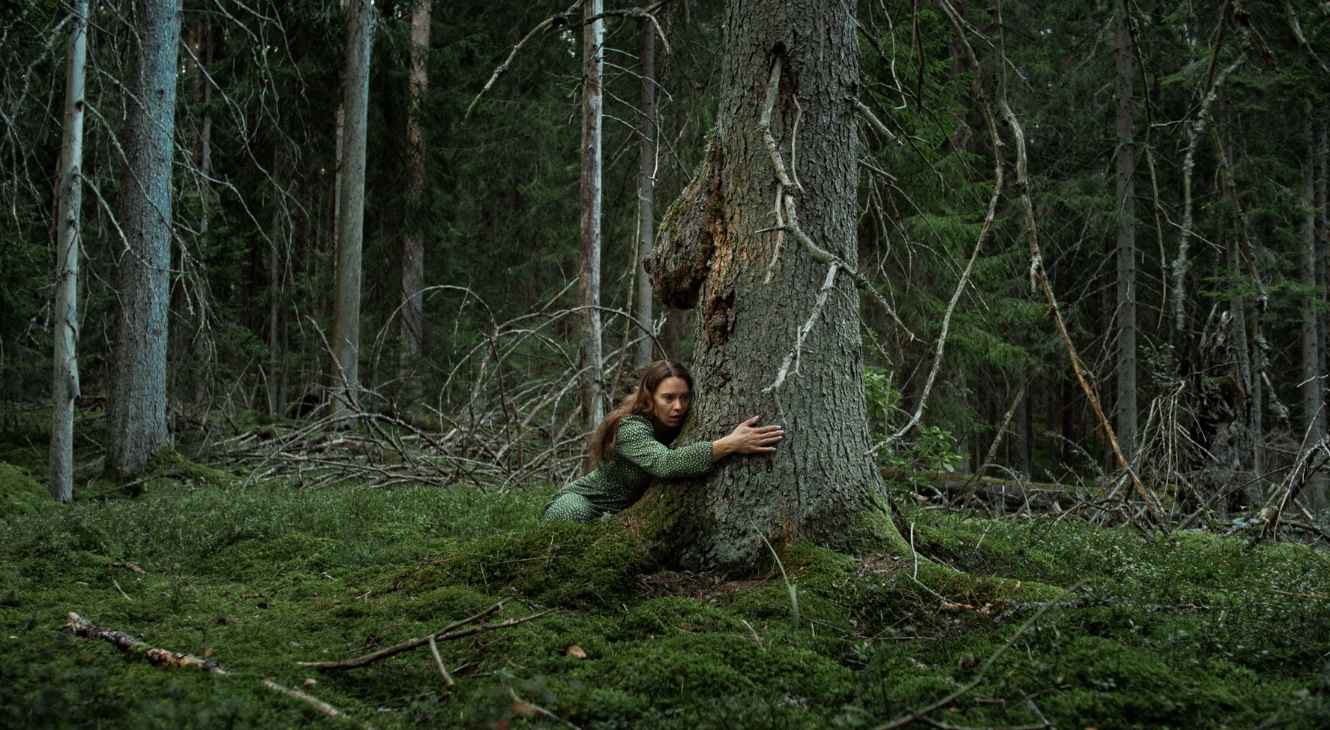
As a mother slipping into a decline, Seidi Haarla portrays Saga with a frank honesty and earnestness that sets her apart from the characters around her. Craving stability and the family feeling she never really had, her motivations are clear. Even when she doesn’t pick up on Jon’s hesitation and discomfort in occupying a home on the brink of falling apart—a none-too-subtle visual metaphor for their relationship—you hope that perhaps she can get what she wants. But Nightborn is more like a fairytale, and things don’t typically go well in those.
As her child shows more signs of abnormality, Haarla matches the energy, becoming more primal in the process. Her face twists and contorts, with her dialogue progressively coming out in shrieks and grunts as Saga’s instinct kicks in. The whisperings of troll blood and what lies beyond the forest are peppered throughout, potentially providing a link to what might be ailing not just her son but Saga as well. Just enough is written in, though, to potentially shake confidence that this might not be supernatural at all. At least, until the end of Nightborn.
For the most part, Nightborn is pretty straightforward in its plot, developing into a modern-era vaihdokas tale and a mother gradually sliding into insanity. Even so, there’s a grounded quality to how things progress that pushes Saga further into isolation, with everyone around her, including her husband, invalidating her suspicions at every turn. Yet, the emerging story about fighting against one’s nature is arguably the more intriguing, with the slow encroaching tree roots from the forest itching their way back the further Saga declines.
Rupert Grint’s Jon is a rightfully frustrating counterpart to Seidi Haarla’s high-energy Saga.
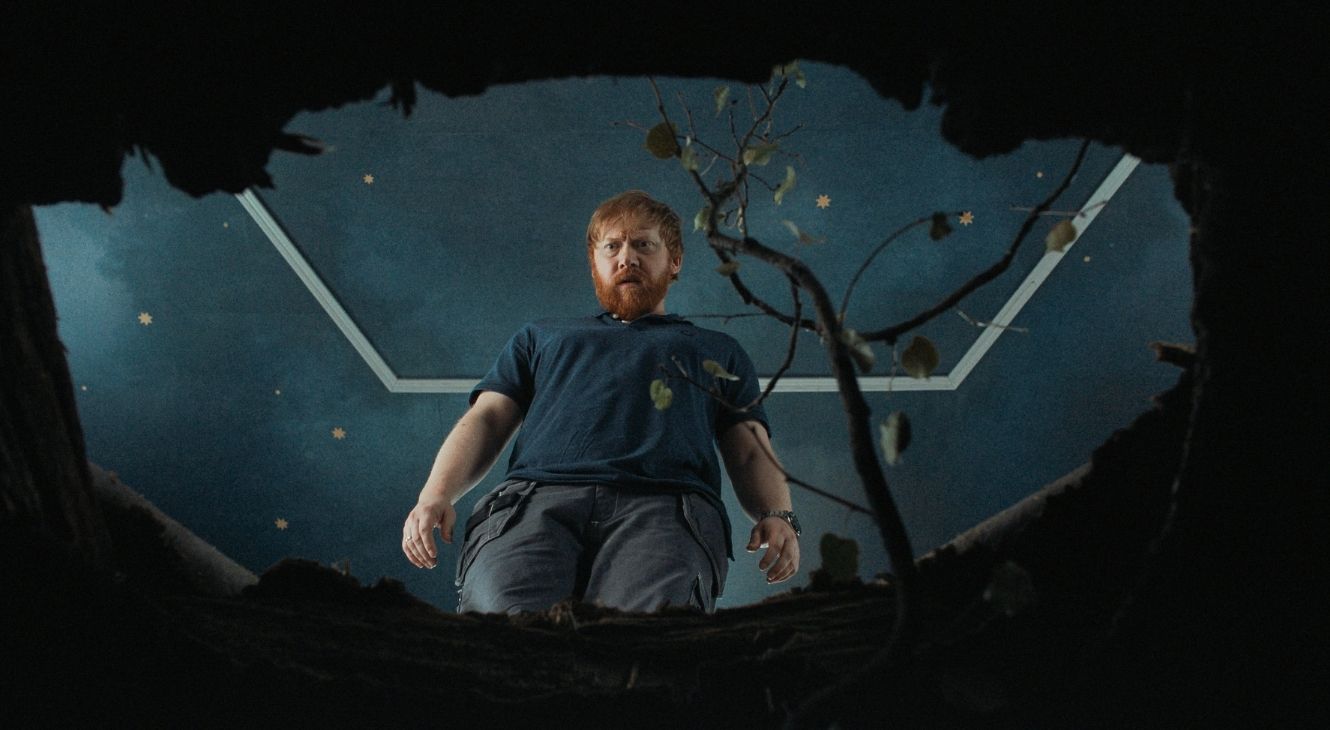
Speaking of Saga’s husband, Rupert Grint’s Jon might draw as much opinion as Saga. While at times it doesn’t seem there is as much for Grint to do onscreen, his gradual absence from the storyline reflects the evolving nature of the relationship in Nightborn. As the outsider and civilizing presence, he tries to do everything right, and yet, nothing he does is. Even still, a more expanded presence from paper to screen might have helped connect the character even more and made some of his pivots less jarring in the process.
Given how much time is spent in the house, the production design by Kari Kankaanpää and the set decoration come together to craft the illusion of the perfect fairytale home that Saga has always dreamed of. Yet, beneath the surface, we know a deep rot has set in, with the home itself steadily cracking under the pressure of expectations placed on it. These cool hues don’t quite extend to the outdoors, with the earthy greens feeling all-encompassing once Saga and Jon step outside into the natural world, a clear separation based on color.
With a shaky ending execution punctuated by CGI, Nightborn ends up taking a slightly clumsy final turn that might be a head-scratcher for some. Even if things don’t quite pan out the way they’re supposed to, which is very much like motherhood, Nightborn rides high on the absolutely magnetic and emotionally driven performance given by Seidi Haarla. Coupled with its gorgeous cinematography and subtle lean into the otherworldly, it’s got enough going on to hook you in, but you may not want to think about having kids after.
Nightborn had its North American premiere at the 2026 Fantasia International Film Festival. It is now streaming exclusively on Shudder.
Read about how Nightborn was made.
Nightborn
-
Rating - 7/107/10
TL;DR
Even if things don’t quite pan out the way as planned, which is very much like motherhood, Nightborn rides high on the absolutely magnetic and emotionally driven performance given by Seidi Haarla.