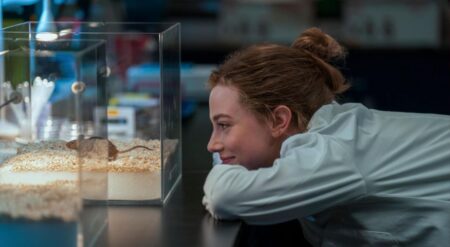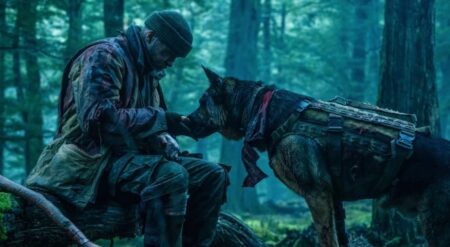


Silent Friend, from director Ildikó Enyedi, begs you to write around the plot because the plot isn’t really the point, which, all in all, is an annoying way to introduce a film by handwaving the narrative drive of a story. But, more than any recent film, Silent Friend, starring Tony Leung Chiu-wai, Léa Seydoux, Luna Wedler, Sylvester Groth, Enzo Brumm, and Martin Wuttke, immerses itself in ideas and tone poems, letting a loose narrative structure act as the pillars of the story while letting emotions and philosophical meditations push everything forward. It’s meant to make you think, and by the time the film comes to its gentle, thoughtful ending, it succeeds in haunting the crevices of your mind.
In nonlinear fragments that resist the more obvious thematic transitional pulls, Silent Friend breaks off into three epochs, following three individuals at specific points in time. The first features Dr. Tony Wong (Tony Leung), who has just traveled from Hong Kong to Marburg, Germany, to teach a class at Marburg University while completing his own studies on the development of newborns’ brain activity. However, just after his first class, COVID struck, and the lockdown was put into effect immediately.
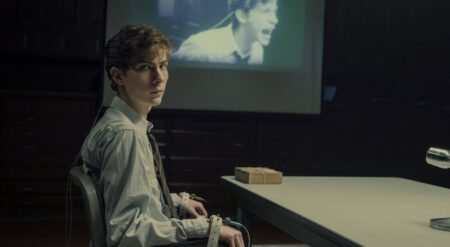
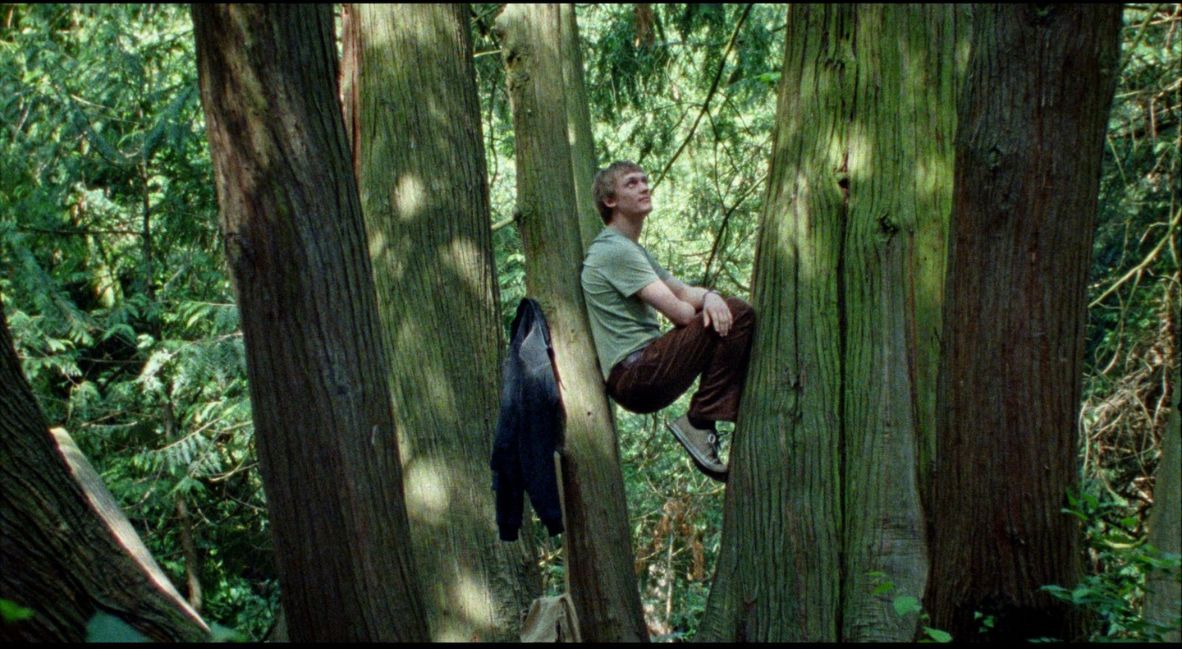
Elsewhere in time, we follow a student in the early 1970s, Hannes (Enzo Brumm), who is intent on impressing his crush—a crush who, conversely, cares very little what he gets up to. Earlier still, at the turn of the century, we watch the first female student, Grete (Luna Wedler), being admitted to the university, despite facing ridicule over her gender from those who admitted her.
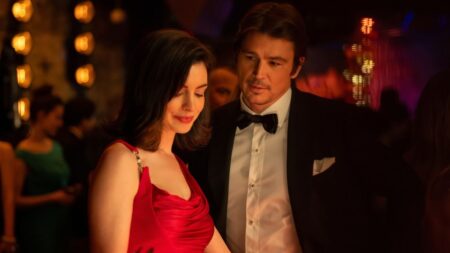
Three characters in different eras come together in Silent Friend.
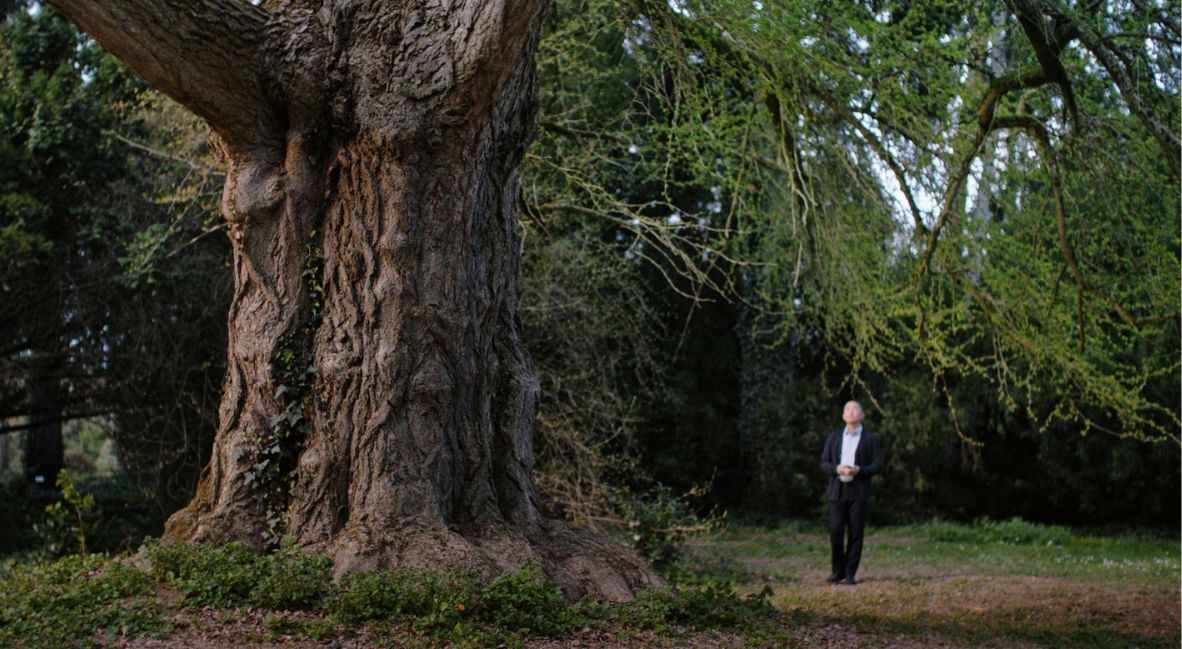
At the center of all three narratives is a ginkgo tree, one that grows into a towering presence in the 2020 portion of the story and, most explicitly, becomes a featured player in Silent Friend. Because while he’s locked out of his own study, forced into isolation in a foreign country, Tony finds solace in the tree, even going so far as to believe and seek to prove that he can match his neurological activity with the tree. Through calls with botanist Dr. Alice Sauvage (Léa Seydoux), his discoveries continue to evolve, further ostracizing him from fellow scientists and co-workers who remain on campus.
In the past, nature worked in different strains, less deliberately centralized to the main story. For Hannes, it takes the form of having to watch a houseplant for his crush. Though there’s certainly a dual meaning as he becomes less ambivalent about its care and increasingly lonely. Feeling left behind and accused of a lack of emotional and sexual depth, he seeks greater comfort in watching something bloom that he can care for.
Meanwhile, Grete’s connection to nature is more ephemeral, linked even to the nature of her gender and how expressing it is conflated with promiscuity. To escape the confines of the rigid, male-dominated university, she communes with other women in the woods, dancing and letting go of academia for the sake of pure release. Silent Friend plays with the idea of object and researcher in this sequence, demonstrating the power dynamics of that era and the agency she feels when, in possession of a camera, she’s able to flip the script, taking photos of her research, capturing it with her gaze rather than being the object looked at.
Cinematographer Gergely Pálos differentiates eras with striking distinctions.
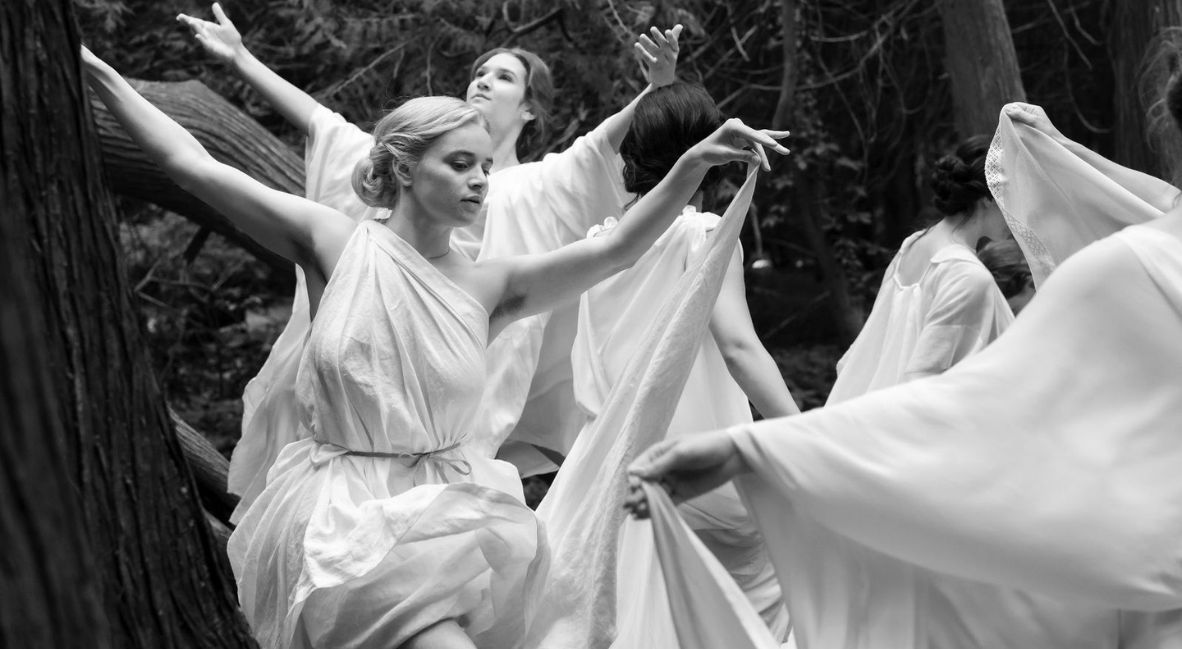
One of the most striking elements of Silent Friend is how the three stories distinguish themselves through the effort of cinematographer Gergely Pálos. The 1908 sequences are shot in black and white and on 35 mm film, playing with lush shadows and stark lighting contrasts.
Meanwhile, the 1972 portion, shot on 16 mm film, grants the story a hazier, fuzzier aesthetic that replicates the era’s filmmaking style. In the present day, the shift to digital delivers crisp frames that position Leung as often a long figure in the midst of empty collegiate spaces, prone next to the gingko tree, or suspended in the calls with Alice.
And what makes it so hypnotic is that it never feels as if it’s a gimmick. Instead, each shift in style and perspective enhances the stories the film tells, anchoring otherwise lightly constructed narratives in weighted thematic cores. We are constantly changing, evident in the film’s style and in the way the characters change and grow throughout the story. We are not in a state of stasis, unaffected by change or alteration. Instead, we are forever in constant motion, as prone to shifting and developing as we are to cyclical mistakes.
Ildikó Enyedi asks, how do we seek connection in times of isolation?
And that is, really, just one part of Silent Friend. On the other hand, it’s easy to assume the point is to create an obfuscated narrative where we’re meant to project our current emotions onto the story. A story that, in its more stripped-down essence, is meant to contemplate the way in which humanity deals with and processes loneliness, isolation, and compassion. When we are alone, who do we look to? What, exactly, do we assign greater power to and why?
We are both creatures of habit and capable of great metamorphosis. As Leung’s Tony Wong seeks to understand the potential connection to the gingko tree, how different is that from those of us who talk to our house plants? I’ve taken to celebrating the tulips that bloom in pairs, rather than in bustles, happy to see them triumph against the New England grays. Is that not just assigning greater life and meaning to nature that is ambivalent to our own pursuits?
Silent Friend, in its meditative contemplation and patient storytelling, which still infuses life and humor into the narrative, understands that core, peculiar function of the human experience. And Leung, one of our greatest living actors, weaponizes his expressive face to highlight that dichotomy. Delivering a soulful, internal performance that still allows his character’s quirks to show on his face through subtle gestures, he keeps the film grounded.
Silent Friend is a stunning rumination on the complexities of the human condition.

With careful direction that maintains the significance of nature in our lives without assigning a meaning beyond what the characters seek, Silent Friend is a gorgeous, somewhat inexplicable character study. While not each section is as effective as the other (the 1970s portion in particular falters), writer and director Ildikó Enyedi, on the whole, delivers an exceptionally transfixing story about the complexities of the human condition.
We will always be looking for higher meaning, for purpose. Enyedi positions our most long-lasting purveyor, the omnipresent, all-encompassing force of nature, as the lynchpin to our growth. And the effect, however messily constructed, sticks with us.
Silent Friend arrives in theaters May 15.
Silent Friend
-
Rating - 8/108/10
TL;DR
With careful direction that maintains the significance of nature in our lives without assigning a meaning beyond what the characters seek, Silent Friend is a gorgeous, somewhat inexplicable character study.