
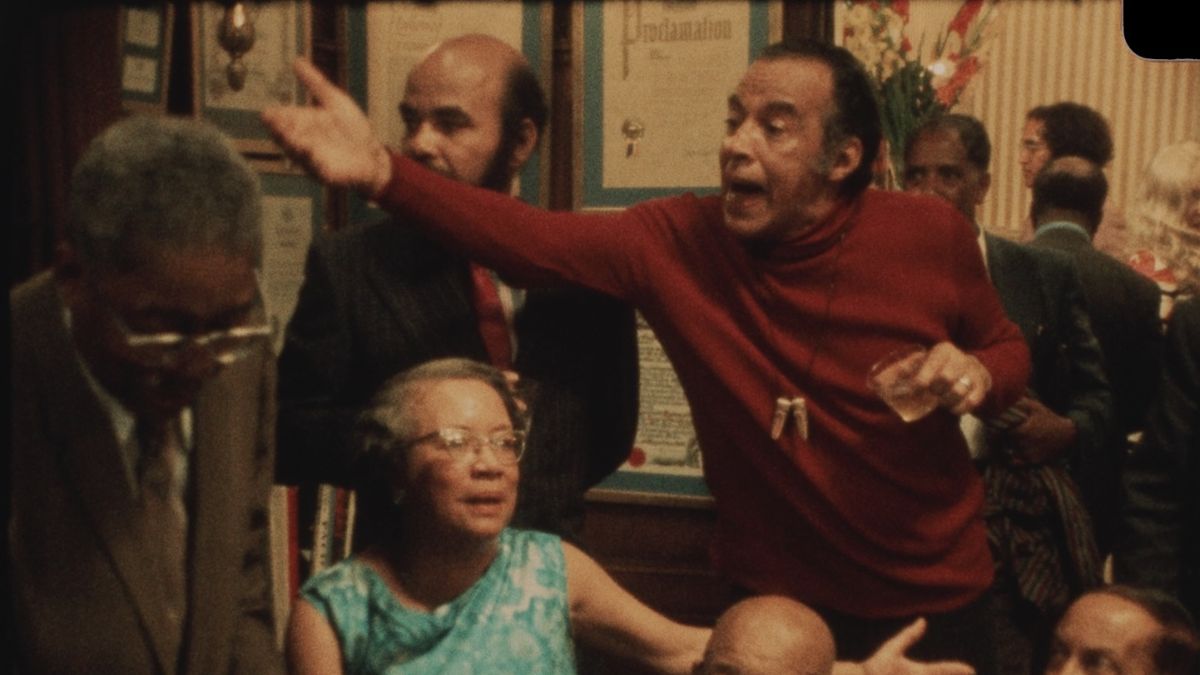
Once upon a time, on a sunny day in Harlem, 1972, filmmaker William Greaves gathered a large number of artists, historians, librarians, and anyone else he could find who was involved in the Harlem Renaissance. That party is the basis of Greaves’ masterful work, assembled by his son David Greaves, into Once Upon a Time in Harlem, a documentary akin to being an eavesdropper at a party you can’t believe you’re attending.
The party was held at jazz legend Duke Ellington’s townhouse. It began as a reunion of figures from an era half a century earlier. They were once bright young minds spearheading a new era of culture, and now older and reflecting on their impact on the world, evolving into a dialogue analyzing that collective impact.
Greaves’ observational capture of the party is interspersed with interviews of attendees reflecting on their youth in the Harlem Renaissance, a movement to celebrate Black heritage, community, and artistic contribution, and so named for the New York City neighborhood where its luminaries lived.
Once Upon a Time in Harlem invites us to a party where the partygoers are long gone.
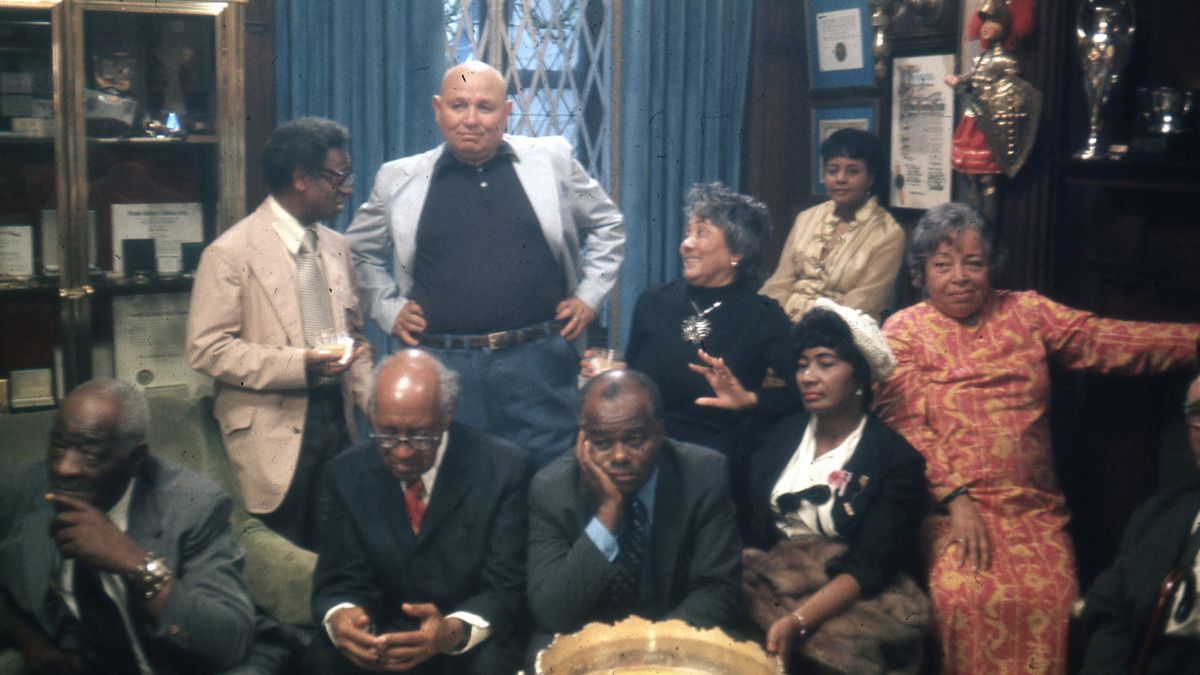
The guests included as many remaining figures from the movement as Greaves could find. They range from the writer and artist Richard Bruce to journalist Gerri Major to painter Aaron Douglas to portraitist James Van Der Zee. Many had not seen each other in years. Some had not seen each other since the very time they were there to reflect upon.
It’s captivating to see these artists reflect on 50 years of impact while itself being released over 50 years after the party was filmed. Once Upon a Time in Harlem is a documentary of a time capsule gently opening, inviting you to a party whose partygoers are long gone. It’s a home movie full of people you’ve never met, reminiscing on a time you never experienced.
Once Upon a Time in Harlem is a reflection of a bygone era, now edited and released when its own time is a bygone era. The assembled party reflects on how history was made before their very eyes, and through their own efforts. This is a group that knew they were part of something special, and took the responsibility of leading a cultural revolution seriously.
Lifting the thin veil between art and artists.
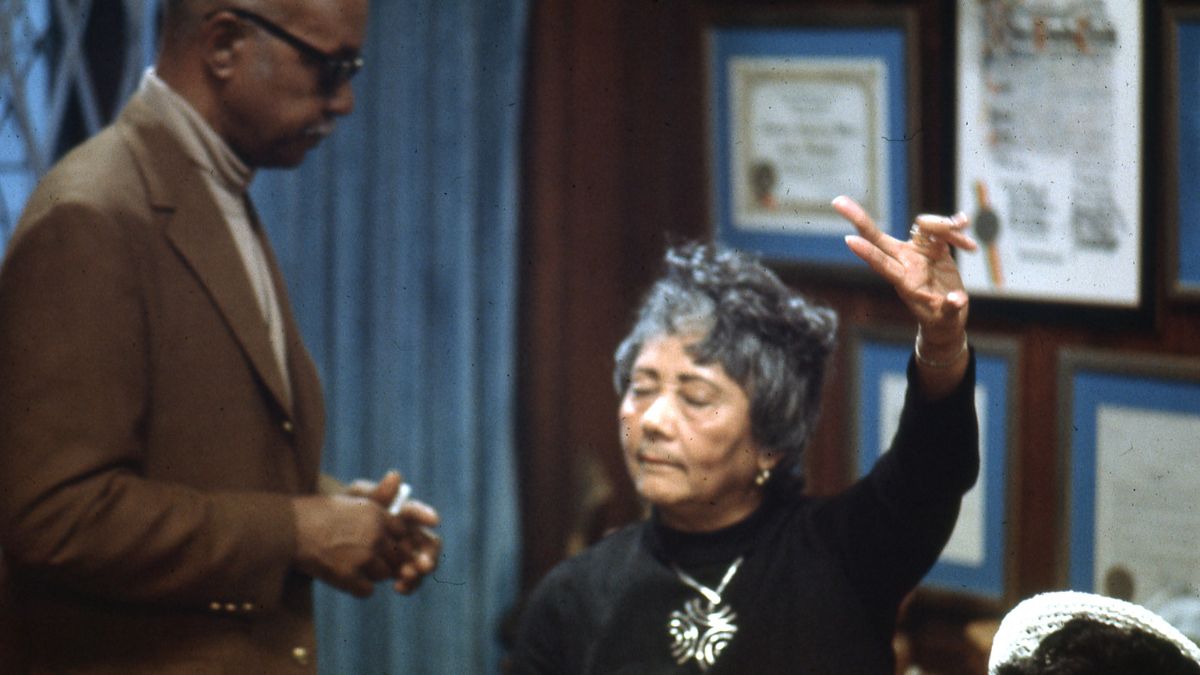
It is a living embodiment of the intrinsically intertwined nature of New York history and Black history, shaping not just a neighborhood, city, or generation, but American culture itself. By 1972, a number of the era’s great figures had died, including poet Countee Cullen. His widow, Ida Mae Cullen, spends the party passionately pleading for her husband’s name and contributions to be remembered, scolding guests who have not mentioned him.
William Greaves died in 2014. Once Upon a Time in Harlem gives directorial credit to him and to his son, David, who assembled the film from his father’s footage from the party, as well as interviews conducted with partygoers at a separate time. When Greaves himself appears onscreen, it’s a beautiful reminder of the thin veil between art and artists.
Here, he’s capturing the conversation of artists, poets, and historians, but becoming a member of his own work of art. His presence reminds us he is the reason the party came together in the first place. Some documentarians might have kept themselves out of the narrative. Greaves floats in and out of frame, greeting the guests he brought together. It’s a gentle reminder that the work and visionaries behind the camera are creating their own art, and want you to know it.
The documentary lets us take part in a landmark historical gathering.
There’s a modern artistic flair flowing through Once Upon a Time in Harlem, too. Tamar-kali‘s score breathes even more vibrance into a film that didn’t necessarily need it. Still, it is a delightful thread connecting the party and Greaves’ one-on-one interviews with partygoers. These interviews, serving as in-depth reflections on anecdotes and personal histories only touched on at the party, are valuable on their own.
The music ties these together as necessary diversions from the party, adding context to figures who might add a sentence or two to a conversation we’ve just seen. Editors Lynn True and Anne de Mare build on that same breathtaking through line, making a three-hour party feel inviting and deep without overstaying its welcome.
Once Upon a Time captures the feeling of eavesdropping at a party, leaning in to a conversation but staying just on the precipice without being exclusionary. You might feel as though you’re sitting on a couch in Ellington’s cozy brownstone as Van Der Zee sits down at a piano, playing even though his camera is his main artistic muse.
Once Upon a Time in Harlem is proof of the magic a great documentary can conjure.
You could witness a conversation between Negro Actors Guild of America founder Leigh Whipper and playwright Abram Hill. You might lean in a little closer as composer Eubie Blake and lyricist Noble Sissle chat at the party while images from their smash-hit Broadway show, Shuffle Along, are laid out onscreen.
It’s one thing to merely film a moment in time. But Once Upon a Time in Harlem exists somewhere in the liminal space between being a fly on the wall and being a partygoer yourself. Capturing an afternoon in the lives of an extraordinary group of people with an artistic destiny far beyond the reaches of their own time, Once Upon a Time in Harlem is the kind of magic documentaries were made for.
Once Upon a Time in Harlem is out now in limited theaters.
Once Upon a Time in Harlem
-
Rating - 9.5/109.5/10
TL;DR
It’s one thing to merely film a moment in time. But Once Upon a Time in Harlem exists somewhere in the liminal space between being a fly on the wall and being a partygoer yourself.