Full spoilers for Spider-Man: Brand New Day below.
There’s a lot to enjoy in Spider-Man: Brand New Day. From the fun and emotional dynamics between Peter Parker (Tom Holland) and MJ (Zendaya), Ned (Jacob Batalon), the Punisher (Jon Bernthal), Yelena (Florence Pugh), and Bruce Banner (Mark Ruffalo), to the witty back and forth, the intrigue of what Sadie Sink‘s character is up to, and solid action and sense of place with New York cinematography to boot, the fourth film in the Tom Holland series has plenty of worthwhile moments.
It also attempts an introspective journey for Peter as he struggles internally with being alone as Spider-Man. He craves connection once again but denies it to himself. This is in the same vein as the superior Spider-Man 2, directed by Sam Raimi, but it struggles to reach that high bar.
The MCU continues to frustratingly bog Spider-Man down with tedious cinematic connections that weaken his own story potential, deny him the full story payoff he deserves, steadfastly refuses to utilize the richness of his source material, and goes so far as to make his own movie a backdoor pilot for the X-Men. These decisions ultimately reduce him just another cog in this convoluted universe that continues to deny him the meaningful fulfillment we all know he’s capable of.
Spider-Man: Brand New Day refuses to let Peter Parker drive his own story.

Despite the “Brand New Day” branding, the film, directed by Destin Daniel Cretton, is anything but. It is exceedingly reliant on the films that came before it. In doing so, and not helped by its overstuffed plotline, it doubles down on this version of the character’s greatest weakness: the IP manager that refuses to give him a truly independent story with proper character payoff. The screenplay may trick us into thinking it has done so. Still, upon closer inspection, that supposed resolution barely scratches the surface of the richness of his character we have seen so many times before outside of the MCU.
Homecoming over-tied his arc to Iron Man, even when Tony (Robert Downy Jr.) doesn’t appear onscreen through most of the runtime. Far From Home doubles down on those ties to Iron Man as Peter tries to follow in his legacy, even though that has virtually never been a feature for the character in the comics or any other medium.
While Vulture (Michael Keaton) and Mysterio (Jake Gyllenhaal) are great villains, they too are overtly tangled into Tony Stark and the MCU. Vulture’s direct connections with Peter thankfully came through towards the end of the film.
Spider-Man acts as the connection to overarching Marvel projects.

It was only when we got to No Way Home that we began to see the Peter Parker we all know and love. Ironic, considering the film finds him interacting with the various villains and other cinematic Peter Parkers who came before him. No Way Home finally sees the character defined by tragedy, grief, and hardship, with Holland delivering his best performance to date (at that time) The story sets him up as the Friendly Neighborhood Spider-Man for New York City that he’s meant to be.
And, to its credit, we do get a lot of that in Brand New Day. We see him fighting crime on a street level. He interacts with the city’s community in high spirits, building a passionate fanbase. He spends his time working with the cops to keep New York safe (the movie is high on copaganda, unfortunately). But he’s also dealing with mutating powers, which leads him to develop heightened senses and organic webbing. His plotline is at times compelling, but its lackluster resolution ultimately makes it a footnote.
The closest we get to substantive development is the superb scene (with an excellent performance from Zendaya) where MJ lets him down after learning the truth about their past. She tells him she can’t love him back because she can’t remember him. But even that is treated perfunctorily. There’s no follow-up or reckoning for Peter after this emotional confrontation, as the movie’s wider plot requires his attention elsewhere.
However, in presenting the conflict as Peter investing too much in Spider-Man over his civilian life, we lose out on key dynamics in his supposedly primary conflict. How does he make enough money to buy and build tech for his apartment, for instance? We never see him work a job. Is he going to school at all? The movie presumes that these things are simply taken care of, without exploring that richness of his struggle that we saw, again, in Sam Raimi’s superb Spider-Man 2.
Sam Raimi’s Spider-Man 2 remains the reigning (live-action) achievement.
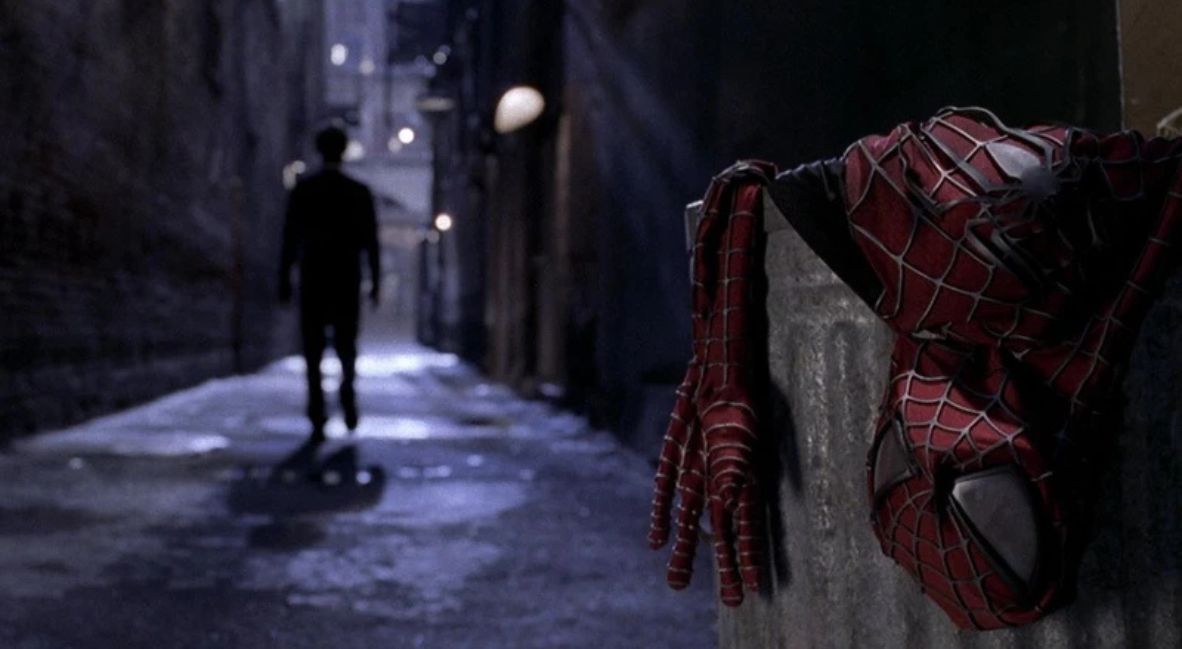
And that richness of character development doesn’t require him to be on his own, but to be actively confronted with new conflicts that relate to him as directly as possible. The film could have drawn so much from his expansive and varied source material for that. Why couldn’t Black Cat/Felicia Hardy have been an antagonist or anti-hero in this film who forces moral quandaries in Peter? Or have Ned actually (finally) become the Hobgoblin, giving Peter a Harry Osborn-esque conflict to confront?
Or how about having MJ become Jackpot, like in the comics, and force Peter to work with his former love, who can’t remember him. Why couldn’t we have, like in virtually all the other live-action Spider-Man films, villains and antagonists directly linked to him, who force him to confront his inner demons in a compelling way?
We could even have characters like the MCU’s take on Green Goblin and Dr. Otto Octavius/Doc Ock again, or even The Lizard from The Amazing Spider-Man. All three are directly connected to him, either through how his conflicts with them affect his friendships with Harry Osborn, his own personal pursuits, and share connections with his love interests, like Gwen Stacy.
Overall, the quality of Spider-Man films has, of course, been mixed. But they at least all had that direct narrative focus on Peter, and consistently gave us conflicts worthy of our hero to deal with that further his growth. Meanwhile, in Spider-Man: Brand New Day, we just see Peter sad because he misses MJ and Ned. While that’s relatable, it needed to thrust him into a new adventure with new allies and villains (classic Spider-Man villains like the Scorpion and Tombstone are only cameos). The adventure it pushes him into is one that has barely anything to do with Spider-Man at all: furthering the story of the MCU’s interpretation of Jean Grey.
The latest addition to Marvel distracts from the main heroes plot in Brand New Day.

Jean Grey is one of my favorite all time Marvel characters and Sadie Sink is fantastic. Her portrayal is arguably its best part in this radical interpretation of the iconic character. Her arc is moving, with strong real-life parallels, and she serves as a compelling anti-hero and antagonist.
But the connection with Spider-Man as her apparent foil is thin, giving them the shared dynamic of “I’m different and dealing with grief,” which is a theme we’ve seen a plenty of times in the MCU during its decidedly subpar era. While emotionally stirring, it doesn’t actively move our main hero forward, except to reach out to Ned at the very tail end.
In fact, the best parts of the film are Jean by herself, acting on her own to save her sister, Sarah, and face down the Department of Damage Control without Peter even there. This sequence generates instant excitement for those looking forward to her journey in the MCU. But that’s also exactly the problem. We’re not here for the X-Men, we’re here for Spider-Man. And, ultimately, Brand New Day works far better as a film serving her arc rather than Peter’s.
Somehow, it becomes Jean Grey’s story instead of Peter Parker’s. And that’s a shame.

And it’s not just that Jean Grey takes time away from the main plot. It’s that it derails Peter’s own personal journey. After spending so much time with Peter’s power mutation as he tries to control and regulate it, the only resolution we have is him saying, “I’m both” in response to Jean asking him whether he’s Spider-Man or Peter. This brief moment resolves the issue, allowing him to control his powers. We don’t spend time seeing him fine-tuning the new developments with his heightened senses and organic webbing. We only see the struggle.
Of course, it’s better in general to show and not tell, but the film desperately needs more introspection on this issue. Instead, we have Jean’s plotline taking up the main focus, with a half-hearted attempt to connect her struggle with Peter’s, which plays nicely in the moment but doesn’t sufficiently bolster his arc.
For all the talk of the movie being “grounded,” which it is to a large degree on the surface, the substance of the story itself is anything but. Once again, Peter Parker is swept into a large cross-film narrative that requires the dilution of his own arc for others, while pretending that it bolsters his. But the film’s focus is driven away from Peter and towards the wider implications of the cinematic universe in which he is stuck.
The film forgets it’s character-driven plot for the sake of MCU stage-setting.

What exactly causes him to realize that he needs to foster his identity as Peter Parker? Why does he acknowledge to himself that he needs to reconnect with friends, outside of a pep talk from The Punisher? The film’s answers to these character questions is muddled in the miasma of plot it forces on the main hero. It makes his journey feel far more perfunctory and unearned when it should be riveting character study that we have seen several times before.
Everything from the first two Sam Raimi films to animated series, the Miles Morales Spider-Verse entries, and even Andrew Garfield’s turn as the hero (in films of mixed quality) has honed in on character-driven stories. Even with the sheer amount of characters in the Spider-Verse films, the focus remains on Miles and Gwen, the leads. And it does so by using the villains and mentors to compare and contrast their actions and explore how to build on an existing legacy.
This issue with Brand New Day could have been fixed, at least in some part, if Marvel Studios allowed the creative team to go the full way with Peter’s mutation arc, and simply let him transform into Man-Spider, just as he did in Spider-Man: The Animated Series in the ’90s.
So much might’ve been different if the film had gone there and let Peter transform into Man-Spider.
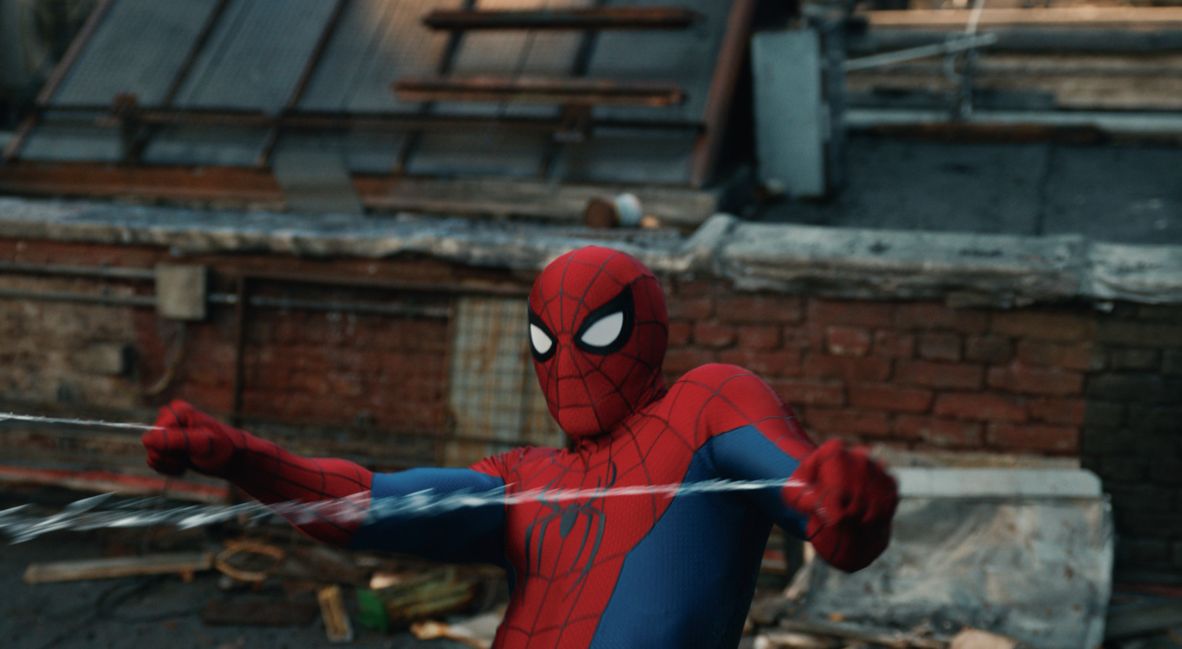
For a moment, it seemed like it might happen when he took Punisher’s bullet for Jean, as it would make sense for his body to react to the trauma by putting him into that monstrous state. To see Peter as Man-Spider, his internal demons taking physical form, and to have the characters of the film (including Jean) work to reassure him, convince him that he’s not a failure or a monster, and ultimately help save him as he confronts his internal monsters, would have been an immensely gratifying payoff.
This direction would have helped aid the supposed buildup of his mutation in the movie. Instead, he simply takes the bullet and takes time to recover as the public cheers him on.
The point about Peter suffering is not an end in and of itself, as Brand New Day supposes. It is always about how he actively works through that suffering to persevere and become a better hero, friend, and partner. But the moves of this new film are perfunctory, rather than Peter and his supporting cast truly driving his own story.
Looking for character-driven stories and spectacle? Re-watch the Spider-Verse films instead.
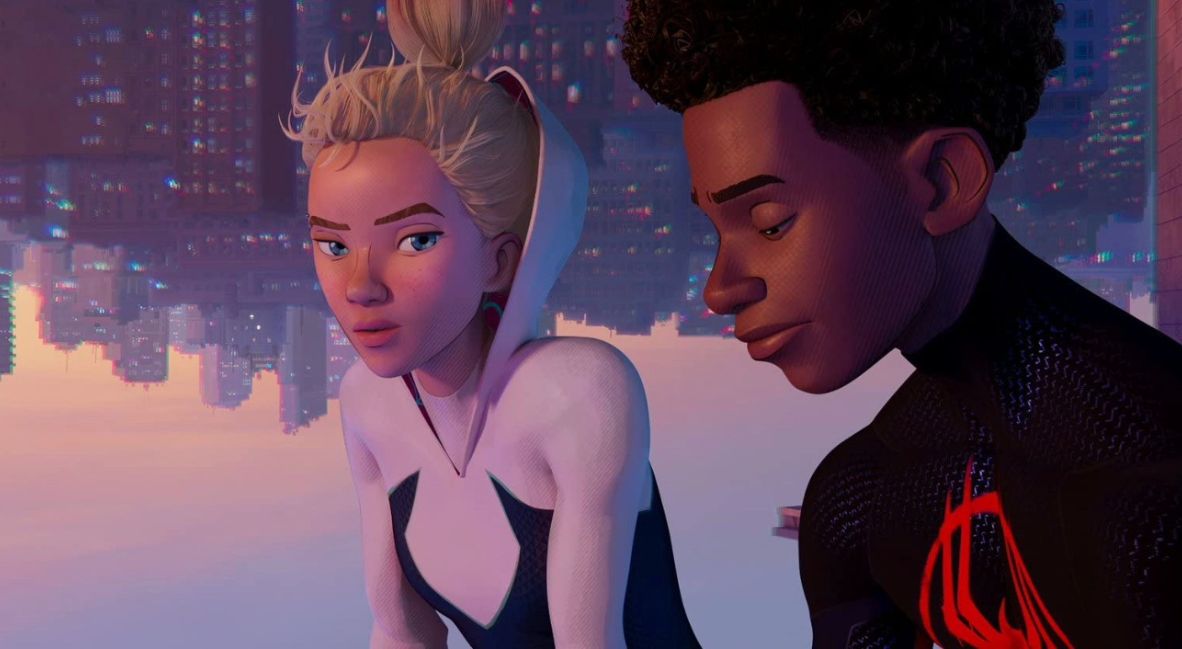
And the most frustrating thing is that the elements of a better story more centered on Peter are in Brand New Day. Director Destin Daniel Cretton and the writers may have very much wanted to explore those further. And yet, the Marvel Studios committee prioritized cinematic connections above all.
By tying Peter so closely to their existing and future characters and stories, it’s as if Marvel Studios is relentlessly and exhaustively telling us, “This is OUR cinematic Spider-Man and not Sony’s!”
This is, of course, not technically true. Sony still owns the cinematic Spider characters and their related IP, and my hopes for fulfilling Spider-Man cinematic stories now rest with Spider-Verse. But in Marvel’s desire to prove this point, it weaves a needless cinematic web of connections for our favorite web-slinger. As such, there will be no unadulterated and sincere Spider-Man story in the MCU, only something to push its cinematic universe along.
Spider-Man: Brand New Day deserved to be more than an MCU IP.
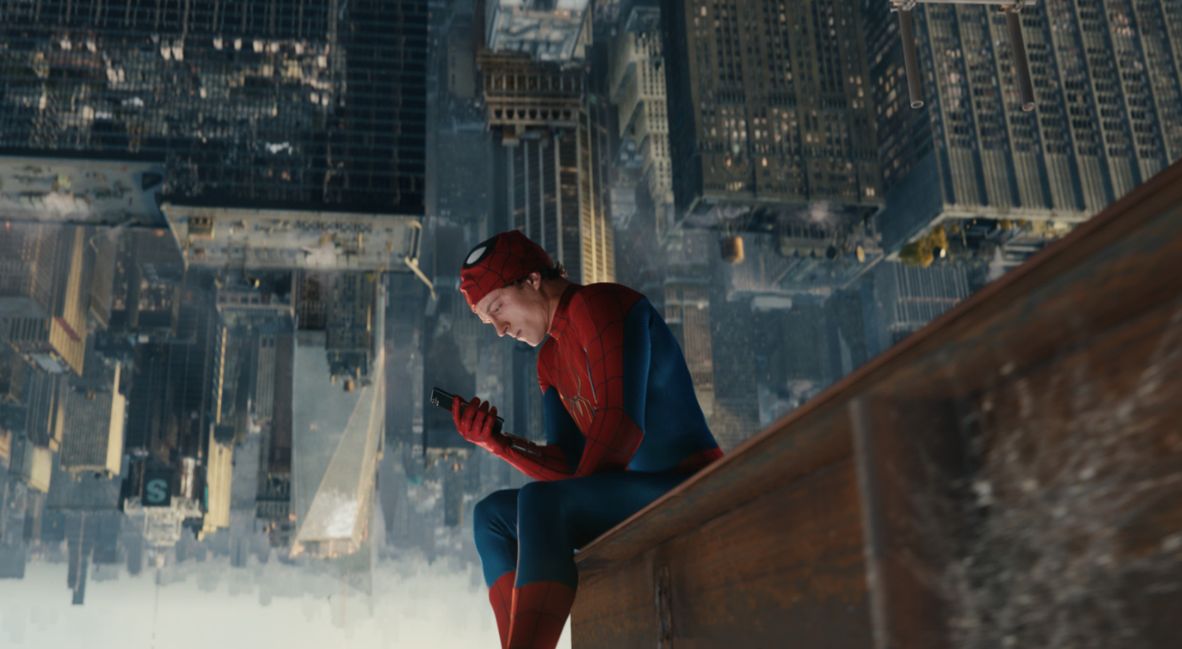
Brand New Day is fine. It’s a fun film with some great Easter Eggs and strong action. Friendly Neighborhood Spider-Man elements are present and it’s all anchored by a great performance from Holland. But it is not a Spider-Man movie, not truly. The stories that the MCU give him, barring No Way Home, continue to serve the character far less than he deserves. And this is especially true when in comparison to wider MCU plans that have little to do with him.
It remains all the more frustrating knowing the excellence of other films. Films like Spider-Man, Spider-Man 2, Into the Spider-Verse and Across the Spider-Verse, as well as the various animated series, serve the best onscreen Spider-Man stories. And they succeed because they focus on Peter, Miles, Gwen, and the rest of the Spider-People.
At this rate, with the MCU’s take on Spider-Man, I’m not as mad as I am thoroughly disappointed. Disappointed in the studio’s refusal to give him a story that highlights his ability as a compelling standalone hero. Instead, he’s simply another cog in their cinematic universe machine. I expect that disappointment to remain with any other appearance of his in this frustrating franchise. I very much hope to be wrong, but sadly doubt it. Peter Parker deserves so much more.
Spider-Man: Brand New Day is now playing in theaters