


Go five or six seasons deep into an EA Sports FC career mode save, and the transfer market falls apart. Every top club bids 100 million on every signing. Mid-table teams spend like they found oil money under the training ground.
The transfer market drifts so far from real soccer that the whole save starts to feel pointless. EA Sports FC 27 is built to fix that. EA Vancouver is calling its transfer overhaul the biggest in franchise history, and after sitting down with Producer Andreas Wilsdorf and Senior Game Design Director Pete O’Donnell, the ambition behind that claim is hard to argue with.
I was a hardcore career mode player for years, usually going until the game told me I hit the season cap. I would take Manchester United back to glory, or build clubs like AFC Wimbledon into global powerhouses. Over the years, the updates dried up, and everything felt stale. Player valuations were all over the place, teams stayed where they were, and the fantasy of managing a real club faded.
So I moved to Football Manager. I’d still boot up EA Sports FC career mode every year, but usually just long enough to see what changed and get frustrated at what hadn’t. The EA Sports FC 27 team saw this across the player base, and they’re betting that this transfer overhaul will bring those players back.
Career Mode is Led By Realistic Values, Finally
EA Sports FC 27 attacks the valuation problem at the foundation. EA Vancouver partnered with TransferRoom, the transfer value platform used by over 800 real soccer clubs, to build a new pricing model around their Expected Transfer Value (xTV) system. xTV measures what it would cost to sign a player based on ability, age, contract length, and current market conditions. Those valuations shift across multiple seasons. They don’t stay frozen.
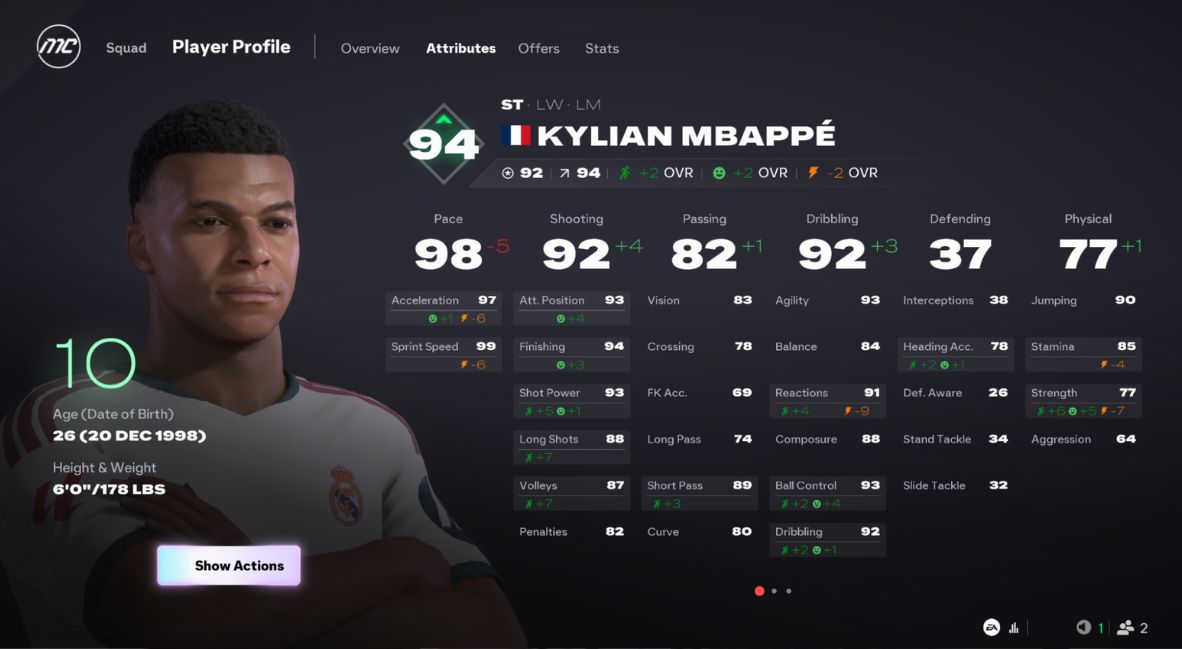
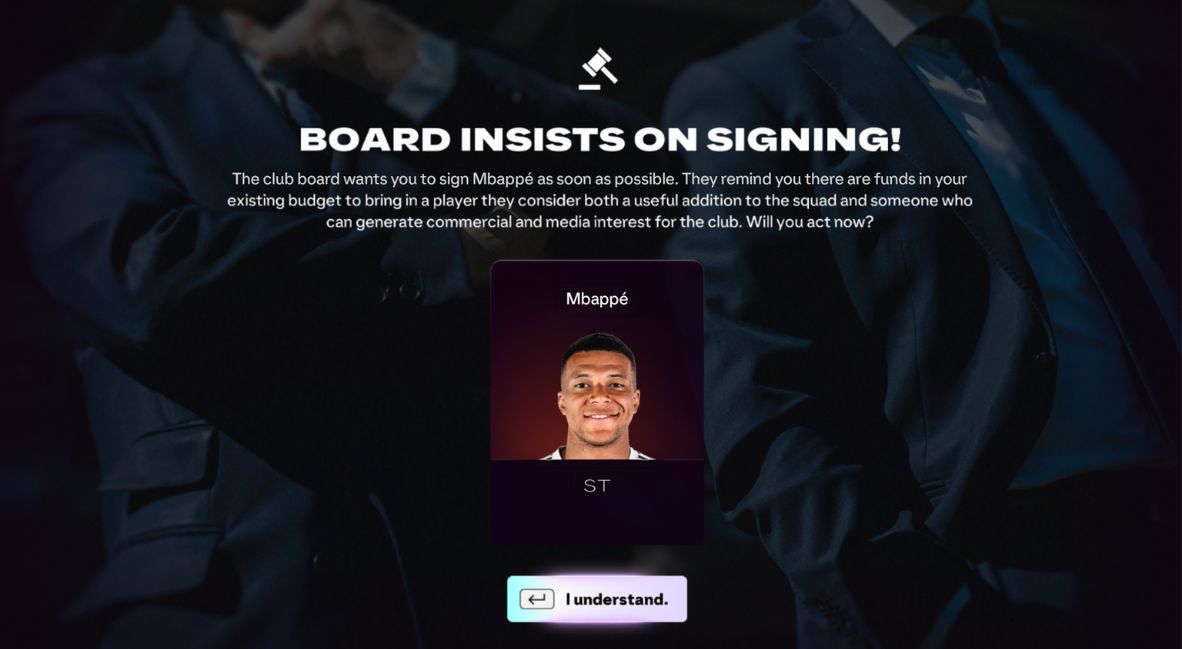
The system also works alongside the game’s existing adjusted value model, which layers in form and league strength. Wilsdorf explained the algorithm behind it: nationality, league, club wages, and other factors all shape individual player prices. “Even 10 seasons in, the world changes regarding player values,” Wilsdorf said. “You will see way different value for players. Like trying to get Mbappé, you’d need a budget of 300 million to actually buy him.”
Clubs now weigh potential against cost. A relegated team shops for different players than a Champions League contender, and an MLS team is looking for something different than a Serie A club. If it works, every save should feel distinct. We haven’t played it yet, so that’s still an if.
O’Donnell framed it as the pitch to lapsed players. Transfers are the number one request from the player base every year. “For someone who hasn’t played for a while, it’s like it will feel so new,” he said. “It will feel almost like a new game.”
Every Deal Is a Negotiation Now In EA Sports FC 27
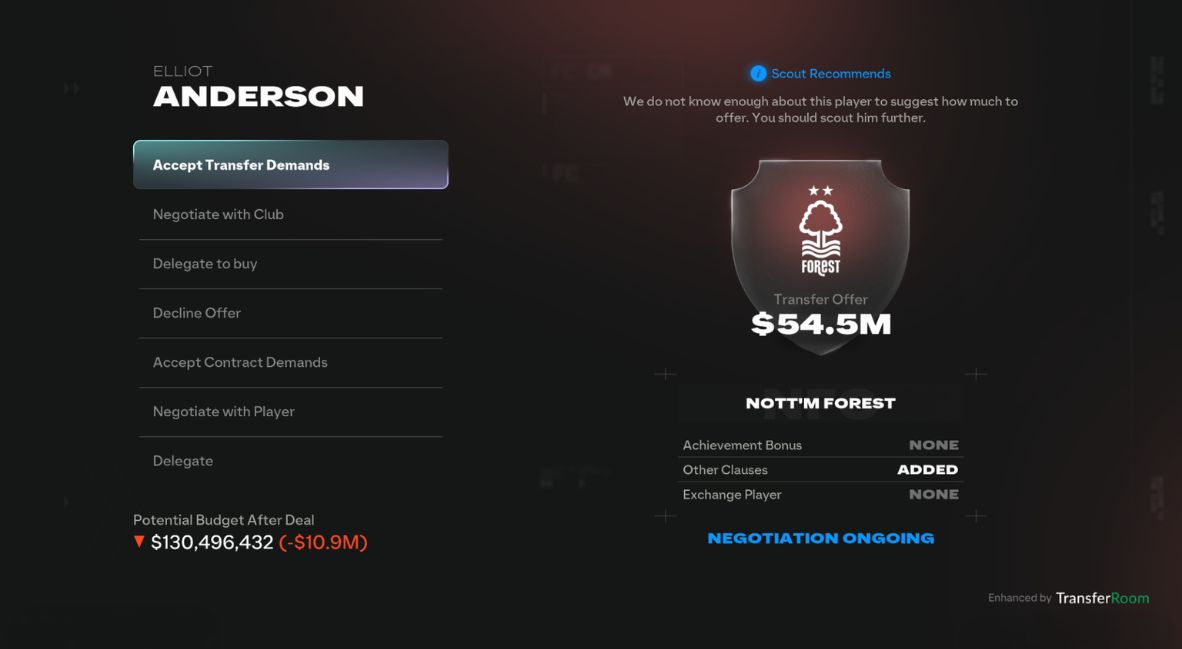
Transfers in EA Sports FC 27 unfold in stages. You open with an inquiry to gauge interest. If the selling club grants permission, negotiations between clubs and the player run in parallel. Rival clubs can hijack deals mid-negotiation, drive up the price, or force you back to the table after you thought everything was settled. The old 3D negotiation scene is gone.
A new 2D interface tracks every discussion through a tension meter that shows, in real time, how close both sides are to an agreement or a breakdown. If a deal stalls, you walk away and chase someone else.
Selling works the same way. Offers arrive over time. You evaluate, negotiate, or hand the whole thing off to your Director of Football. After two clubs agree on a fee, the buying club and the player negotiate separately, and you get one final window to push for better terms. Whether that push works depends on how many other clubs are circling.
The options available to managers during those negotiations are where EA Sports FC 27 separates from previous entries. Wilsdorf laid out the tools: installment payments spread across seasons, loan-back agreements that let you buy a young talent now and develop them at their current club, and player exchanges that cut the cash required.
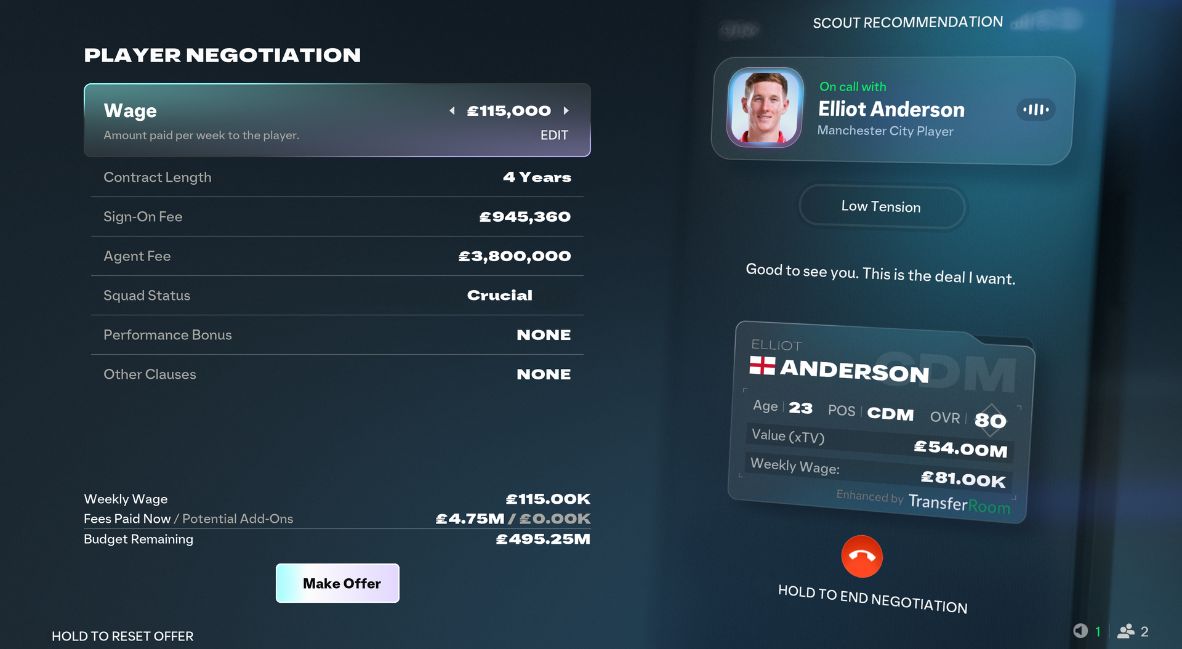
“Do I pay installments? Do I wait? How do I use my budget?” Wilsdorf said. “I want to buy a young talent, but right now I have no spot in the squad, so he’s going to be loaned back at his club, play two more seasons there, and then I’m getting the player I want.”
The clause system runs deeper still. Buyback clauses let a selling club reclaim a player at a set price. First refusal clauses let you match any future offer. Sell-on clauses guarantee a percentage if the player moves again. Achievement-based bonuses can bridge valuation gaps by tying additional payments to silverware, individual awards, or on-pitch performance without locking in the full fee upfront.
Contracts got the same treatment. Squad roles set playing time expectations during the negotiation itself. Performance bonuses balance against guaranteed wages. Automatic wage increases trigger on promotion or continental qualification. Automatic reductions kick in after relegation.
All of it makes negotiations feel closer to the real thing. I can plan how I spend across multiple windows, or I can overspend and make risky moves that blow up three seasons later (looking at you, Barcelona).
AI That Builds Like a Real Club
The tools only matter if the AI on the other side of the table uses them. EA Sports FC 27 rewrites the way AI clubs scout, spend, and build squads over a career. Clubs recruit based on long-term philosophy. Youth-focused teams spend more on young prospects. Others chase proven players who can start immediately. For the first time, AI clubs run parallel shortlists, pursuing multiple targets at once instead of fixating on a single name.
League statistics now shape who attracts interest. Goals, assists, average ratings, and clean sheets all factor in, so a breakout season in a smaller league can land a player on a bigger club’s radar. The team also tightened financial behavior. Clubs consider how important fiscal responsibility is to their identity before they spend, so not every top-table squad burns through its entire budget on day one of the window.
O’Donnell described a “weak point analysis” powering the decisions. AI clubs scan their squads, identify the worst player or the most urgent positional gap, and go find a replacement. They do this across multiple positions at once. “They’ll be looking for a left back and maybe a right winger as well,” O’Donnell said. “So the squads will always generally be developing, and that creates a more dynamic system where people are transferring, looking for new players.”
Wilsdorf pointed to Bayern Munich. If Bayern has an 85-rated striker and a 78-rated backup with 85 potential, they’re not burning budget on another 85 striker. The succession plan already exists. But if Manuel Neuer is 40 and the club doesn’t trust its second goalkeeper, Bayern starts shopping for a high-potential replacement who can grow into the role over a season or two.
If this works, each club grows in a way that mirrors its real-life identity. No two elite teams take the same approach five years into a save. That same logic should reach the lower leagues, and a club that bets on the wrong strategy should be able to fall from the top.
O’Donnell brought up Chelsea. “The concept of Chelsea buying all these young players, they’ve been buying young players for the last two or three seasons. Are they going to be winning the league in five years? I don’t know if that strategy actually ever turns into them winning the league.” The team can update club strategies through patches, and the goal is that three, five, or seven years into a save, the world around you looks different from where it started.
Manager identity matters now too. AI clubs are more likely to pursue players who fit their manager’s preferred style, so the same player might draw heavy interest from one club and none from another based on tactical fit. Players who recently moved are far less likely to transfer again right away, cutting down on the carousel of unrealistic transfers that has haunted career mode saves for years.
Rivals Stay Rivals In FC 27’s Career Mode
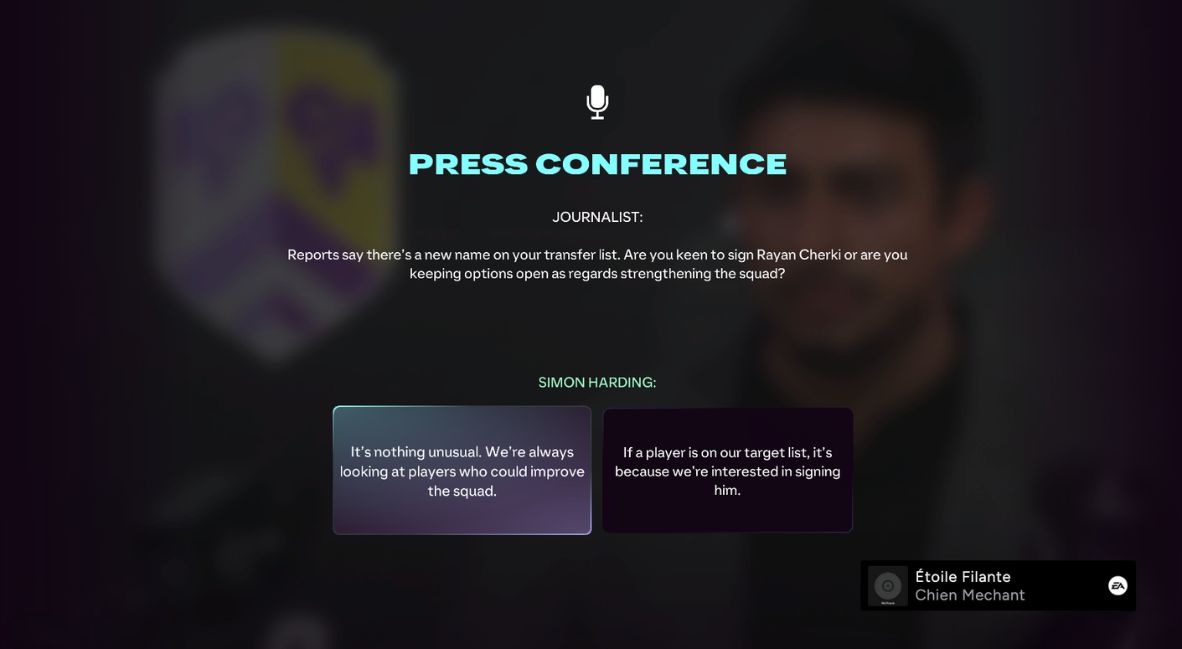
EA Sports FC 27 overhauls club relationships. Historic rivals are far less willing to sell to each other. Local derbies and regional rivalries carry similar restrictions. Major competitive relationships, the kind between clubs that regularly chase the same trophies, reduce the likelihood of direct deals too, though less severely. Clubs within the same multi-club ownership network are more inclined to trade, the way those connected clubs already work.
When asked what got left on the cutting room floor, O’Donnell had a specific answer. The team wanted a system where a player who left a rival and went to a neutral third team still couldn’t circle back to the original rival. An Arsenal player goes to La Liga, develops, and ends up at Chelsea. That shouldn’t happen. “That fell under the cutting block, but is one we would love to do in the future,” O’Donnell said.
More notable than what got cut is what didn’t. O’Donnell called the transfer overhaul “the biggest feature we’ve ever done in managing career.” Development took roughly a year and a half. “We’ve delivered kind of 95% of this,” he said. “Very little got left on the floor. Fortunately for us, I mean, it’s not always the same story.”
This New Career Mode Is Bridging the Gap Between the Casual and Hardcore
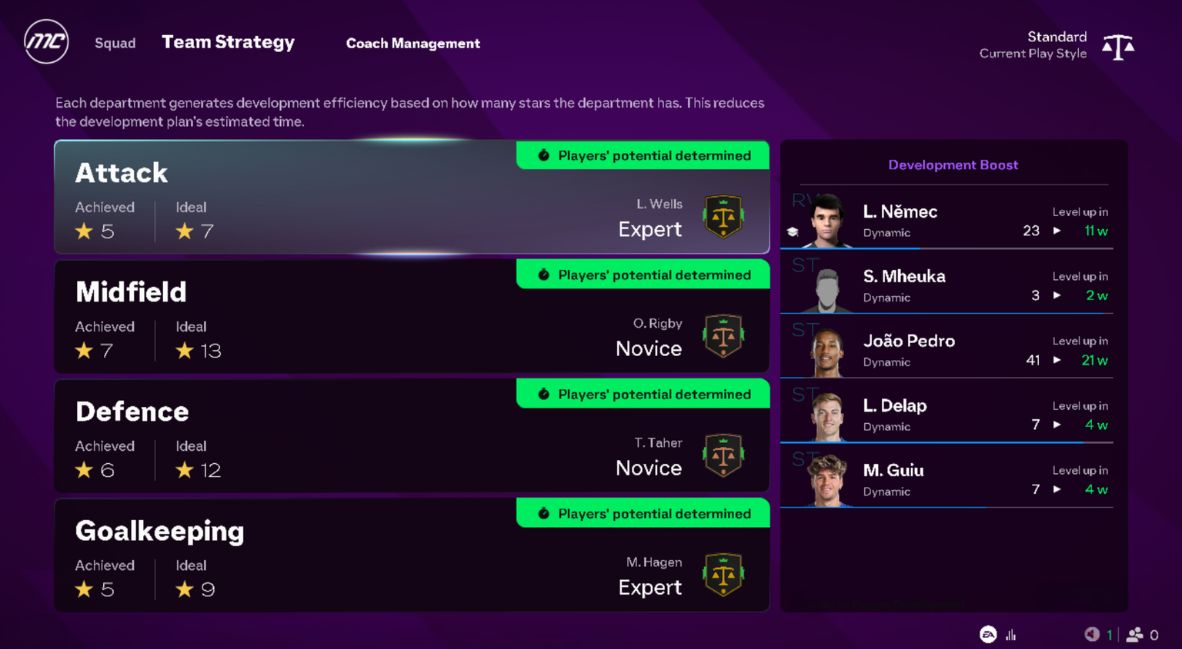
EA Sports FC 27‘s career mode has always occupied the middle ground between Football Manager‘s simulation depth and the pick-up-and-play appeal of a match-focused sports game. This overhaul pushes toward simulation, but Wilsdorf and O’Donnell both stressed that accessibility stayed a priority.
O’Donnell acknowledged the comparison. “We’ve got some players who play 15 seasons,” he said, “and then we’ve got players who just want to go in and just play a top team and just play a little bit.” Every new transfer feature includes a delegate option. If the negotiation stages and clause system feel like too much, you hand the process to your Director of Football, pick the player you want, and let the AI close the deal.
The Transfer Hub reflects that split. Scouting and Transfers now live in separate sections, so finding players and closing deals don’t crowd each other. A new Player Actions list lets you jump from scouting a target to opening negotiations from the same screen. Interest indicators flag how willing a player is to join your club before you commit to an inquiry, so you stop wasting time on deals that were dead on arrival.
Wilsdorf also addressed league-specific transfer and roster rules, framing it as a tension between “authentic fantasy” and full simulation. If the team ever builds league-specific rulesets, Wilsdorf said, “we would probably make it a toggle, like something where you can turn it on and off.”
O’Donnell was blunter about the difficulty. Supporting one league’s rules invites complaints about every league left out. “At this point at least we’re consistent,” he said. The team weighs where to put resources based on which leagues draw the most players. It’s an active conversation, but not one with a date on it.
MLS roster rules would be chaos to replicate in-game, and I get why the team isn’t there yet. Staying consistent across every league is easier than chasing registration rule changes season by season.
For the first time in a long time, I’m excited about career mode. The transfer overhaul goes after the exact frustrations that pushed me toward Football Manager: a market that lost touch with reality and AI clubs that ignored how real teams operate. Whether the execution lands is a question only the final product can answer, but EA Sports FC 27 is making its biggest play in years.
EA Sports FC 27 launches September 25, 2026, on PlayStation 5, Xbox Series X|S, PC, Nintendo Switch, and Nintendo Switch 2. Early access for Ultimate Edition and Ultimate Plus Edition begins September 18, 2026.