Every four years, the FIFA World Cup unites people around the world through the beautiful game. Netflix’s Mexico 86, directed by Gabriel Ripstein, tells the chaotic story of how the 1986 tournament landed in Mexico. It abandons a straight historical or documentary approach to deliver a highly satirical, comedic look at the absolute criminality behind securing the right to host the world’s biggest sporting event.
Mexico 86 begins when Colombia, dealing with some severe political turmoil, withdraws as the 1986 host. FIFA is left scrambling to find a new host, and Mexican leaders want to throw their hat in the ring. Mexico faces a major disadvantage: it had just hosted the 1970 World Cup, and no country had ever hosted the tournament twice. Assuming the United States is a lock to win the bid, the Mexican delegation treats their trip to Switzerland as a vacation and decides not to even try.
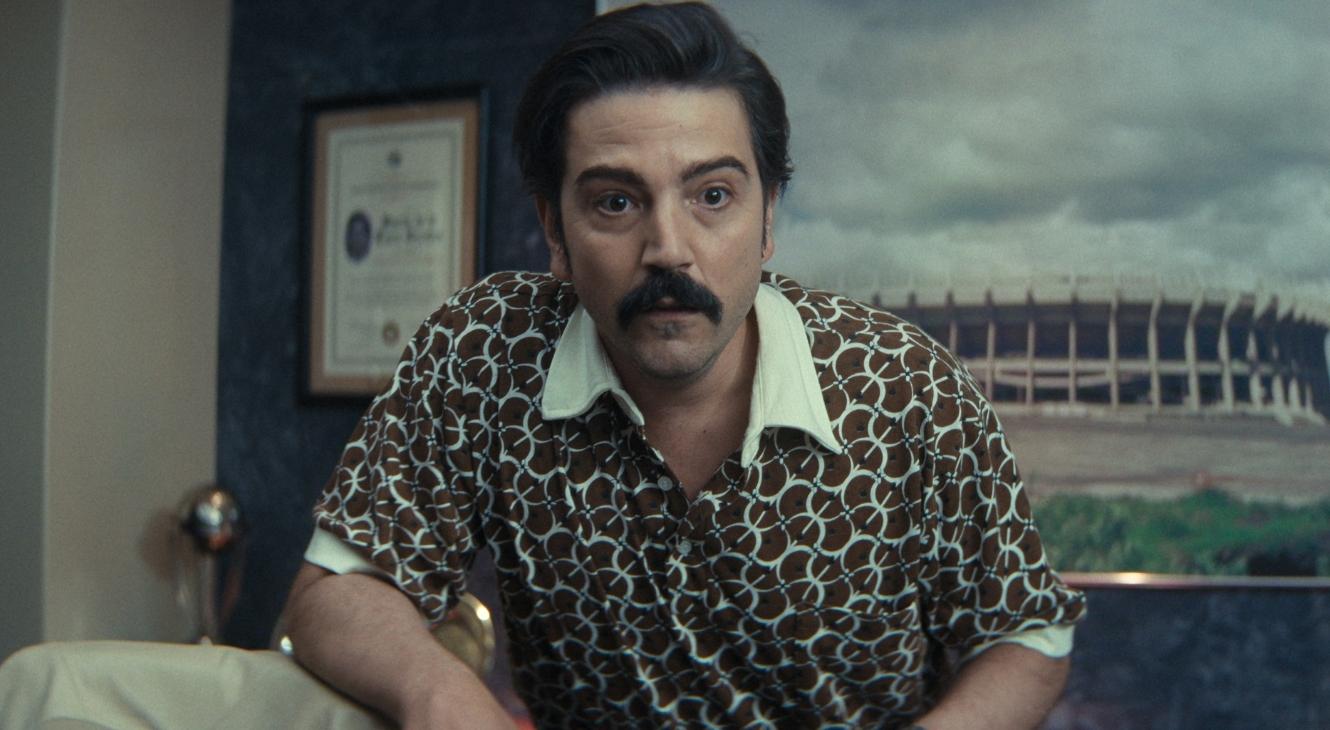
Enter Martín de la Torre (Diego Luna), a lowly employee of the Mexican Football Federation, who decides to intervene. Outraged by his superiors’ apathy, Martín appears on national television to call out his bosses, boldly declaring that the country can secure the World Cup with better leadership.
Diego Luna shines in Mexico 86.
He ultimately gets the job and heads to Switzerland, bringing along his partner, Susana (Karla Souza), whom he leaves his wife for. They immediately find themselves up against a heavyweight American delegation featuring Pelé and Henry Kissinger, who are busy offering ballistic missiles and military aid. Martín counters the only way he can: by handing out literal bags of cash.
Luna shines as Mexico 86 tracks Martín’s evolution. Initially, a miserable accountant frustrated by the lack of passion for soccer around him, Martín becomes ecstatic as Mexico successfully wins the bid. He gets a swanky new office and throws himself into the preparations.
The pressure mounts quickly, placing a heavy strain on his relationship with Susana. Luna anchors the emotional weight beautifully, particularly during a vulnerable, tearful conversation with Susana in a travel agency. The chemistry between Luna and Souza grounds the narrative at times when the plot threatens to spin entirely out of control.
Luna and Souza ground a narrative that tries to go off course.

Martín’s moral compass is constantly tested. In one critical moment, Televisa head Emilio Azcárraga (Daniel Giménez Cacho), who is bankrolling the effort, demands through intermediaries that the Mexican national team throw a match so they can play their next game at the famous Estadio Azteca.
Martín refuses. He believes in Mexico and that his country can win the whole thing. He won’t throw away what makes the sport special just to help an ally. The irony is sharp, however, because Martín’s eventual downfall comes when he cheats in the subsequent Olympics by fielding overage players.
Everything eventually crumbles. The Mexican national team is knocked out of the World Cup by West Germany (losing 4-1 on penalties), the Olympic cheating scandal is caught, and Martín’s life is left in shambles. Mexico 86 brings his journey full circle, ending with him in the same bar from the opening act. The patrons are now rabidly cheering for soccer, but Martín has lost all interest in the game, leaving him with only his relationship with Susana.
Mexico 86 captures the era with its high-stakes lived experience, but struggles with tonal whiplash.
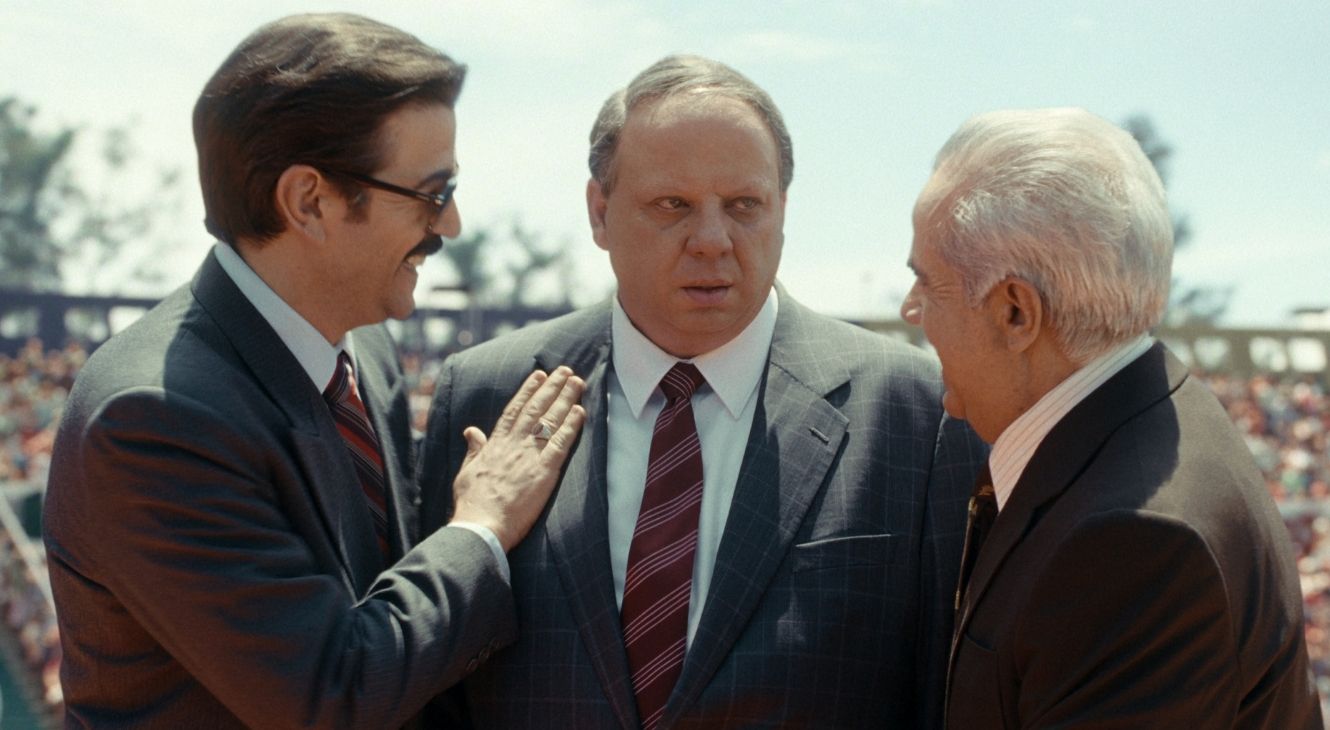
Visually, Mexico 86 captures the era well, from tense meetings to striking sequences of driving through Mexico City as citizens rebuild after the devastating earthquake. However, it does struggle with tonal whiplash. Ripstein intertwines real historical footage of the earthquake, the Colombian political crisis, and actual game highlights with highly fictionalized, satirical events. This makes it frustratingly difficult to differentiate fact from fiction.
Leaning so heavily into comedy undercuts the actual history. One egregious sequence features Martín manipulating a FIFA representative who arrived to strip Mexico of the tournament. Martín herds the official into a stadium filled with locals he bribed with boxes of food. The scene devolves into an absurd, extended sequence involving heavy drinking and a mariachi band. While it aims for laughs, it pulls the narrative into cartoonish territory that detracts from the impact of how the World Cup was genuinely secured.
The satirical tone doesn’t entirely work, with the more comedic moments muddling the story’s impact.
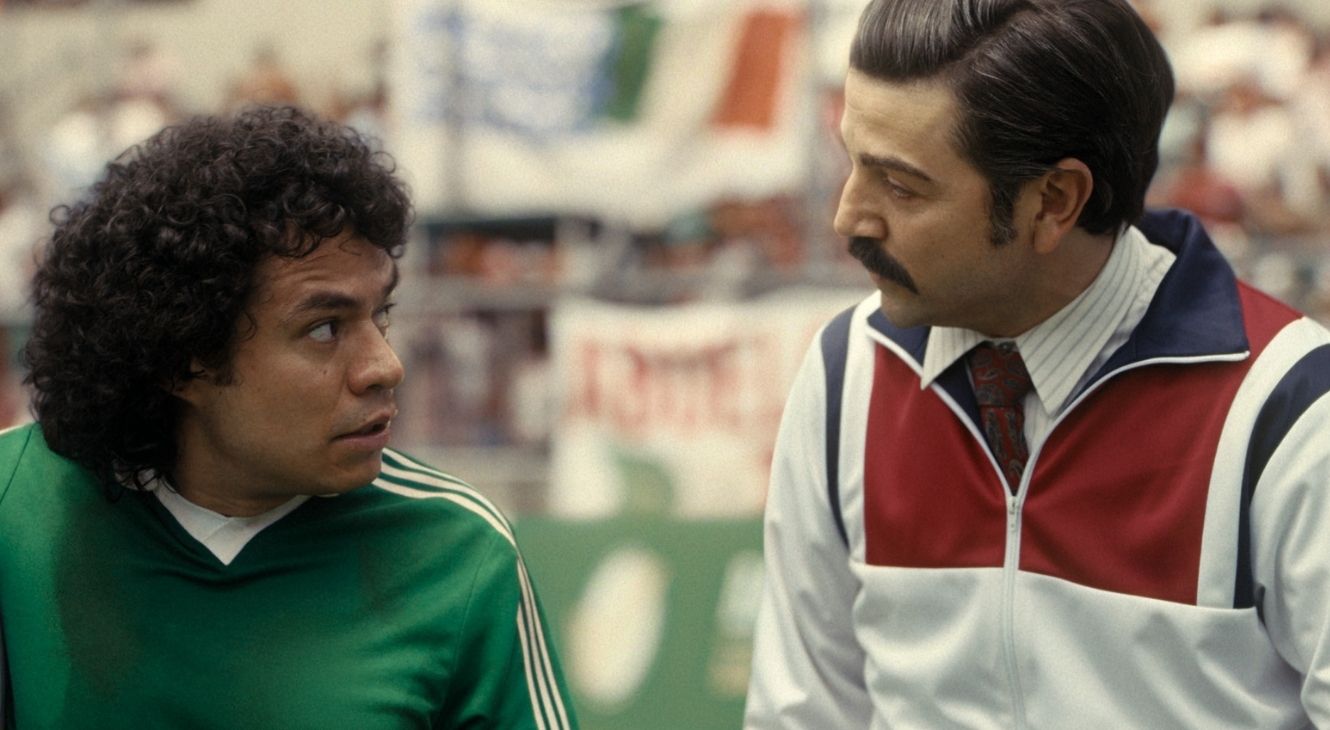
The core message is clear: FIFA is deeply corrupt, and the Mexican Football Federation ultimately failed its own ecosystem. The movie subtly points to the long-standing issues in Mexican soccer today, where the relationship between fans and players remains strained, and the national team struggles to reach the heights of 1986—even as Liga MX is arguably the strongest it has ever been from a sporting perspective.
Mexico 86 is an off-the-wall, high-energy ride driven by a dedicated cast, but its heavy fictionalization limits its audience. Soccer fans tuning in to learn the true story will not get the same impact as viewers who already know the history and can spot the satire. It is a wildly entertaining movie, but one that sacrifices historical weight for absurdity.
Mexico 86 is now streaming exclusively on Netflix.
Mexico 86
-
Rating - 6.5/106.5/10
TL;DR
Mexico 86 is an off-the-wall, high-energy ride driven by a dedicated cast, but its heavy fictionalization limits its audience.