
The wounds left behind by the Japanese nation’s historical impact on Korea and its people still linger, and in The Blue Road (Pureungil), the latest manhwa adapted into a KDrama, the tensions come to a head when a serial killer starts killing people in both countries. Starring Son Suk-ku and Eita Nagayama, the series picks apart the fragile nature of Japanese-Korean relations and the ripple effects of past events, using its detective pairing to examine and confront uncomfortable truths.
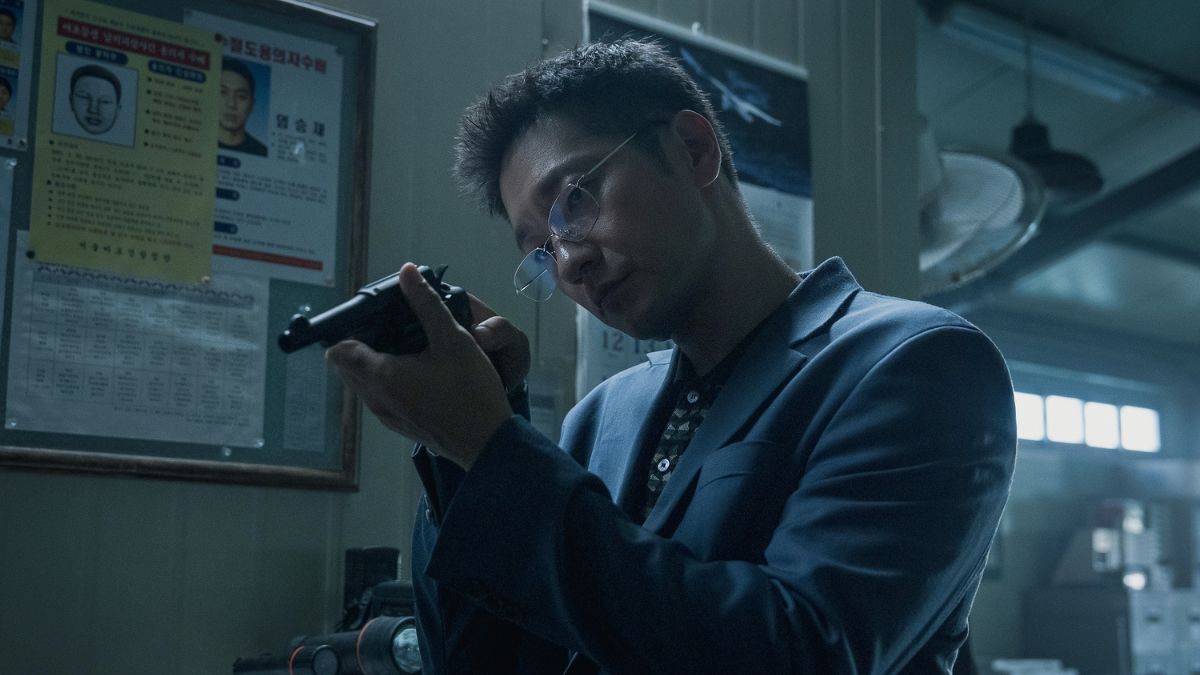
Set in 2002 during the co-hosted World Cup by Japan and South Korea, The Blue Road opens with a murder in Japan. Offering little in the way of visuals, the horror of what’s done is delivered mostly through sound, a sensory element that becomes an important clue. Japanese detective Inose (Eita Nagayama) arrives on the scene, where the murder victim is shown abnormally twisted with a message written in Hangul above her. A camera snap at the scene catches his eye and leads to an action-packed introduction to Korean detective Kim Seok (Son Suk-ku).
It’s a turbulent start for the two detectives, with both harboring biases against each other because of their nationality. This is shown through their choice of language and brusque treatment in the opening episodes, but they quickly learn they need each other. For Kim Seok, the murder links to a recent one back in South Korea, with Japanese painted at the scene of the crime rather than Hangul. Signs point to a possible Zainichi connection, making the case a more complicated affair for both nations to solve.
Son Suk-ku and Eita Nagayama make for a magical pairing in The Blue Road.
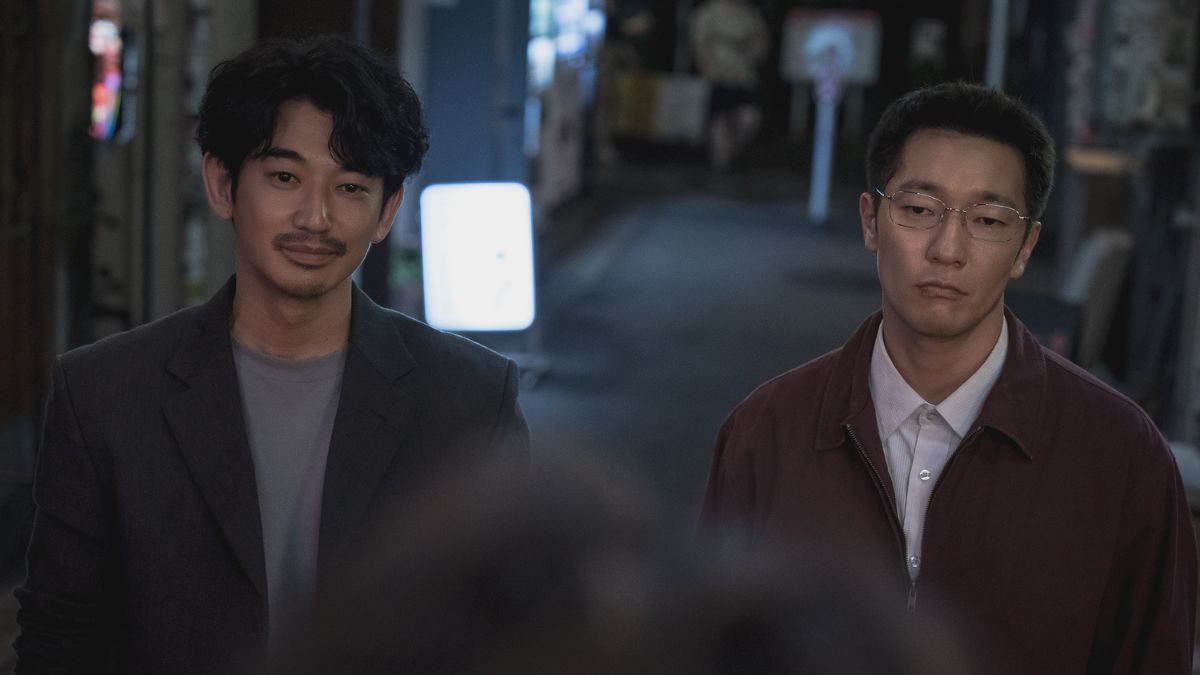
Directed by Han Jun-hee, who co-wrote the screenplay with Cho Yu-jin, The Blue Road immediately hooks with the murder set-ups. They dabble heavily in ritual, the macabre, and the tension-riddled pairing of a Japanese and Korean detective working together. Son Suk-ku always needs to be in control in his approach to Seok. However, behind closed doors, it’s clear Seok isn’t as in control as he thinks. He’s uncomfortable being vulnerable, which triggers Inose’s suspicions.
Eita Nagayama plays Inose as more of an open book, creating an immediate personality contrast with Seok. He’s quick with a smile and more easily cast in a “good cop” role, as he quickly puts those around him at ease. The exception is Seok, who, upon meeting him, views Inose with some hostility. Through the opening episodes, it’s clear both are very good detectives on their own, but when circumstances change, they quickly put aside their differences if it means stopping more people from dying.
On top of the grotesque nature of the crimes, of which the cracking sounds will have you wincing, The Blue Road spares nothing in its action sequences. From the opening episode’s chase between Inose and Seok, the executed choreography sets a high bar for what’s to come. Son Suk-ku, in particular, goes through the wringer, leaping from buildings, navigating hallways whilst acting like he’s in a drug-induced haze, and then some. The use of angles and shaky cam during certain moments amplifies the intensity and gives the scenes a raw edge.
The action the detectives are thrown into keeps them (and the audience) on their feet.
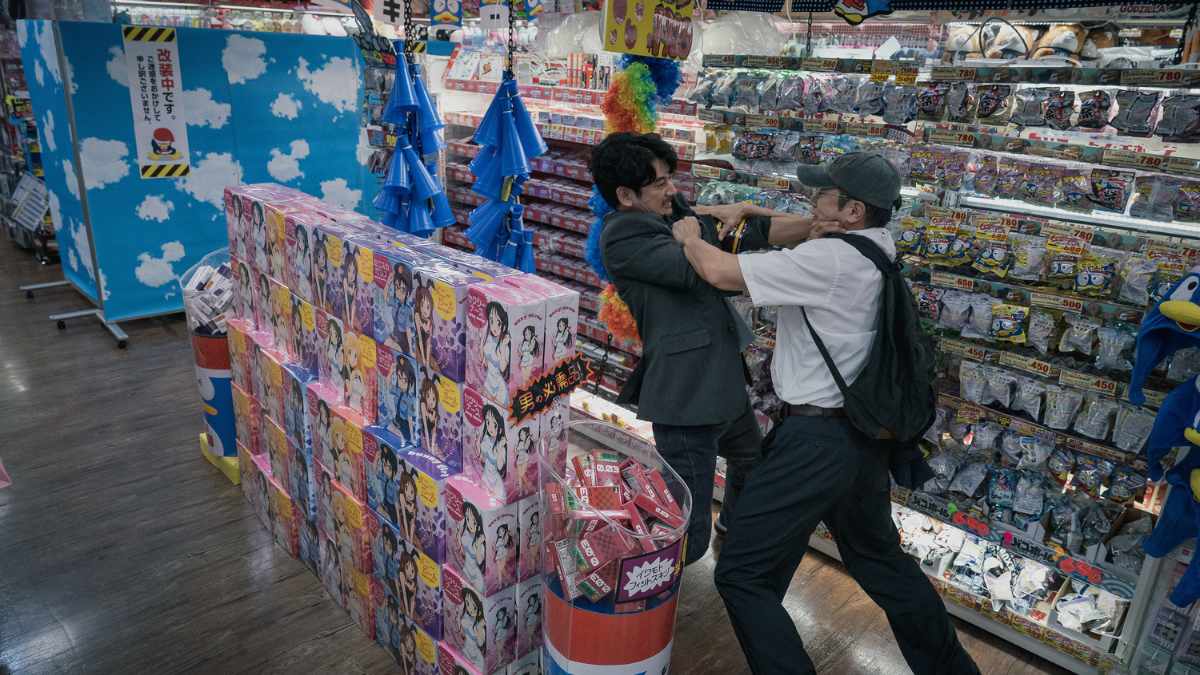
Except the action doesn’t stop there. The Blue Road is separated into two main story arcs. The first half focuses on the initial serial killer. The second half follows Seok unraveling the mystery surrounding a series of murders in the ’80s that directly inspired the ones happening in the present day. For Seok, these cases are personal, something that Inose isn’t fully able to understand until trust is finally forged.
The first half of The Blue Road is arguably the tightest in its arc, with the first villain making an incredibly memorable impression thanks to an impeccably disarming performance. The second half shows the progress Inose and Seok have made, not just with each other but on an individual level. Seok, in particular, has the stronger arc, overcoming a fear that has long plagued him to do what’s right. It takes going toe-to-toe with a mysterious figure (Jung Jae-young) to bring these revelations to light and finally free himself from the ghosts of his past.
A more educated critic would be better able to parse the deep intricacies of the Japanese-Korean tensions and historical complexities in The Blue Road. While some background knowledge helps, The Blue Road provides enough explanation to give unfamiliar viewers a sense of how deeply rooted the resentments are and how everything comes together to create a ripple effect across centuries (dating back to the Imjin War).
The Blue Road is incredibly gripping from beginning to end, with a pairing you can’t help but root for.
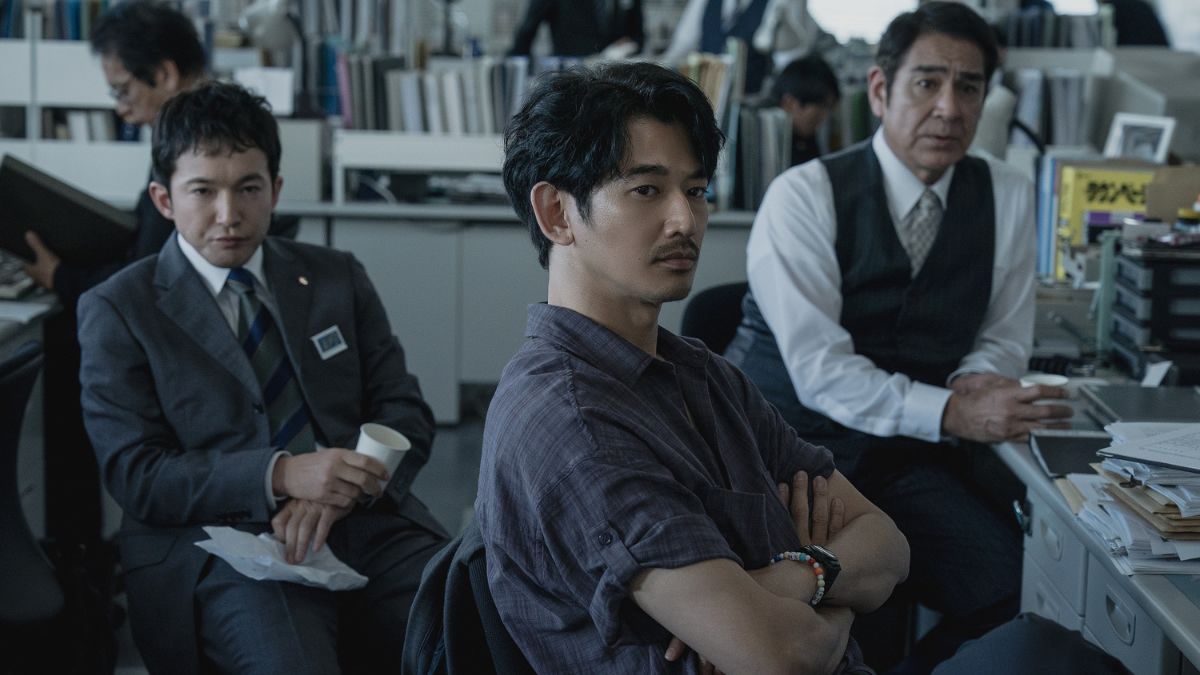
The series’ handling of these complexities is admirable, and the characters’ decisions ultimately break the cycle for at least one character, even if a last-minute callback in the final episode is more sentimental than earned. That is where the second half of The Blue Road finds its footing. The first half addresses the dangers of idealizing the past to an extreme, with horrifying results.
The second half addresses the importance of not being tethered to the past, using Seok and his encounters with the mysterious figure to unravel it. The past is important to remember and reconcile with, but the more we hold on to it, the longer it takes to address and heal wounds. In Seok’s case, what is uncovered from the past can never be unlearned, adding layers that make you question everything you know.
The Blue Road is incredibly compelling, with layers of history and depth that make the story all the richer. What starts as an uneasy collaboration between Inose and Seok turns into an undeniable bond that could stand the test of time, with Son Suk-ku’s and Eita Nagayama’s performances drawing you in and making you root for their characters to make it to the very end. For crime drama fans, add this to your list. It’s a must-watch.
The Blue Road is now streaming exclusively on Netflix.
The Blue Road is incredibly compelling, with layers of history and depth that make the story all the richer for it.