
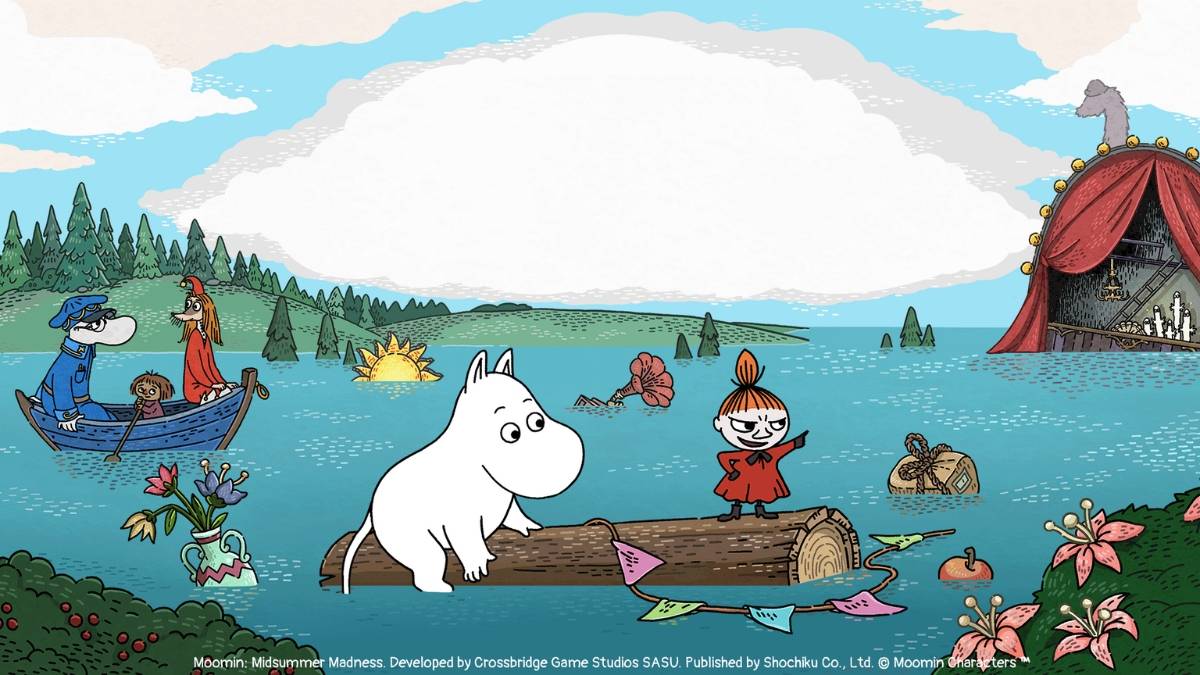
Moomin is one of those cute characters out there in the cultural zeitgeist that I actually know very little about. Finnish creator Tove Jansson‘s artwork has stayed with me, and it’s part of the draw of my picking up Moomin: Midsummer Madness in my first foray into the Nintendo Switch. This cozy adventure is more adventure than simply cozy, with a disaster upending everything its characters know for a spell, but there’s a sense of calm and whimsy to this world that invites a sense of respite away from the outside world that is just lovely.
Developed by Crossbridge Game Studios and published by Shochiku Games, Moomin: Midsummer Madness starts off on a summer day. Little My is terrorizing her sister and runs off to find Moomintroll. In Chapter 1, players learn to navigate the item storage system, switch between Little My and Moomintroll for certain actions (usually based on their size), and complete the tasks assigned to each to move the story along. This all helps prepare the player for the destruction to come as Moominvalley gets flooded in Chapter 2.
With each new obstacle thrown at Moomintroll and his friends and family, themes arise around the importance of adaptability and making the best of one’s circumstances. But also, everyone we meet has their own struggles and story; in times of crisis, it can be isolating. Through Moomin and his family’s adventures in Moomin: Midsummer Madness, we see how these barriers to isolation can be broken down, but also how outlooks inform how we approach crisis.
Moomin: Midsummer Madness starts with summer bliss before disaster arises.
Little My, in particular, is the best vehicle to see these themes through. She makes the perfect vehicle for younger players to latch onto in this all-ages venture. While her jokes lean more toward the dark, she’s constantly having fun as she navigates her surroundings with Moomintroll, and never hesitates to engage with the strangers she meets along the way. This playfulness extends into mini-game puzzles players can choose to do or skip, giving a slightly deeper look into how Little My sees each new task.
Even more fun is seeing these characters’ personalities shine through long before a word is uttered, and the game’s 2D art style (pulling from Jansson’s material) only emphasizes these traits. Moomintroll’s calm, stoic presence in both appearance and personality provides a lovely contrast with Little My when they’re paired together, with Little My’s devious expression speaking volumes about her nature before she even says a word.
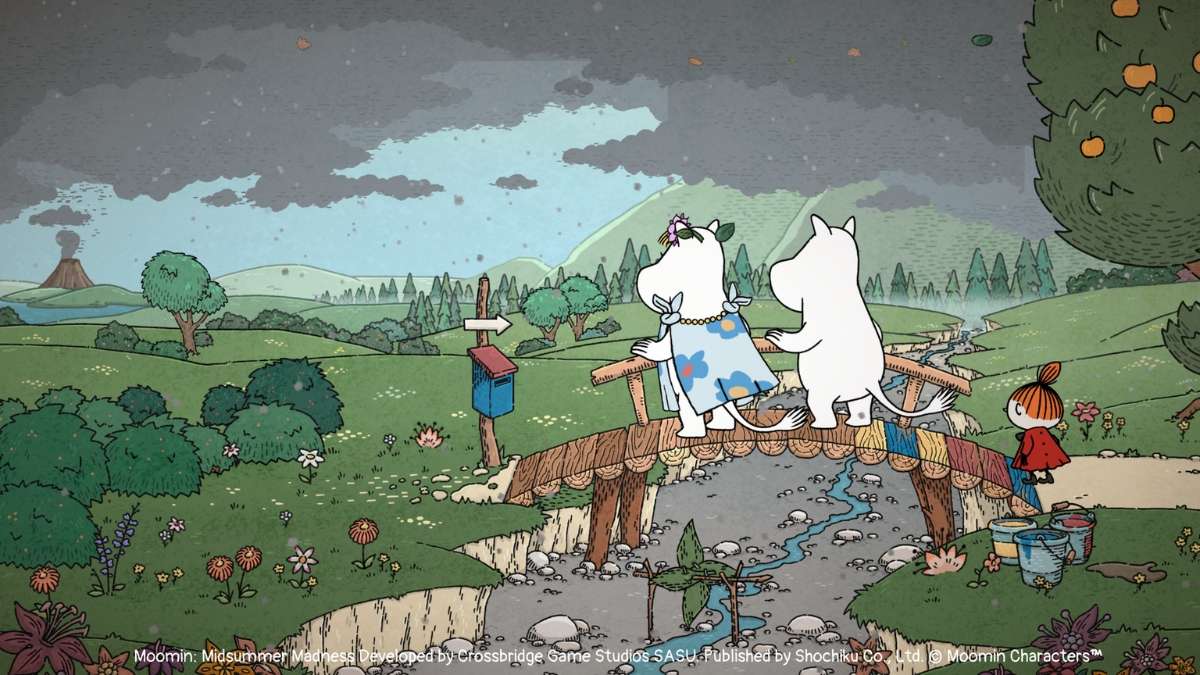
However, even with the whimsy and gorgeous backdrops in each setting, Moomin: Midsummer Madness never lets players forget the severity of the in-game disaster. The stark image of a volcano erupting in the distance while the Moomin family watches ends Chapter 1. Chapters 2 and 3 never shy away from the severity of the floods that have impacted the family home and surrounding Valley.
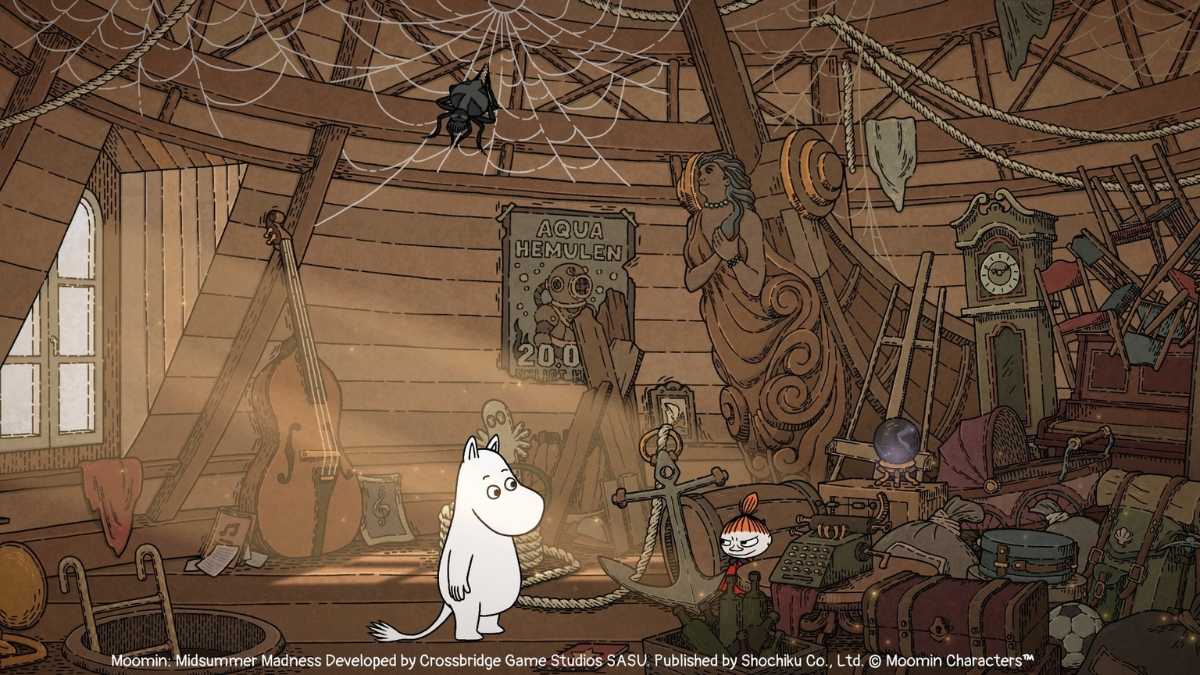
The attention to detail crafts beautifully intricate settings to explore but can overwhelm in a search.
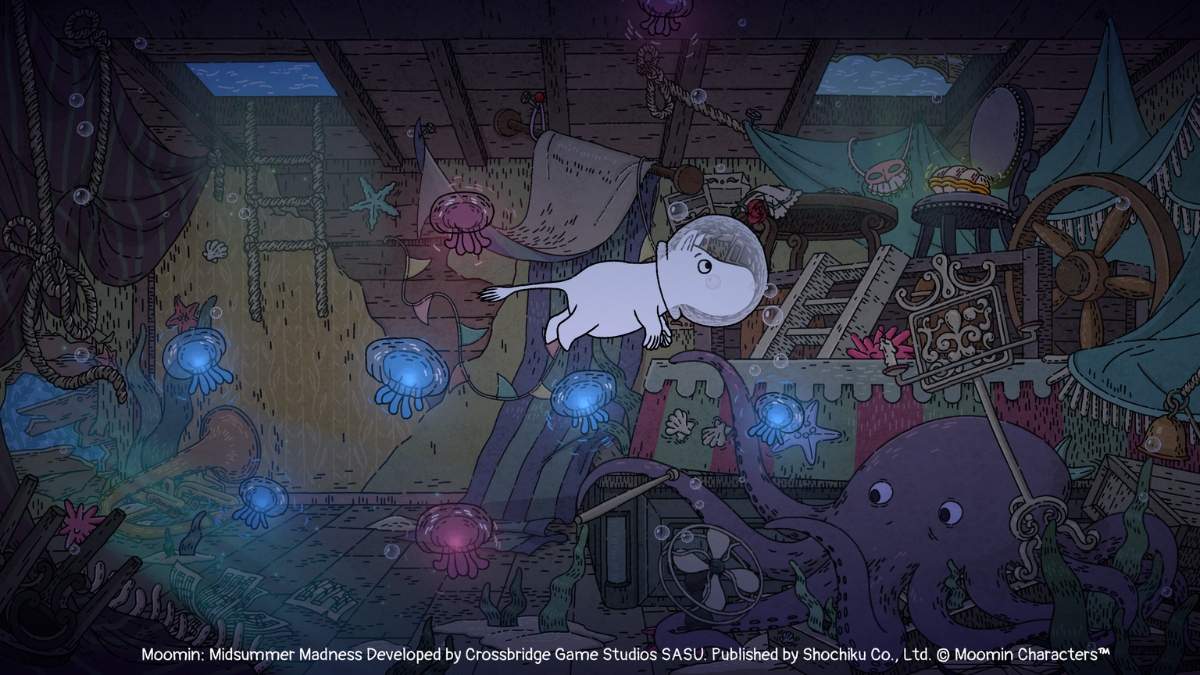
Some tasks tie into safety, whether it’s making sure there is a source of oxygen for swimming or chasing away a threat that could electrocute them before they can complete the next task. And when one neighbor is left abandoned by family after the flood, sick and in need of medicine, it shows a scenario that could easily happen in the real world post-disaster. Moomin: Midsummer Madness is cozy, but there’s more to read beyond its whimsical, comforting adventure. It reminds us to help others when we can, especially in times of need.
It’s easy to understand, though, why those notes might be missed because of how rooted in the fantasmical Moomin: Midsummer Madness is. There are so many details in each new space the player enters that the eye easily wanders. The attention to detail is both a blessing and a curse because many tasks center on finding items. Some of these details can distract or become red herrings for players desperately searching for the final item needed to move on to the next part of the story. It can be a little maddening.
Similarly frustrating, but not game-changing, is that it isn’t instinctive to use the touchscreen portion to activate certain prompts and dialogue. Part of this could easily be attributed to user error on my end, but in Chapter 1, where the tutorial portion takes place, the player learns that if an eyeball icon or cogs appear over an item, one should investigate and can do so with the buttons. Sometimes,
It may not always be easy to solve the puzzles, but seeing where the story goes next is its own reward.
In subsequent Chapters of Moomin: Midsummer Madness, this is not always the case. I only discovered that I could investigate unmarked things with the touchscreen by pure accident in a later Chapter. Sometimes you can also work around it by toggling the R button, but you need to get close enough to the item for it to work. Clearer directions in Chapter 1 on touchscreen functionality would help players of all ages better understand the range of exploration available through both the buttons and touchscreen functions.
Even so, the challenges presented, from finding items to solving a variety of mini-games, give players of all ages plenty to do to add stimulation to this cozy adventure. With each new task completed, there’s a dearth of satisfaction in seeing the story continue forward in Moomin: Midsummer Madness. And with each new twist and turn (seriously, I didn’t know where things were going to go with each chapter), there are surprises in store for those who are entering the world of Moomin for the first time.
Moomin: Midsummer Madness is both cozy and just as mad as the title proclaims. What starts as an innocent summer day quickly turns into a once-in-a-lifetime disaster for Moomintroll and his family to navigate, giving players a healthy dose of puzzle-solving (with some puzzles a little harder than others) to keep them on their toes. As an entry point to the world of Moomin and the Nintendo Switch, it’s a safe way for players to test the waters and get their feet wet, metaphorically speaking.
Moomin: Midsummer Madness is now available on Steam, Nintendo Switch, and Nintendo Switch 2 for $19.99 USD (€19.50). The game has a limited-time discount of 10% until November 26.