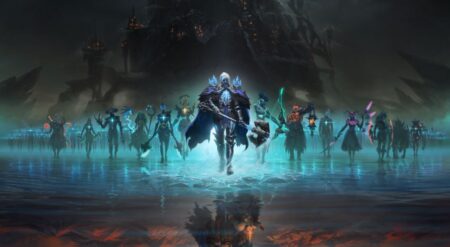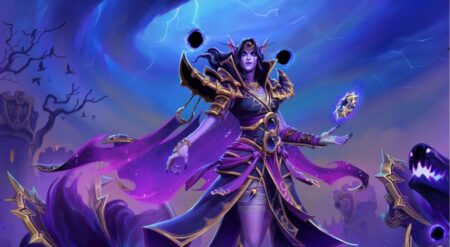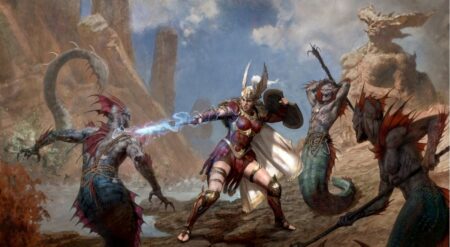


Warlock: Dungeons & Dragons had its gameplay debut at Gamescom 2026’s Opening Night Live. Published by Wizards of the Coast and developed by Invoke Studios, the game is a loud return for the publisher to gaming. And it’s picking up the Dungeons & Dragons baton from other entertainment. The gameplay looks fantastic, and so does the voice cast, with its leads, Kaatri and Tasha, voiced by acting icons Tricia Helfer and Maggie Robertson, respectively.
During Gamescom in Cologne, Germany, we sat down with actress Maggie Robertson to talk about Tasha. Known for her work as many baddies (both villains and baddies that Megan Thee Stallion would approve of), Robertson is no stranger to using her performance to evoke intimidation. As Lady Dimitrescu in Resident Evil Village, she took the internet by storm. But now, with Warlock: Dungeons & Dragons, she’s not a villain; she’s just complicated.
In our interview with Robertson, she digs deep into that physicality and finds new layers and heights of performance with her latest role. As Tasha, and with all of her roles so far, Robertson has to consider the tools in her arsenal, assessing if it’s either the “hammer or the wrench” that will best assist her with the project at hand.
We spoke about finding a new layer in her performance with motion capture, the necessity of complex, messy women characters in games, and the surrealism of sharing the stage with actors she considers titans of the industry. And most importantly, we walk away understanding what women like Kaatri and Tasha can bring to storytelling.
This interview with Maggie Robertson for Warlock: Dungeons & Dragons was conducted on-site at Gamescom and has been edited for clarity and length.
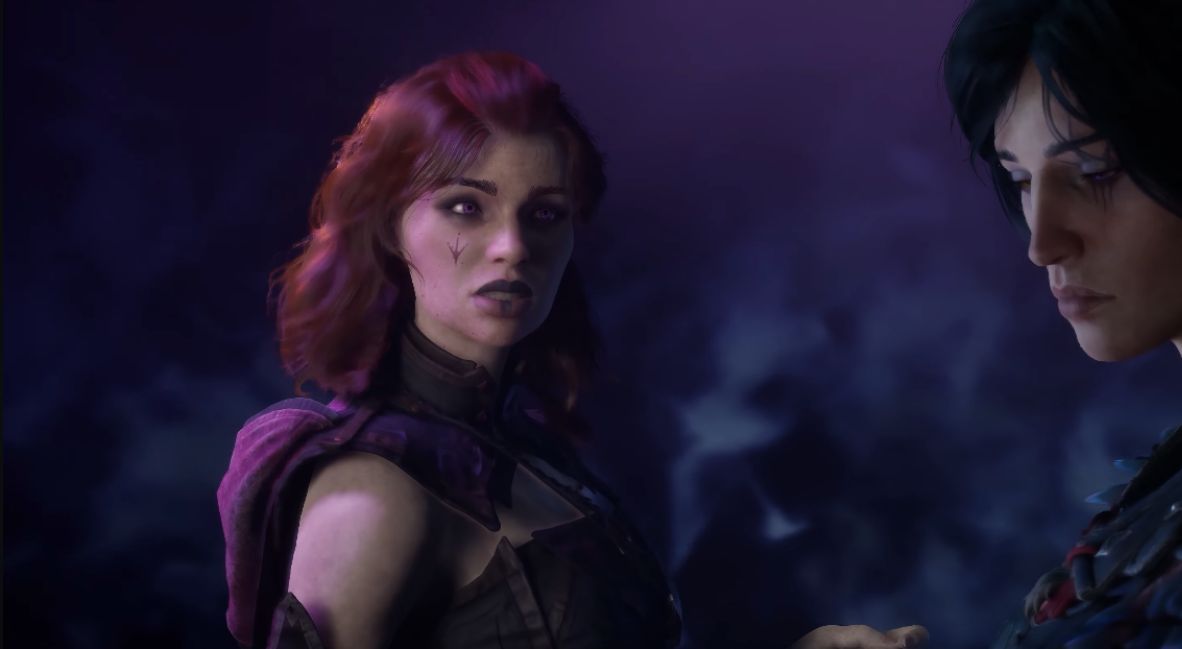
BUT WHY THO: The presentation for the opening night live was phenomenal. How excited are you for this to be out in the world to showcase yourself and the game?
MAGGI ROBERTSON: I’m very excited. Less about showcasing myself because that’s always awkward [laughs], but more about finally having our hard work put out there into the world. Getting to watch the gameplay trailer at Opening Night Live was, I think, only the second time that I had seen it, so I am of the people. I am equally excited and jazzed to see all of the new material that comes out at the same time as everyone else.
It’s so thrilling. We just hope that everyone loves it as well. It is a huge act of faith because, especially for the actors, you know, we come in, we record our stuff. We do the performance capture, but sometimes the animation hasn’t quite been finalized, so we’re not really able to see the final renders.
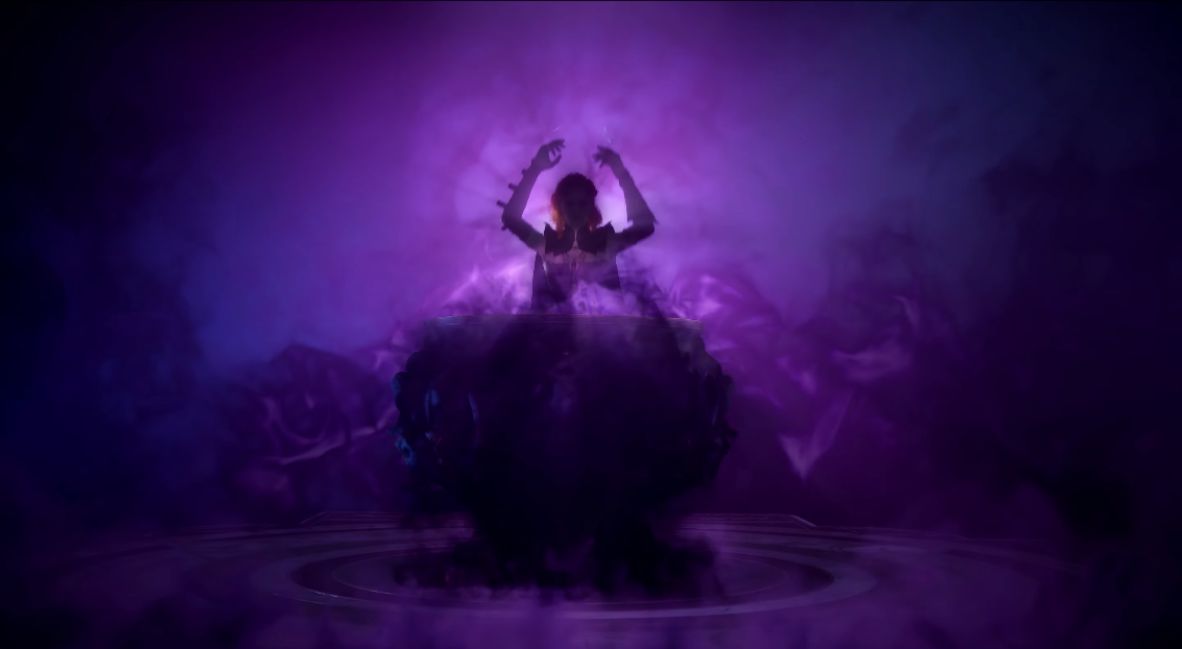
And so you’re just like, “I sure hope that it all comes together.” And so seeing it last night was so exciting to see it all come together and be like, “Oh my God, it’s happening!” And it looks so cool. The way the magic works in the game looks so unreal.
BUT WHY THO: What drew you to the project specifically?
MAGGIE ROBERTSON: I love this question because the answer is always I got the audition [laughs.] With video games, because everything is always so under NDA, we often don’t have a lot of information about what is in development or what’s open for us to access.
So it really was the moment of, “Okay, this audition.” My agent sent me this audition, and I think I originally auditioned for a couple of different characters. Then finally it was Tasha, and she’s just such an exciting character who straddles the line between good and evil.
Obviously, we know from my repertoire that I like playing baddies, and I do find that quite fun. Tasha is a nice new challenge because she is an ally. She’s your patron in the game, so she is somebody that helps you out. But she is also the person who is always going after her own ends, and you never know what her true goals are, what her true motivations are. So she is your ally, but you do have to be careful at the same time.
BUT WHY THO: How do you feel moving in that direction? Because you are very good at being bad. Are there different parts of yourself that you access to shift between playing a villain, but also playing, you know, playing Tasha now, and being both the ally, as you said, but also maybe keeping some of those edges nice and sharp at the same time too?
MAGGIE ROBERTSON: That’s a great question. Because I come from a Shakespeare and a theater background, the text is always the paramount thing. My work always starts with the text, and that’s why every character feels different because every character is written differently. You can hear it linguistically. You can hear it in the rhythms and their speech patterns, the words that they use. All of that gives you clues about the character.
I always start there, and that’s how I access inwards, and I always find, for me, if I can find the physicality, if I can work kind of from the outside in, that really helps me as well. Because then I get out of my head, and then I’m just kind of feeling it. So if I can find the little physical moments that feel true to the character, then that really unlocks something for me.
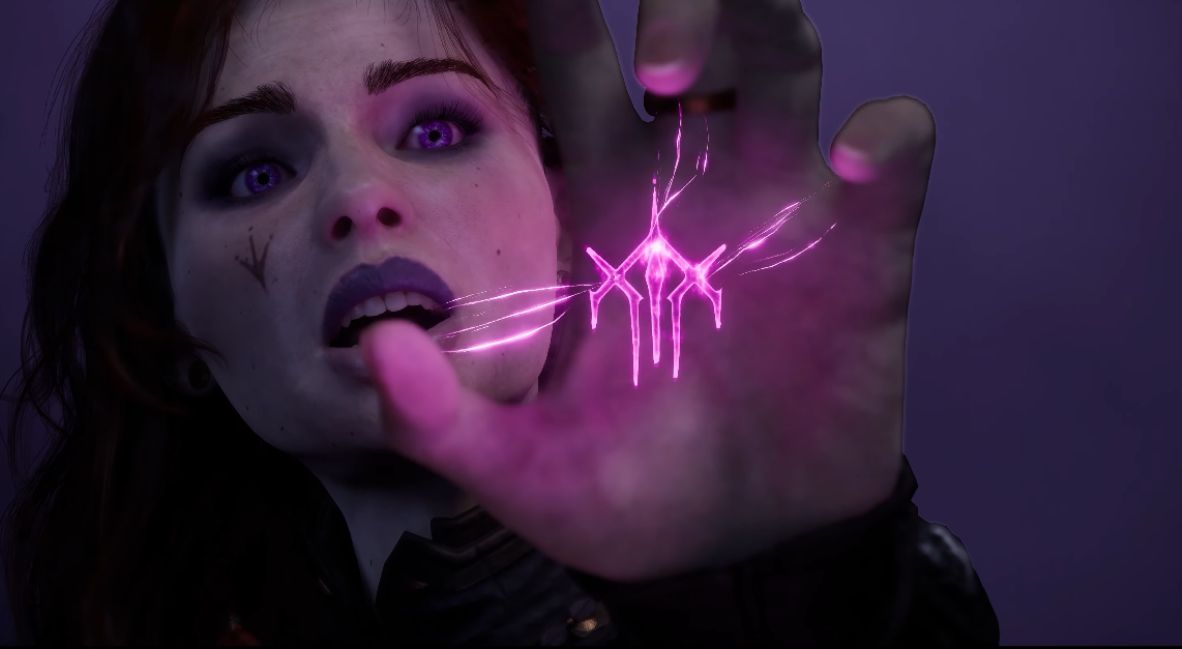
BUT WHY THO: What is it like doing this for video games where you haven’t seen the animation yet, and you are using the script to bring in your own life to it? What do you want people to know about the physicality of the recording booth?
MAGGIE ROBERTSON: Well, for this one, we did get to do performance capture, so we have some stuff that we’ve done in the booth. We’re also up on our feet recording it like a regular acting process. The thing I would want people to take away is that it’s all acting with a capital A.
It’s all under the acting umbrella, and anything that you do, whether it’s on camera, voiceover, motion capture, or stunts, it’s all acting. It’s just a matter of what tool in my toolbox I’m going to use today. Am I going to bring out my hammer, or am I going to get out my wrench?
It’s just the little fine-tuning. With video games, sometimes we don’t get much time in advance to prep the material. You have to have put in your 10,000 hours of work beforehand, before you even get the job, so that you know that you’re able to make snap decisions and be versatile and flexible enough on the day.
So that if your director comes in and says, “Hey, actually, later on this character does this, so we actually need you to do this in this moment to like build up to that thing,” you have to be able to make that switch and take your ego out the door because you might have come in with a great idea, but it just doesn’t work.
So being able to be flexible. It doesn’t matter how good of a voice you have, or how many good voices you can do. If there’s no acting behind the voice, you’re never going to book the job.
BUT WHY THO: I’ve found that, whether it’s an actor, director, writer, or a developer, there’s this thing about creating where you throw every bit of yourself into it. I also firmly believe that when you do that, you also learn something from either the work that you’re attached to or the character that you’re playing, and you learn a bit about yourself in that process as well.
So with Tasha, what has she been able to teach you about you?
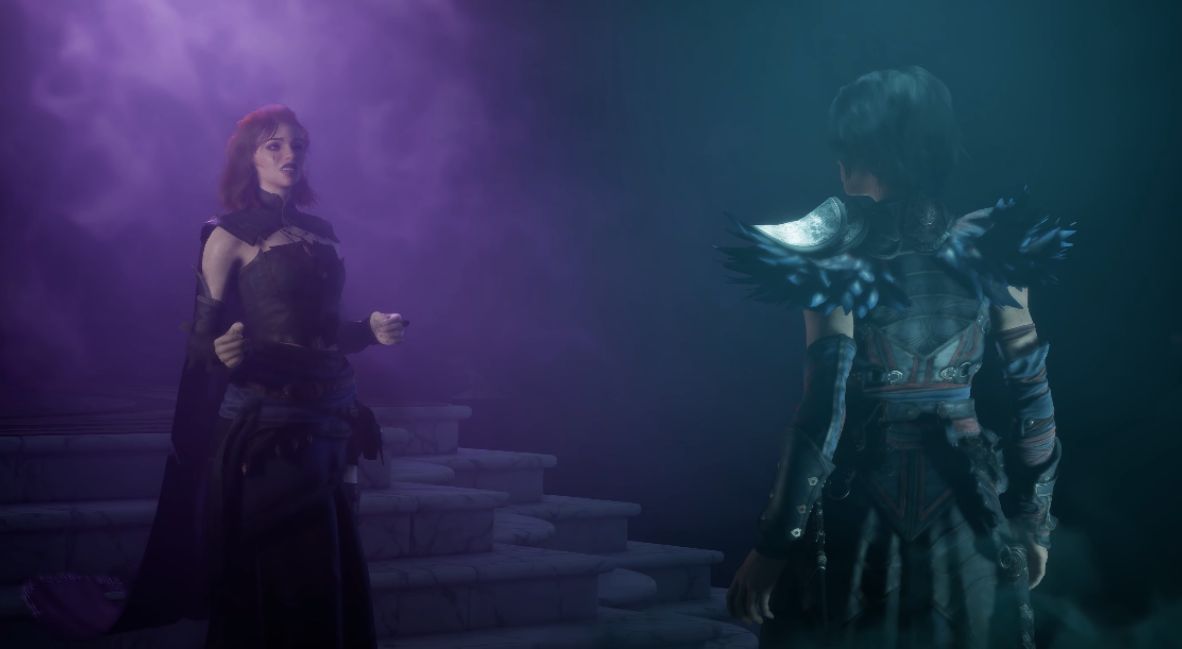
MAGGIE ROBERTSON: I feel like Tasha is someone I’d love to be. I don’t know if I quite am her yet. I think I oftentimes package myself in a similar way. What I admire about Tasha is that she is so smart and quick-witted, and her business acumen is like off the charts. She’s planning 10 steps, 100 steps ahead of wherever you are, and so I love that.
She’s a badass boss bitch. She knows what she wants, and she knows how to f___ing get it. She goes after it, and she makes it happen. That is something quite admirable about her. We can sometimes question her methods and who she throws under the bus to get there, but she always gets what she wants, and she doesn’t suffer anybody else getting in her way. I think, especially as women, there’s something to take away there that I’m like, yeah, hell yeah, stand in your power, like get after it.
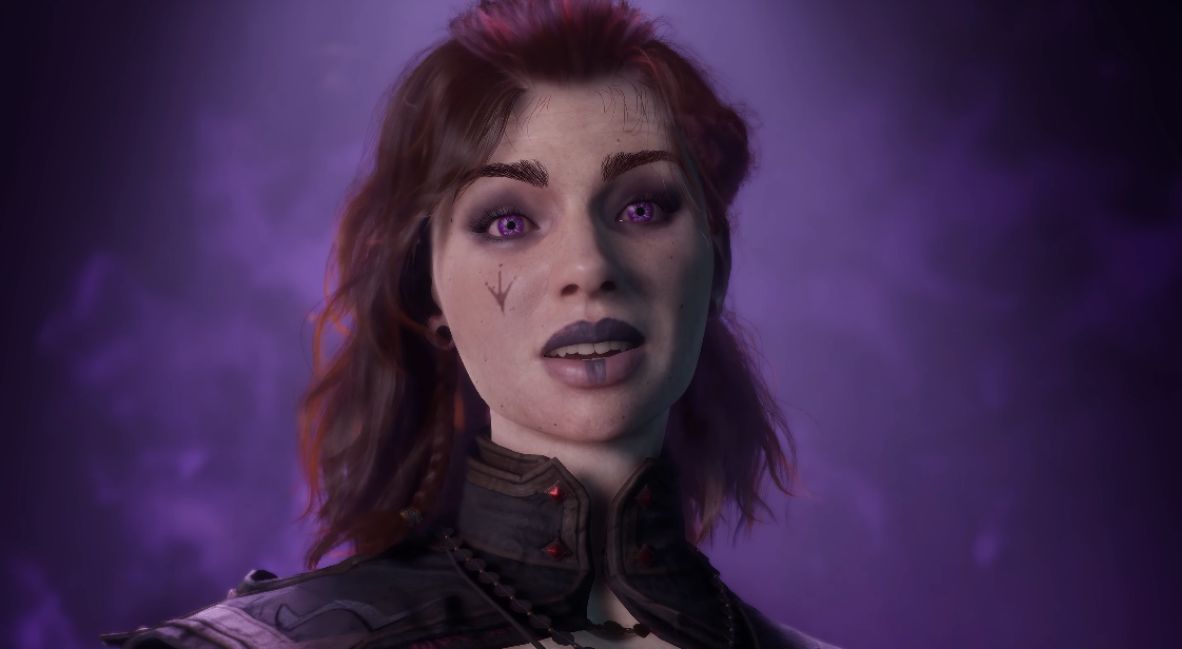
BUT WHY THO: I love getting to speak to women who are part of video games because sometimes it is very easy to feel overlooked as a woman in games myself. But I think that there’s something with what we’ve seen from Tasha so far, and just in this conversation with you, that’s not black or white. She gets to be a little messy.
For you, what is it about characters like that, especially women characters who don’t necessarily get pushed into a specific role, but really find themselves and be themselves in the process? How does that resonate with you? And do you hope it resonates with fans?
MAGGIE ROBERTSON: I definitely hope it resonates with fans. It feels like the true meaning of diversity is getting to a point where the stories are not just about X, Y, Z, but about that person; in fact, as you say, they are messy, and they’re neither black nor white. They can be a whole jumble of a lot of things, and that’s what makes them interesting. That’s what makes anybody interesting.
We’re all full of contradictions, so the more we can create characters that invest in those contradictions, the more exciting it becomes. I think we’ve seen that in our history with games, and the characters that really pop off in culture and the games that people are excited about are the games that have characters that are complex. How cool is it that Warlock is a game with a female protagonist and a female patron?
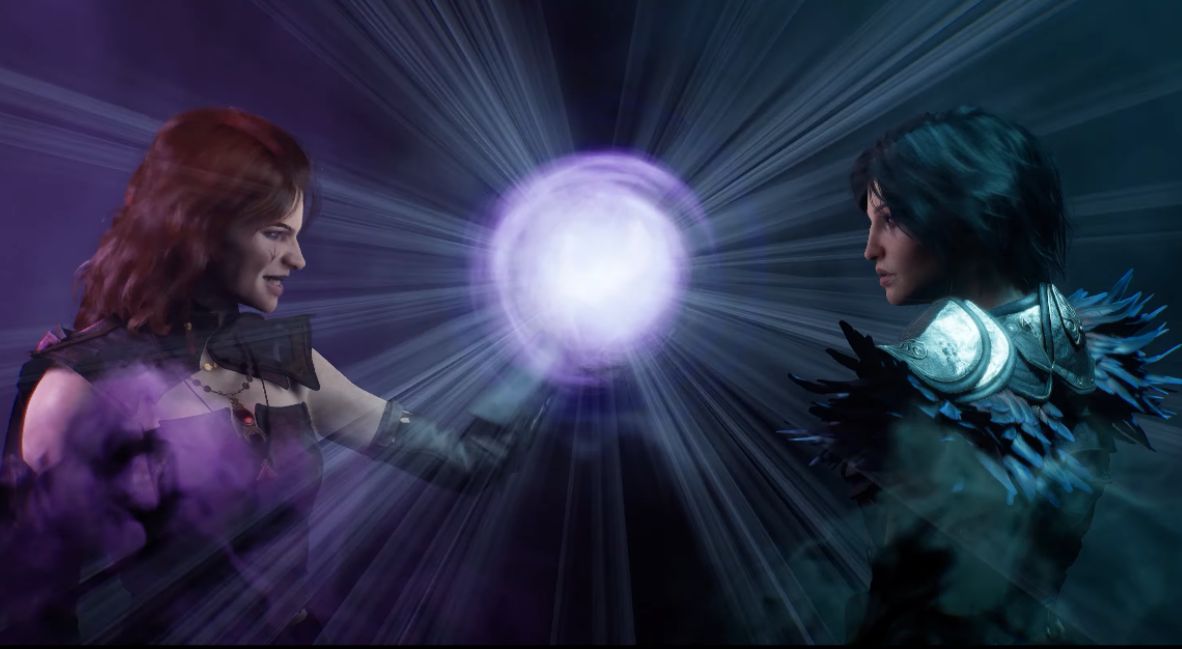
I’m not going to toot my own horn a lot, but like, there are two lead women in this game, and that is so exciting. And they’re both incredibly different from each other. We are going to get to see a wide range of what it means to be a woman and what it means to be a powerful woman. They both are incredibly powerful, but in different ways.
BUT WHY THO: Instead of asking about your favorite big moment or major reveal in the game, I want to know what is your favorite small moment? Maybe it’s a small moment in your performance that you got to either do the motion capture for or record that maybe hit you differently.
MAGGIE ROBERTSON: There are a few that come to mind. It was so surreal getting to work with Tricia Helfer on this. I’ve been a Battlestar Galactica fan. I’ve been a Lucifer fan. Being put in the same arena as these titans in the industry…I felt the same way with Baldur’s Gate 3.
I didn’t get to work with them personally, but just, you know, being lumped in the same category as Jason Isaacs and J.K. Simmons, and now getting to work with Tricia on the ground, it was so inspiring to see the way that she works.
She’s such a professional, and I think the last scene that we filmed together, we both got a little emotional at the end because it really was like, oh, we came, we found something. We felt the characters really connect in that final scene, and so that was very special.
BUT WHY THO: Now that it’s out in the world and people have seen gameplay, people have seen you – what do you hope players walk away with from Tasha and your part of the game once they beat it and the credits roll?
MAGGIE ROBERTSON: I think the relationship between these two women is extremely complicated, and so I hope people walk away enjoying the complexities of that, and how neither one of them stands firmly on either side of the line.
I hope they walk away also still feeling how powerful they both are. Even though Tasha is Kaatri’s patron, Kaatri is extremely powerful and badass. I hope they walk away feeling the mutual respect that both of these parties have for each other.