
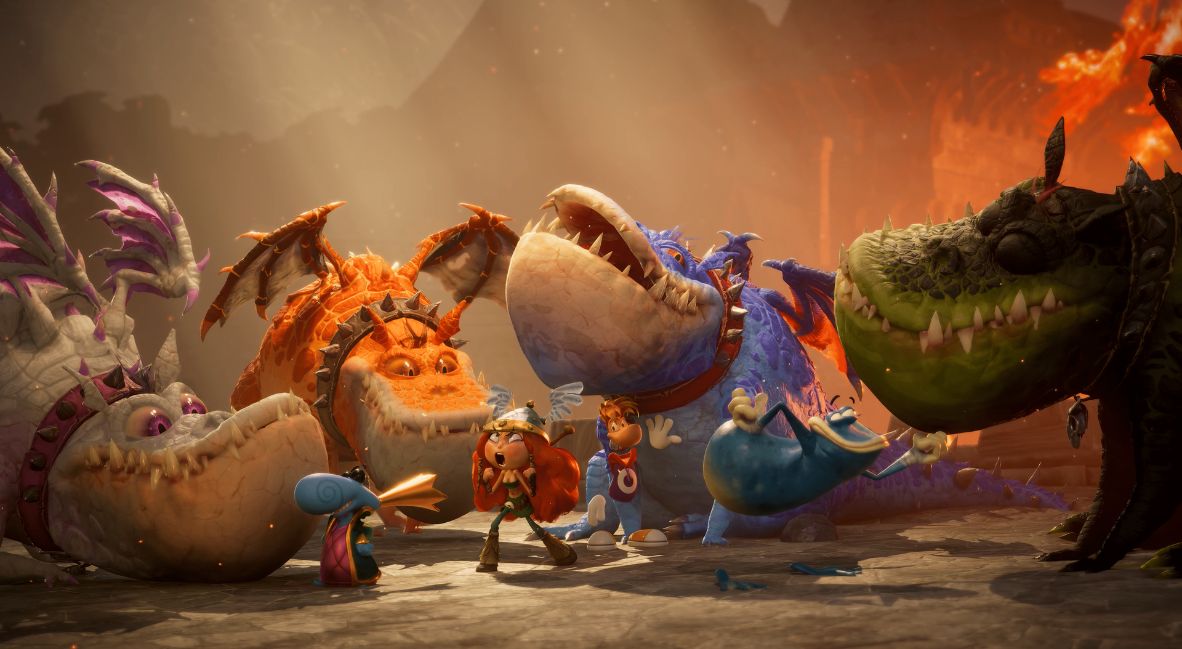
It’s been 13 years since the last Rayman game, and now Rayman Legends Retold is bringing it to a new generation of consoles and fans. Ubisoft has explained that the new title is a retelling of Rayman Legends. While the game remakes the 2013 platformer, Ubisoft leans into its storybook structure and retells the legends with a new world, new mechanics, and a bevy of accessibility options.
Co-developed by Ubisoft Montpellier and Ubisoft Milan, two studios behind the Rayman IP. Together, the studios gave Rayman Legends an art overhaul, pulling the former 2D side-scroller into 3D animation and reimagining the levels to meet 2026 expectations, impacting art direction, difficulty, mechanics, and more.
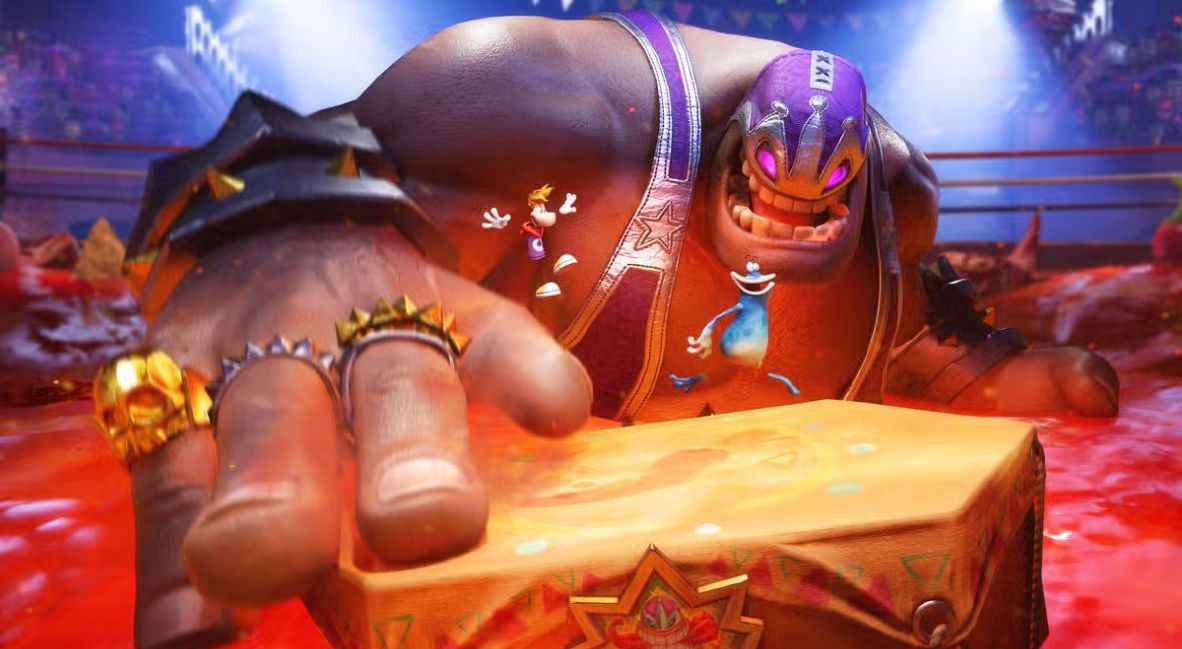
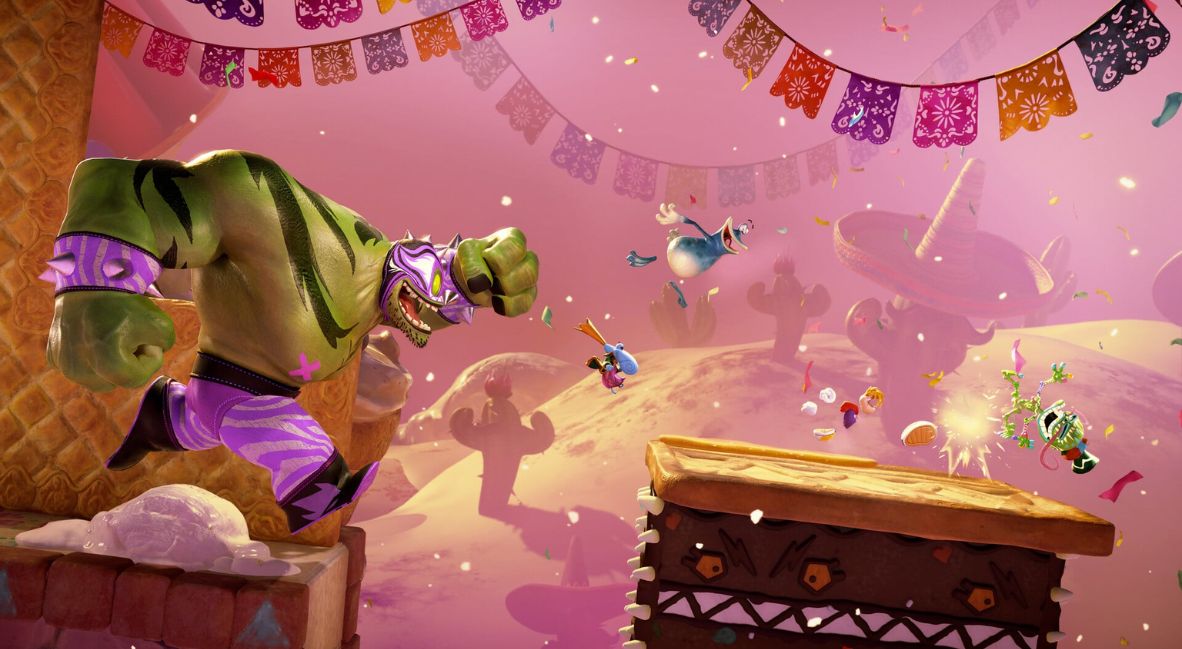
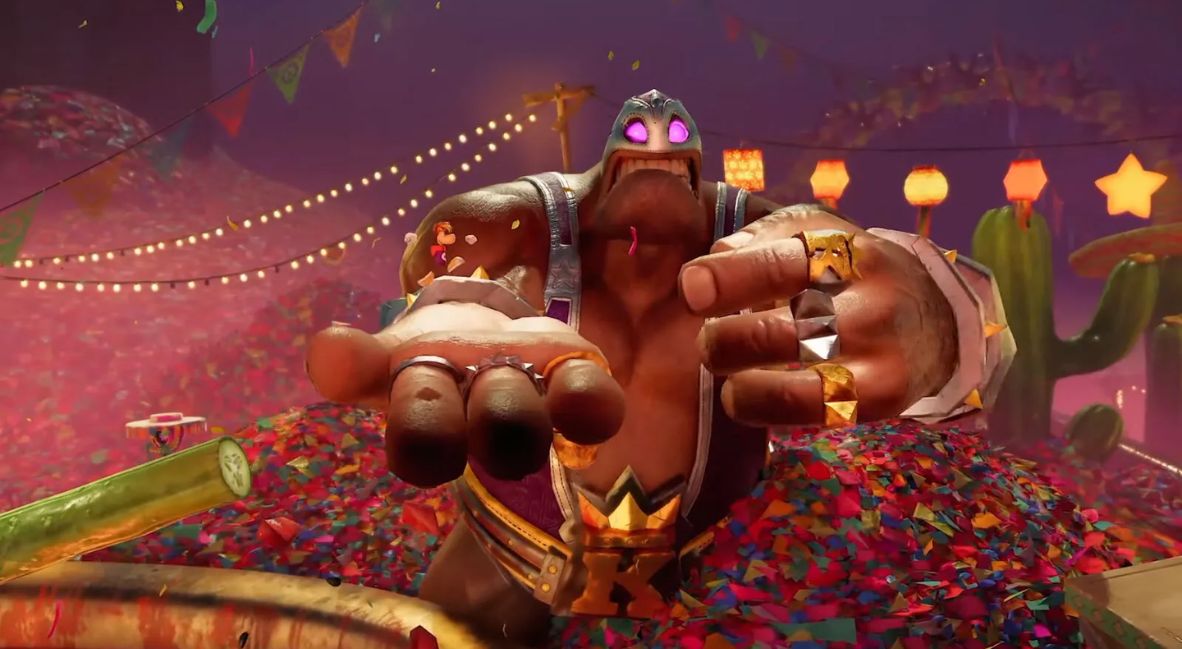
One standout world from our three-hour preview of Rayman Legends Retold is the new take on “Fiesta De Los Muertos,” now called “Mystic Mesa.” Inspired by Mexican culture and food, the world features a giant Luchador boss you can move around. The levels in Mystic Mesa range from walls made of cortadillo (a bright cake sold at Mexican bakeries), running around a vibrant town filled with calavera-inspired enemies, and more, before culminating in a boss battle with a luchador.
After our preview, we spoke with Rayman Legends Retold‘s Loïc Gounon, brand producer at Ubisoft Montpellier, and Marco Renso, the animation and realization director at Ubisoft Milan. In our conversation, we discussed the Mexican inspirations in Mystic Mesa, what goes into “retelling” Rayman Legends, how the teams approached accessibility, and what it is like bringing Rayman to a new generation of gamers (some of whom are their own kids).
This Rayman Legends Retold interview was conducted via Zoom and has been edited for length and clarity.
BUT WHY THO: What’s really exciting is seeing Raymond come back after about 13 years, 13-ish years away. And I had to ask: what is behind the name Retold? Not just from a branding perspective, but also from how you’re approaching the art direction of having it be a retelling while still honoring what people expect from the Rayman series.
MARCO RENSO: I love the question. Yes, yeah, it’s not a random name, actually. Yeah, because that, I told you, speaks for itself. It was a way for us to reimagine a game, a great game, but that we wanted to approach with something new. From a storytelling point of view, that’s something we wanted to bring a feeling of adventure to the game. The original game was a great game, but let’s say that story was probably not its strongest point. We wanted to introduce a new villain and give a sense that the world is believable and immerse players in it.
BUT WHY THO: And I think that really came through with what we played. Actually, I’m Mexican-American, so the Mystic Mesa level was something I was very excited for from the game’s Opening Night Live trailer, and from my time with the game. Now, we saw this level in the original Raymond Legends, but it has changed for [Retold].
What was it like picking pieces of the Mystic Mesa to hold onto and also choosing the elements that you knew needed to be updated for 2026?
MARCO RENSO: Another good question. Mystic Mesa was a challenging one because, while giving the sense of a world that is connected and believable, as you notice, working on the hubs, the dragon rides, you know the story. We tried to give us a feeling of a connected world, and some levels on Mystic Mesa were kind of abstract, so we tried to explain why. So we introduced concepts like vision and world-building to give a sense of it.
For example, when working on the Macarena musical map, there was this element of the chili coming from the regional game, like the boss battle was starting with the boss pouring chili sauce in the arena, and we noticed that for us it was an opportunity to give a bit of storytelling to that.
We introduced that element as a theme and storytelling element in the map, and connecting all these elements was part of the process. [We wanted players to] understand how you can justify the presence of this element in the level without changing, you know, the bizarre nature of the brand.
LOÏC GOUNON: I wanted to [compliment] what Marco said. A starting point was also making sense of the geography of that world and the topology of the world. It all started with a drawing of the world map and where the place could be, because we imagined the network developing the game without having it as a tool 13 years ago, because it was not developed that way.
And so, post-rationalizing world consistency was not an easy challenge, but it was a fun one. Starting by drawing a world map, understanding where the places could be and where it could make sense, and then connecting all the dots. That’s been the fun part of making the thing more consistent, as Marco said.
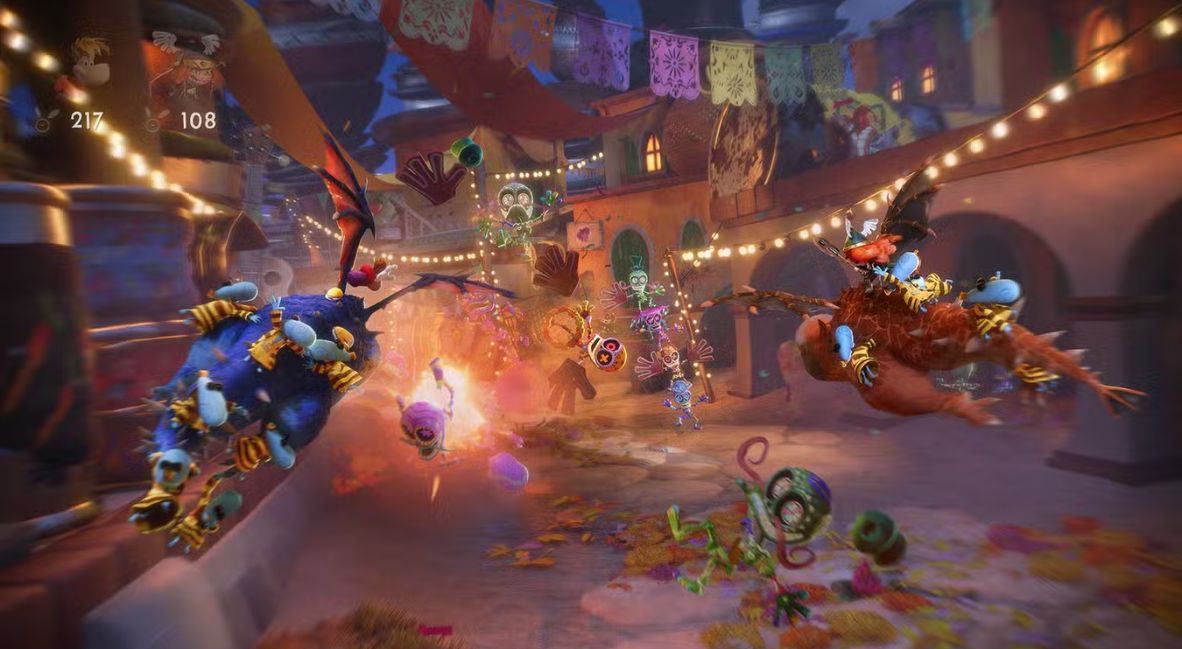
BUT WHY THO: One of the other things I think that also came through was the design of, like, how do I say, portraying Mexican culture. The immediate thing that I think a lot of people will notice is the calaveras, the little sugar skulls, and those enemies.
But another thing I noticed was the pink frosting cake. Like, I ate that growing up all the time. So the fact that there’s a cake level, and the frosting is specifically pink, kind of stood out to me as, like, “Okay, they’ve done their research on our panaderias.”
Are there any other small elements within “Mystic Mesa” that you’re excited for players like me to jump into and find? Are there any small cultural nods that maybe aren’t huge and in your face, but still showcase the thought that went into designing the world?
MARCO RENSO: I have to say that for the work done by our artists, they spent a lot of time [on research]. I notice that the levels are so full of details that sometimes—even now that I’ve been working on the game for a few years—I keep noticing [new] details here and there.
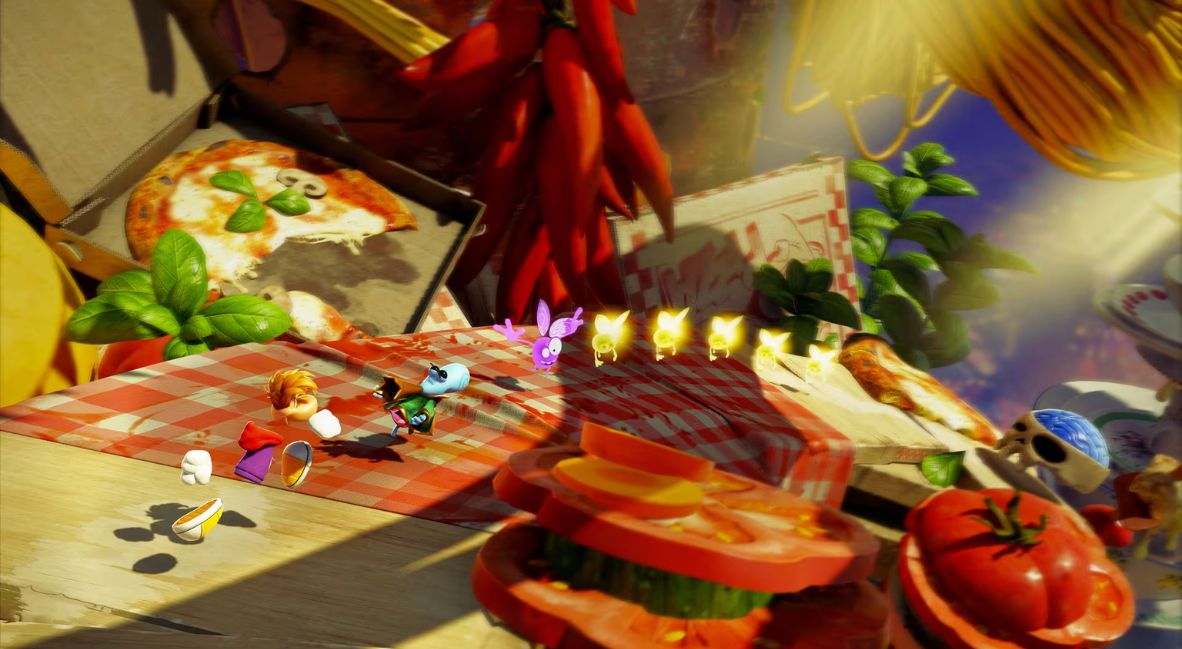
There are a lot of details and Easter eggs here and there that you can notice, and things that the artists have added themselves. So, I cannot pinpoint exactly one specific thing, but for example, in the Macarena [rhythm level], the latest part is kind of inspired by pizza as a theme. There is one specific kind of pizza that one of our developers loves that he put there. It’s almost hidden because everyone dislikes [that pizza], apart from her. It’s hard to notice, but it’s there. So it’s it’s full of these things.
LOÏC GOUNON: I think it’s funny what Marco described, because a huge part of Rayman is a sense of humor and self-deprecation, and I think we are mocking in a way that is not naughty; it’s not mean in any way. It’s what Rayman does. But we’re also mocking ourselves too!
You will see us mocking the French accents as bad as mine with some characters you will meet in the game, like Victor Velour. We’re also mocking Italian culture. It’s [all a] part of the [Rayman] franchise to mock a bit of situations or people or characters. But the mocking also includes self-deprecation about our own work and culture, which makes it obviously more acceptable for people as a sense of humor.
BUT WHY THO: That sense of humor is really fun. And I think what is really interesting is that that sense of humor also seems to have made really challenging platforming mechanics at the same time too.
So you can all take this question however you’d like, but I died a lot. I’m going to be honest. And I love platformers, so I didn’t expect to [die so much], but also this no death really felt horrible, and I think that part of that was about the design.
The world is always inviting, whether it’s the animations in the background or the artwork, but also in the level design itself, with gaps between the challenges and the reprieve. Can you all talk about balancing the idea of challenging your player while also making sure they always feel invited to come back even if they keep dying?
LOÏC GOUNON: It’s part of the ongoing conversation we still have on [Rayman Legends Retold] because there’s always a stretch on those particular games because platformer genres are rooted in, let’s say, the die-and-retry philosophy from the first Mario Bros. It’s part of the DNA of platformers, including Rayman 1, which was especially tough to understand, you know, by dying in a way.
[Challenge] is a part of the formula and what people love, but at the same time, 30 years after the creation of platformers, or 40 years after, maybe people have less tolerance for dying too many times, etc. So we need to be more welcoming to players.
When you have a long-running IP, you have your core gamers [who] love the difficulty, and it’s part of their DNA, and you don’t want to break that. But at the same time, you want to be welcoming to younger players who did not grow up like us maybe 13 years ago and 30 years ago with core arcade-type platforming. Part of the answer was that we did not want to change the nature of the challenge of Legends because we’re remaking a game, which includes respecting its design philosophy, its level design, and what people loved.
That’s why we developed a new set of accessibility features, including two that you might have seen in the preview. One is a golden heart system. If you die at a certain checkpoint four times, a golden heart is going to appear as help for the player. That’s optional. You are not forced to take it, but it allows you to get hit twice instead of dying after the one hit.
The second layer is that if you die up to seven or eight times, a new activity kicks in called the Fairy’s Blessing, and Betilla will lend her power to help you pass a certain area. You’re not forced to use it everywhere, but in a certain sequence where you’re stuck because of a difficulty peak, you could just move through that sequence and continue, but it’s still part of the world-building and the lore because it’s a new power given by Betilla, not just an option in a menu.
We’ve had lots of conversations in many months about those design features, their implementation, their tweaking, and as we observe more players playing in playtest or more journalists experiencing the game, there are little adjustments and fine-tuning we are still doing.
BUT WHY THO: One of the things that I’ve always loved about Rayman is the humor, but I also think the ability to really blend these rhythm elements into platforming itself. Two of my favorite levels, which shouldn’t be a shocker, in “Mystic Mesa” are the “Macarena” level and the mariachi version of the “Eye of the Tiger” level.
What was the approach to designing these levels? Now that we do have more modern advancements for both game design and implementing rhythm elements as well. Technology’s come a long way in 13 years.
MARCO RENSO: Yes, technology has evolved, but at the core, it’s still that everything starts with the music, and the rhythm and the pacing of it. We start by choosing the right track, and then, at an early level, design prototypes, and we can already tell if it can work or not. If the potential is there, it’s a matter of iteration because it’s a matter of rhythm and flow, which is another element of Rayman Legends that is key.
Even if things have evolved, at the core, the musical idea of [the level] is still the first part. Then comes the fantasy, the storytelling, like how to make it visually engaging and the whole humor into it. But everything starts with the music.
LOÏC GOUNON: If we bounce back to technology, [it was really] what we could not afford at the time. Because we were purely a 2D side-scroller, the new musical levels were made in the new game and can [be designed] because of the use of 3D.
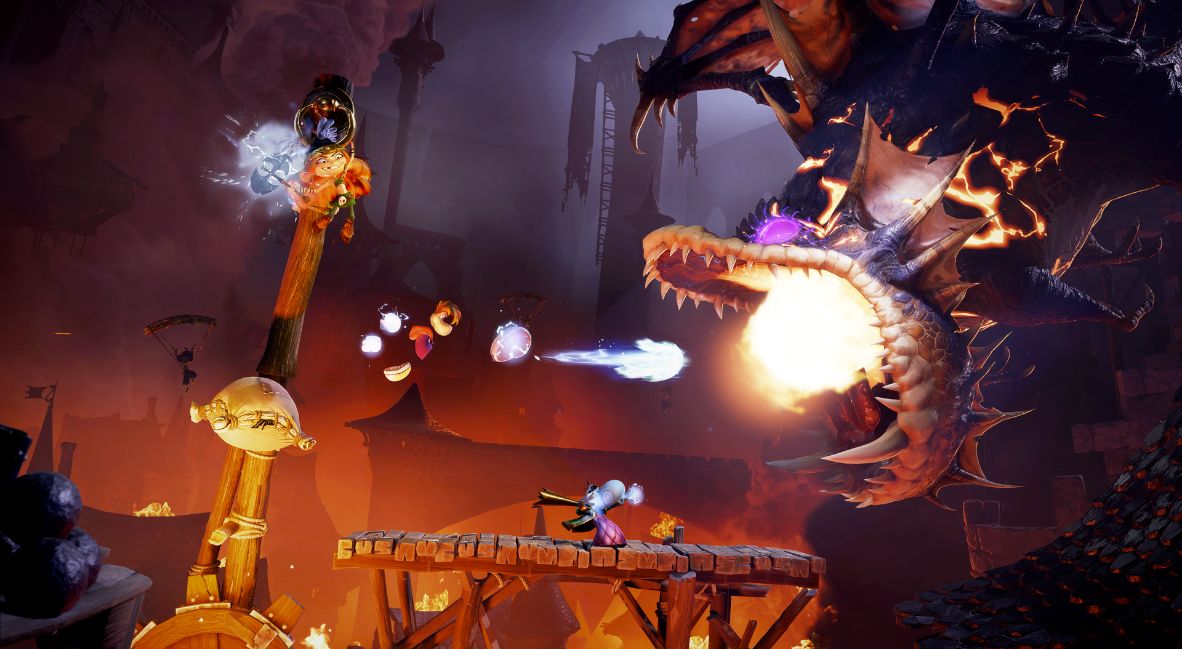
Because we are not 2.5D but 3D, there are some areas where we use the bend, meaning rotating around something. If I’m on a zip line and I have something on my back, that’s something we could not afford to do because, technologically, the game was purely drawn in 2D.
What [new] technology and the new engine we are using, Snowdrop, is allowing us to do is more immersion, more mise-en-scène related to 3D, and we use that quite a lot in the newer musical levels. You’ve seen some of them. We have others that leverage that aspect even more. So we kept some surprises for the player.
MARCO RENSO: Yeah, from a realization point of view, yes, absolutely! Like, the 3D allowed us to play with the scale of the characters, with, you know, hands coming towards the screen, like all elements of the level were possible thanks to the switch to a 3D engine.
BUT WHY THO: So one of the things that I’ve come to really love about remakes or “retellings,” in this case, is that with 13 years passing, there is a chance to meet an entirely new generation of players now, and introduce Rayman to them [for the first time].
How does it feel to kind of understand the place that [Rayman Legends Retold] has to kind of bring more people into the world of Rayman, but also be their first time meeting the franchise? How does it feel to be a part of that process?
MARCO RENSO: It feels awesome. One of the main motivators for me on this project was exactly what you described because I have two kids, and they have never played a Rayman game before, and this was the chance for them to know the characters and play Legends for the first time. So to me, the opportunity to be able to play it with them, on the couch, together as a family, is important. They keep stressing me to play when it’s done!
LOÏC GOUNON: It’s the same for me as for Marco. My kids are approximately the same age. I mean, two out of the three are typically potential [Rayman Legends Retold] players. They’ve seen figurines and goodies, and they’re like, “What’s that guy?” And I say, “You will know. Wait.” So yeah, that’s a similar vibe.
Even though that’s work, it’s tough not to make the parallel with your own kid. You know what they are watching, playing, and what they would like to see. We try not to bring back too much work at home, like analyzing how they play and what they do. But still, it would be super cool to enjoy the game [with them] for Christmas. Having that game released and playing it with them will be, I think, for many members of the team, will be really satisfying.
BUT WHY THO: This last question that I have is something I ask pretty much every developer I talk to because I believe that whenever we create something, whenever we create art, we put ourselves into our creations. We leave our fingerprints on them. We give them years of our life. We give them everything about us. But I also believe that when we make art, it gives back to us too.
So I wanted to ask, what have you all learned about yourselves in the process of developing Rayman Legends Retold that you didn’t know before you started?
MARCO RENSO: I have an answer for this! From a creative point of view, and pure imagination, I learned to be bold and go beyond what a good idea is. This is a brand that really allows you to express any kind of idea and make it become a reality in the game. It really pushed me from a creative point of view beyond what I was used to, and this is something I will bring with me.
LOÏC GOUNON: Yeah, to me [Rayman Legends Retold] taught me lessons about boldness and creativity. It’s part of our studio DNA, so I’m used to that. Sometimes I think we take too much risk in Montpellier, but that’s a good thing. I’m always scared by the beginning of projects because of how crazy or ambitious they are. But to me, it’s maybe more the collision of talents that can create amazing stuff.
When I say collision, it’s a positive collision. It’s a mix that creates something really beautiful. I mean, like in real life, two cultures meeting and creating something unique. I think it’s a big wedding we had between Montpellier and Milan—French culture and Italian culture mixed and created something unique that I did not expect.
To me, it’s a big surprise how positive it can be: instead of just being with the people you know and creating something together, you can mix with other people, be amazed by the results, and you couldn’t have known that before meeting them. It’s part of something I realized maybe younger in my life by traveling to other countries, but in work I learned it now. It’s I mean, and and by the creative art of you know creating. That [collaborative] work was something I enjoyed, and I’m taking that with me.