

Marvel’s Wolverine, the new action game from Sony Interactive Entertainment and Insomniac Games, is a fun, bloody, straightforward action experience. It ultimately feels safe coming from the Ratchet and Clank and Marvel’s Spider-Man developers, Insomniac Games, where each of those experiences had enough creativity and energy, but Marvel’s Wolverine feels exactly as you’d expect.
It’s not necessarily a bad thing, and it does take some impressive narrative swings to varying effect, but the combat feels too simple with limited enemy variety and a small combat kit. It’s a turn-off-your-brain roller coaster that doesn’t really demand much from the player, and while it has its moments, it doesn’t live up to Insomniac Games’ previous work.
Marvel’s Wolverine follows Logan, aka The Wolverine, as he rejoins Team X, featuring the likes of Nathanial Essex, Sabretooth, and Mystique. With no X-Men at this point, Logan’s found family is a ragtag group of traditional villains and anti-heroes. They do what good they can, working together to save mutants persecuted and captured by Bolivar Trask, an anti-mutant human scientist dead set on ridding the world of their kind.
Insomniac Games’ overall story beats are one of the game’s best parts.
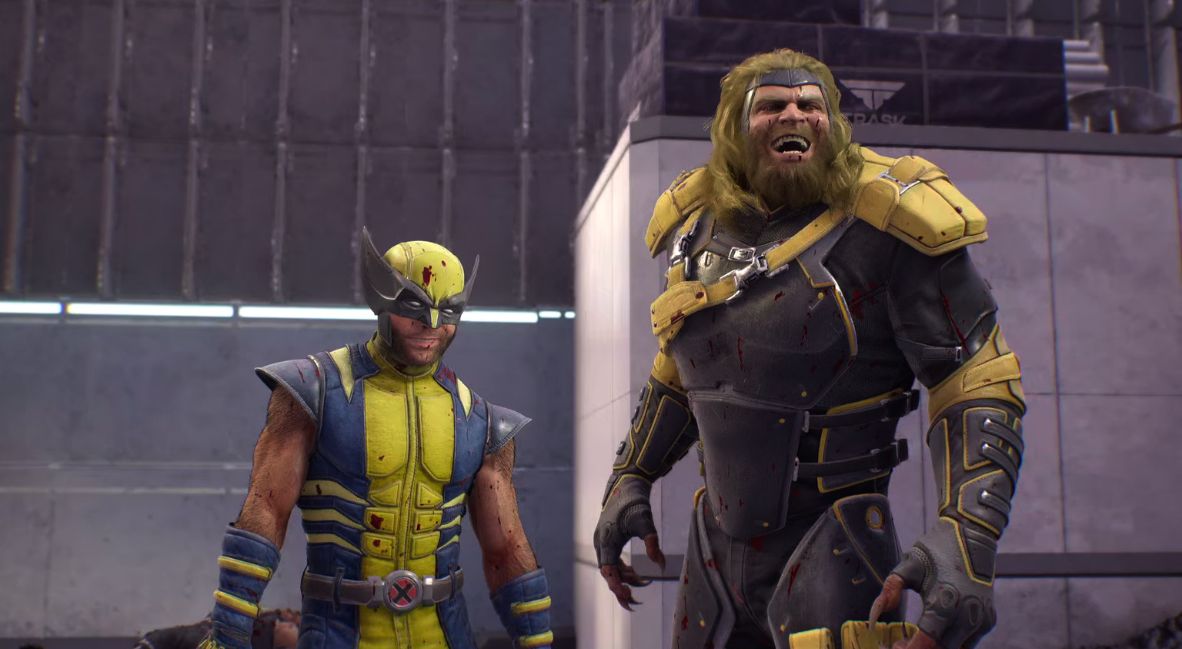
The story is one of the best parts of Marvel’s Wolverine, though not without issue. Much of the game is spent with Jean Grey, telepath extraordinaire, in a worldwide adventure centered around stopping Trask, recovering lost friends, and discovering the mysteries of Logan’s past.
There are some really fun moments here that play with canon as we know it. At times, it borrows heavily from established lore; at others, it veers away in interesting ways that will prove divisive for some hardcore fans.
It centers on Liam McIntyre‘s Wolverine, who plays the role with equal parts rage, regret, and sadness. There’s a real heart to McIntyre’s take on the character that you quickly root for. He’s weighed down by the sins of his past, even though he doesn’t really remember them, with much of his history locked away.
Occasional memories flood back, with Logan’s efforts to uncover them being at the heart of his character arc. When the game focuses on Wolverine, it can hit hard both narratively and emotionally.
The issue is that Marvel’s Wolverine is almost equally as centered on Jean Grey. Once she hits the scene, she’s largely there for the majority of the rest of the game. It’s not that Jean herself is the issue; she’s fun with Logan, and seeing their beating hearts pine for each other actually works.
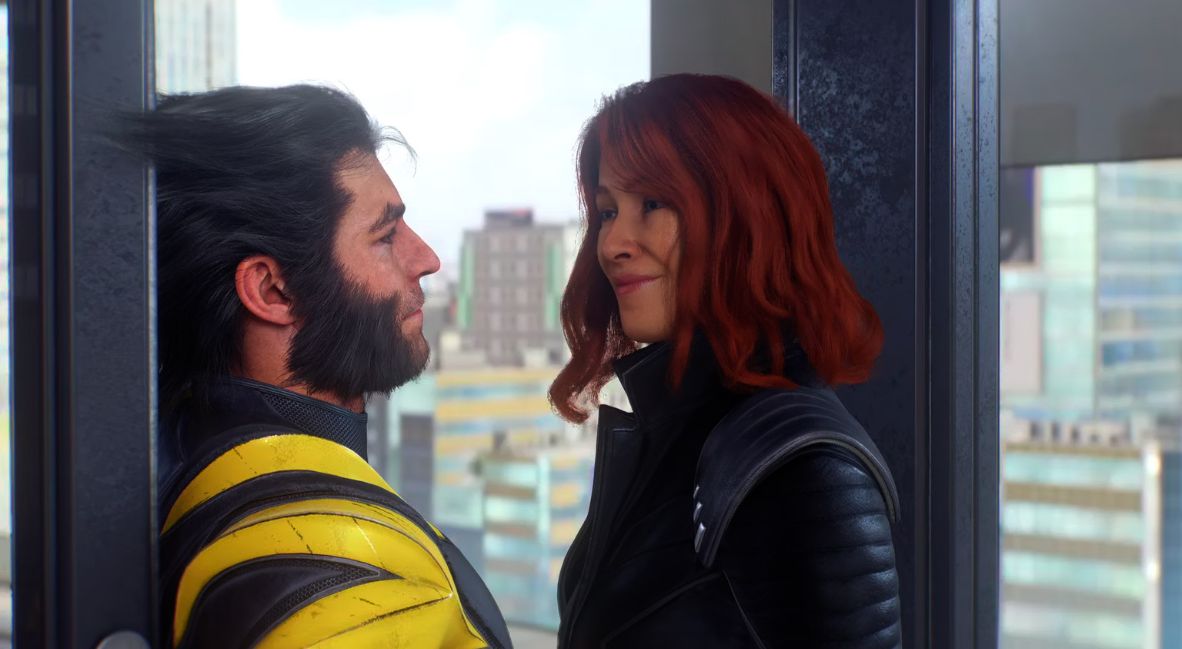
While I’m not generally a huge fan of the pairing, Marvel’s Wolverine may be the best version of the romance. However, the issues flare up because so much of the narrative focus then falls on that tension and romance, leaving much of their backstories and motivations feeling shallower due to a lack of exploration.
Jean and Logan bicker and fight, make doe eyes at one another, and work together to take down enemies left and right. But the most interesting parts of their characters largely fall away to focus on them together instead of building them up as individual characters.
As a result, both of their backstories feel underserved as the game focuses on them together and the problems at hand. And that’s an issue when their story is central to some of the game’s most important mysteries. The game’s narrative is so focused on putting Logan and Jean in front of the player that it doesn’t meaningfully explore them as characters or their real dynamic together (outside of small elements), and this extends to the cast at large.
Team X largely becomes less important as soon as Jean shows up, but the game continually asks you to care about them without really giving you much reason to. There are great moments here. One bar scene in Madripoor offers some of the best character work of the whole game, but far too often it feels like things happen because the Plot needs it to. You get glimpses of why you and Logan should care, but the game doesn’t really explore their stories together.
Logan and Jean could have meant so much more if only they were fully developed.
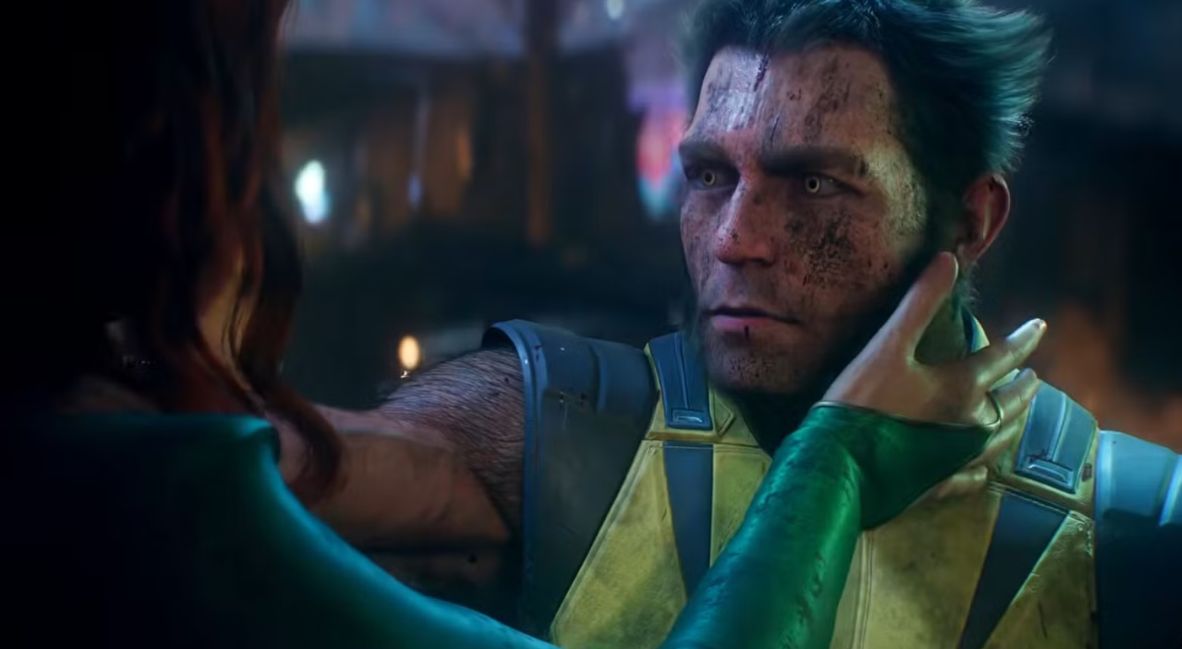
The entire middle section of the game, set in Tokyo, is the most glaring example of this. Logan and Jean chase after the Hand for a few reasons, one of which is rescuing a friend. Logan’s motivations here are clear, yet his emotional response is off the charts, so focused on recovering his friend that nothing else really matters.
Still, it’s hard to feel that sense of urgency or connection as the player in this story. The friend they’re chasing isn’t a massive focus up until this point, and aren’t really after, but the game tells you that you should care. It wants you so badly to care without really doing any of the work to bring you to that point.
These issues also extend to the game’s final act, where Marvel’s Wolverine leaves some really interesting plot threads about where a sequel could go, but in doing so, they don’t really answer a lot of the central questions asked by this game.
These moments drop lore, filled with winks and nods, more than actual resolution to plot points that are incredibly important to this narrative experience. A good hint towards the future leaves you wanting to see more behind the curtain, not just offering a partial answer and then promising to fill in more later.
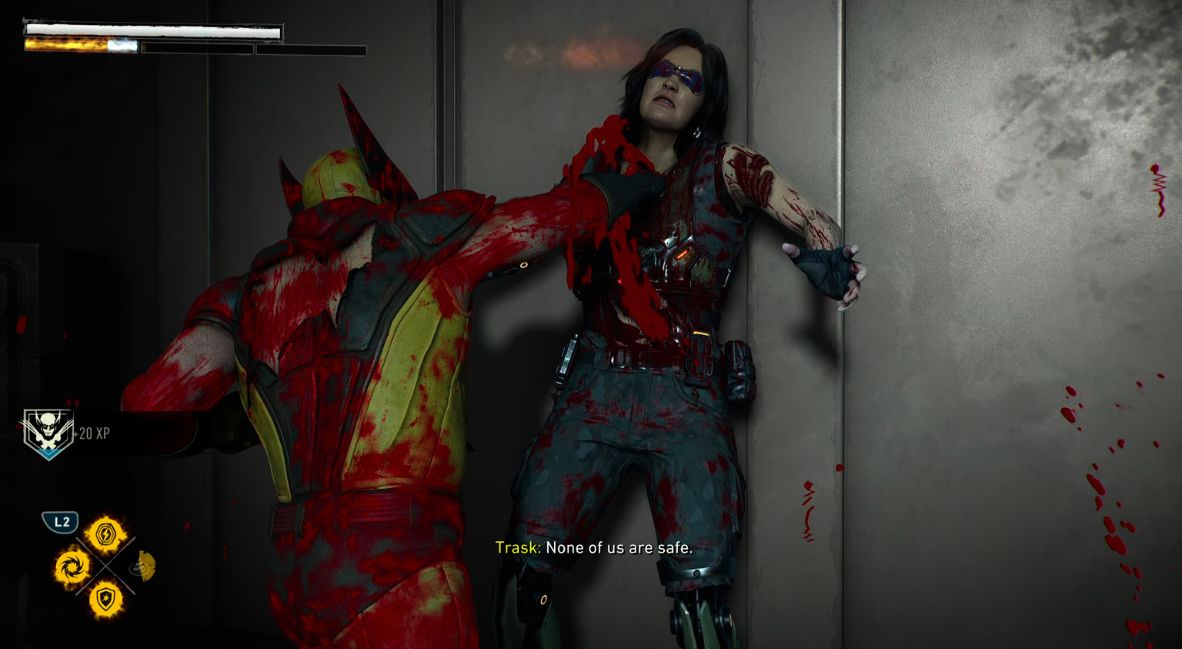
At the same time, moments of narrative tension and backstory really take some swings. Marvel’s Wolverine gets dark, with some truly horrific moments. In the opening mission, Logan wades through bodies of dead mutants as he’s forced into the sewers.
It’s awful and chilling, and that’s not even the worst of it. Some story sections are fantastic and a bloody good time, pure spectacle and set pieces that are a ton of fun to watch and play. Logan and some of the surrounding cast are really likable and easy to root for. They shine when they’re given the space to.
The gameplay side also ranges from bone-crushingly fun to incredibly slow. Marvel’s Wolverine has some really high highs and some middling lows. Combat can be a lot of fun, even if it is simple.
Logan cuts, claws, and slices through enemies quickly and efficiently, taking legs off and slamming his claws straight through their heads. Insomniac does not skimp on the blood and gore at all here, with some really awesome finishers that are a blast to see every time. Logan can also leap at enemies, a fun nod to games past, diving into them to close the distance quickly.
Logan’s past is central to developing Marvel’s Wolverine, but it stumbles.
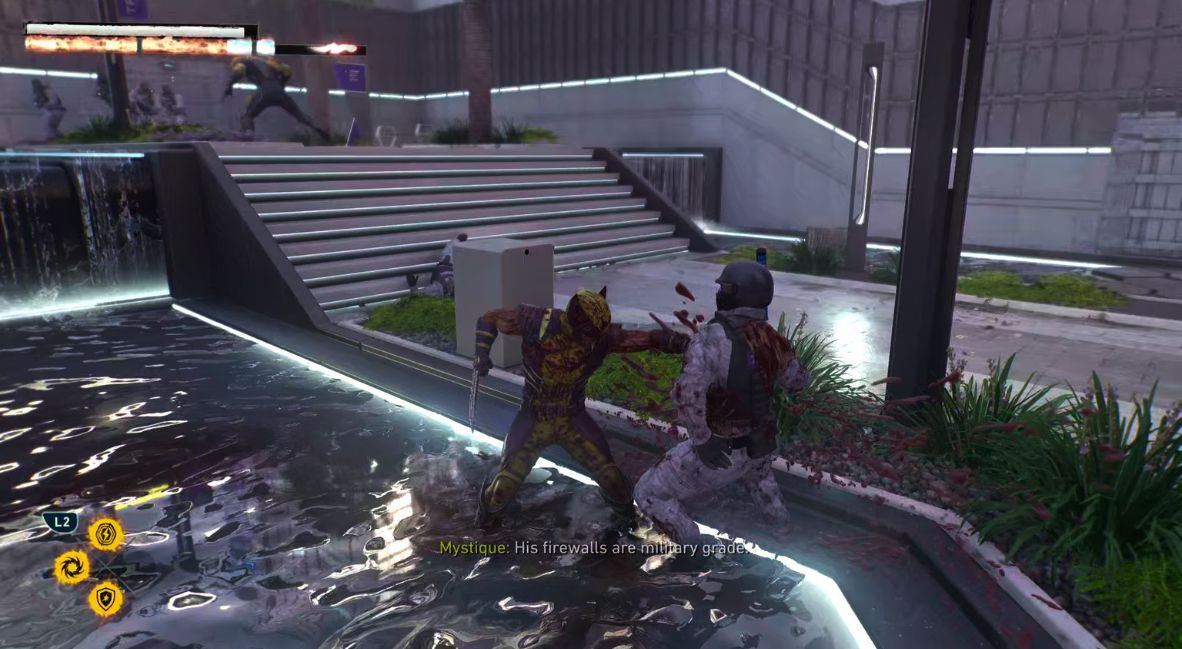
Logan has special attacks that build up over time, letting you equip four at a time to deal fast damage. Each carries their own purpose. Where a spin move that sends Wolverine careening through enemies is great for crowd control, a special knee to the face does a ton to the Stagger meter.
Stagger an enemy, and you can repeatedly stab into them in a feral fever. There’s a rage bar that builds over combat, and as it levels up, Logan hits harder and does more damage. It can also pick Logan back up when he goes down, leaning into the near-invincibility and healing factor the character is known for.
Once the Rage meter hits level 3, things really take off. The screen greys out, Logan’s anger bursting through with a singular focus on the enemies in front of him. Combat finishers fly at lightning pace, decimating, decapitating, and slicing off limbs at full force, one after the other. It feels fantastic every time, appropriately messy, brutal, and effective.
The issues with combat arise in its simplicity, enemy variety, and upgrades. There aren’t more than a couple of combos to learn, making the combat feel mechanical as you mash square with an occasional finisher, block, dodge, or counter thrown in.
There are multiple enemy factions you’ll fight, but they largely feel the same. Brutes are giant health saps that you just need to hit more than their smaller counterparts. This extends to boss battles, which can take too long without much variety given how limited Logan’s combat kit is.
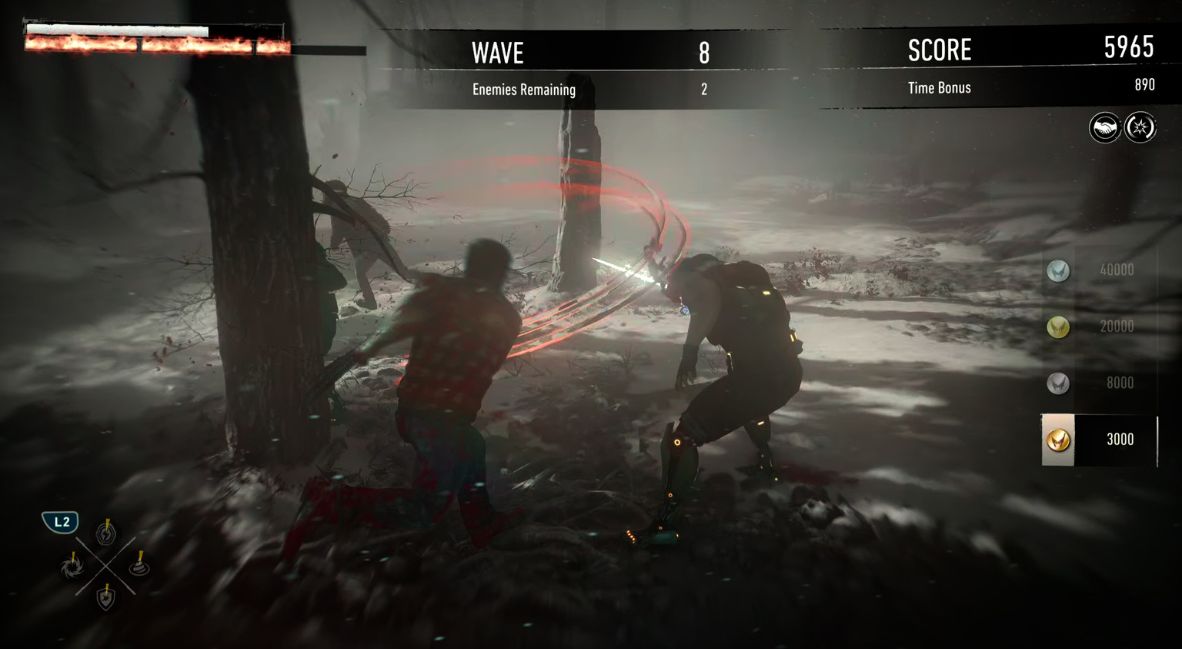
Logan is feral and deadly, yes, but giving him more ways to handle enemies would’ve made combat feel more full. Onimusha: Way of the Sword nailed this recently, as even though mobs were quick work, Musashi’s combat kit is so dense and robust that it never gets old.
Having more than a handful of bosses could’ve made this feel better too, or at least giving the existing ones more mechanical diversity to make them feel different. Combat is fun as long as you mostly turn off your brain and go for the ride, feeling more like a summer blockbuster than a deep combat sandbox.
These issues extend to Logan’s upgrades, too. They’re all fairly standard fare, where your attacks just get stronger as you pour more skill points in. It’s mostly just more of what’s already there, which makes upgrades feel far less exciting to engage with.
The adaptation system feels similar, where you can put on different modifiers that don’t really feel all that interesting. One might make a specific ability cooldown faster, while another lets you hit harder, but they don’t really feel all that important. The idea is to let Wolverine focus on what you want, but the build craft just isn’t deep enough to support it meaningfully.
Repetitive bloody combat defines Marvel’s Wolverine even if the progression behind it loses steam.
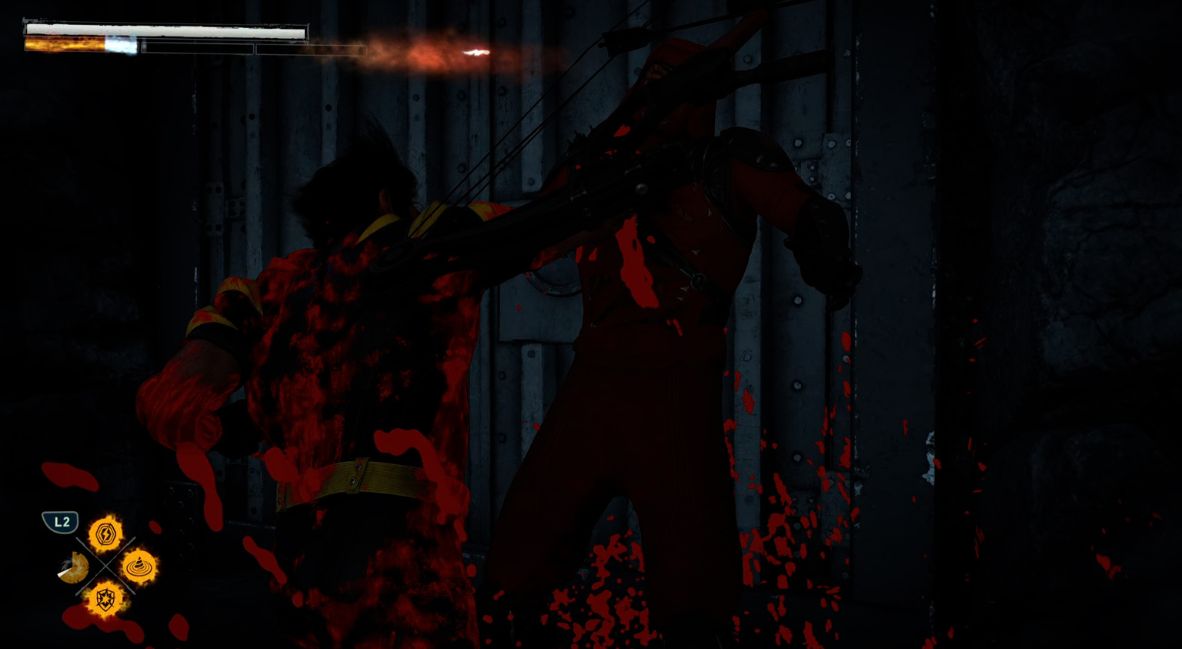
Marvel’s Wolverine is also Insomniac’s most PlayStation first-party-feeling entry yet. There’s a huge cinematic and story focus here, but it can slow gameplay down too much. Far too often, and this is again most glaring in Tokyo, you run from a combat encounter to a room where you slowly look at stuff, to running to a new location, to a new fight, to more stuff to look at, and so on.
Marvel’s Wolverine is at its best in fights and set pieces, and these sections where Logan just walks and talks happen too often and slow down the pacing. There are exceptions, like the aforementioned Madripoor bar scene and others later on, but using them more sparingly would’ve made them easier to appreciate.
The Nightmare Doors are also hit or miss. These are short challenges that are supposed to help Logan unlock the mysteries of the past.
The actual challenges themselves are straightforward. Run quickly to the end with some simple platforming, fight enemies, kill some a certain way, and so on, but the rewards don’t feel worth it despite the brevity of the gameplay section.
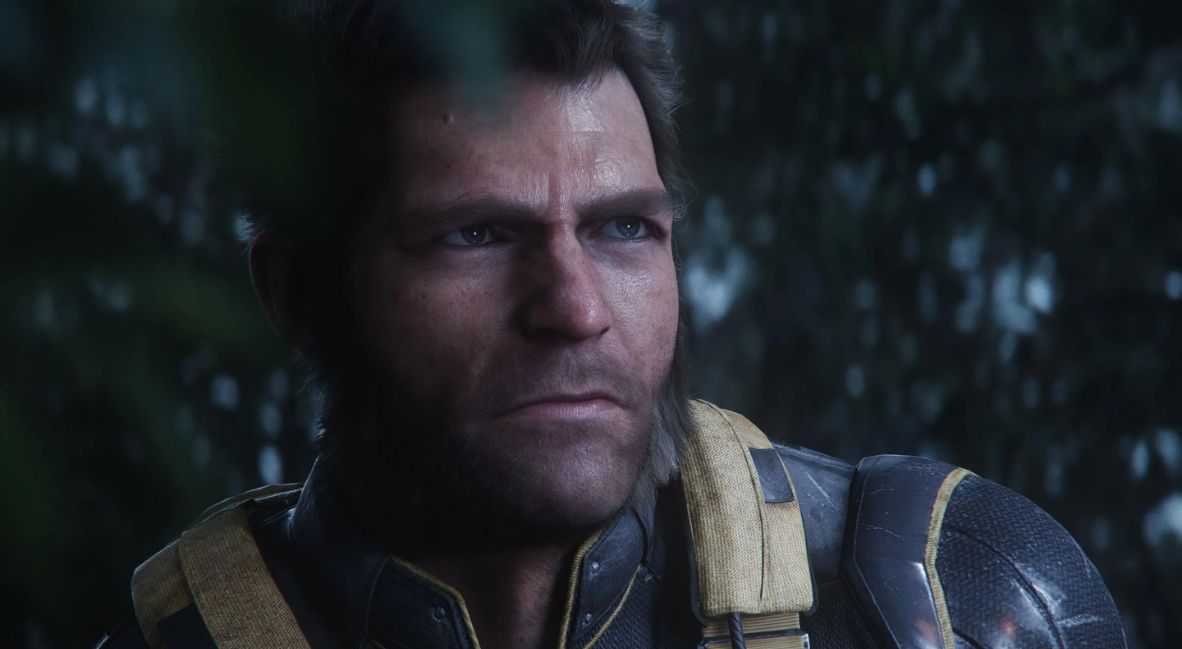
You get a wall of text that Logan reads out about something that happened to him in the past. Why not play these sections out in cutscenes, or at least motion comics? Why not do something that lets the player connect with the stories more than just sitting and listening while looking at a static image?
These could’ve been awesome looks at Logan’s past, or his relationship with Essex and Team X, but end up feeling like busywork even though some of the challenges are fun.
Graphically, Marvel’s Wolverine is absolutely stunning on PS5 Pro. It’s easily one of the best-looking games of the generation. From the slower cutscenes where you can see Logan’s emotions all over his face and posture, to the fast, hard-hitting action where limbs fly and claws whirl, Marvel’s Wolverine is a joy to see play out. There are also a ton of different costumes that reach into different parts of the Marvel character’s mythos, and they’re cool to use and play with.
The most glaring issue with Marvel’s Wolverine is that it ends up feeling like a game made to be exactly what it is, nothing more, nothing less. It’s a Wolverine game with some bloody action and fun story moments, with some moments of darkness.
The game lacks the verticality and movement of Marvel’s Spider-Man, and while Wolverine should never feel like Spider-Man, that same creative energy just feels dull in comparison here. All the parts are there, but they coalesce into an experience you can’t help but feel you’ve seen or played before.
Marvel’s Wolverine is safe at every turn, even if it’s Insomniac’s bloodiest game.
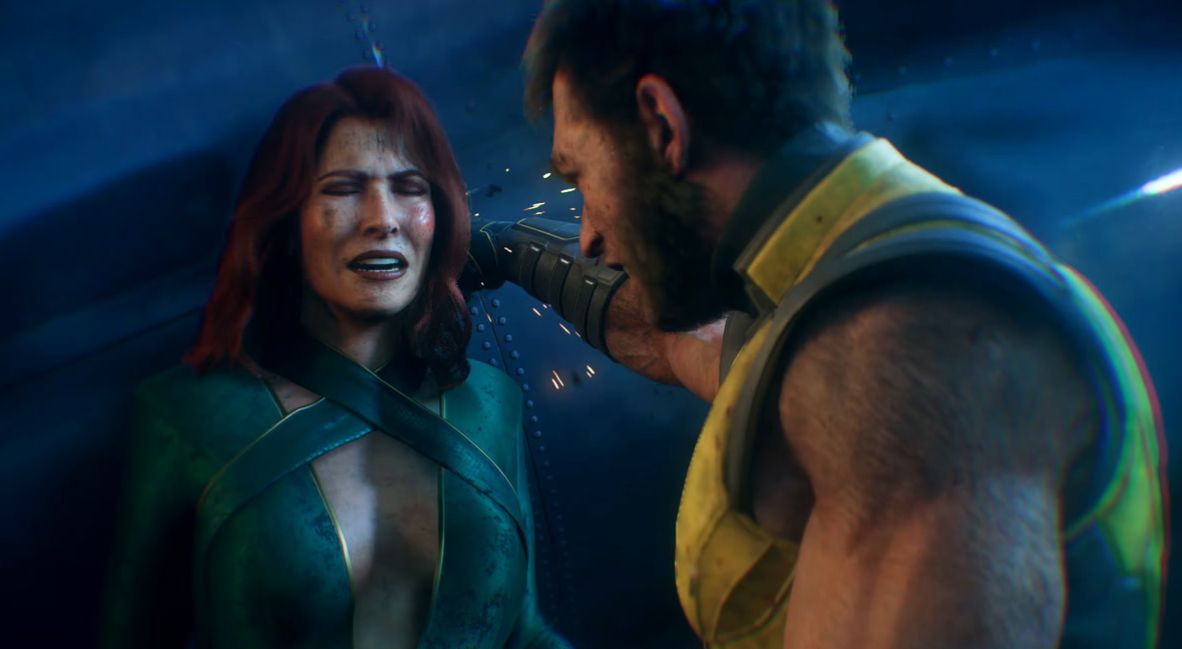
It’ll be more than enough for some, but you walk away from it feeling like something was missing. Whether it was a more diverse and rich combat sandbox that gave you plenty to play with, or a more focused story that explored Logan and his locked-away memories, or a greater variance in gameplay systems, Marvel’s Wolverine seems content to deliver only on its simplest and core concept.
Overall, Marvel’s Wolverine is a fun, albeit safe, new entry in Insomniac’s Marvel universe. The combat is fun and flashy, but doesn’t really meaningfully change as the game progresses. There are some great narrative moments, but it lacks the buildup to make you care about them.
Marvel’s Wolverine is a stunning graphical showcase that really shows the PS5 has plenty left in the tank. The game feels intentionally packaged as a Wolverine game made by PlayStation to fit the first-party mold.
This is a turn-your-brain-off-and-go-for-a-ride spectacle that occasionally punches above its weight. That works to some extent, but Marvel’s Wolverine doesn’t live up to the creative standard Insomniac Games is known for, and Logan has never been known for playing it safe.
Marvel’s Wolverine is out on September 15, 2026, on the PlayStation 5.
Marvel's Wolverine
-
Rating - 6/106/10
TL;DR
This is a turn-your-brain-off-and-go-for-a-ride spectacle that occasionally punches above its weight. That works to some extent, but Marvel’s Wolverine doesn’t live up to the creative standard Insomniac Games is known for, and Logan has never been known for playing it safe.