
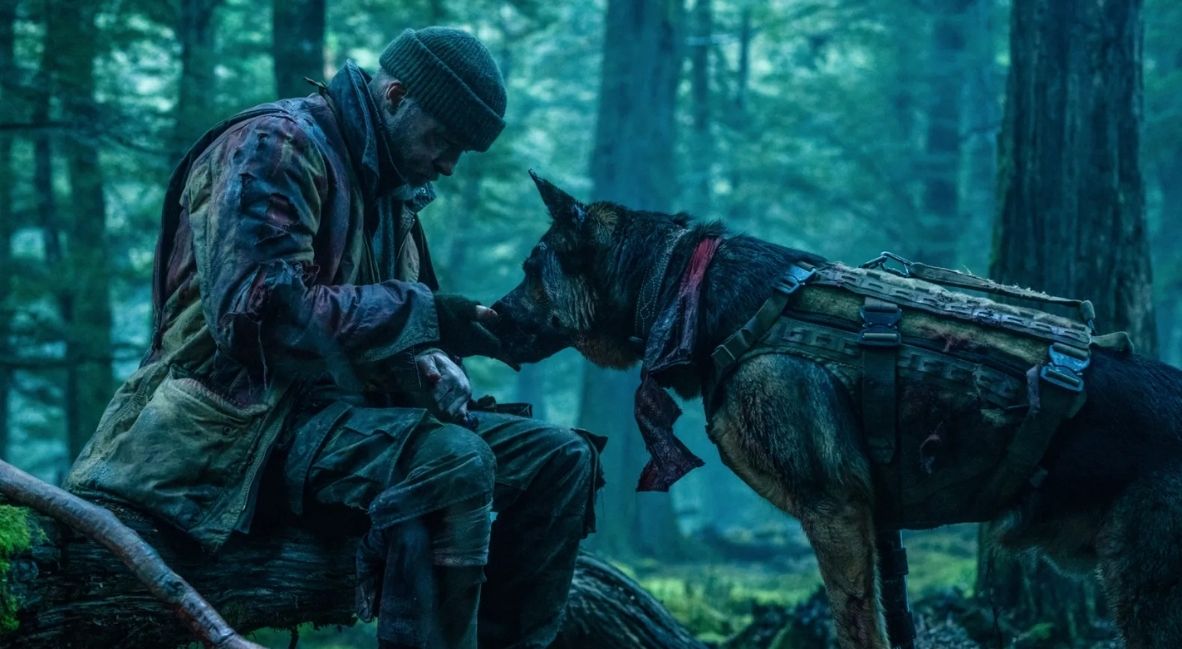
It’s been said that dogs are man’s best friend. They’re playful, loving, and loyal to a fault. Heart of the Beast, directed by David Ayer and written by Cameron Alexander, is a beautiful examination of that loyalty and trust. More than that, it shows audiences that such trust is possible both ways. It doesn’t have to be one-sided.
Dogs have been used in warfare for thousands of years. Records indicate that the Egyptians and Greeks used them in warfare as early as 600 BCE. In the United States, dogs have been actively trained as part of the armed services since 1942. Just like any other soldiers, these dogs require a distinct sense of loyalty and trust.
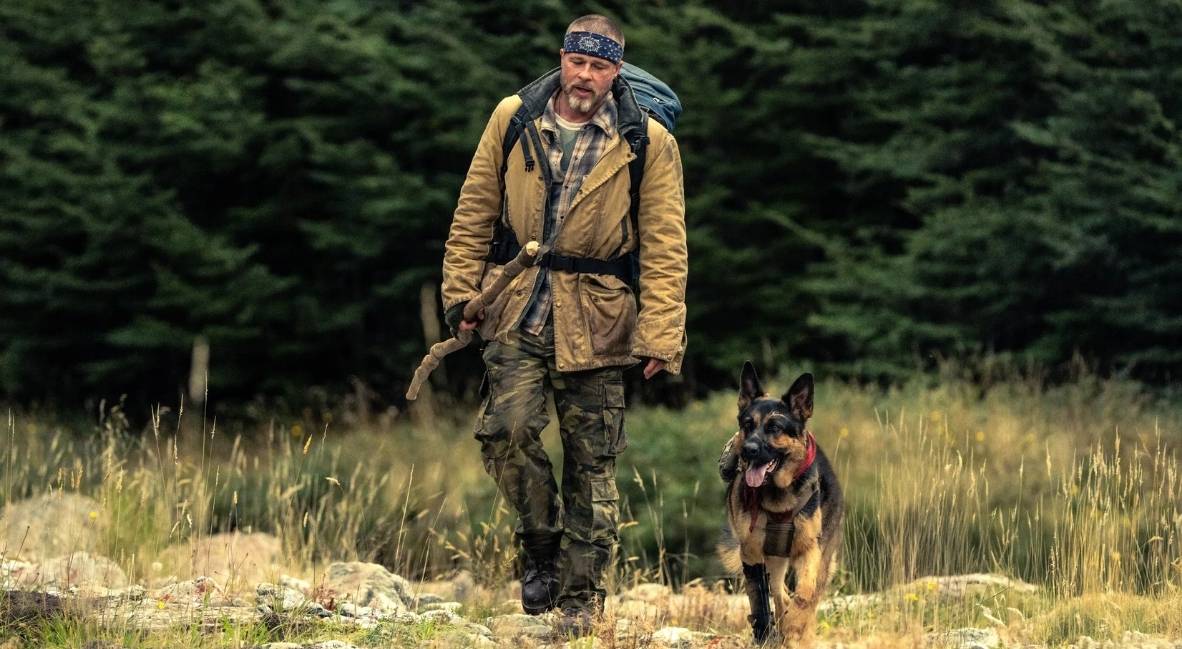
In Heart of the Beast, retired Army Special Forces officer James Belmont (Brad Pitt) and his dog Odin, also retired from active duty, share a connection forged in the fires of war. After James suffers a medical episode while flying a small plane in a mountainous region, the two are suddenly thrown into the unforgiving wilderness. They’ll have to rely on each other if they hope to make it back to civilization alive.
Heart of the Beast is a moving examination of love, loyalty, and trust.
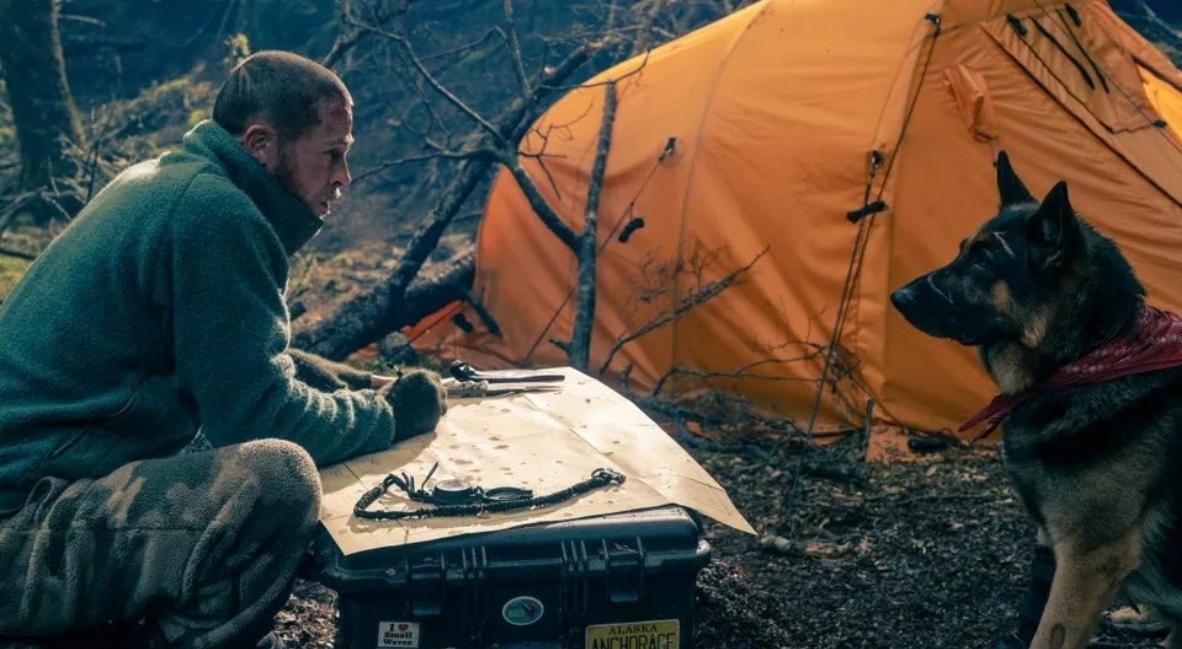
Heart of the Beast explores some fairly intense themes such as PTSD, especially among veterans and canine veterans. While it’s no surprise that many service members come home from war suffering from PTSD and not getting all the support they need, it can also be present in canines, like the 3,000 deployed into combat zones around the world every year.
Odin and James both suffer from PTSD, but their friendship goes much farther than simply a man and his dog. They actively support each other and show through their actions a strong sense of camaraderie even in their darkest moments. That kind of loyalty allows them to have an almost unspoken language where James doesn’t have to hear Odin speak words for him to know what Odin needs.
Before everything hits the fan, they meet another traveler named Watkins (J.K. Simmons). His small role in Heart of the Beast is crucial because it sets up everything that follows. When Watkins leaves their shared camping space before dawn, he leaves a book with a quote circled for James that says, “It’s not who you live for. It’s who you’d die for.”
The statement Watkins leaves behind is constantly challenged throughout.
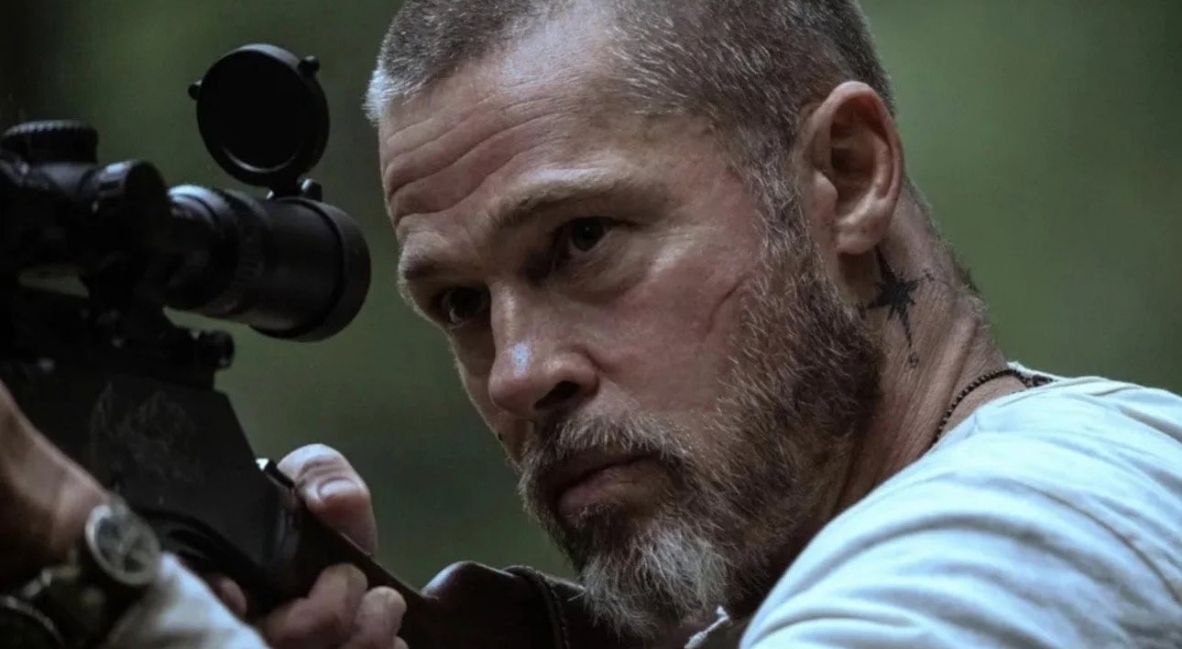
Throughout Heart of the Beast, that statement is tested time and time again. Each time, James uses enormous power to protect Odin. Likewise, Odin isn’t some mere passerby watching it all happen but works to protect James. It’s an incredible look at what it means to truly put everything on the line for the sake of someone else.
Where Heart of the Beast falters is the level of aerobics required to believe they could sustain everything happening to them. In the 2013 reboot of Tomb Raider, Lara Croft can’t catch a break. She falls off cliffs, gets impaled by rebar, is shot at by just about every single human she encounters, and yet she keeps getting up.
Likewise, Heart of the Beast asks audiences to suspend disbelief, as a man who had just suffered a medical episode keeps getting up every time he’s knocked down. Odin, who has only three legs and uses a prosthetic, also seems incapable of staying down for long. Yes, some of it could be attributed to adrenaline, but it’s an Olympic-level leap to believe that this much damage could still see James or Odin getting up to keep going.
A fair amount requires suspension of disbelief as James and Odin endure their trials.
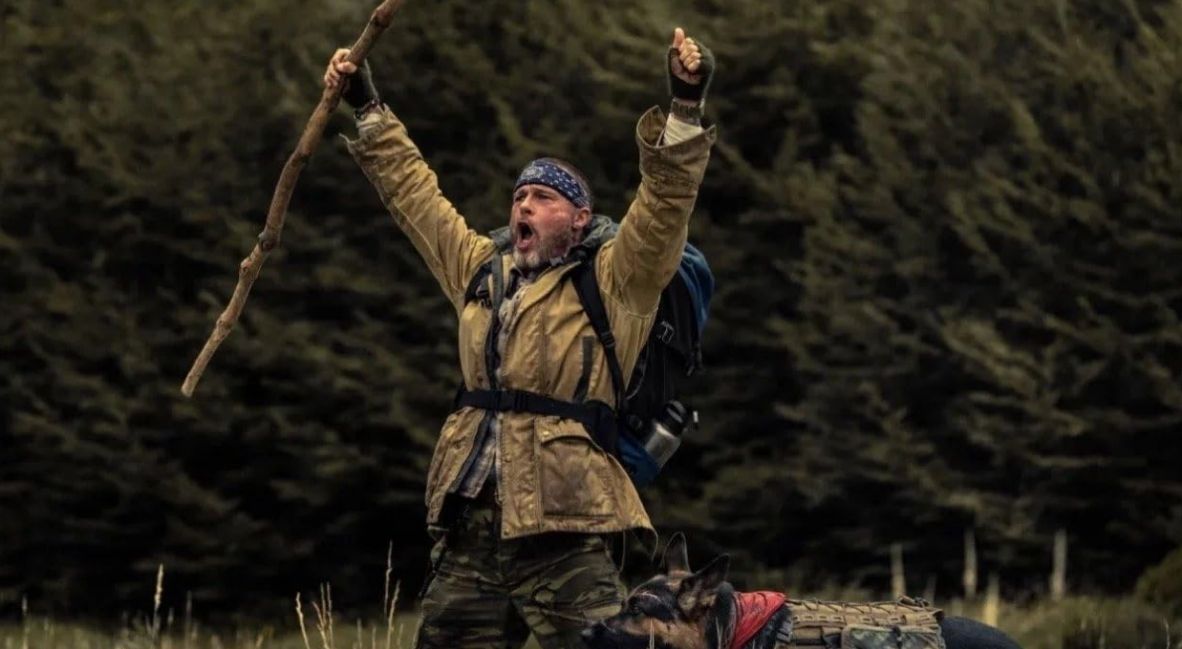
Still, Heart of the Beast is doing a lot with a very small amount. For the vast majority of its 104-minute runtime, Brad Pitt and Odin are doing all the work on screen. The scene with Watkins is brief, and despite being listed as one of the film’s stars, Anna Lambe is only on screen for under five minutes.
Brad Pitt is mostly great in Heart of the Beast. He uses his body and facial expressions to carry the emotional depth that acts as an anchor all the way through the film. Despite an otherwise stellar performance, his laughter is a bit distracting because it sounds very fake. It really breaks the immersion for a moment.
The cinematography in Heart of the Beast is brilliant. There are shots of the beautiful mountain range that show the vast wilderness that James and Odin are trying to survive. Neil deGrasse Tyson has been known to call Earth “a giant killing machine.” There’s something truly inspiring about watching flyover shots of the beauty of the Earth, knowing that the whole point of the film is the danger just underneath.
The use of sound and camerawork helps heighten the immersion of PTSD flashbacks.
PTSD flashbacks of their time on the front lines accomplish quite a bit without any real dialogue. The lighting and camerawork really put the audience right into the action. The muffled volume clearly indicates it’s a horrid memory from the past that still troubles James and Odin.
Composer Jared Michael Fry’s score is both enchanting and incredibly clever. The music really sets the mood each time James and Odin are on screen together. The use of calming and serene instruments feels like a warm hug. Instead of charging into high-intensity dramatic music in moments of peril, Fry allows the scene to breathe. By doing so, he gives us an even more chilling scene that focuses on the drama with an eerie silence in place of a score.
Heart of the Beast is a beautiful look at the power of friendship, loyalty, and trust. While the film suffers from a touch of physical implausibility in the situation, James and Odin’s deep connection shines in spite of it. As they move through the wilderness in this moving fight for survival, the audience sees two soldiers who refuse to leave each other behind.
Heart of the Beast is playing now exclusively in theaters.
Heart of the Beast
-
Rating - 8.5/108.5/10
TL;DR
Heart of the Beast is a beautiful look at the power of friendship, loyalty, and trust. While the film suffers from a touch of physical implausibility in the situation, James and Odin’s deep connection shines in spite of it.