
The title of Ha-Chan, Shake Your Booty! captures the film’s quirkiness. That much is obvious, from the exclamation point to the word “booty” (when’s the last time you saw that word in a film title?). But its premise—a Japanese ballroom dancer loses her husband and finds love again with her new dance instructor—only scratches the surface in revealing its charming earnestness and infrequent but delightfully funny sense of humor.
Married couple Haru (a captivating Rinko Kikuchi) and Luis (Alejandro Edda) are deeply in love, both with each other and with ballroom dancing. Their days are spent with Luis cooking meals for them both, then watching ballroom dancing competition videos to improve their own skills. But when Luis dies of a heart attack during a competition, his family whisks his body back to Mexico for burial. For months, Haru has vivid dreams of Luis returning to her, sometimes as himself, and sometimes while wearing a crow mascot costume.
Haru’s ballroom dancing dreams are over with her partner, on and off the dance floor, dead. Haru’s imagination, already empowered by the unusual dreams of Luis in the crow mascot costume, comes to a head when she’s coaxed into returning to dance classes, taught by Fedir (Alberto Guerra), an instructor whose claim to fame is that he’s a strikingly handsome former Dancing with the Stars pro.
Dance is used to dissect and process grief in Ha-Chan, Shake Your Booty!
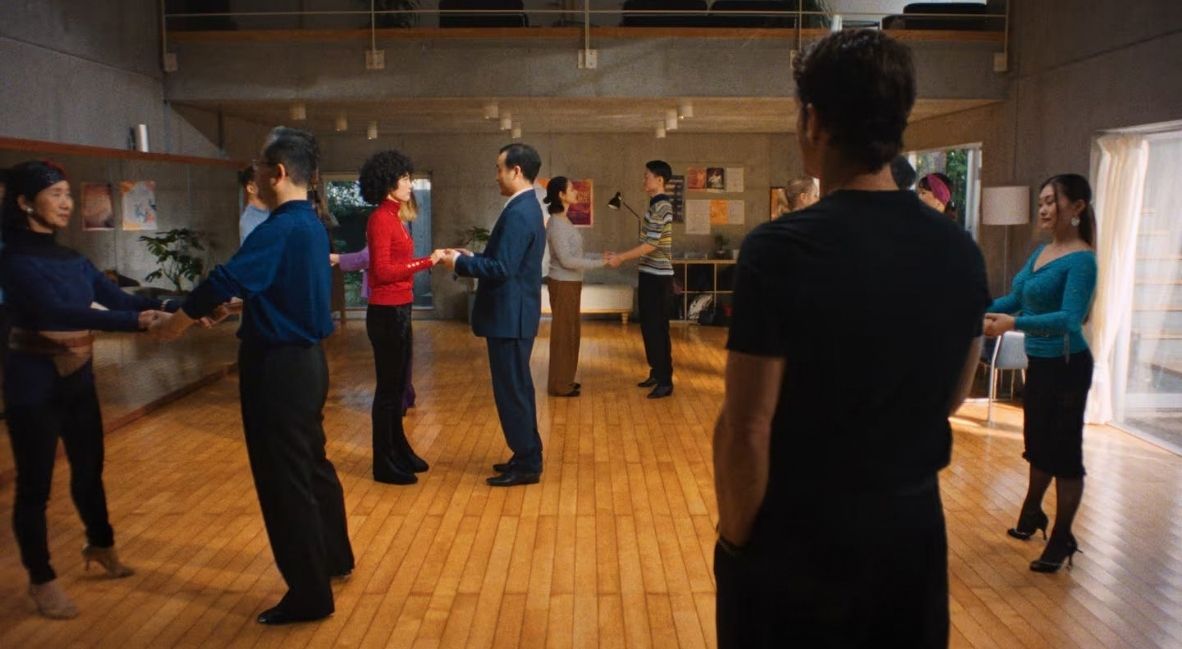
You’d be forgiven for guessing that from here, Ha-Chan, Shake Your Booty! evolves into a tale of living with grief while still pursuing life, with ballroom dancing and a new partnership as metaphors for those things. But instead, Ha-Chan, Shake Your Booty! evolves into something else entirely. It’s ultimately a character study of Haru’s imagination as a means of coping with her feelings.
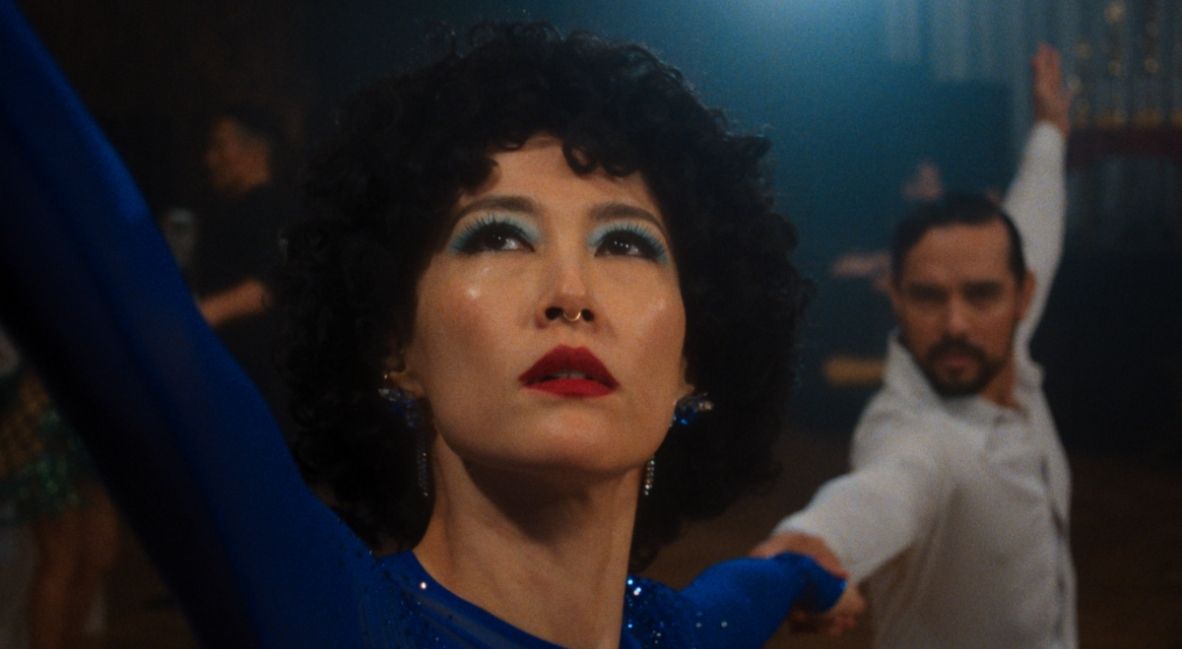
There’s far less ballroom dancing than you might expect, but when it appears, it’s gripping. One of Haru’s many dream sequences involves a dance where she’s caught between Luis and Fedir, and it’s not even the best dream dance sequence in the film. It turns into a film about someone with a rich, fulfilled life turning to a rich, fulfilled imaginary life because real life is too complicated and unwhimsical.
So much of Haru’s life is either quietly observed or internal; she and Luis have barely exchanged a few words onscreen before Luis drops dead. Kikuchi’s performance is a masterclass in capturing conflicting emotions on one’s face. When Haru sees Fedir for the first time, her attraction to Fedir is as palpable as her fears that being attracted to him means losing her last threads of connection to her dead husband.
Haru moves beyond the restraint of her emotions, but you always know exactly how she feels, often without a word. It’s a fine line that few actors walk with such precision, but Kikuchi masters it and makes it look deceptively easy.
Rinko Kikuchi is absolutely mesmerizing in Ha-Chan, Shake Your Booty!
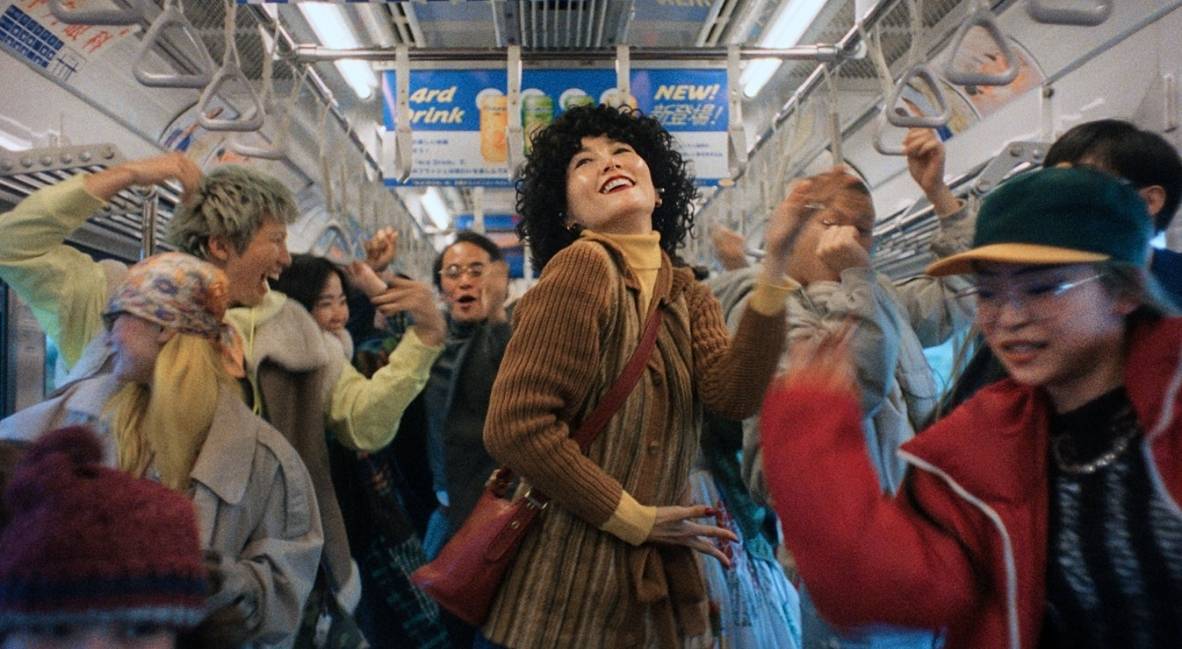
Though Ha-Chan, Shake Your Booty! is undoubtedly Kikuchi’s, her leading men are just as fantastic, even with less material. Guerra’s Fedir is the less complicated of the two, as much of Haru’s time with Fedir is spent falling in love with an admittedly handsome, charismatic man.
Edda’s Luis is more complicated, as Edda has to play both the real Luis at first and then the idealized version of Luis that remains in Haru’s imagination and memory. They both have great chemistry with Kikuchi, making you almost root for Haru to remain with her memories of Luis just as much as you want her to be with Fedir.
Haru’s world, though at its most indulgent when it’s imaginary, is delightfully realized. Set decorator Maya Tanaka makes Haru and Luis’s home so welcoming, you’ll wish you could move in. It has hallmarks of believing the characters have a life beyond the action that unfolds onscreen.
Haru and Luis have posters from All That Jazz and Punch-Drunk Love on their walls. Neither movie is mentioned during the film, but their inclusion makes you feel as though their largely-silent introduction was preceded, offscreen, by years of sharing favorite movies and art.
Haru’s world is brought to life through impeccable set decoration and production design.
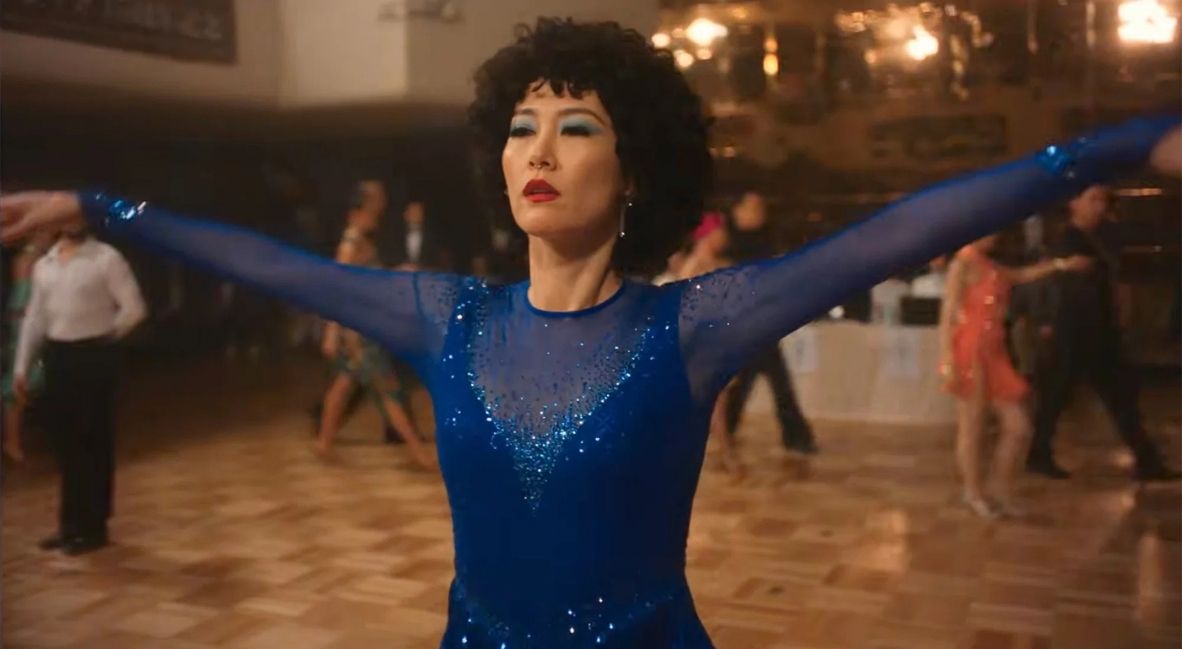
Their home has a lived-in feel that contemporary movies so often sacrifice for unrealistic, jarring spotlessness. Their clutter, plus Luis’s extensive record collection, make it seem as though production quietly wandered into someone’s home to film, and left it the way they found it.
Ha-Chan, Shake Your Booty! is sparing in its gut-bustlingly funny humor, much of which is delivered by Haru’s man-hungry friend Hiromi (You). But when its humor hits, it hits. Without spoilers, it contains perhaps the funniest thumbs-up ever delivered onscreen, adding to the zaniness of Haru’s increasingly absurdist dreams. Director Josef Kubota Wladyka, co-writing with Nicholas Huynh, finds the humor in the conflicted heart of Ha-Chan, Shake Your Booty! It’s a metaphor for the many facets of life, if there ever was one, with the film as funny as it is sad.
Though it doesn’t do nearly as much with the dramatic stakes of professional ballroom dancing as the opening would lead you to believe, Ha-Chan, Shake Your Booty! ultimately turns into a film about the stakes of real life, no dramatic competitions necessary. It’s a rich character study, not an exploration of a sport. Ha-Chan, Shake Your Booty! is far less about dancing than it is about personal discovery through dreams. But when she does dance, real or imagined, Haru’s passion makes you want to dance, too.
Ha-Chan, Shake Your Booty! is now playing in theaters nationwide.
Ha-Chan, Shake Your Booty!
-
Rating - 9/109/10
TL;DR
Though it doesn’t do nearly as much with the dramatic stakes of professional ballroom dancing as the opening would lead you to believe, Ha-Chan, Shake Your Booty! ultimately turns into a film about the stakes of real life, no dramatic competitions necessary.