

When I got to play Exodus, the debut title from Austin-based studio Archetype Entertainment, I didn’t know what to expect. One of the things about me is that I love genre. I love fantasy, action, and, at one time, most of all, science fiction. But as times have gotten darker, sci-fi and the bleakness that I once loved are something I try to avoid. Instead, I retreat into my Hobbit hole for the umpteenth time and avoid the vast isolation of space.
This isn’t to say that I believe that sci-fi can only be bleak. But as a student of Ray Bradbury, Margaret Atwood, Mary Shelley, Isaac Asimov, and Octavia Butler, bleakness and how it impacts the human condition have always felt like home. But now, I’m not searching for that, and thankfully, Exodus isn’t either.
What I ultimately found during the media-preview event held in my home city of Austin, TX, on the campus of my alma mater (the last real time I felt hope), was a sci-fi game aiming to build empathy, embrace science, and hold onto hope. After the demo, we sat down to speak with Archetype’s Studio Head, Chad Robertson.
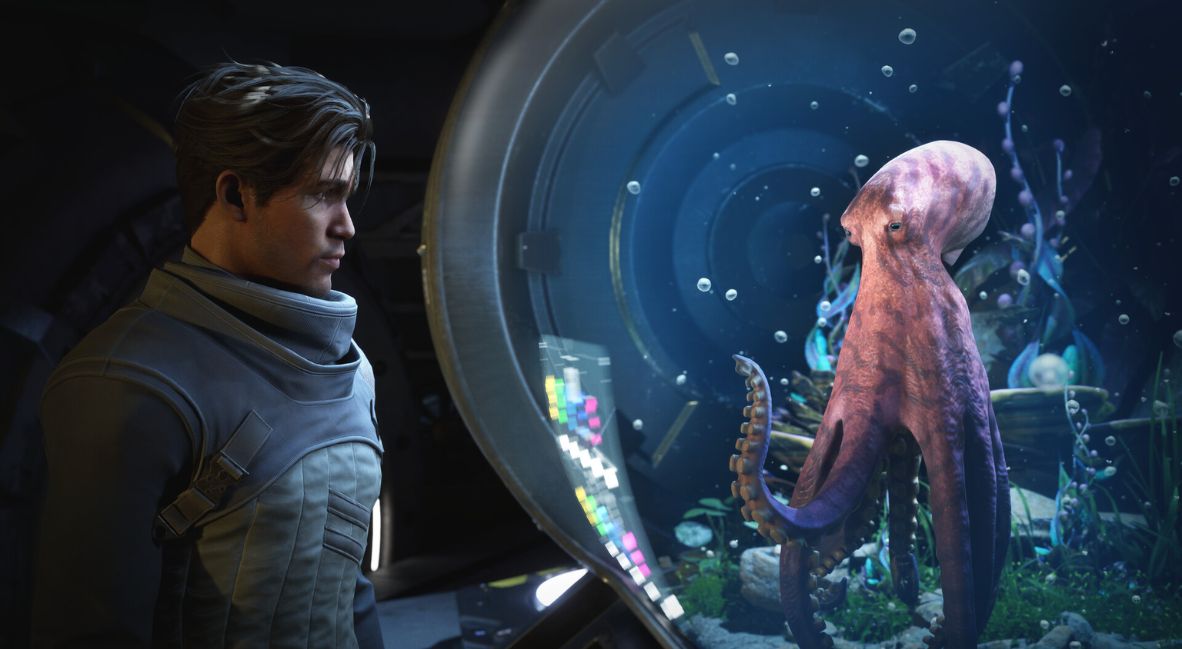
In our conversation, Robertson discussed the unique opportunity that the studio has found itself in, rounding out Wizards of the Coast’s IP genre portfolio, and what the chance means for the studio and his team. But at the core of our conversation, where we talked about the vast differences in the game’s influences and the importance of artistic vision, the one theme that Robertson and I kept coming back to was, well, hope.
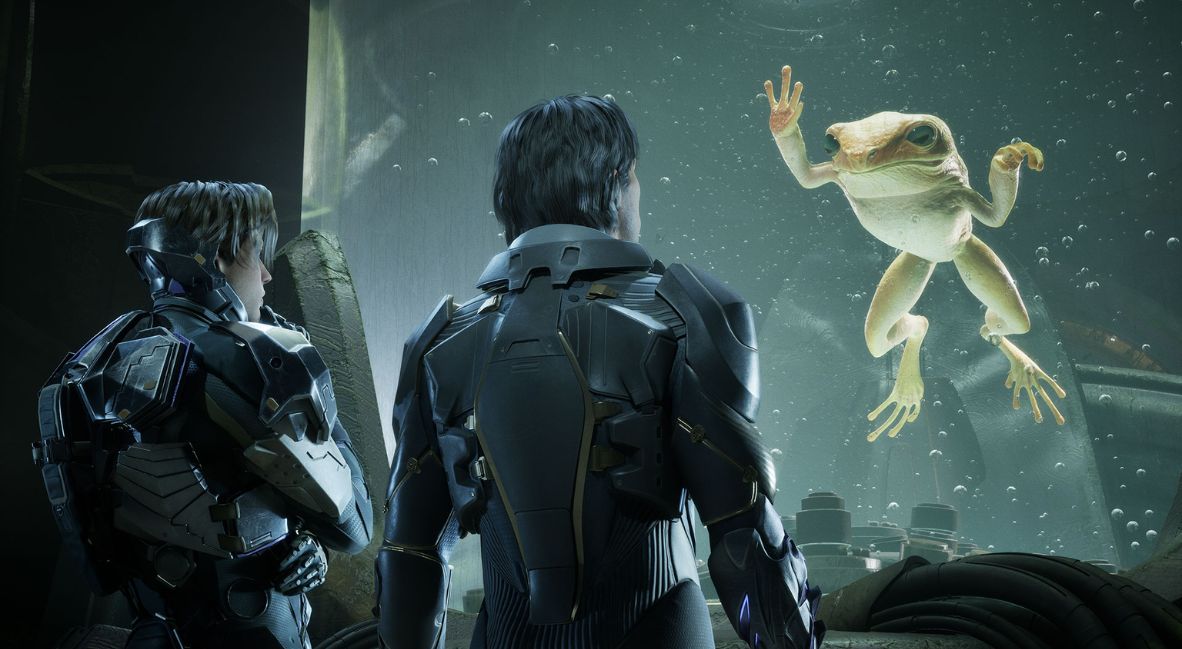
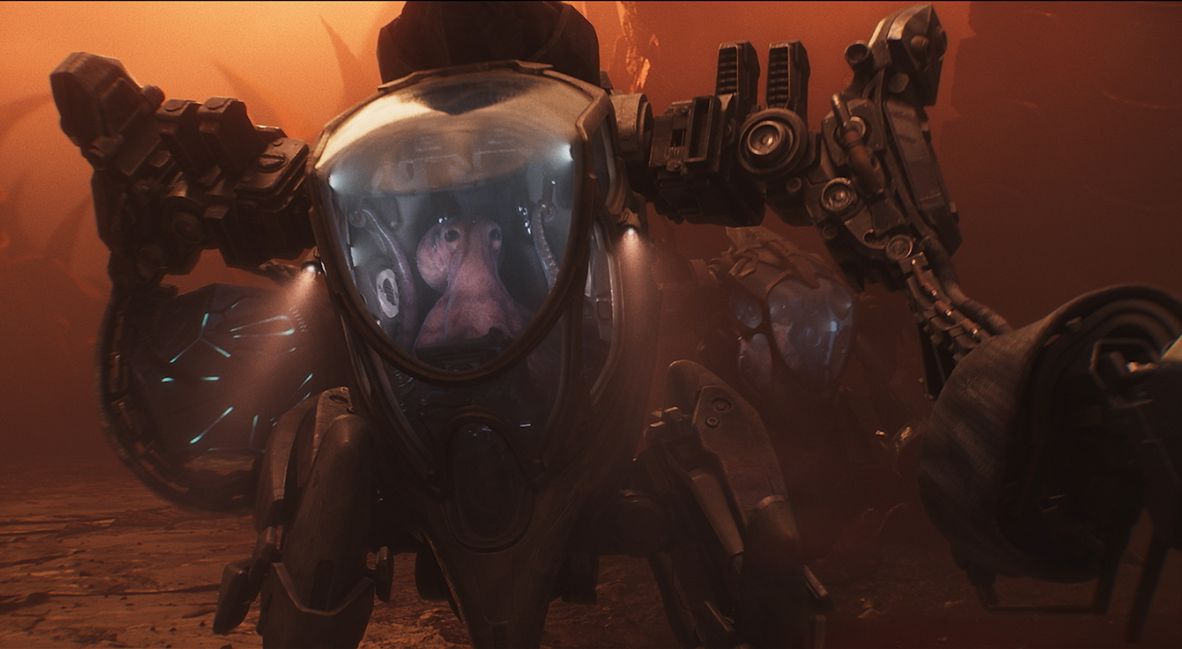
With just under an hour of playtime under my belt, which accounts for one mission circumstance and dialogue, it pushed my empathy with the game’s Awakened, sentient animals who are often exploited by humans. It also asked the player to hope and, in doing so, think beyond themselves.
Time dilation and the application of real physics as game mechanics may seem like a topic in the weeds of game development, but what it brought out was just how much Robertson and his team were building a game that looked to the science fiction genre as more than just something dystopian to overcome. For them, they are creating a world that people “want to be in,” and in that way, Exodus is nothing short of being built on hope.
This interview with Craig Robertson for Exodus was conducted on-site at a media event and was edited for clarity and length.
BUT WHY THO: Genre storytelling, sci-fi in particular, allows you to do so much more, but still get at really human qualities. The pieces that connect us to everything, and that’s something really unique. So I wanted to ask: why sci-fi? What does that genre mean for you, and what does it mean for the studio in terms of connecting through storytelling?
CHAD ROBERTSON: There’s a bunch of different facets [in] the way I could answer that question. The part you touched on in the core question is probably the most interesting piece to both me and the studio. There’s an opportunity with science fiction right now and role-playing games that is a little bit underserved.
With a new IP, the ability to form a world and a universe and a set of characters that’s our own outright, to tell the story in a way where the storytelling is authentic to the game we want to deliver. That’s a pretty rare opportunity now. We’re fortunate to be part of Hasbro and Wizards, where that opportunity presented itself.
Another facet of the answer is from the lens of what works for the business that Hasbro and Wizards of the Coast are trying to build. If you look longer term with their digital video game strategy, they’ve got things covered pretty nicely from the fantasy element of Dungeons & Dragons and Magic: The Gathering. If you roll back the clock to [Hasbro’s] very earliest days, science fiction was very appealing to them too because it closes that loop a little bit in terms of IP coverage beyond fantasy.
We’re also just big fans [of sci-fi]. I mean, hopefully you’ve picked up on that from today with all that you’ve played and seen [with Exodus]. But we’re nerds, and the nerd element of time dilation is super cool. Science fiction gives us that vehicle to tell a cool human story, but at the end of the day, it brings it back to human connection and human emotion. And in a way, for a role-playing game, [time dilation fits] uniquely in terms of what player agency it’s able to do.

BUT WHY THO: I’ve been a sci-fi fan most of my life. I’ve been a fantasy fan as well, but I found myself coming back to fantasy more, only because we’re in a little bit of dark times, and hope is what I’m latching onto. Hopeful sci-fi is even more underserved than everything.
Playing through the demo, specifically looking at the choice to go with the Awakened as sentient animals and choosing to give them help or not, or even their humor. How is it making a story like this right now, especially since in sci-fi you could go really bleak instead?
CHAD ROBERTSON: We had core themes that we wanted to deliver on, and hope is one of them. From the earliest days, creatively, one of the charters was: Let’s do something that has some moral gravity to it, but also optimism for the future, that no matter what happens here on Earth, conceptually and wherever we end up as humans long term, there’s an outlook for us that’s positive, and we still have influence over the things that happen to us and then grounding [the story in] that.
One of the things I like most about Exodus, we talked about it a little bit earlier, is that micro-to-macro level choice that you make in games like this. Then with us, because of time dilation, the macro can get enormous. We hope players will pause every now and then and think about that. One of the stories I like to tell with regard to time dilation is that for Jun in the game, it’s just part of his universe.
As you know, as much as anything, science affects us today in this world; I mean, it’s part of our world now too, of course. But it’s not something that affects us day to day. But for him, it’s – and for the Travelers especially, and the people of Lidon – it’s something they intimately understand because they’ve dealt with it in terms of how they got there. So the things they left behind, they understand, were brought by ancestors who were only there because of the ability to travel at near light speed. There are just some cool elements to that.
Then, the Awakened, you’ve only seen a tiny sampling of the Awakened so far in what you’ve played, but their personalities are super cool. One of our Creative Directors has this other mantra for us, and I really love this one: I want to play a game someplace that I want to be.
Because we could have made it a science fiction dystopia that was really bleak and harsh, and there’s still plenty of great science fiction properties out there that do that and still are very successful. But for us it was like, “Where do you want to spend your time?” If you’re going to invest, I can’t say how many hours, but a bunch of hours into Exodus, let’s make it some place that you want to be at the end of the day.
BUT WHY THO: Yeah, that makes a lot of sense.
CHAD ROBERTSON: And between the combination of the characters and the universe itself, I hope we’ve delivered on that for players. I hope that hope is part of Exodus. Absolutely.
BUT WHY THO: It comes through in the demo. Now that you bring up time dilation, in the demo I chose the one between the two paths, the Immortal and the Paladin. And I realized while I was making the choice that their response was, “As long as this generation is here, you’re welcome on this planet.”
Then it clicked that because of time dilation and travel, well, that isn’t that long of a time. It feels like whenever we have to choose in an RPG, we’re choosing good or bad, but we’re choosing for ourselves, for what we want. But here, it seems like we’re choosing something that is about the people you’re helping or hurting and who comes after you.
What was the role of time dilation as a factor in creating these branching narratives? How did you all build out the branches, and what do you hope that a player finds in them?
CHAD ROBERTSON: That’s great! I’m glad it resonated with you. The core of it isn’t altogether different than like writing or narrative structure for any game with branching dialogue. The time dilation just forced our writing team to think of it at a scale that was greater than what they were used to.
In other scenarios, the outcome might be a few days later, or even the end of a war or something like that. For realistic reasons, given the game’s development, we also couldn’t go extremely crazy. So there’s a balancing act you have to do as a developer: deliver something meaningfully different, but also unique in terms of scope.
I can’t share too much, but when you play the end of the game, I’ll be interested to hear your thoughts on it, because there are a couple of unique twists there that might surprise players in a way that really makes them feel time dilation at that point.
Everybody will get it in terms of the way [time dilation is] used in Exodus. I hope. They’ll either get it in the sense of, “Wow, I couldn’t have played through this in any other game other than Exodus with the way this is done because of time dilation.” I hope that’s the takeaway. But it’s not too much of a change structurally for us, other than the consequence and the magnitude of those ultimately, in terms of what comes out.
One thing that’s very different [though] is how we pay off those consequences in terms of the way development had to deal with that because of significant differences in time. I don’t want to go too deep into that because [of spoilers], but I think it’ll pay out. I’m optimistic players will be excited by it.
BUT WHY THO: Even hearing y’all’s influences—Dune, Star Wars, and Interstellar—they’re all vastly different takes on space [and sci-fi]. There is space fantasy, and then you have something that’s sci-fi that borders on a space opera. You have hard sci-fi that pushes into the isolation of space.
When it comes to pooling those influences, how did you navigate these substantial genre differences?
CHAD ROBERTSON: That was a great summary!
BUT WHY THO: I like sci-fi. [laughter] How do y’all balance all of those? Because I know influences are one thing, but you’re balancing pieces of a genre that is so large and pays off differently.
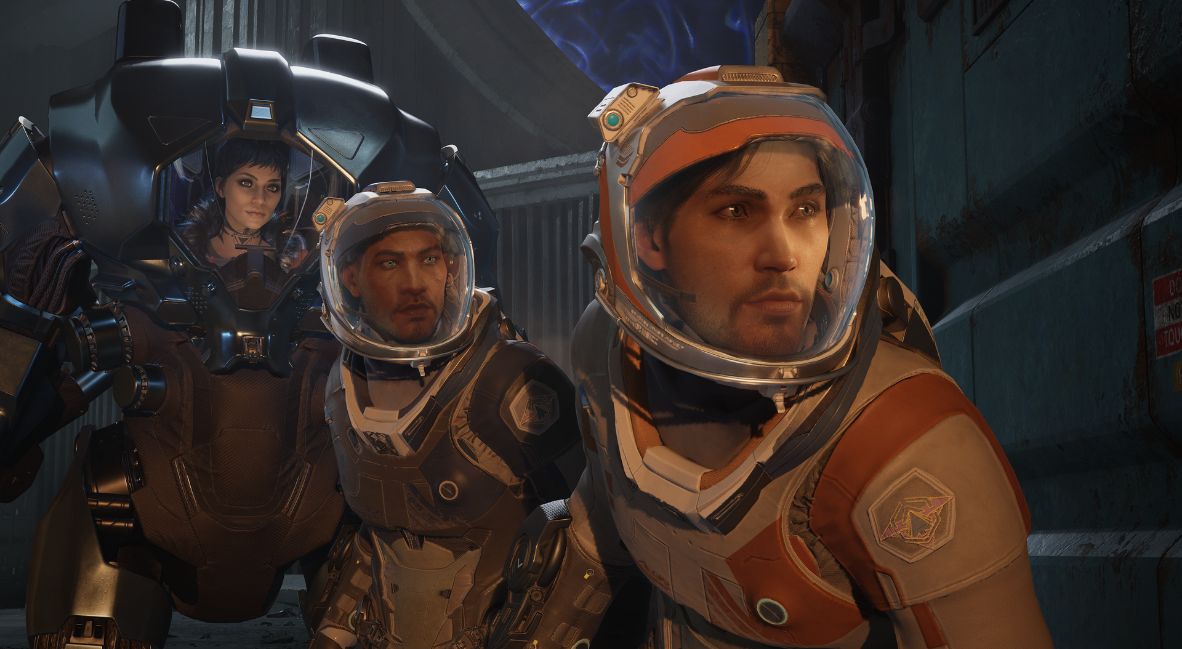
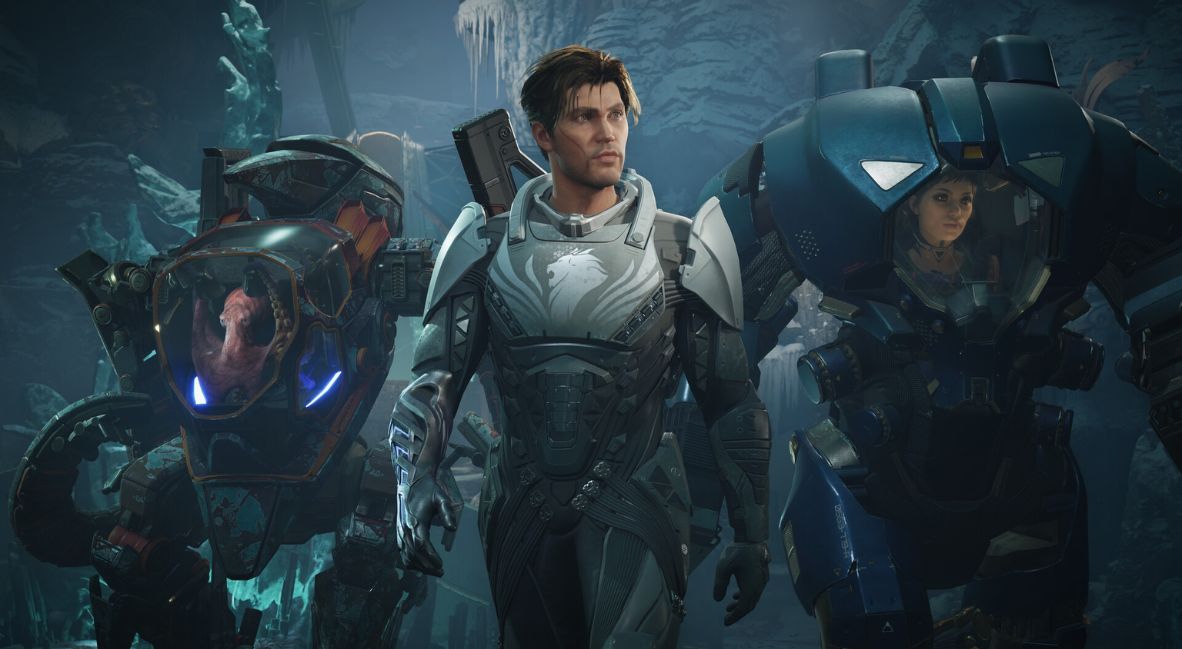
CHAD ROBERTSON: That’s a tough question. Inspiration can take so many different forms. But your summary was spot on. Actually, the things from Dune that we love are just the grounded reality that Paul faces, you know? There’s an element of him not being an unsuspecting leader or hero because he understands what his fate is going to be. He doesn’t really understand exactly where he’s going to end up, but we wanted a bit more of that in Jun than, say, the space cowboy or the complete unknown hero who can’t step into the role as a leader.
Jun isn’t intended to be a goofy Star-Lord-type or anything like that. There’s a much more serious tone to him because he has this unique [perspective]. Even though he’s a bit of an unsuspecting hero early on, he quickly understands what makes him unique and that he’s really the only path to save humanity in terms of the plight that Leiden is facing.
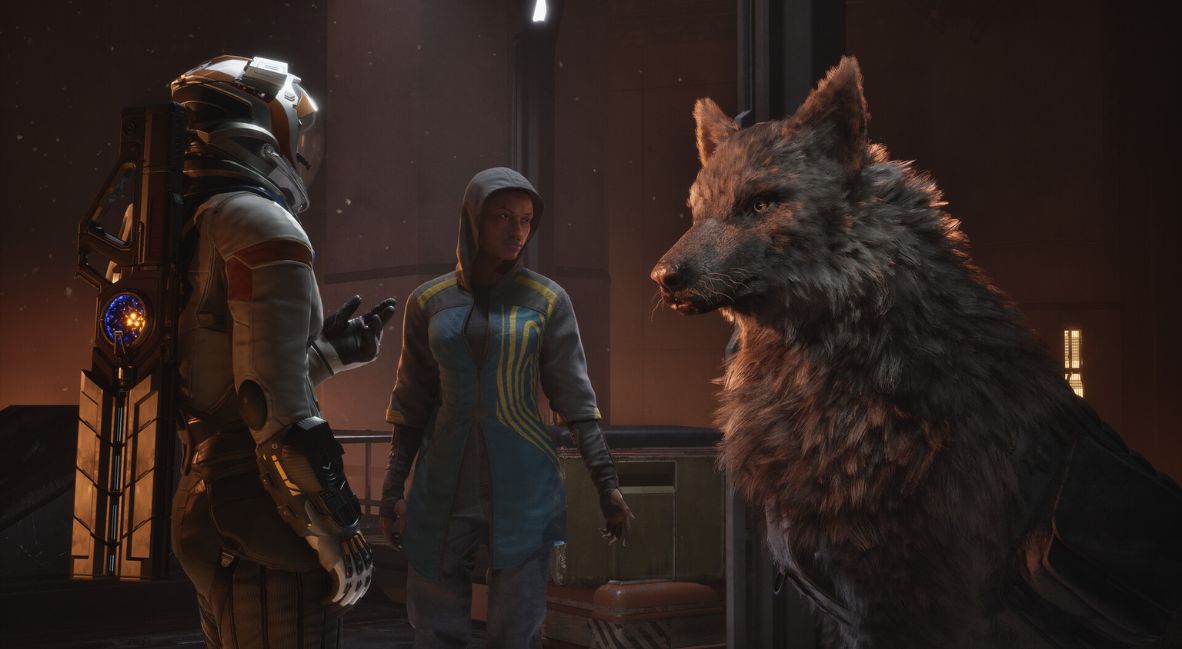
With Star Wars, it’s like, “Oh, I can imagine myself in that universe because it’s so accessible and everything’s relatable.” There’s a communicating Wookiee that’s with me, which you know you can flip for inspiration in terms of our Awakened, perhaps a little bit there, the Cantina Band, or exotic locales and space travel. But where Star Wars doesn’t work for us is that we wanted the harder edge of real science fiction.
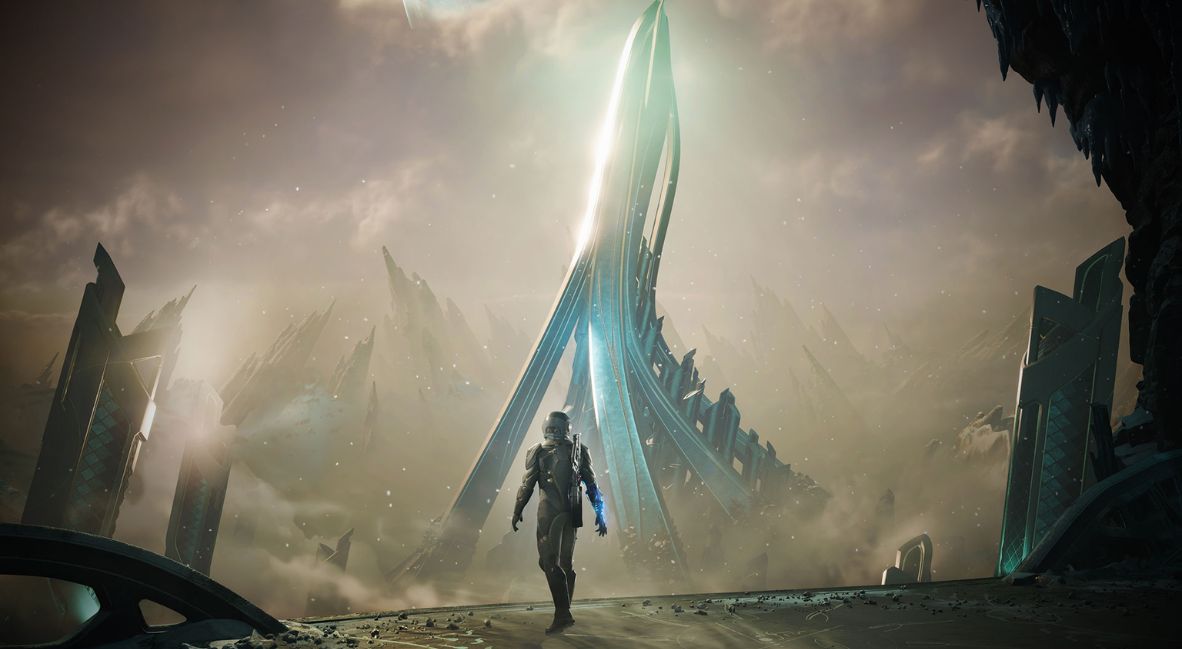
That’s where Interstellar comes in because it’s like Drew talked about in our intro: we obey relativity. That’s a cool mechanic for us. Not just because of time dilation, but because we don’t have space magic in this game.
BUT WHY THO: Yeah, I can see that now.
CHAD ROBERTSON: There are things that every now and then you get, especially if you’re doing some of the deeper side quests and stuff in the game; there’ll be moments where you’ll be like, “Oh, well, that’s a pretty serious take on something that could have been a little bit more corny.” It could have been done in a more comical way, but we don’t. We’re not choosing to go that route.
We love humor, and there’s plenty of humor in the game. But balancing [it], it’s not just those three IPs, but those three elements of them, like you characterized. Drew’s maybe a better person to answer this, as the lead writer.
But I think we’ve done a nice job bringing those together in a way that’s relatable, real, and also something that is hopefully desirable for people to be in. If we balance those, that’s why we have those three up there as the truest inspiration points for us.
BUT WHY THO: It is a great conversation point too. I am interested in what other small influence from science fiction has inspired you. Like, what small piece from something that you’ve read or seen when it comes to the genre has inspired you as well?
Is there anything that is more personal to you that you think Exodus is speaking to in terms of theming that someone may not recognize?
CHAD ROBERTSON: I mean, we kind of talked about it! Many on our team, and certainly Drew and Chris and I, we’ve been in the industry for a long time, and this opportunity is unique—especially [since] the industry is going through some challenging times right now. Building a AAA game that we believe is high quality right now is something we cherish as an opportunity—to be able to take our original vision and turn it into a piece of playable software that we hope people love.
In doing that, we don’t want to send a political message, but a message that’s meaningful to people. A message that shows that this game and this IP can stand the test of time, and “hope” is a key part of that message. There are themes in the story that we think are really meaningful and powerful. But in terms of things that have that influence beyond that, I could rattle off 20 games that have been influence points for us. What stands out beyond the core story and the emotional hook are those moments we talk about a lot.
The games we love the most are the ones where you have to pause moments before you make a decision. So this isn’t a specific “X game” to answer your question, but it’s those games where you have to do that, where it’s the weight of [a choice], the decision that matters.
Not every decision is like that in Exodus because some of them are more micro-level, but we want to have enough of those [big decisions] that players emotionally have to think about it and figure out what they want to do. And I don’t know; you can be the judge of that when you put your hands on it sometime in the not-too-distant future.
BUT WHY THO: Last question. I love to ask every developer, every filmmaker, every actor, anybody I interview, this question. When we make art, we put all of ourselves into it.
CHAD ROBERTSON: Oh, we put so much of ourselves into every game. It’s brutal.
BUT WHY THO: But I’m also a firm believer that [our art] gives us something back. We don’t enter a project the same way that we leave it. I wanted to ask what have you learned about yourself while working on Exodus?
CHAD ROBERTSON: That is deep…
BUT WHY THO: Yeah, it is. Sorry! You can take a minute.
CHAD ROBERTSON: That is deep. I’ll answer for the team holistically. I mean, this is a lesson many of us have learned: Trust your creative instincts because it is a work of art. You’ve got to watch out [for losing] your way along that journey.
If you’re starting to onboard too many voices and too many opinions, what you end up with could be so diluted that it isn’t authentic to your original vision. That’s not to say you shouldn’t listen to player feedback when you want to make the game as appealing to them as possible.
But it is a statement that if you look at some of these masterpieces of the science fiction genre, whether it’s Star Wars or Interstellar, or many others, there’s a creative vision behind it that has this common thread through everything it does. With Exodus, we’ve tried to try to uphold that [common thread].
We got asked a question earlier about whether there is stuff that got cut. Of course, there’s tons of stuff that we cut from the game, but some of those things that got cut were cut because we didn’t feel they were authentic to the original vision that we established. Maybe we revisit those later, but I think those were the right calls to stay true to this first manifestation of a video game built in the Exodus universe.
So, stick to your creative guns because at the end of the day, it’s your heart. And well, we’re part of a business where there are a lot of factors in it, and if you aren’t doing that, you’re not going to end up with something that is likely to be delivered at the level that you hope it does.