

I’ve been playing Magic: The Gathering for three years now, but only seriously for a little under two. While I’ve always found the art beautiful and the world deep with lore I wanted to learn, Magic: The Gathering was intimidating. Between the longevity of the game, the mechanics and history I didn’t know, and the simple fact that I never saw women playing at events I attended, falling in love with Magic was hard.
But when I attended MagicCon Atlanta, I found some of the amazing women behind the game, and started to see that women were in this space; I just hadn’t been looking for them. Fast forward to MagicCon Las Vegas, over half a year later, and I had not only become more confident in my deckbuilding and strategy, but I had more confidence in the space itself. So, one of the first things I did was reach out to Wizards of the Coast to pitch this interview, a conversation with the women who make Magic: The Gathering.
During MagicCon Las Vegas 2026, we sat down with five women in Magic: The Gathering. We spoke with Meris Mullaley, the senior worldbuilding designer at Magic; Natalie Kreider, game producer and co-host of The Magic Story Podcast; Harless Snyder, events team member and co-host of The Magic Story Podcast; Lauren Bond, the senior worldbuilding game designer on the narrative team and set lead on Secrets of Strixhaven; and Athena Froehlich, executive producer and the narrative lead on Secrets of Strixhaven.
During our conversation, we learned about their stories of how they got involved with the game and the work they’re doing now to ensure that other women and young girls see a future where Magic: The Gathering includes them. Below is an excerpt from our conversation; you can press play on the interview video to see the full interview, which was recorded on-site.
With varying entry points into Magic and lives before Wizards of the Coast, the women we spoke to showcased just how diverse everyone’s Magic journey is. From former English teacher to former pro-player and more, the most important takeaway from hearing each of their entry points came back to feeling supported in picking up the game, even if their story included first being turned away.
I could see my own story in there. In thinking about the press room that only had two other women press in it at any given time, the conversation became more focused on the community as it is now. We dove into the recommendations the panelists would have for new women players and young girls who may be looking for other women but can’t seem to find sisterhood in the spellcraft of Magic just yet.
Harless Snyder answered first, “One of the things I was most impressed by when I started playing Magic, because I was an adult when I started playing Magic, was looking at the cards and seeing the the work that the world building team has done to put women, powerful women, on cards, and those powerful women don’t always look the same, and that was just like pure magic to me. And so I think if you can see yourself in the cards, who’s to say you don’t belong there playing it?”
Lauren Bond added, “Definitely, looking at our artists pool, especially if you are an aspiring creative looking to get into art or illustration, or any of those works, we have a lot of just incredibly talented women who do the art for our cards. And I think if you spend some [time to] scroll through that Artist Roster, a lot of the time, you will pick out all of these beautiful, different styles and ways of expressing themselves creatively.”
Shifting gears only slightly, Athena Froehlich’s recommendation was to not think about being, well, “wrong” when you pick up a Magic deck. “There’s no wrong way to engage with the game,” Froehlch said. “I think previously it was that you played competitively. You sit down 1v1, and it’s about who’s better. And if you don’t really jive with that, Magic isn’t for you.”
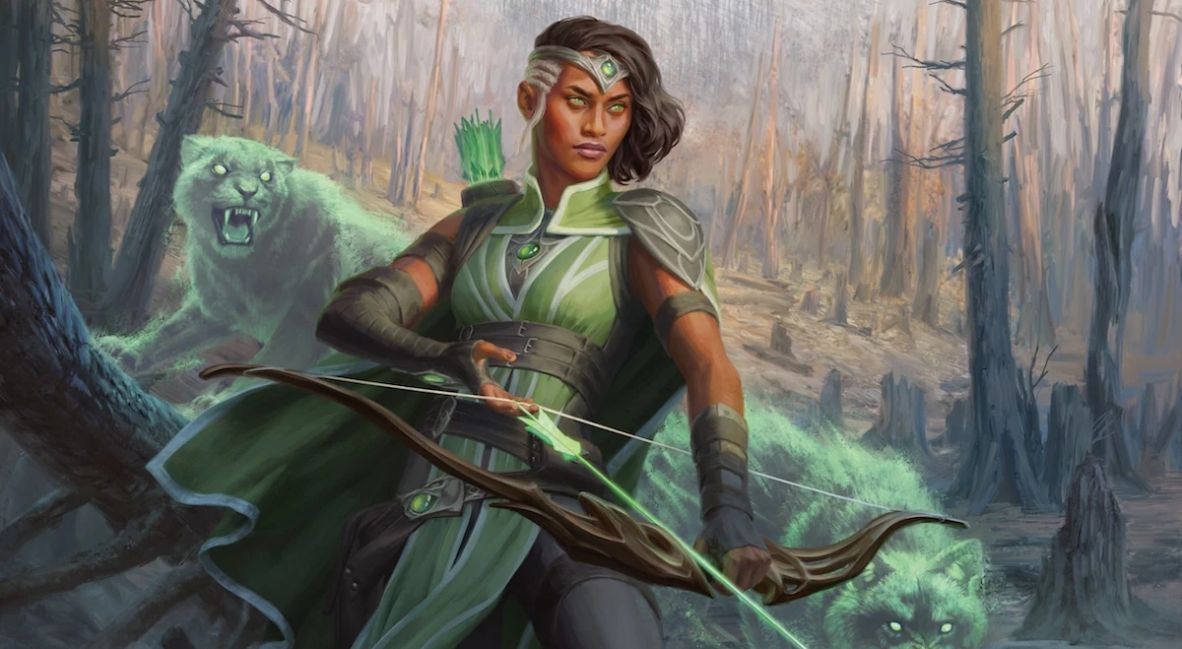
She continued, saying, “I feel like now there are so many different expressions and ways to engage with Magic so [only competition isn’t the case anymore]. You can play socially for Commander, and you can play high-tier, really powerful decks if you want to kick someone’s butt. Or you can play like, ‘I like cats and rabbits, and this is my [deck].’ I mean, just engage with the art.”
“Women have always been in those spaces. Women have always loved games. Women have always been fans [and] a part of nerd culture.” — Harless Snyder
As the women continued to answer, I found myself thinking of the moments I had almost tapped out of playing Magic, and what kept me in. Part of it was the excitement of new sets, another was a friend who deeply wanted me to keep learning, and finally, it was the creative process of deckbuilding for themes. Even then, it still took me time to find the courage to walk into my local game store and play with people I didn’t know.
Meris Mullaley’s response took that into account: “One of the great things is if you’re not ready to try going to the local game store, you can open up Arena. You can play Arena for a bit,” she said, noting Magic: The Gathering’s video game counterpart.
But it wasn’t just about digital; it was also about finding your people at specialty conventions. Mullaley added, “There are also more and more conventions of varying scales that are focused on different demographics. Like, we’re from Seattle, and we’ve got Geek Girl Con. I remember when that had its first year, and having gone to PAX for a number of years. And like, enjoyed PAX, but went to Geek Girl con and was like, ‘Oh my god. We’re all here.’ That opened doors to just different experiences and trying new things. And places like that.”
Adding, “Because everywhere out there in the community, there is another woman or anybody of any demographic who’s like, I want more people like me who are playing. And maybe they have been like, ‘I’m going to start a local thing in my library,’ or ‘I’m gonna set something up and reach out to people,’ they’re out there. They’ve always been out there.”
Harless Snyder added, “Women have always been in those spaces. Women have always loved games. Women have always been fans [and] a part of nerd culture, right? And I think that was quieter, but that voice and that loudness are growing and continuing to be there. I think that now, to Athena’s point, you can play socially. You can play with your friends. You can easily get a group of women together to play Magic.”
Snyder added, “I say easily because, like I said, when I was in high school, and I was trying to play, it was always the boys that were playing, and they realized, well, we don’t want to teach you. And I just have not had that experience at all as an adult. It’s been very like, Oh, you like this? I like this. And it’s just the entire tone is shifting in such a major way that feels very important and impactful.”
There are more ways than ever to play Magic: The Gathering, and that’s a good thing.
While it’s easy to tell people to start playing, the women didn’t forget to explain how, with Mullaley praising the Jumpstart packs for Magic: The Gathering, which only require that you buy two packs and shuffle them together to have a deck working for a quick match. Athena Froehlich added the newly released co-op version of Magic that launched with the Teenage Mutant Ninja Turtles Universes Beyond set, called Turtle Team Up. In this version of the game, players play together rather than against each other to take down boss battles.
By making a point of highlighting the avenues that Wizards proper has created to get more people into the hobby, it was clear that this was top of mind for the panelists. But then, again, finding more ways for people to play something they love just comes naturally.
As the women discussed the cards they saw themselves in, I was left with a question I hadn’t considered before. Wizards of the Coast has consistently made an effort to highlight that everyone is included in Magic: The Gathering. Even standing stalwart in the face of baseless harassment around card portraits, as they experienced in the Tales From Middle-earth set. Still, every set continues to highlight the trading card game’s players through the diversity of characters and art on the cards.
But that left me with the question, what do you do when something is going the wrong direction? Whether that’s an artist looking to make the default, which is often white and male, or a product straying from the intention and brief the designers put together. The answers, which were some of the larger responses in our conversation, offered a peek behind the curtain. And the takeaway was that there are women at Wizards, from the top of leadership down, who are making sure that the art that defines the game is not only inclusive but thoughtful.
Lauren Bond answered, “So that’s a big part of what Meris and my role is. And honestly, it [happens] even as early as when we are writing the briefs for the artists. The world has created a default, and that default is particular ethnicity, particular genders, and particular able-bodiedness, like these are all things that people will default to if you don’t ask them for something specific.”
Continuing, “A lot of our role is really making sure that we’re being particular, figuring out what our balance looks like, what is spread across the cards, and seeing what or who we are missing. Who are we not representing?”
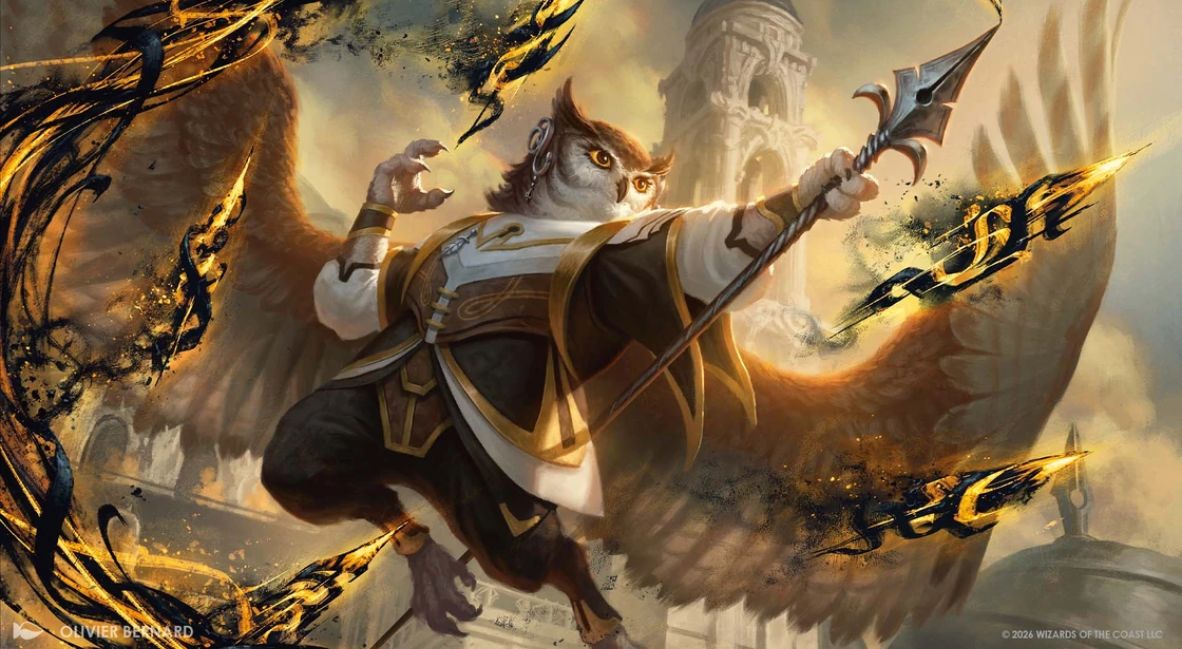
To explain further, Bond shared an anecdote about the first time that Magic: The Gathering had a card featuring a Deaf character. “The character Abigail, she’s an owl, but she’s also Deaf, and that was something that we hadn’t created before. We didn’t have a legendary character who was Deaf, and so that was also us recognizing, ‘Hey, I don’t have the knowledge or the resources, but I want to include this character.’ And so we [sought] consultation, and we received additional advice on how to depict these characters in ways that are authentic, resonant, and unique to them. So it is a big part of the early planning and communicating that with our art directors.”
Meris Mullaley joined in, “I’ve been at Wizards now for eight years, and [I’ve seen] just the evolution of our world-building creative process in that time. Now, regardless of gender, we are putting our concept artists to work when they’re creating characters for the worlds that go into our world guides, and they’re just defaulting to creating folks of different ethnicities, different body sizes, different genders.”
“And that makes it much easier when we go to write our art descriptions… I think, like on the whole, the team, and this is true on creative and on game design, people want to see themselves. They want to see their friends in the game. And that is really powerful, really important,” she continued.
Adding to the anecdote, Harless Snyder explained that they heard the story of a child who saw themselves in Abigail. And, more importantly, how much work is involved in creating characters and art before it even makes it to distribution or marketing.
Snyder said, “I think Abigail is such a great example. I heard a story recently of someone who has a child who is deaf, and was able to, in the trailer, she was so excited, because she was like, ‘I can understand this.’ This is the actual American Sign Language that Abigail is using. From the time that this team handles it to the time it gets all the way down to marketing creative, that throughline is there and is communicated so well. Then we get to talk about all this amazing work on [The Magic Story Podcast], which makes it much easier.”
“There are a lot of women behind making Magic. Women in Wizards are in very strong positions of power, but also [they’re] strong voices behind game design, behind creative, behind marketing, behind the whole process.” — Natalie Kreider
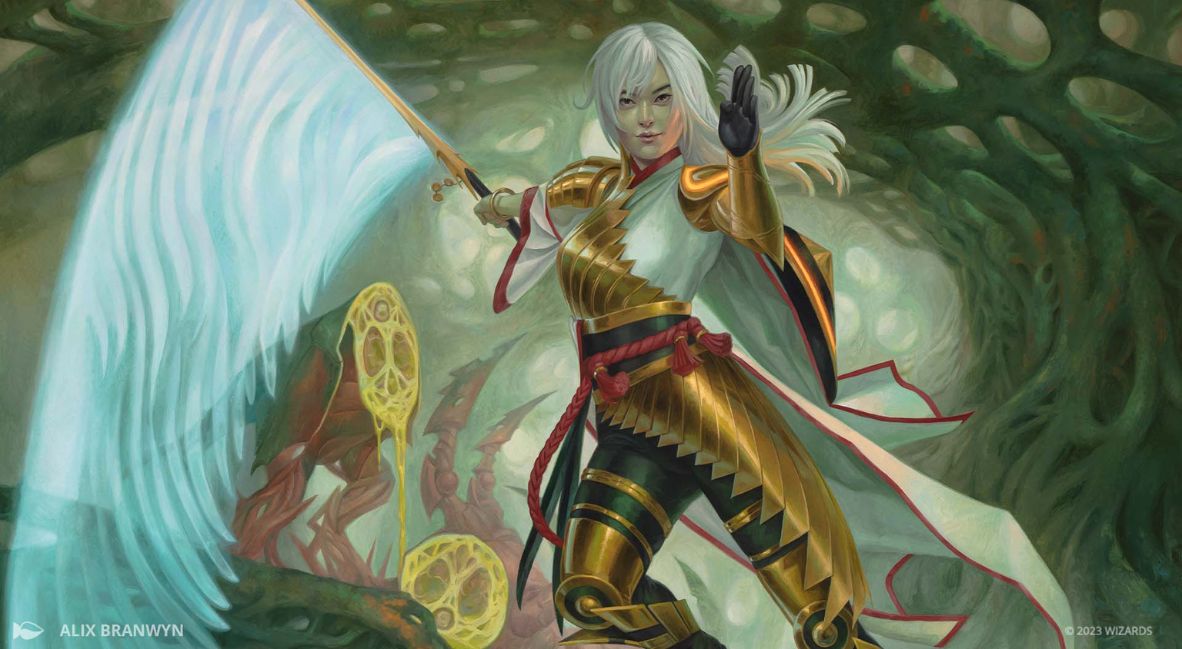
When we take a step back and look at Magic’s landscape, the reality is that there is a little bit of something for everyone. That kind of inclusivity is fostered by the people behind the sets. Lauren Bond explained, “It also goes into the other teams, like who our art directors are working with, and their role in bringing in new artists that maybe we haven’t represented historically, and who our story leads are selecting for writing articles and writing the fiction, making sure, where it makes sense, we have own voices. We have people who are able to speak to these experiences and add their perspective to something.”
But even when “own voices” isn’t the focus, the reality is that Wizards of the Coast has multiple women in leadership on Magic: The Gathering who are there working to ensure the set doesn’t hit a snag and that people feel supported pushing back on what’s been submitted.
Athena Froehlich jumped into the conversation, “It also helps that, for Magic, the fact that we have so many women who are kind of like in positions of power in our creative org. Like, we have Alicia, who’s in charge of our creative packaging, so every single time we put something on a box, she’s the one dictating which characters are featured. And then we have Jackie Jones, who’s our VP of creative, who oversees the creative work as a whole. And I think having women in strong positions of leadership really then trickles down to the rest of the team and [informs] how we handle things.”
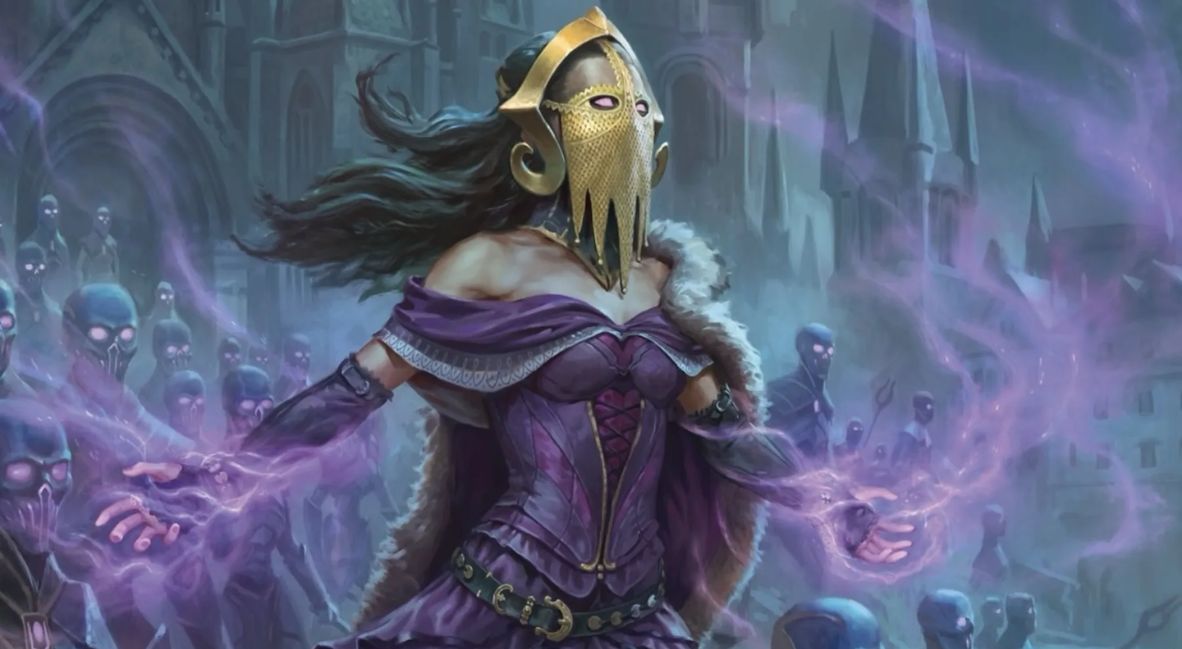
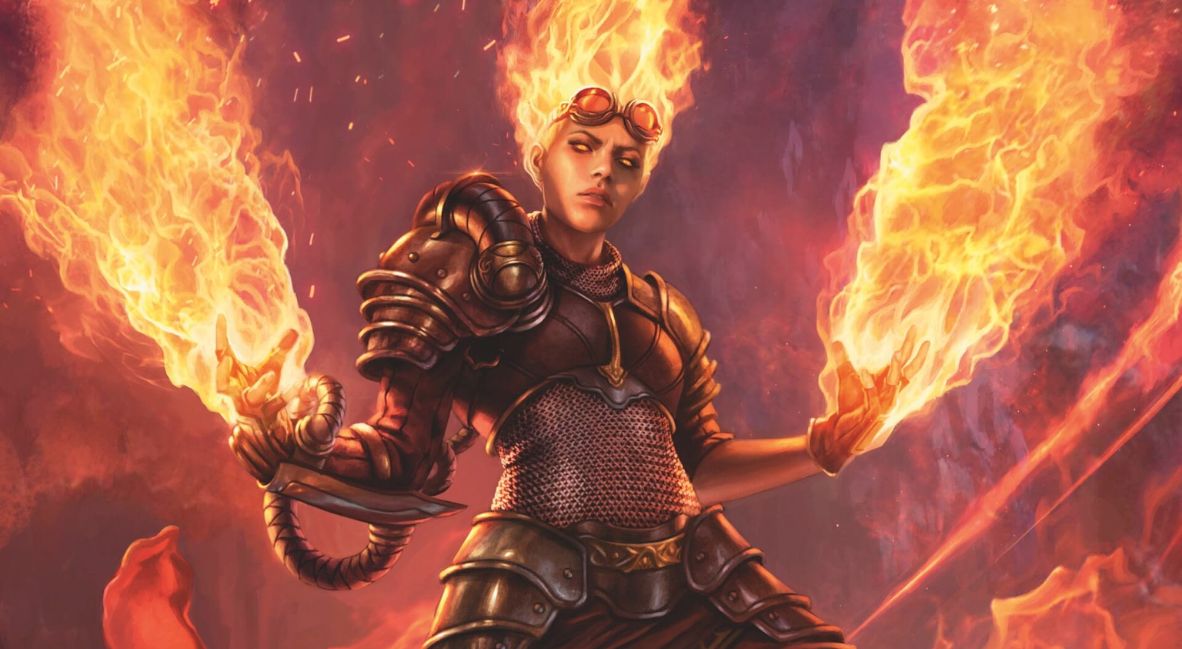
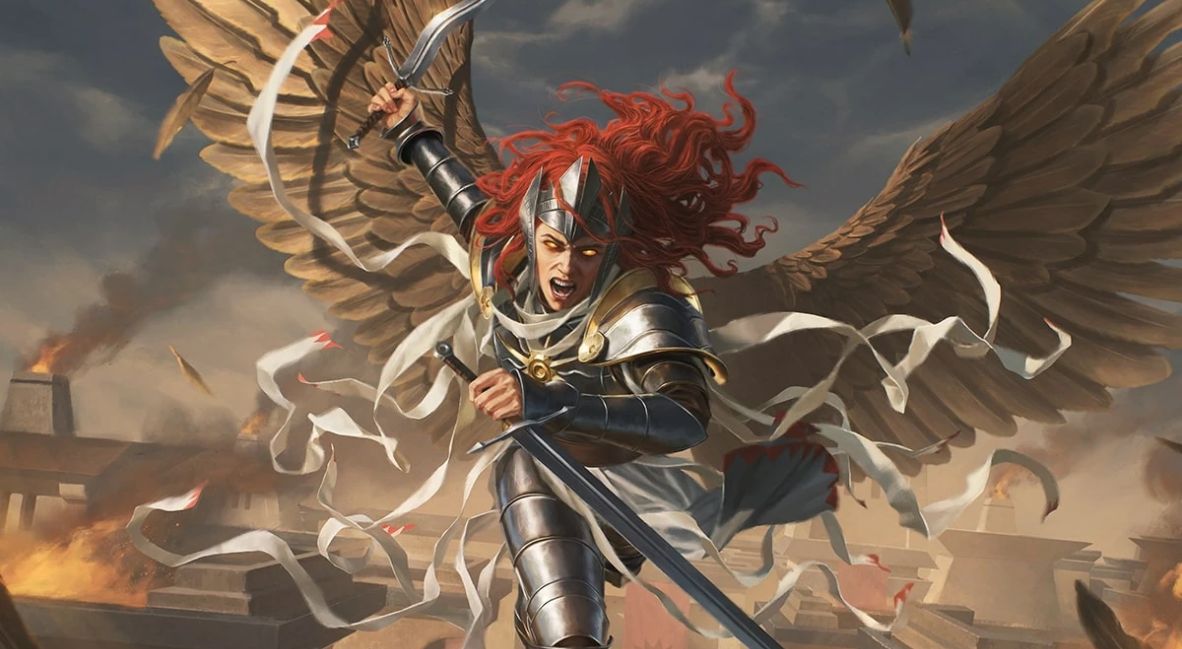
One of the most exciting things about women characters in Magic: The Gathering is that they have been allowed to be complicated and messy. From Chandra to Elspeth and Kaya, to the choice to make three versions of Eówyn in The Lord of the Rings set, women aren’t cast into any one singular role. And, we’ve seen these characters evolve over time, and with the Reality Fractured set coming later this year, we’ll see even more.
Natalie Kreider captured that as she responded to Froehlich, “That’s what I was just going to echo. There are a lot of women behind making Magic. Women in Wizards are in very strong positions of power, but also [they’re] strong voices behind game design, behind creative, behind marketing, behind the whole process. There are a lot of women who make this game and see themselves in this game too. I think that just translates [to the game].”
She continued, “For me personally, when I grew up with fantasy or even really just media, it seemed like women were cast into one role, which was the romantic interest, right? And it bothered me so much because there was so much more than that. I wanted us to break out of that trope. And that’s the beautiful part about Magic, since being engaged with Magic, it never fell into that trope, and just the passionate voices behind creating this game are proof of that.”
“Over the fact that it’s not like we’ve never fallen into that trope. Women, as you said, are complicated and allowed to be complicated, and it’s much more than just a romantic interest to a male protagonist. It’s never been that way. So it’s just very inspiring to have women be at the helm behind making Magic and also translating that passion into the game itself, so that other women can see themselves,” Kreider said.
The Gathering part of Magic is important, and it’s crucial that it includes everyone.
But progress doesn’t only come from women alone, as Mullaley made a point to highlight the “great allies” at Wizards of the Coast. Mullaley said, “I think we also have a lot of great allies in various levels of leadership and peers as well. The number of times people have been like, like, men have come up and be like, This feels like a problem. I wanted to get another opinion.”
Snyder added, “Even on the events team that I’m on, which is so much more downstream from the creation of the cards. But, my leadership is women like the entire way up, and that is when you walk the floor at MagicCon, that’s what you see, and that’s a big part of it as well. So it really is. It’s all these voices coming together, singing this chorus: women are more than what you have seen in the past.”
Continuing, “I also think on the events team, we always say that we really are the gathering, part of Magic: The Gathering, and that gathering is welcoming everybody in. And that’s not unintentional at all. That’s something that we have discussed, and we make sure it is, like you said, prevalent on the show floor.”
As many strides as Magic: The Gathering and its teams have made, there is always more work to be done. “I think all of us know like it’s an ongoing process, and it will continue to get better and better, but we’re glad you’re here. That’s such a part of it, and that’s part of why we also want to be here with the people who are playing. We, too, wish to gather,” Lauren Bond said, closing out the interview.
Being a woman in Magic can feel daunting at times, primarily in online spaces. Still, seeing the women at the helm of a hobby that has become central to my life can only be described as healing. If there is one thing that MagicCon Las Vegas taught me, it’s that we’re here, we’re gathering, and we aren’t going anywhere.