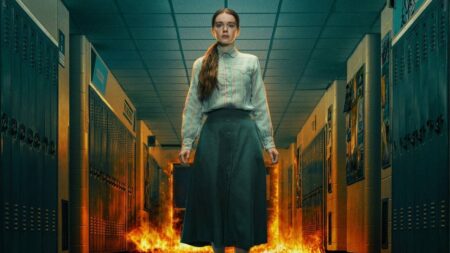
Some stories do not get remade as much as they get reintroduced. Lord of the Flies is one of those stories. William Golding’s 1954 novel has lived for decades as a classroom staple, a literary warning, and a cultural shorthand for what happens when children are left to build a world with only the tools adults have already handed them. It has been adapted before, most notably in Peter Brook’s 1963 film and Harry Hook’s 1990 version, but the BBC’s new four-part adaptation, now available on Netflix, gives the story a different kind of shape.
Written by Jack Thorne and directed by Marc Munden, Lord of the Flies uses television to slow the descent without dulling it. Each episode centers on one of the major boys: Piggy, Jack, Simon, and Ralph. That structure gives the series a psychological focus that makes its most familiar moments feel newly painful.
For many viewers discovering it through Netflix, this may feel like a new release. But what makes the adaptation work is that it understands Lord of the Flies is never really new. It is a story people return to at different points in their lives and, depending on who they are when they come back to it, find something different staring back at them.
The television format is used in Lord of the Flies to draw out the slow descent into madness.

The setup remains familiar. After a plane crash leaves a group of British schoolboys stranded on a remote island, they try to create structure in a place without adults. Ralph becomes the closest thing they have to a leader. Piggy clings to reason and rules. Jack turns fear into control.
Simon senses something deeper and more terrible moving beneath the surface. Anyone who knows the book knows where this is going. The conch will lose its power. Jack will choose violence. Simon will understand the truth too late. Piggy will pay for being right. Ralph will run. The question is not whether the series changes those moments. It is whether it can make them hurt differently.
It does.
Lord of the Flies has always been a descent into madness as much as it is a survival story. Golding’s novel is not frightening simply because children become violent, but because that violence grows out of fear, humiliation, performance, and the slow collapse of the rules they were taught to trust.
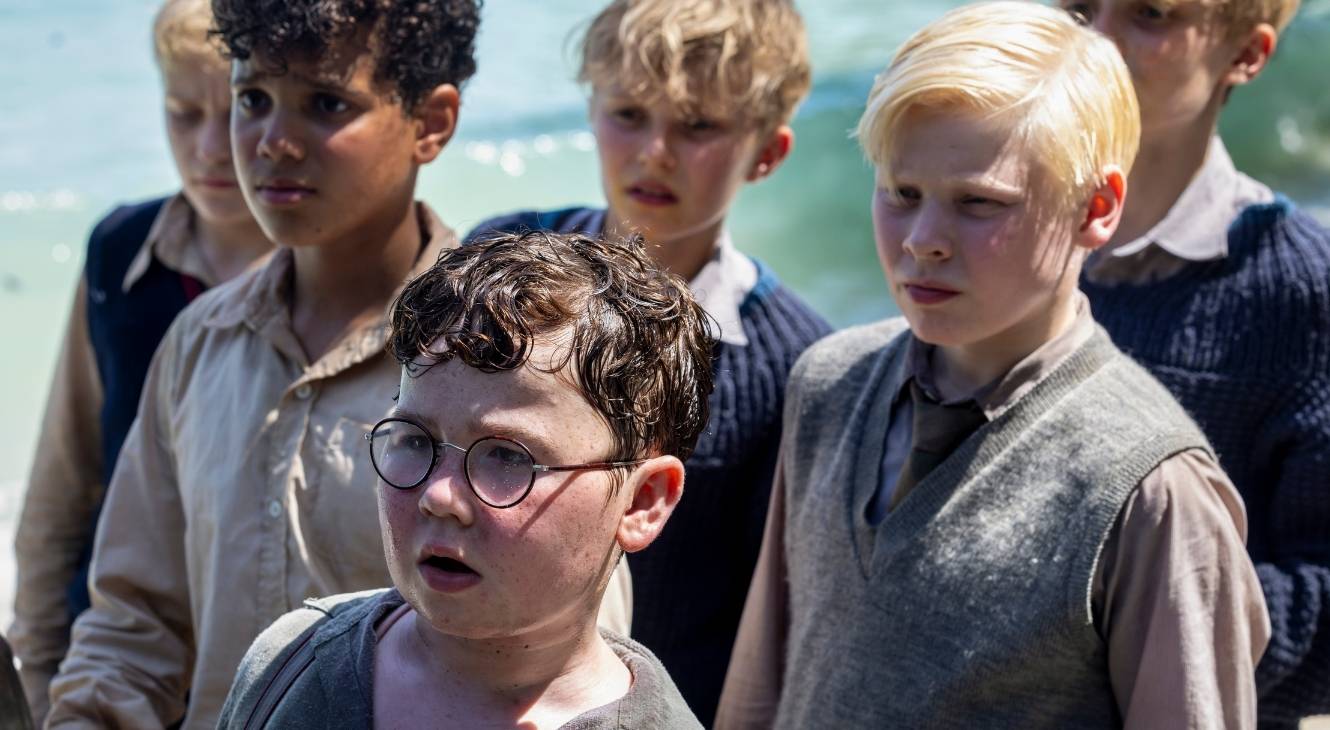
Previous adaptations have approached that horror in different ways, from the stark realism of Peter Brook’s 1963 film to the more conventional survival-thriller shape of the 1990 version. What makes the BBC’s adaptation work is that it leans into the psychological horror already embedded in the text instead of toning it down.
Munden does not shoot the island like a simple survival setting. The beach is beautiful, but the beauty never feels safe for long. The jungle feels alive. The colors overwhelm. The close-ups hold on faces long enough to make them uncomfortable. The boys are constantly being watched by the camera, by each other, and eventually by the versions of themselves they are becoming. The result is a series that feels less like a clean prestige drama and more like a nightmare the boys are still trying to convince themselves is a game.
That visual approach could have become too much, but the performances ground it. David McKenna is tremendous as Piggy, giving him the nervous intelligence and stubbornness needed to make every dismissal sting. Piggy is not just “the smart one.”
The performances ground the distinct visual language we see onscreen.
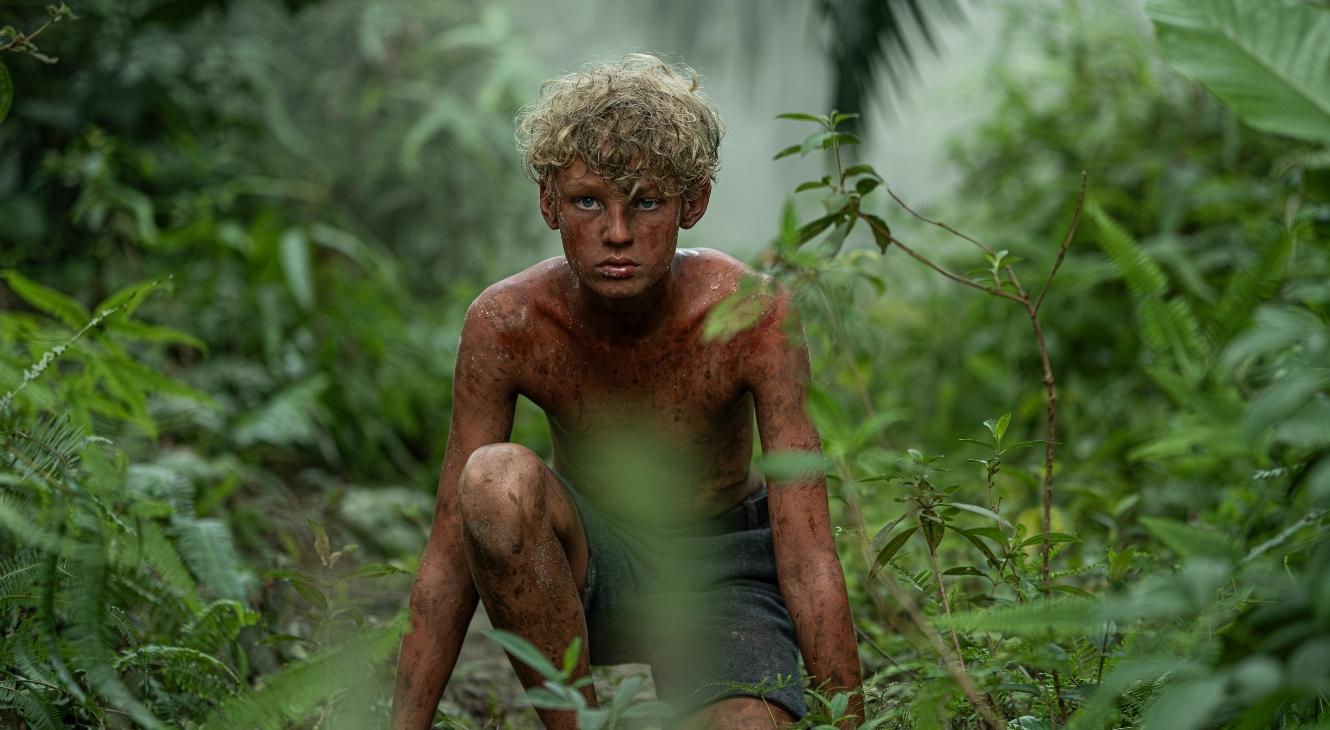
He is a child who understands structure because structure is the only thing protecting him. Lox Pratt’s Jack is just as strong because his cruelty does not arrive fully formed. It grows out of humiliation, entitlement, jealousy, and the intoxicating feeling of being followed. Ike Talbut’s Simon brings a strange softness to the series, making him feel like someone who understands the island before he has the words to explain it.
The music and sound design add another layer to that growing dread, especially because Jack’s group begins as a choir. Early on, their voices are beautiful. There is structure in the way they sing, a kind of practiced harmony that reflects the world they came from. They are boys trained to perform order, discipline, and tradition. When things are still relatively calm, that sound carries a strange innocence with it. It is controlled. It is clean. It almost makes them seem safer than they are.
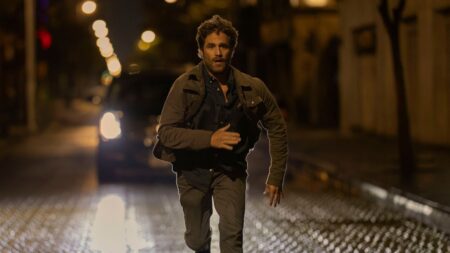
But as Lords of the Flies goes on, that harmony starts to curdle. The singing gives way to chanting. The rhythm becomes heavier. The breaths become more noticeable. What once sounded organized begins to feel unstable, like the boys are still trying to use the tools of performance but have lost the thing that gave them meaning. By the time Ralph is running, the sound has become overwhelming. Voices overlap. The choir feels out of sync. The island, the boys, the music, and the images crash into each other until it all becomes a cacophony of fear, ritual, and violence.
That is what makes the sound design so effective. It does not simply tell you when to be scared. It shows how something beautiful can be twisted into something terrifying. These are choir boys who know how to breathe, chant, and harmonize together. The horror is watching that shared discipline become a weapon. By the end, their voices are no longer proof of innocence or order. They are the sound of a group choosing violence together.
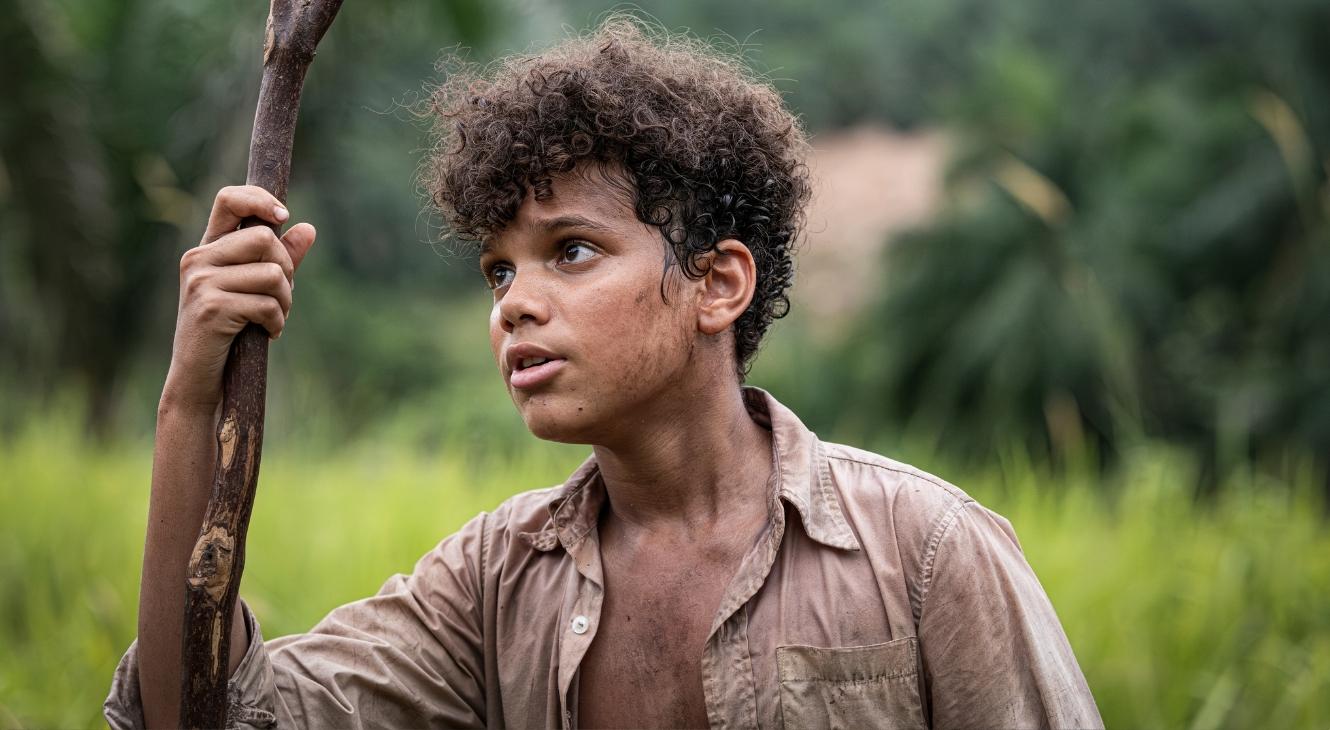
But Ralph is where this version hit me hardest. Winston Sawyers plays him with confidence, uncertainty, fear, and care, all fighting for space at the same time. Ralph is not a perfect leader, and the series is better for that. He can be dismissive, selfish, and unsure of himself, but Sawyers makes every part of that internal fight clear.
You can see Ralph being pulled between Piggy’s reason, Simon’s gentleness, and Jack’s growing power. Those conversations land because the young cast understands exactly who these boys are and what each represents as the island begins to change them.
Winston Sawyers’ casting as Ralph adds an unspoken complexity and depth to Golding’s underlying themes.
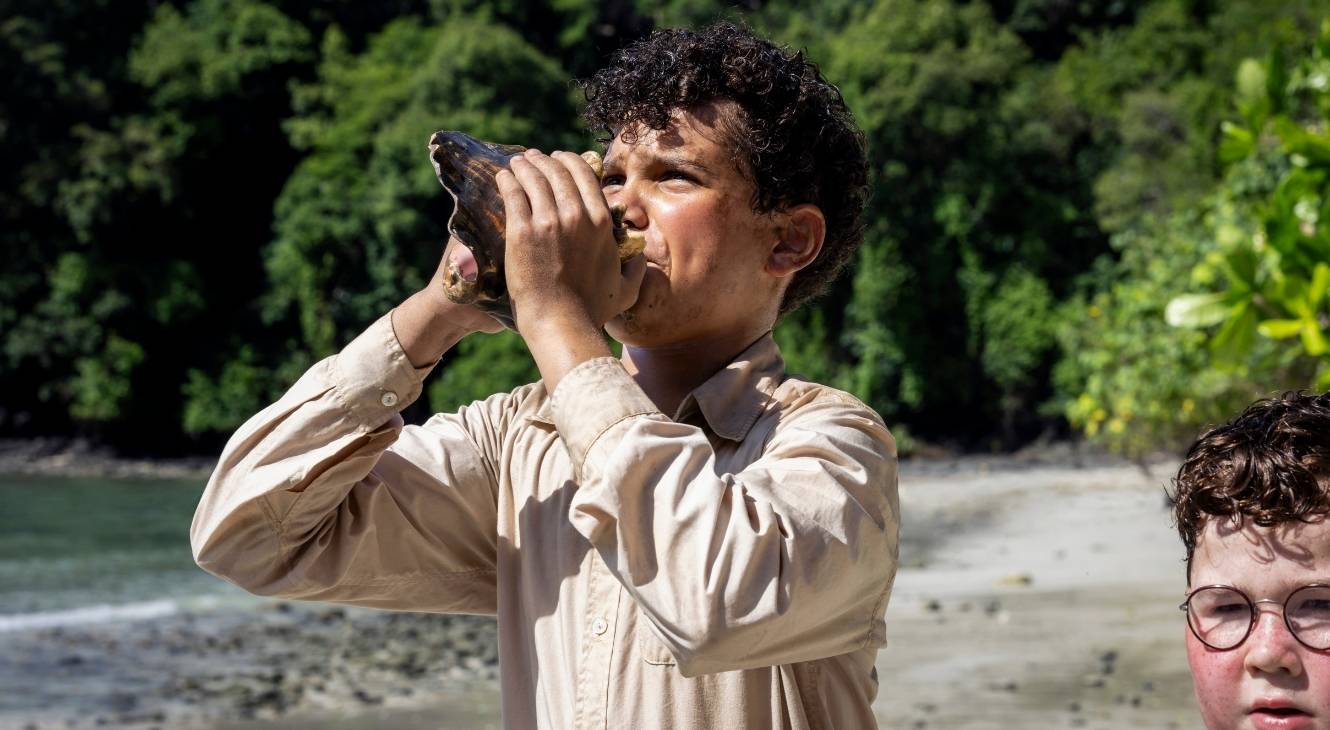
There is nothing overtly racist being shown in Lord of the Flies. The series is not built around slurs or direct racial violence. But race does not only matter when a story announces it. It matters in the image. It matters who is asked to stay calm, who becomes the face of order, and who is expected to carry responsibility while everyone else begins to fall apart.
Watching Ralph, a Black boy, become one of the only central boys of color and eventually be chased through the island by a group of primarily white boys, along with other children of color whose choices we barely understand, gives the story a weight I was not fully prepared for.
My history with Lord of the Flies is personal. I first read Lord of the Flies in fifth grade because of my grandmother, who introduced me to the book. She was taken from me too young, and for a long time, the book existed in my memory through that connection. I remembered the island, the boys, the pig, the conch, and the ending. I remembered the broad lesson before I fully understood what it meant.
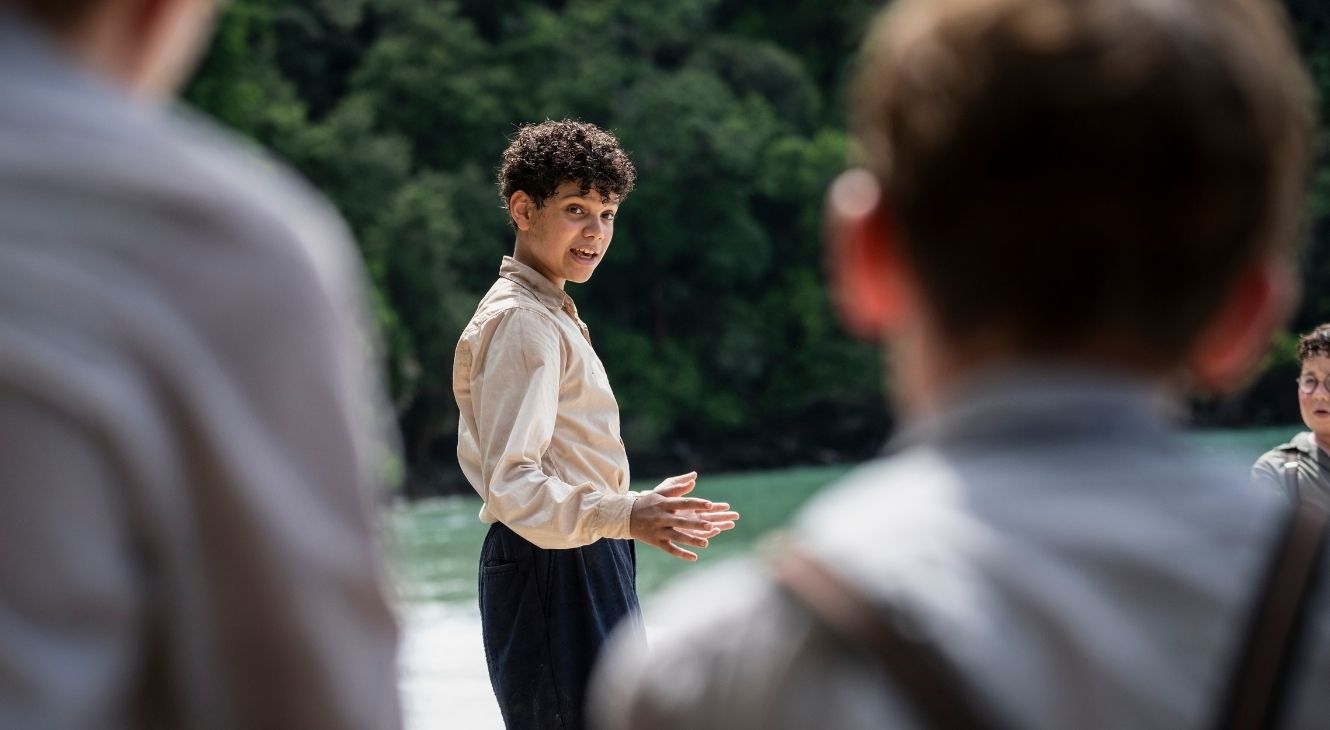
Watching this adaptation now, at 32, after growing up believing I was Latino, that I am Black, made the story land somewhere else entirely. The book had not changed. The adaptation had not changed the bones of the story. But I had changed, and that made Winston Sawyers‘ performance of Ralph impossible for me to watch from a distance.
That is why this casting choice works so well. It is not representation as a surface-level update. It changes the emotional temperature of the entire story without rewriting the plot. America and Britain are not the same, and the racial dynamics are not identical. Still, some experiences carry across borders when you are a person of color moving through spaces built around whiteness.
Watching Ralph, a Black boy, become the one asked to lead, stay calm, represent order, and then survive being hunted gave the story a weight I had never felt before. I grew up with Lord of the Flies, but watching this version now, after spending most of my life believing I was Latino and only recently learning I am Black, made Ralph feel painfully close. This kid looked like me when I was younger.
The four-episode structure of Lord of the Flies isn’t enough time. Instead, you easily want more with this cast.
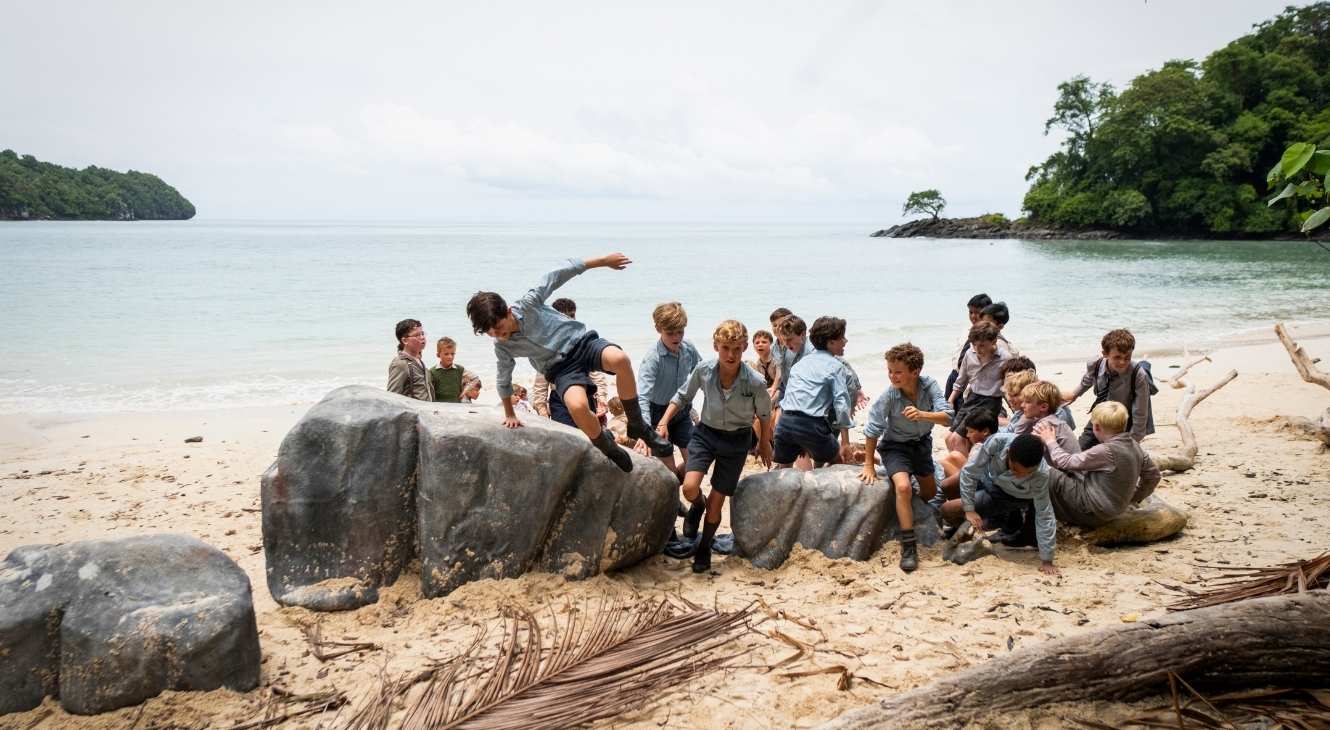
Seeing a Black or mixed Ralph in a story I thought I knew changed everything. Sawyers does not just give us a new Ralph. He gives the story a new way to hurt. That is also where the adaptation’s biggest flaw becomes clear. Lord of the Flies is so enticing that I wanted more of it.
The four-episode structure works, but it also makes the fuller version of this adaptation easy to imagine. This is not a complaint that the series needed to abandon Golding’s structure or turn every background character into a lead. But in a version this visually ambitious, this psychologically focused, and this willing to rethink what the story feels like through casting and performance, it is hard not to want more time with the rest of the boys.
The first episode is filled with faces that feel like they should matter more on a rewatch. Boys look around, follow, hesitate, laugh, stare, and slowly begin to understand where power is moving. Those faces should become heavier the second time through. They should become warnings. Instead, many of them remain flashes instead of becoming people.
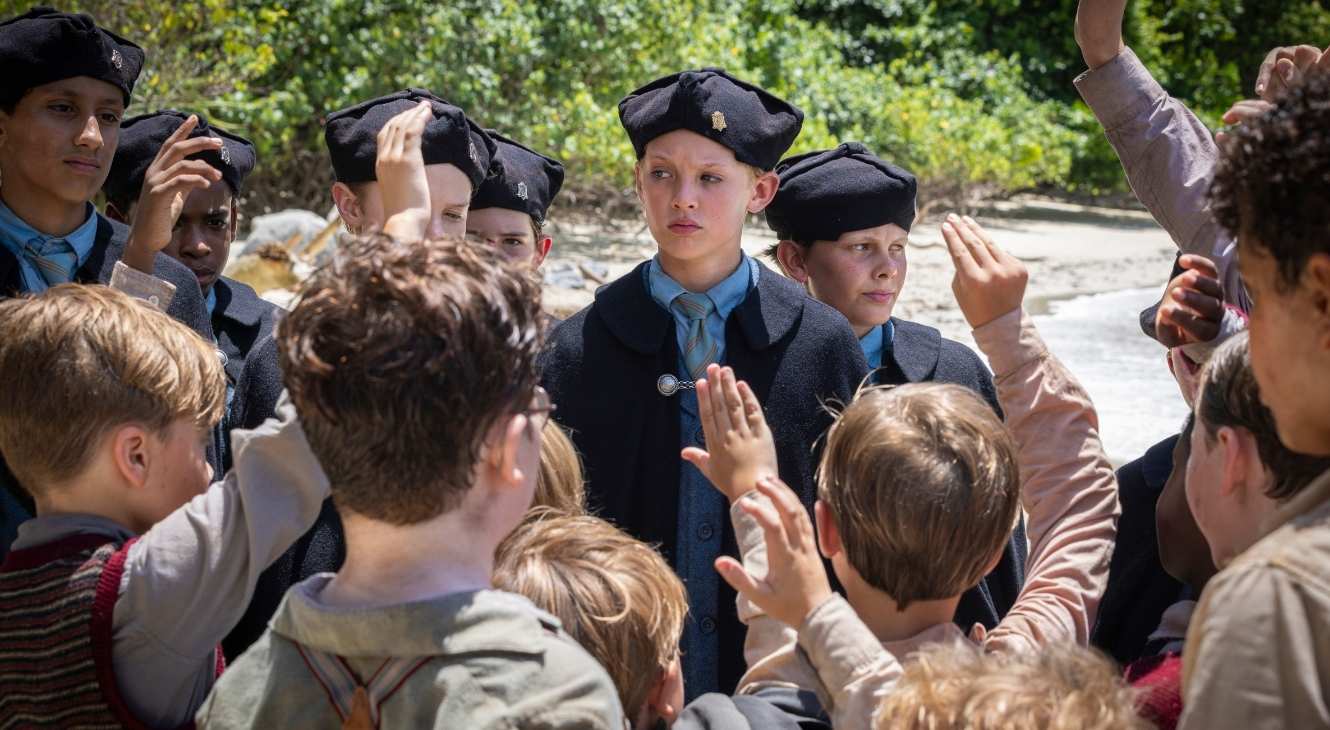
Lord of the Flies is a story about collective collapse. The boys who go along with Jack matter. The boys who stay quiet matter. The boys who stand behind the choir matter. The boys of color who exist around the edges of the story matter. Given the story’s relationship to Britishness, colonialism, class, and empire, there was room for their presence and the presence of others to mean more.
That is what keeps the series from being perfect for me. Not because every character needs a full episode or every act of cruelty needs explaining, but because this adaptation already knows how to make familiar hurt feel new. The book’s major moments are always going to happen. We know Ralph, Piggy, Jack, and Simon. We know where they are headed. What could have separated this version even further is giving more of the other boys that same specificity.
Lords of the Flies hints at that in the first episode, filling the island with faces that feel like they should matter more on a rewatch. But many of them remain flashes instead of people. In a version willing to rethink Ralph’s place in the story, it is hard not to imagine what more could have been done with the boys of color, or even with quiet white boys pushed further into the background for once.
The horror of Lord of the Flies is not just in the violence; it is in the gradual collapse.
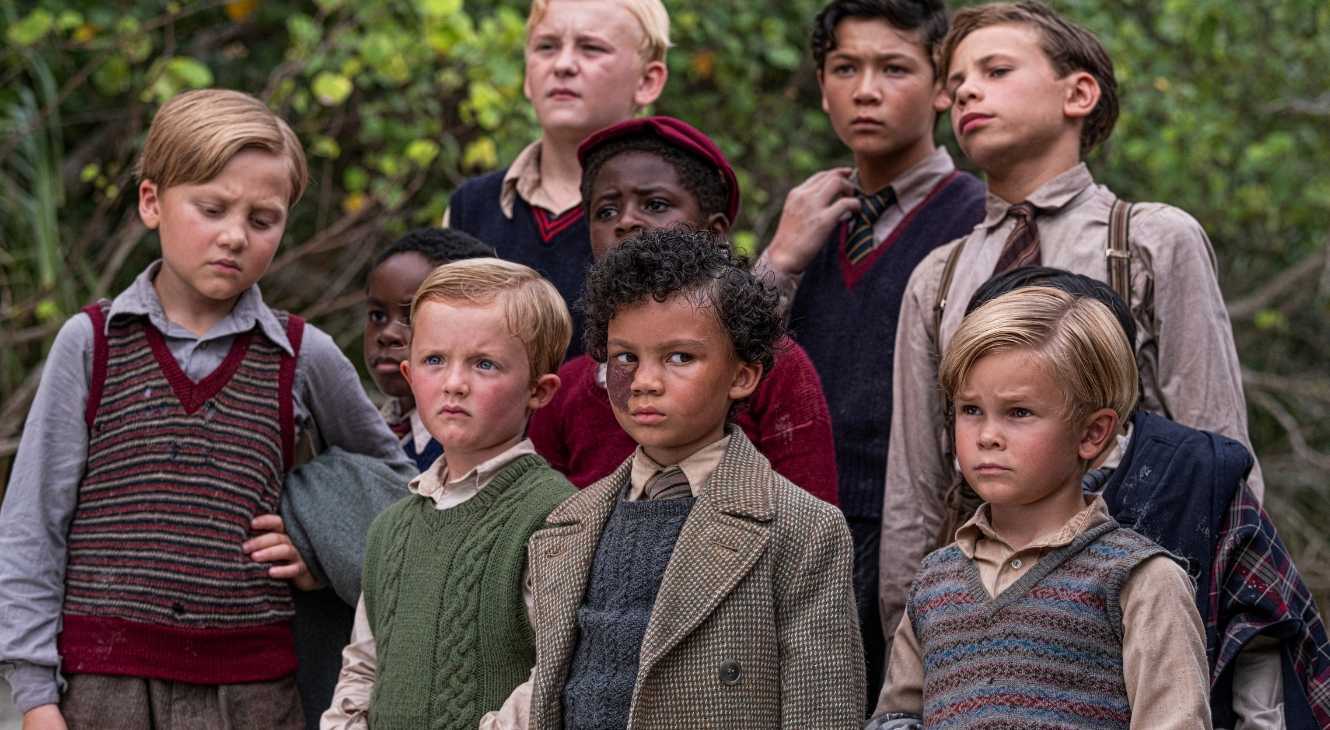
The four-episode structure gives the series focus, but more time with the ensemble would have made the collapse feel less like a wave and more like a series of individual choices. The horror is not only that Jack becomes what he becomes. It is that so many others choose to follow him.
Even with that limitation, this is still one of the strongest versions of Lord of the Flies because it understands that the horror is not only in the violence. It is in how slowly the boys give themselves permission to become worse. Piggy is dismissed before he is fully endangered. Simon understands too much before anyone is ready to listen. Ralph is isolated before he is hunted. The conch loses meaning before it loses power. Nothing falls apart all at once, and that is what makes the collapse so painful to watch.
As a child, I understood Lord of the Flies as a warning about human nature. Watching this version now on Netflix, I saw something more specific: a story about how quickly a group can decide whose humanity is negotiable. That is what great adaptations should do. They do not just send you back to the original. They make you realize how much your relationship to the original has changed.
The BBC’s Lord of the Flies is visually striking, powerfully acted, and unafraid to treat Golding’s story like the psychological horror it actually is. It makes Ralph’s burden feel personal and turns the island into a place where childhood curdles into performance, then violence, then survival. By the time Ralph runs from the boys who once stood beside him, the story feels both familiar and newly devastating.
Lord of the Flies is now streaming on Netflix.
Lord of the Flies (2026)
-
Rating - 9/109/10
TL;DR
Lord of the Flies is visually striking, powerfully acted, and unafraid to treat Golding’s story like the psychological horror it actually is.