


We all have bad days, but for the protagonist of The Terror: Devil in Silver, one bad day turns into a hellish journey within the decaying confines of New Hyde’s psychiatric inpatient unit. With each act of non-compliance, his time there is further extended, even if there is a reasonable justification for his behavior. And if the series’s occasionally heavy-handed messaging surrounding the bureaucracy of the mental health industry, compliance at all costs over genuine recovery, and the kinds of treatments used on the patients don’t send chills down the spine, then the supernatural, liminal nature of the series will.
The Terror: Devil in Silver introduces us to Pepper (Dan Stevens), a working-class man with a bit of a hero complex and grand ambitions. One day, an incident with his partner’s ex evolves into Pepper assaulting off-duty cops, leading to his immediate arrest and involuntary commitment to New Hyde Psychiatric Hospital. The hospital has seen better days, as have its inhabitants, many of whom have been almost forgotten by their loved ones or left behind. The staff is burnt out, and, as many in the series iterate, if Pepper wants to get out, he has to comply.
As if the staff and patients weren’t already giving him the eagle-eye, something else has fixated its dark gaze on the new patient. Yet it’s unclear whether this “something” is just a figment of the patients’ imaginations or very real. One thing is clear: the more Pepper tries to get out, the more it will force him back in, and once the bodies start to fall, and the boundaries between reality and the imagined blur, Pepper may be the only one who can save the day after all.
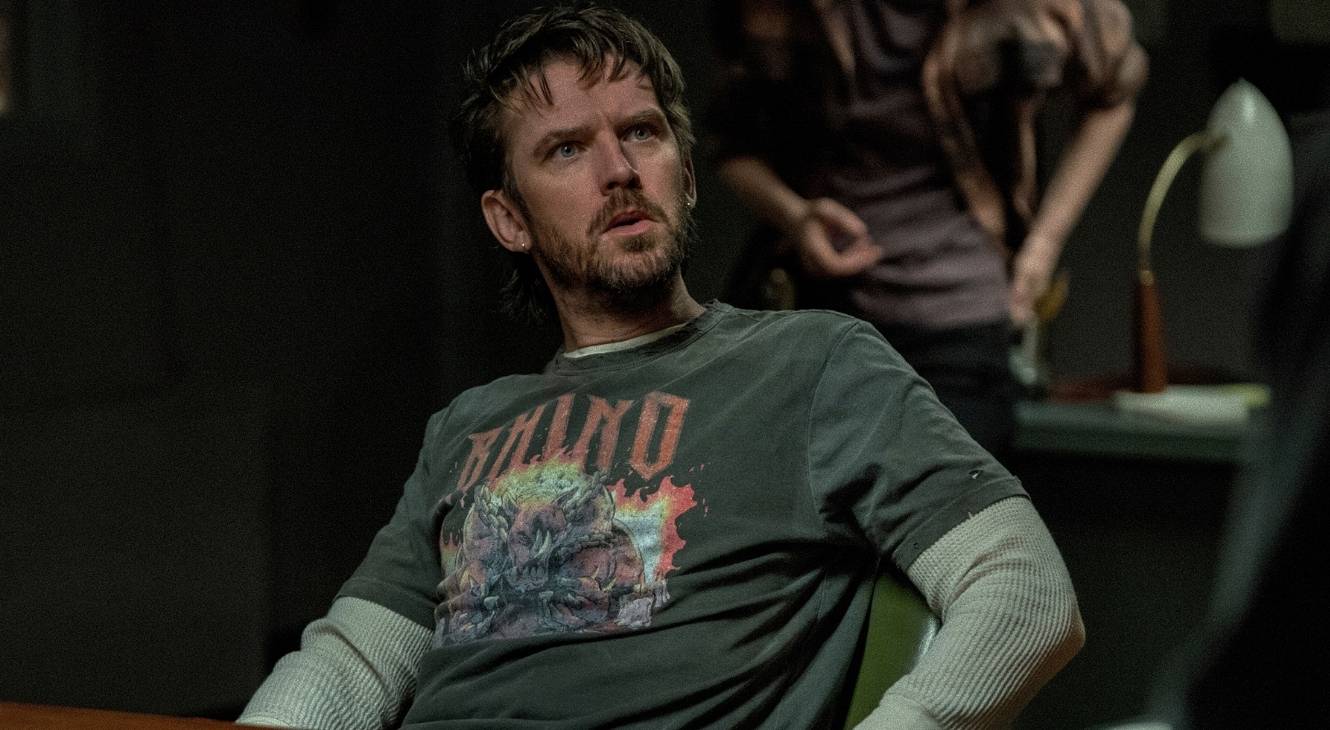
Dan Stevens is in familiar territory in The Terror: Devil in Silver.
The Terror: Devil in Silver succeeds most in its dissection of the mental health industry, particularly of its history (here’s looking at you, Walter Freeman) and the lack of modern funding and appropriate care. No two patients are the same, yet, as we see throughout the series, the routine established is a one-size-fits-all approach. The emphasis on complying with what is asked of the patient in exchange for something else is a dangling carrot. If you’ve ever experienced a stay – either involuntarily or voluntarily – at a mental health facility (i.e., institution), this method will feel familiar.
Writers and showrunners Chris Cantwell (Halt and Catch Fire) and Victor LaValle (who wrote the novel of the same name), and actor/executive producer Dan Stevens use Pepper to uncover the inner workings of the mental health hospital system. In some ways, The Terror: Devil in Silver offers a successful exploration into the dangers of compliance in place of active recovery or stabilization, especially when those who demand compliance are in positions of power. These moments manifest themselves in the series’s overarching villain and the horror unleashed on those deemed non-compliant or not “with” the system.
Stevens finds himself in a familiar acting space with Pepper. Hotheaded and blunt, Pepper imagines himself as a hero type, so his being locked up in New Hyde creates a natural source of conflict for him. Heroes shouldn’t be locked up and forgotten, so why is he there? Part of his journey in The Terror: Devil in Silver is unraveling whether he is a hero or just acting out of selfishness, and for a protagonist positioned as a hero, that makes for a compelling arc and a fascinating argument about heroism.
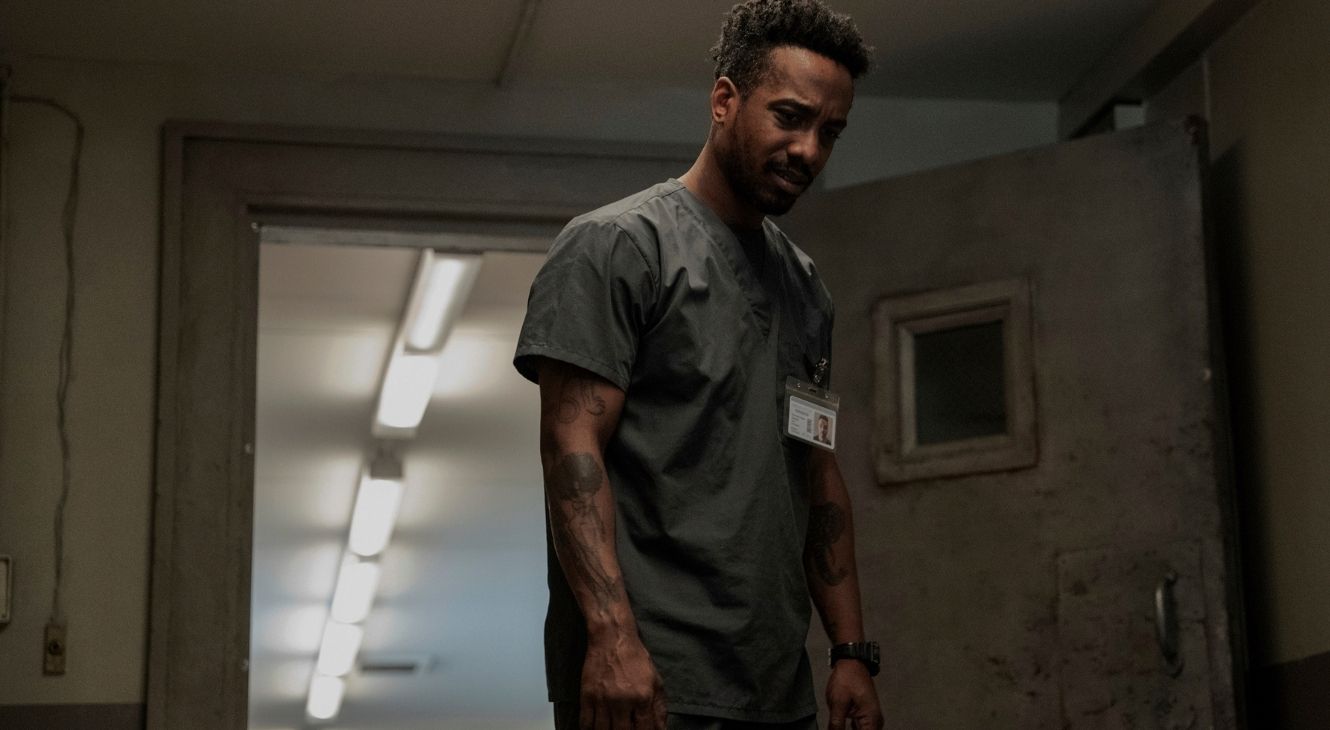
The employees are just as trapped as the patients in New Hyde in The Terror: Devil in Silver.
While Pepper is the focus, The Terror: Devil in Silver is nothing without its supporting cast of characters, many of whom easily command the spotlight away from Stevens. Judith Light‘s Dorry is unpredictable, and Light deftly plays with the character’s many levels, keeping everyone around her and viewers on their toes. Chinaza Uche‘s Coffee is a real highlight. In less capable hands, the character could easily evolve into a caricature. Uche’s approach adds the necessary humanization and depth, refreshing.
Rounding out the cast of characters are the staff members of New Hyde. CCH Pounder‘s Mrs. Chris is a longtime veteran of the hospital. She is a formidable, no-nonsense force, but she is just as much a perpetrator of the system as Aasif Mandvi’s Dr. Anand. Both know that there is nowhere else for these patients to go, but refuse to accept or acknowledge what might be taking hold of New Hyde.
Hampton Fluker‘s Scotch Tape is the brawn of the hospital, but what he has seen wears on him. Fluker wears that fatigue like armor as Scotch Tape counts down the days until he is done with New Hyde. Maureen Sebastian‘s Josephine is the newest employee, stumbling and making mistakes. Sebastian plays her with necessary vulnerability and resolve, with the latter coming into full force by the series’s end.
The Terror: Devil in Silver doesn’t quite land its climactic ending.

New Hyde is a deceptive horror setting. As a small wing of the main branch of the hospital, there’s no easy place for anyone to hide. At least, that’s what you first think. As tensions mount and the story leans into the mind-bending, cerebral nature of its inhabitants, the space takes on a liminal quality. And with each inhabitant’s mind allowing room for interpretation of what they’re perceiving in their surroundings, New Hyde adjusts and adapts to match (with some terror to match).
With only a six-episode order, The Terror: Devil in Silver struggles with its ending in its climactic final two episodes. Answers are achieved, but the series’s resolution is rushed, leaving a feeling that something is missing that could have made its final revelation more impactful. It’s a shame because so much does happen, with a rightful escalation and doubling down on the series’ compliance-focused themes once the countdown kicks in. With so many things to balance, however, a little more time would have strengthened the finale.
Even still, The Terror: Devil in Silver is an indictment and dissection of an industry in need of a major overhaul and reform. You’ll grow fond of the patients of New Hyde, even when they are at their worst (and let’s face it, we all have our bad days). For some horror fans, the fear factor may be lighter than desired, yet what the series accomplishes is just enough to transcend Victor LaValle’s literary horror to the screen. If the ending were just a bit stronger and smoother in execution, it would have knocked it out of the park.
The Terror: Devil in Silver premieres May 7, 2026, on AMC+ and Shudder.
The Terror: Devil in Silver
-
Rating - 7.5/107.5/10
TL;DR
The Terror: Devil in Silver is an indictment and dissection of an industry in need of a major overhaul and reform. For some horror fans, the fear factor may be lighter than desired, yet what the series accomplishes is just enough to transcend Victor LaValle’s literary horror to the screen.