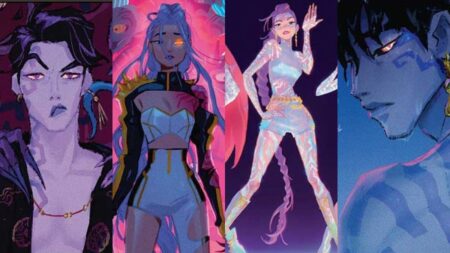


Magic: The Gathering’s Reality Fracture set has been shrouded in mystery and theories ever since it was first teased. Those mysteries are finally beginning to get answers, thanks to MagicCon Vegas previews revealing that this is indeed a “what if” set.
As a set dealing with alternate timelines, this is a major opportunity for Magic to make more fans of the stories behind the cards. It’s also possible that the opposite happens.
Reality Fracture will serve as the capstone to the past three years’ worth of Magic: The Gathering’s in-universe storylines. Unlike games such as Fortnite, Universes Beyond sets are firmly non-canonical. Over the course of these sets, players have seen the fallout from the last event set (which saw a multiplanar invasion by the horrifying Phyrexians) lead the front man, Jace Beleren, down a dark path. That path ends at a separate reality created by his hands, which Wizards of the Coast calls the “Echoverse.”

Jace’s Echoverse is a world in which he tries to solve everything by changing the story itself. A plan that a comic book fan could tell him is going to have knock-on effects. Iconic Planeswalkers shift into different colored cards than normal, symbolizing how their lives are being twisted.
Even the set’s primary location is a twisted reflection of Secrets of Strixhaven’s colleges, called Hexhaven. For long-time players, Reality Fracture echoes classic fan favorite sets such as Planar Chaos, which moved entire mechanics into colors that would otherwise never get such effects.
However, a set that leans so much on familiar characters gone wrong opens up a problem: many Magic players don’t know the ongoing story. It’s a problem only exacerbated by the mass of Universes Beyond sets and products that are many people’s first set. How can Wizards of the Coast convince players who came in via Final Fantasy to care about how chilling it is to see Chandra as an ice-magic-wielding cop?
Chandra, Chill of Compliance | 1 Colorless Mana, 2 Blue Mana
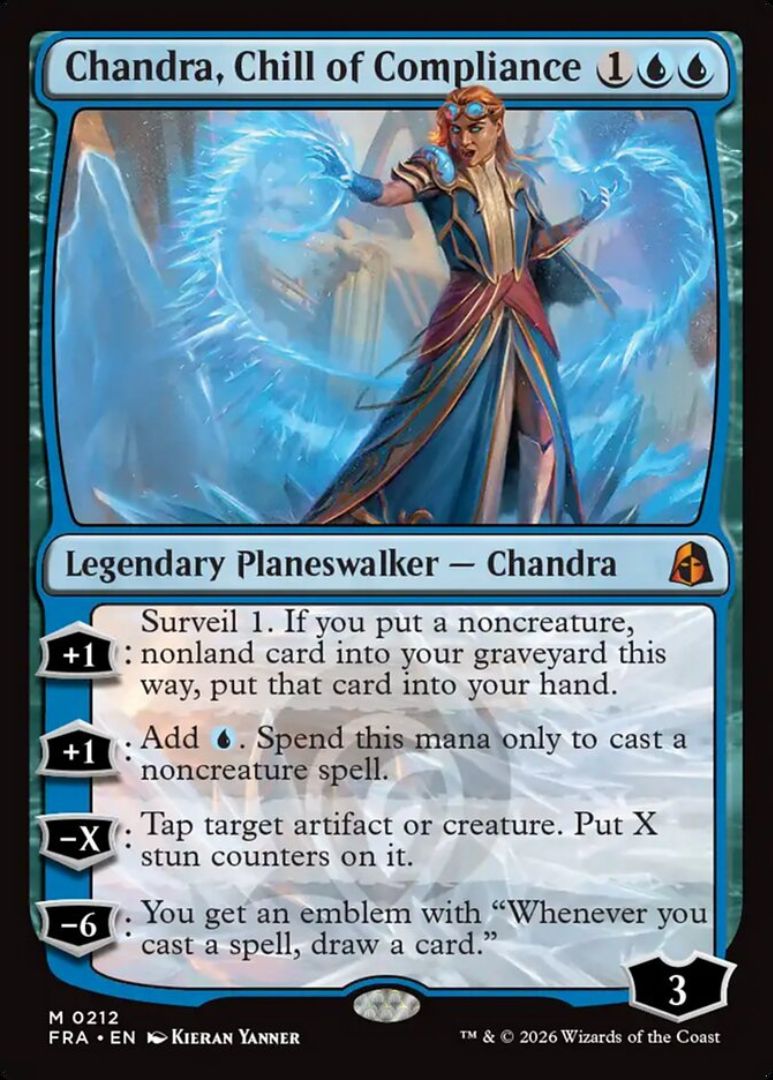
Legendary Planeswalker — Chandra
+1: Surveil 1. If you put a non-creature, non-land card into your graveyard this way, put that card into your hand.
+1: Add {U}. Spend this mana only to cast a non-creature spell.
−X: Tap target artifact or creature. Put X stun counters on it.
−6: You get an emblem with “Whenever you cast a spell, draw a card.”
3 Loyalty
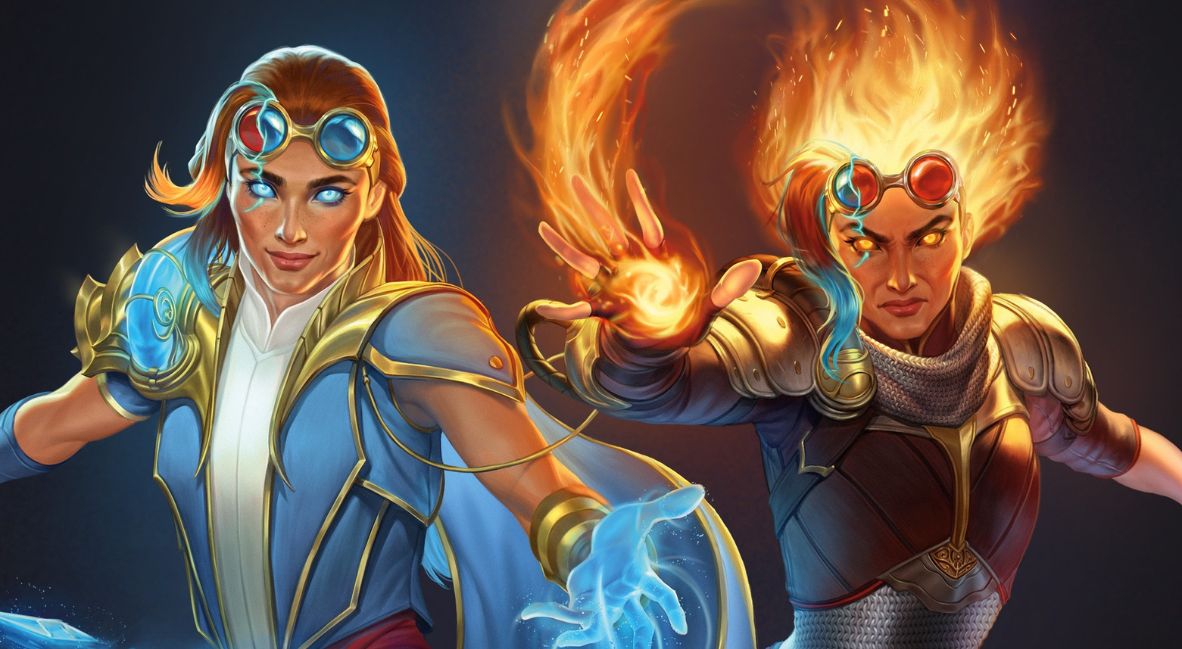
The solution comes in the form of Reality Fracture’s hook: pairing cards. Every pack of Reality Fracture will have two cards for the same Legendary Creature or Planeswalker character: one that represents the true character and one visiting from the Echoverse. Wizards want the visual and mechanical differences to speak for themselves regarding differences. This gives the set a mechanical hook for those players who might not be invested yet in Jace’s machinations.
Yes, Magic has done card pairs before in smaller supplemental sets, but as Head Designer Mark Rosewater explains, achieving this required new technology and planning to reach the scale of a full Standard set. By comparison, the multiplayer-focused partner card set Battlebond could be printed by only a single printer. However they did it, this solution does open up the chance for players to find iconic interpretations alongside their new cards, as seen with the returning best Chandra card ever: Chandra, Torch of Defiance.
Chandra, Torch of Defiance | 2 Colorless Mana, 2 Red Mana
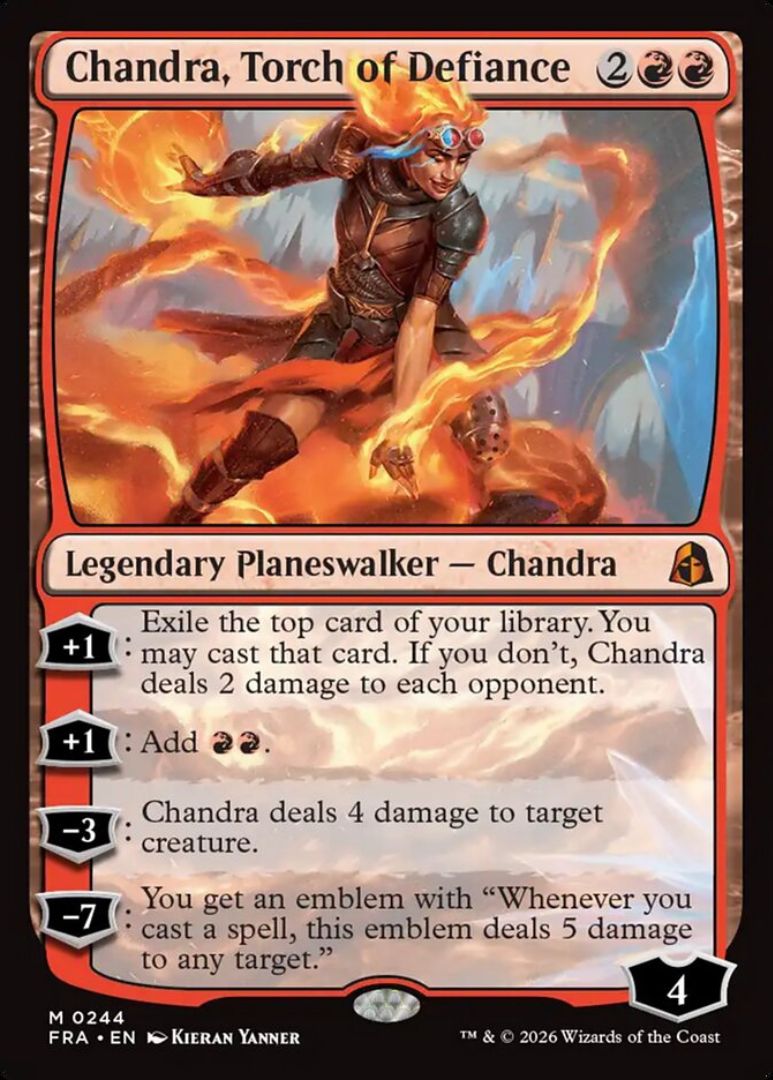
Legendary Planeswalker — Chandra
+1: Exile the top card of your library. You may cast that card. If you don’t, Chandra deals 2 damage to each opponent.
+1: Add {R}{R}.
−3: Chandra deals 4 damage to the target creature.
−7: You get an emblem with “Whenever you cast a spell, this emblem deals 5 damage to any target.”
4 Loyalty
On the other hand, mechanical solutions can’t solve everything. The story arc conclusions in Magic: The Gathering tend to be a mixed bag. The highly anticipated War of the Spark launched in 2019 amid controversy.
This was thanks to a tie-in novel that conflicted with the game in multiple ways, particularly by straightwashing a character so badly that an apology was needed. Despite some genuinely exciting narrative and mechanical buildup, 2023’s March of the Machine spread itself too thin, and players came away thinking the story was over too soon.
Both of those examples had a straightforward build-up as well. Meanwhile, Reality Fracture’s narrative threads have been more subtle and in the background.
Some of this is outside of the control of Wizards, such as the reveal of Jace’s return and his new plans having to be rolled into Outlaws of Thunder Junction rather than its own microset, thanks to player reaction to those microsets. Others are well within their control, like the story having to take breaks while Universes Beyond sets are on the stage. Even enfranchised players may need coaxing into caring.
Rosewater and Narrative Designer Meris Mullaley stressed that while Reality Fracture is mechanically satisfying regardless of story engagement, the point of the set is to tell and finish that story. In comparison to similar sets, this one is trying to get it right this time. Hexhaven isn’t the focus of the set, but by introducing it, Wizards of the Coast knows that fans will want to see it more than briefly.
They are working to provide catch-up material to help players catch up and to keep the set focused mostly on Jace’s conflict with his former allies. Even the other sets this year – Lorwyn and Strixhaven – thematically line up with where Reality Fracture starts as much as it does narratively.

This time might be the time Wizards of the Coast threads the narrative needle. The Echoverse is a compelling way to put Magic’s stable of iconic characters front and center in a new way. By confronting versions of themselves that have gone a different way, a window of opportunity opens.
Longtime fans get to see their favorites challenged in deeply personal ways; I personally can’t help but wonder if Liliana won’t be tempted by a version of her life that actually went right. By the same token, newer fans have a chance to easily see what each of these characters’ deals are and what makes them tick.
What Reality Fracture really reminds me of isn’t a big event set, but rather 2018’s Dominaria. The set returned players to Magic’s original plane and had the hefty task of satisfying old fans while convincing newer players that such an old place mattered. Through the historic mechanic, a Legendary Creature in every pack, and excellent art design, the team at Wizards of the Coast did just that. Magic’s story can be front and center in a successful way, and it looks like Reality Fracture has all the pieces it needs to do so.
Reality Fracture local game store prerelease begins September 25th, with a wide release on October 2nd.