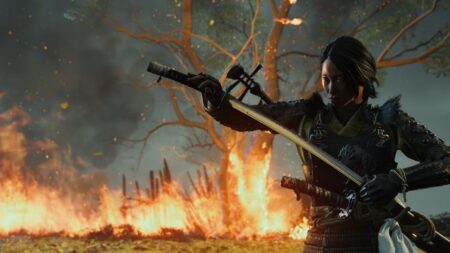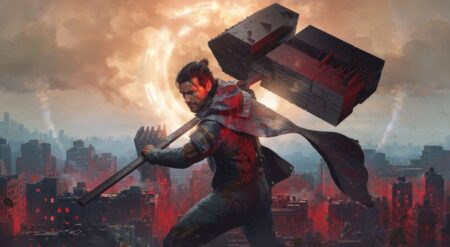


The gothic vampire genre is as old as time, and The Blood of Dawnwalker looks to be steeped in it. A villager afflicted by the vampiric curse who sets out to kill the man responsible for it and for kidnapping his family is a classic revenge tale. All of these things seem on the books for ‘been there, done that’. However, it’s how the team at Rebel Wolves takes it and runs, crafting a world drowning in wonders and horrors, woven together by an excellent story. Even with its 45-hour runtime, it’s a game you want to sink your fangs into again and again.
The Blood of Dawnwalker follows Coen, a young villager who, after a series of unfortunate events, becomes the thing he hates: a vampire, aka a Vrakhiri. However, he is of a rare breed: one who can be human by day and vampire by night without being affected by the sun. Now, Coen must find a way to find the villainous Brencis and kill him before the coronation, where Coen’s family will die, in 30 days.
While things may play out like a typical revenge story, the writing here in The Blood of Dawnwalker is exceptional. Every line of dialogue feels like something out of a fantasy novel, but much more grounded. Main missions have the charm of a spectacle, and even small side missions tell stories with arcs and themes. It rarely feels like filler, with just about everything having some consequence, even if it doesn’t seem like it.
Every moment of storytelling counts in The Blood of Dawnwalker.
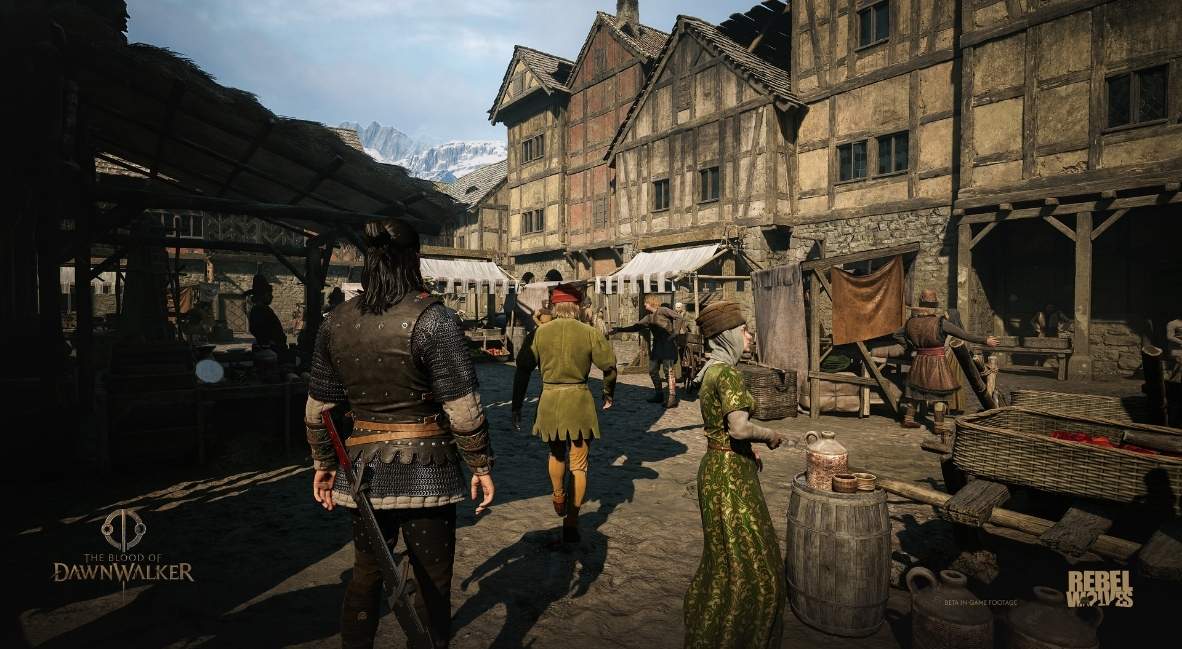
For example, there was a villager in chains in the middle of an alley being bruised and battered by guards. I chose to save him and, in return, he told me to pick up an order at a local emporium. Well, the said emporium’s owner was actually a vampire and one struggling with the murder of his two close friends, one he may have committed but doesn’t remember. The many stories of The Blood of Dawnwalker are ones you actually want to seek out and find, as they can lead to potential key characters and even straight to a fearsome foe.
Speaking of characters, there are some amazing NPCs crafted by the team at Rebel Wolves. Each of them feels like real people, not just pawns in Coen’s story. Part of that goes to the great voice cast, who bring life to characters already steeped in rich writing. Key among them is Will de Renzy-Martin, whose portrayal of Coen made the protagonist a much more personable and engaging lead to follow.
As mentioned before, you will be handed a lot of choices in The Blood of Dawnwalker, and you better be ready to face the consequences. However, it’s one of those games where your decisions can feel justified, even the immoral ones. It shows you both sides and hands you the ropes to steer in whichever direction. In my playthrough, I was a kind and curious swordsman who aimed to see the good in those who deserved it, though merciless to those who took advantage of it. It led me to gain powerful allies, but also an infamous reputation where soldiers didn’t take kindly to my presence.
Because of the choices you make throughout the game, the replayability potential is huge.
On that note, despite being around 45-55 hours, depending on how you play, there’s so much replayability. Seeing how the story changes through your decisions in The Blood of Dawnwalker was a highlight, and witnessing just how different things play out made even replaying certain missions fun. This also extends to the ending, as there are multiple ways things can play out depending on your allegiance. I won’t spoil anything here, but knowing things can go differently is one I’m excited to dive into again.
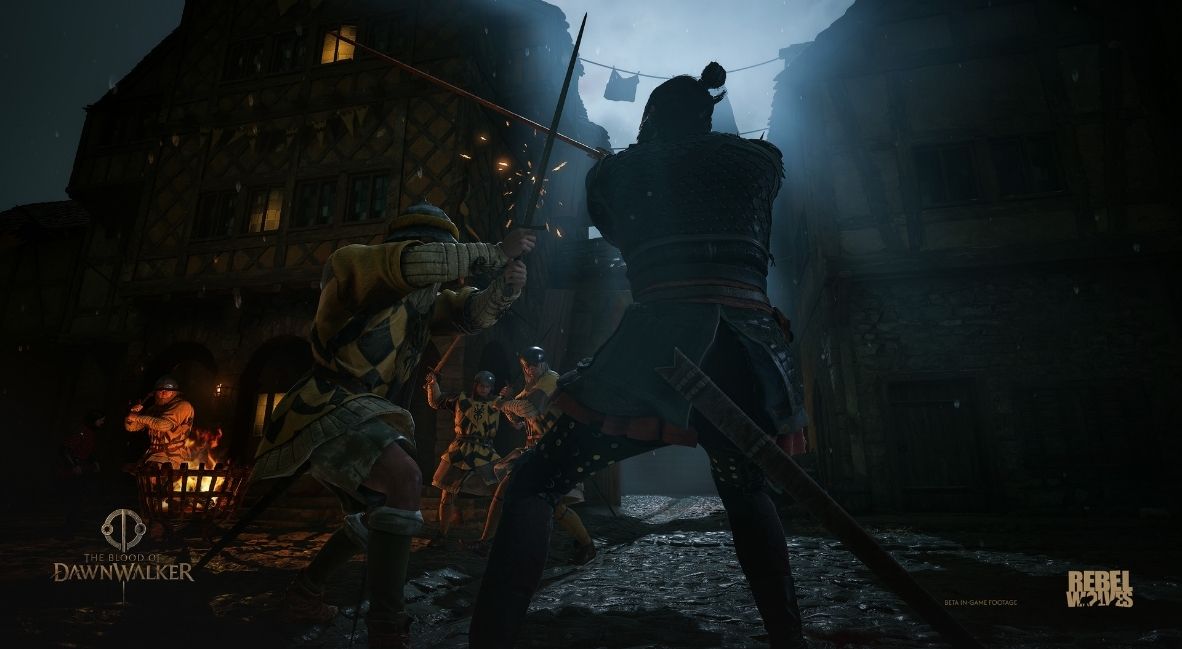
Combat-wise, The Blood of Dawnwalker takes more of a hands-on approach. Enemies will attack you in different directions (above, below, left, and right), and you need to pay attention to try and block them. While you can use an Onmiblock (which drains stamina), blocking correctly will give you an opening when you can attack with a correctly directed slash, as well as conserving stamina.
While it sounds complicated, you’ll get into a rhythm pretty quickly. It helps spice up combat, even outside of events, keeping things interesting and you on your toes. You never feel too powerful, even in seemingly one-sided fights. Boss battles are where, even if you have an easy time with directional inputs, you’ll be put to the test. It shows the intricacies of battles, as well as its flaws, as quick enemies and attacks can feel unbalanced and leave you with plenty of scratches.
Battles keep you on edge, with unlockable abilities accessible through discovered texts.
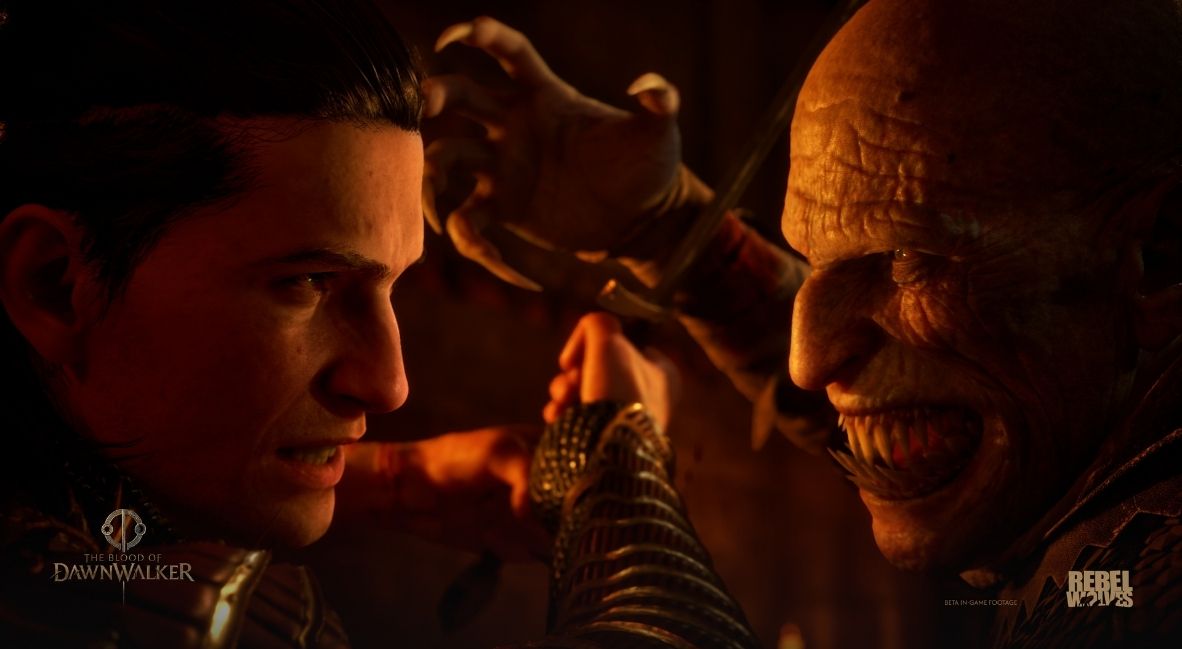
In addition to your swords (and claws at night), you have abilities to use in battle, like a deadly stab or sucking the blood of an opponent mid-fight. These are unlockable alongside various upgrades for health, stamina, and damage. I’m not the biggest fan of how it’s done, as many of them require you to find books that you have to ‘read’ to unlock them. It takes away from being able to customize how you’d like from the start.
Outside of combat, you have a sprawling open world to explore. Vale Sangora is a beautiful yet haunting landscape filled with thunderous mountains, lush forests, and quaint villages. While the gothic medieval genre tends to make things overly dreary, what is on display is quite vast and diverse.
It rarely feels like you are navigating the same areas and, when you do, there’s something new to find and discover. In fact, most of the time, you’ll encounter enemy bases that, when interacted with, can anger the many lords who reside over Vale Sangora. Everything in the world plays a role in the overarching story, letting you play out at your own pace.
In addition to the wide-open world, you’ll have a superb soundtrack orchestrating your journey in The Blood of Dawnwalker. Whether you’re exploring monstrous caverns or fighting hulking soldiers, the music provides the perfect backdrop, never feeling distracting or awkward. Gregorian chants and striking violins practically narrate the scene of a battle and craft moments of intensity that feel straight out of a film.
With its open world, there’s much to explore without feeling like retreading familiar ground.
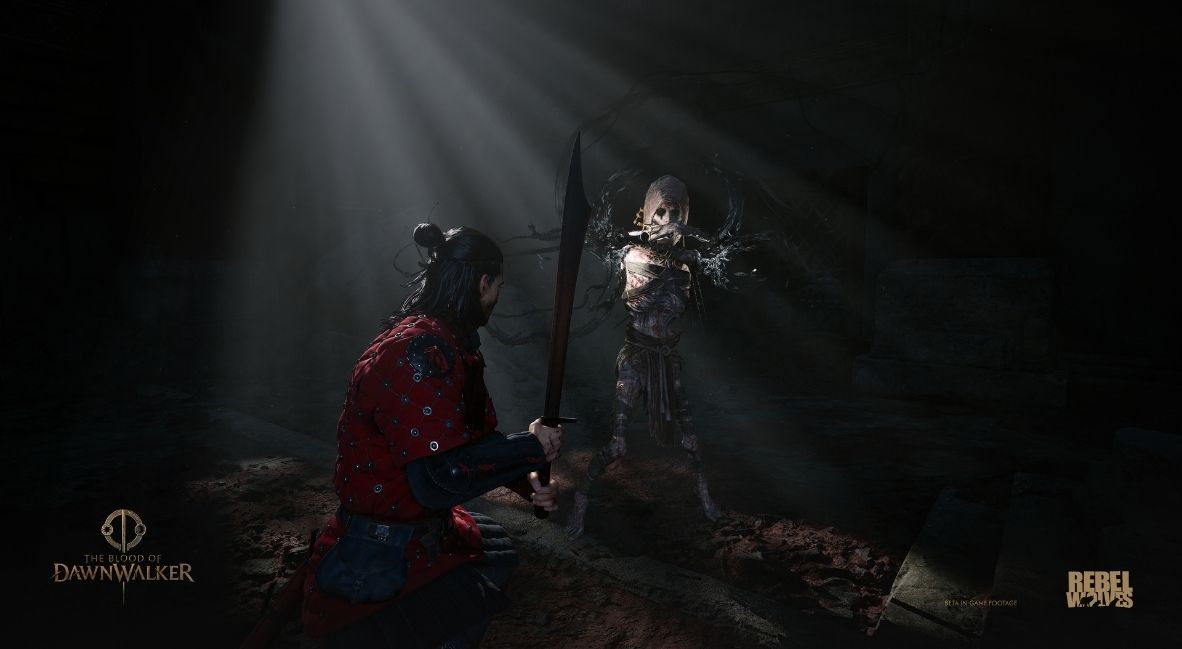
On the graphics front, things looked pretty decent, texture- and model-wise in The Blood of Dawnwalker. I played on a base PS5 prior to the planned 60fps launch update, so my playthrough stayed at an okay 30-40fps. It didn’t dip during battles or large events, but it did become noticeable during combat, as 30fps isn’t the best for action combat that relies on frame accuracy.
Still, while some landscapes and such can be a little dull, The Blood of Dawnwalker looks great at times. Both day and night hold their splendor, especially during cutscenes. Much of that comes from its art direction, which balances realism with a high-medieval flair. It can feel straight out of an old painting, capturing both unease and beauty.
Overall, The Blood of Dawnwalker is a fantastic RPG worthy of diving into, despite the plethora of games releasing near it. Its incredible worldbuilding, charming characters, and engaging combat show a deep understanding of the craft. While it isn’t perfect, due in part to multiple glitches, choppy framerate, and an iffy upgrading system, there’s a lot to enjoy. Rebel Wolves’ inaugural title is proof that, with a great team, there is still a lot of life in the vampire genre.
The Blood of Dawnwalker is now available on PlayStation 5, PC, and Xbox Series X/S.
The Blood of Dawnwalker
-
Rating - 9/109/10
TL;DR
The Blood of Dawnwalker is a fantastic RPG worthy of diving into, despite the plethora of games releasing near it. While it isn’t perfect, it’s a game you want to sink your fangs into again and again.