


Over the ten years of Dead by Daylight‘s existence, Behaviour Interactive has consistently taken community feedback and incorporated it into the game. This form of community engagement reached a new level over the past year and a half with the development of the community-led chapter, Chorus of Sin. From the designs of the Killer and the Survivor to the formation of Exile and beyond, these efforts led to something distinct and unique, born from teamwork between the developers and the Dead by Daylight community.
Ahead of the launch of Dead by Daylight: Chorus of Sin, we spoke with Senior Creative Director Dave Richard, where we discussed the challenges that arose from implementing this new voting process, how essential the voting process was in narrowing down the look and feel of Exile and the broader Chorus of Sin chapter, and how he would adjust the voting process for future collaborative chapters with the community.
One challenge that arose, particularly in the early stages of the voting process, was making sure the team would be happy with the choices presented to the community. With three choices in each voting period, this also tripled the team’s workload. “Usually when we do an original with the team, we pitch lots of ideas on the board, and in an hour we can focus on what we want to do and what makes sense for us, and what we think the fans are going to love. So we can make the first iteration of a direction more easily,” Richard explained.
The voting process leading to the creation of Dead by Daylight: Chorus of Sin kept the team on their toes.
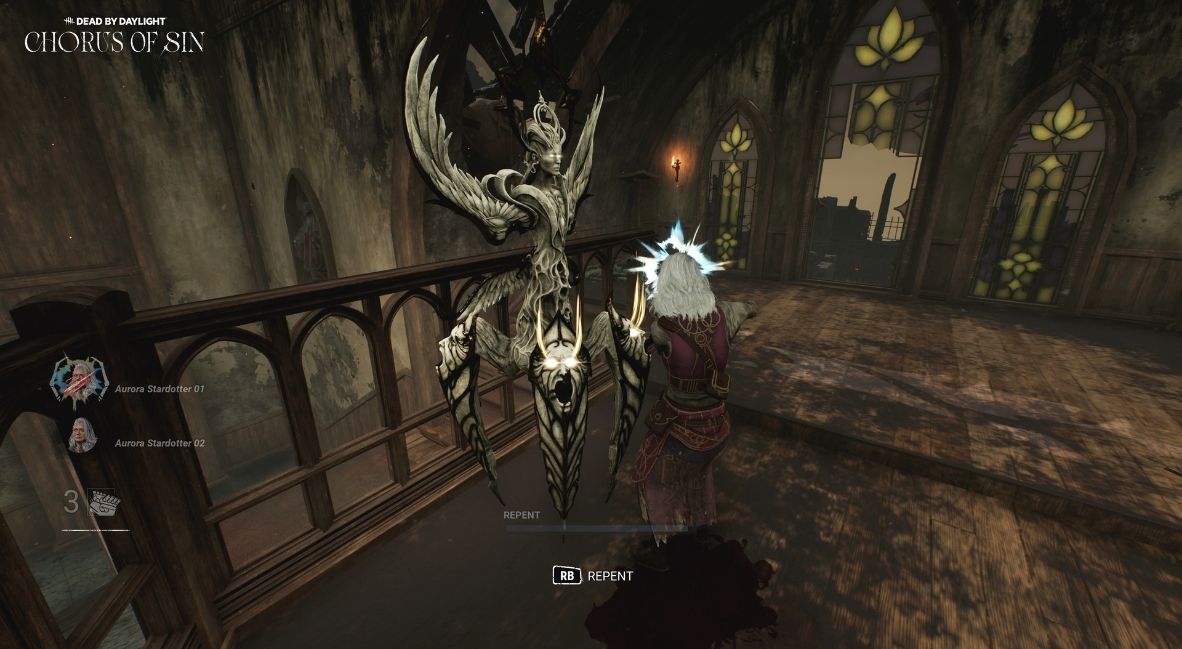
“We wanted to make sure that any choice the players would pick, we would be happy with, as in we think that we would be able to make it right for Dead by Daylight, that it would fit. That there wasn’t a stupid choice in there that wouldn’t work well with our game. With that rule, if there were three different choices, we had to work toward making all three acceptable in how we presented them to the players.”
Managing audience expectations was also a task that arose when navigating the options presented at voting, and whether the team gave enough information to convey what each option would encompass. “Anything we communicated in the [options to vote on] with our players, there’s only a maximum of information we could give for the votes,” shared Richard, before explaining that this meant gauging how fans might interpret a possible option and meeting expectations. “Basically, if you give them a choice, and then you work towards that choice, but if it’s not what they were expecting, we’re in trouble.”
An example given was how fans might interpret something as simple as a werebeast, as one of the earlier options presented in voting. “Lots of the players that voted for werebeast, how they communicated online, were really talking about a werewolf. But what if we ended up with a weregiraffe, for example?” explained Richard. On the one hand, he elaborated, the team could always say that they delivered exactly what the prompt stated, but that wouldn’t be what the players wanted in the end based on their interpretation.

Ultimately, what the community ultimately selected as the Killer for Dead by Daylight: Chorus of Sin was The Judgement, an otherworldly cosmic entity that evokes a sense of angels of old. For the Survivor, they selected Aurora Stardotter, a spiritual scientist who miraculously survived The Judgement’s impact on her home world. In designing The Judgement, the team had their work cut out for them in balancing this new killer’s multifaceted visage with the practicality of the killer’s mechanics.
“We absolutely had to have a design that didn’t feel practical or just beautiful. It had to feel strange, alien, too complicated,” Richard explained. “Where it got really complicated for us was with the game metrics and the little things. It’s not even about the power. It’s about the common vanilla move that a character has to make. So going through a window, fitting in the door frames, portraying this grandiose aspect of a killer, but that fits into these very specific metrics that are more human-sized.”
When tackling the silhouettes of the three killer designs to be put up to a vote for Dead by Daylight: Chorus of Sin, all the designs presented, including one that was a giant head on a pedestal, would present challenges in adapting to the more basic movements in-game.
This would prompt questions, Richard explained, like, “What tech and time and budget do we have, and in that short time frame, will we be able to move the wings? Collapse the wings and do it in a smart way, where that character will be able to go through a window. Or do we need to rely on more supernatural VFX to be able to go through windows, go into these tight spaces?”
“There are ideals, and there are Plan Bs, but there’s always a solution.”
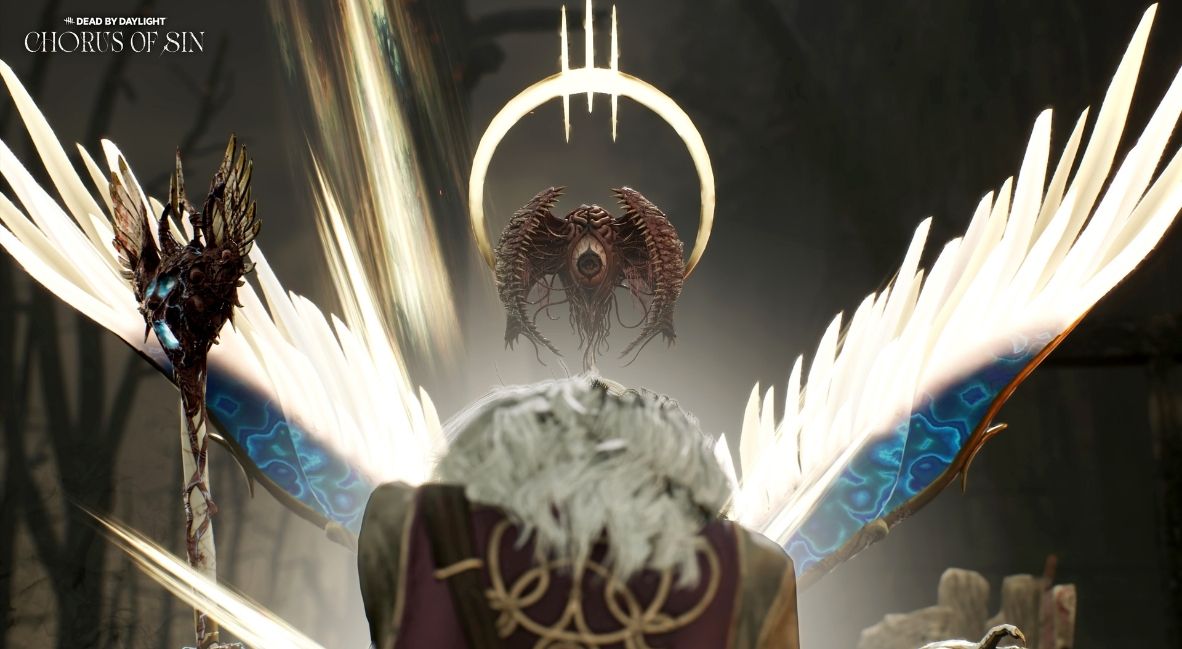
These questions are nothing new for the Dead by Daylight team when it comes to tackling more complicated character designs: “There are ideals, and there are Plan Bs, but there’s always a solution.” This matter-of-fact approach was very much the case when tackling Exile, an alternate realm that The Judgement could send players off to in a sort of game-within-a-game variation. The developers had an ideal vision, but as Richard shared, cuts and changes were needed to deliver the final result players see now.
“Originally, we wanted the killer to be able to go into that space, and we had more ideas on how dynamic it would be. [But] as soon as the killer had to interact in there or be active in some ways, it was too distracting for what the killer has to do, and it became unbalanced in the sense of a normal match of Dead by Daylight.” This ultimately led to the survivor-only experience in Exile that exists now within Chorus of Sin. “We really wanted to be able to go in there with the killer and have more of a divine interaction there, but sadly couldn’t.”
The voting process was essential in nailing down what would ultimately be the end result, visually, for the Exile realm. “As soon as we had the votes on the materials and the look of the Exile, that really nailed down the style of the world and the characters that we would finally make,” Richard shared. “The light blue, the aloes, the gold in the character [of The Judgement], and the Exile [realm] that has these columns and this really angelic Western kind of religious vibe; at that point, as soon as we added that, everything kind of fell into place.”
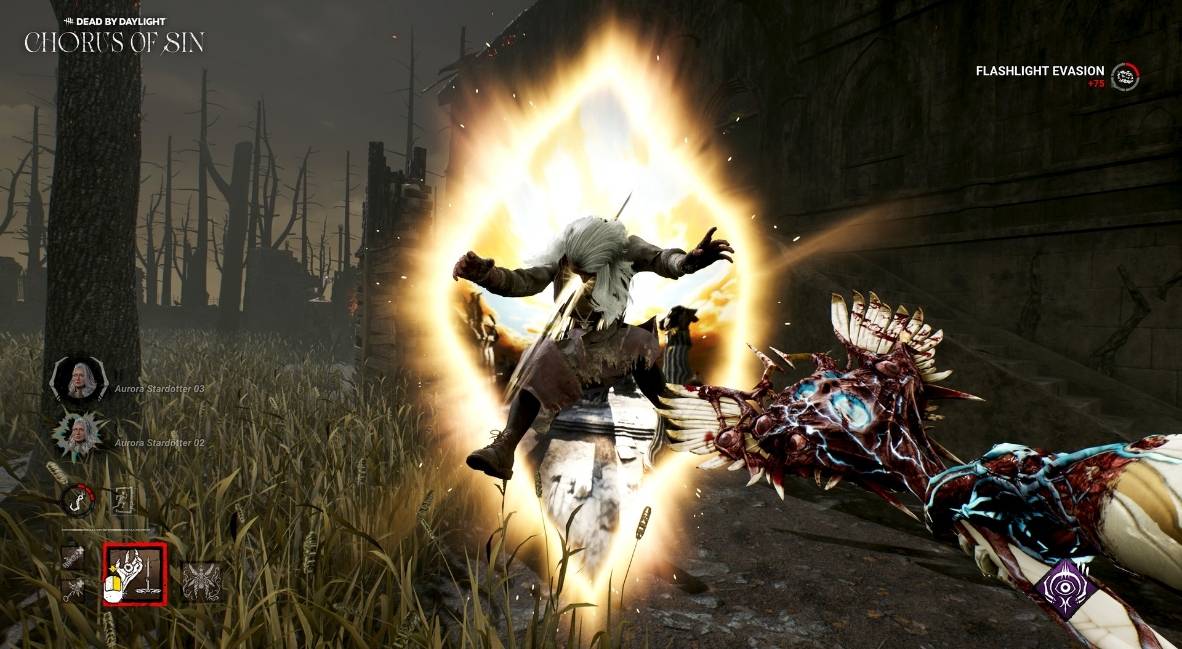
With Chorus of Sin marking Behaviour Interactive’s first highly collaborative chapter with the community, there was a learning curve in figuring out how to build an effective voting system that would reward not only voters but also the team. While it was a successful first foray into a voting system, Richard noted areas that could be improved to make the experience more rewarding for everyone involved.
“One thing that I would change is that we’ve been voting for winners in all of the votes, and I would change that to more votes, but let the community vote for the losers. So basically, you have three choices: vote to cut one, and there are two left. By doing this in that order, you get more people that might have their choice win.” As Richard would go on to explain, the limitations of how the voting system was designed meant that sometimes, when a player’s favorite pick didn’t go through, it often meant seeing some players being disengaged in the process.
This didn’t have to be the case, as the data showed. “When we look at our data, something interesting was that a lot of the time, when we had three choices, often we didn’t have a clear winner. We had a split by half a percent. The winner was barely winning.” If players could vote for the losers rather than seeing their faves disappear from the running completely, that would prompt further engagement but paint a clearer picture of who the “ultimate winners” are in the end.
For future collaborative ventures, creating a more dynamic voting process is in the cards.
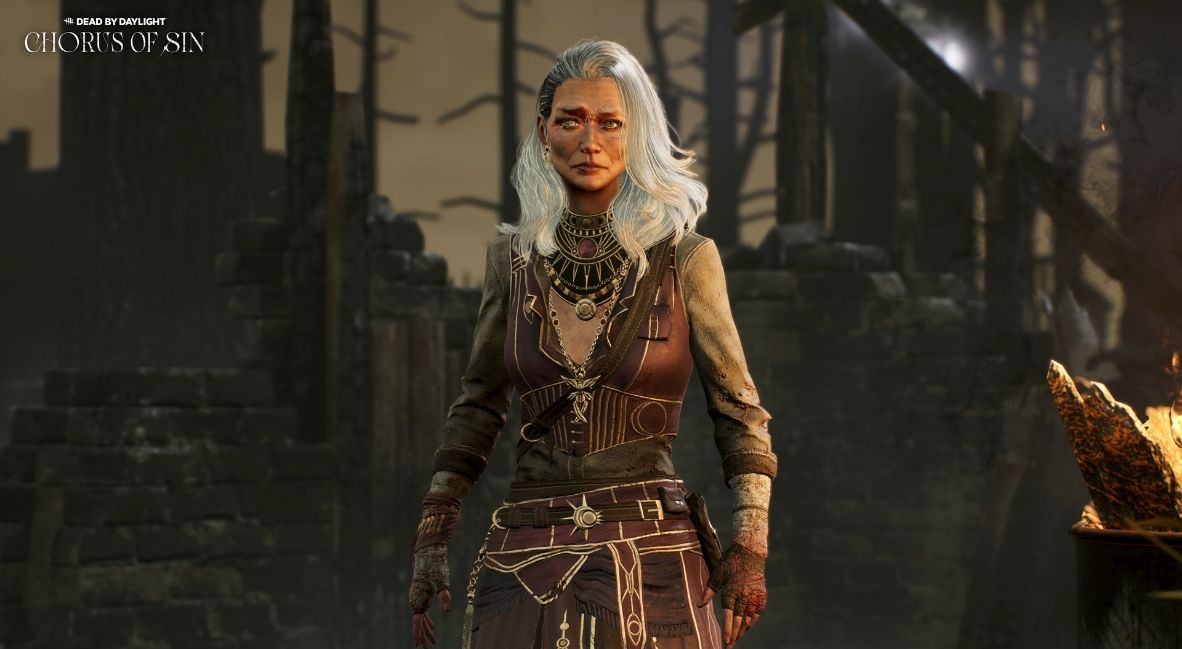
Even if the voting process wasn’t perfect in the process of developing Dead by Daylight: Chorus of Sin, Richard hopes that throughout this nearly two-year collaboration process, players got to learn more about what goes into the making of an original chapter like this: “I hope that it allowed for everybody that participated in voting in seeing how it is developed, that they could see how what happens backstage with how we make decisions and how a decision that’s been made like two months ago is creating a Domino effect with everything else that we’re making, and some of the compromise that we have to make for it to be able to work in the game.”
As for the future of the Judgement and Aurora Stardotter beyond Chorus of Sin, Richard mentioned that the two characters will be expanded upon in the future but that players should also keep an eye out for lore drops in future chapters. “We’ve stealth-introduced a new lore system in the game at the anniversary. With The Black Banquet, there are objects you can explore, and you can play with them that come with a bit of lore. That’s something we want to continue in the future to expand the stories and let players interact with objects related to these characters.”
Ultimately, after much trial and error, numerous voting opportunities, and frequent feedback, this collaborative process led to the birth of a special kind of gaming “baby” between Behaviour Interactive and the Dead by Daylight community. Everyone involved should be proud (and in awe-struck terror) of the Enochian wells tapped to bring this distinct, post-apocalyptic chapter to the Dead by Daylight universe. Whatever you do now, just try not to get thrown into Exile. You may not get out unscathed.
Dead by Daylight: Chorus of Sin is now available across all platforms.