Following Sherlock Holmes‘ little sister through Netflix’s Enola Holmes film series has been one of the platform’s biggest joys as a viewer. Audiences have seen Enola grow up alongside Millie Bobby Brown. This is core to understanding the appeal of Enola Holmes 3 as it grapples with the liminal stage of engagement and the ideas of identity and agency it brings in any woman, whether they’re in Victorian England or not.
Enola Holmes 3 is directed by Philip Barantini, the filmmaker behind the hit one-take crime drama Adolescence, and Jack Thorne returns to write the script, based on The Enola Holmes Mysteries by author Nancy Springer.
The latest installment throws its titular character into another mystery, and she has to solve it while also getting ready for her wedding to Lord Tewkesbury (Louis Partridge). While the duo was still in their teens in the previous film, now they’re in their 20s and transitioning into a new life. And Enola is, of course, struggling with the idea of changing her name and becoming someone different just by moving from Miss to Mrs.
With the wedding set in Malta, Enola Holmes brings her tenacity and drive to right wrongs to the nation, then under British colonial rule. The film series is no stranger to setting up moments for Enola to witness injustice and change her view of the world. This time, Enola Holmes 3 sets its mystery against the backdrop of Malta fighting to gain independence.
Enola Holmes is on a new adventure, and she’s finding her identity along the way.
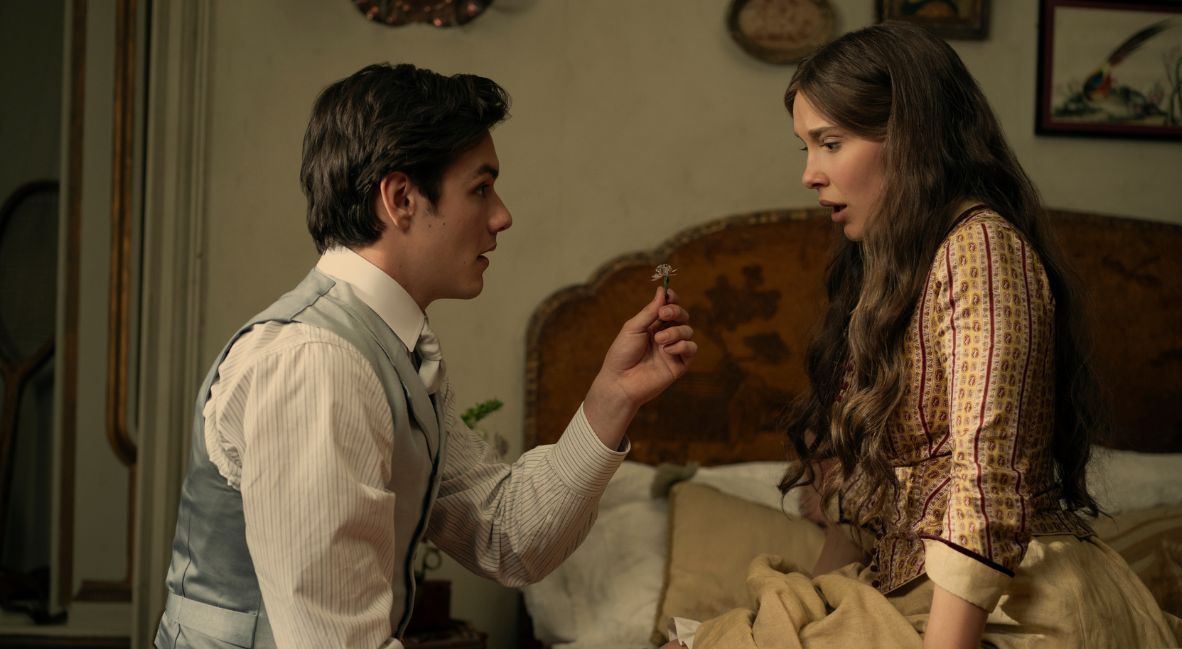
But with a wedding on the horizon and a rift with her family, Enola makes assumptions about how the people she loves most will view her marriage and new life. Keeping them out of the ceremonies, Enola is pretty much alone to figure out what her life will be.
The film doesn’t backtrack on the second film, which highlighted that young women can love and still be their own person. Instead, it grapples with the internal navigation of this liminal space in life and with how much society shapes how you change after the ring is slipped on.
Still, Enola Holmes 3 is very much about the melodramatic mystery, and here, Enola gets the news that her big brother, Sherlock (Henry Cavill), has been kidnapped. The only person who can put it all together, Enola, still needs support. With performances from Helena Bonham Carter as her mother, Eudoria Holmes, Himesh Patel as Dr. Watson, and the introduction of Joe Azzopardi as Mikiel, Enola gets help finding her brother and putting the villain in their place.
While solving the mystery, Enola is stuck trying to figure out how to not only grapple with her impending wedding, but also the way that being exposed to the violence of colonial rule changes her views on her position, her fiancé’s, and her family’s.
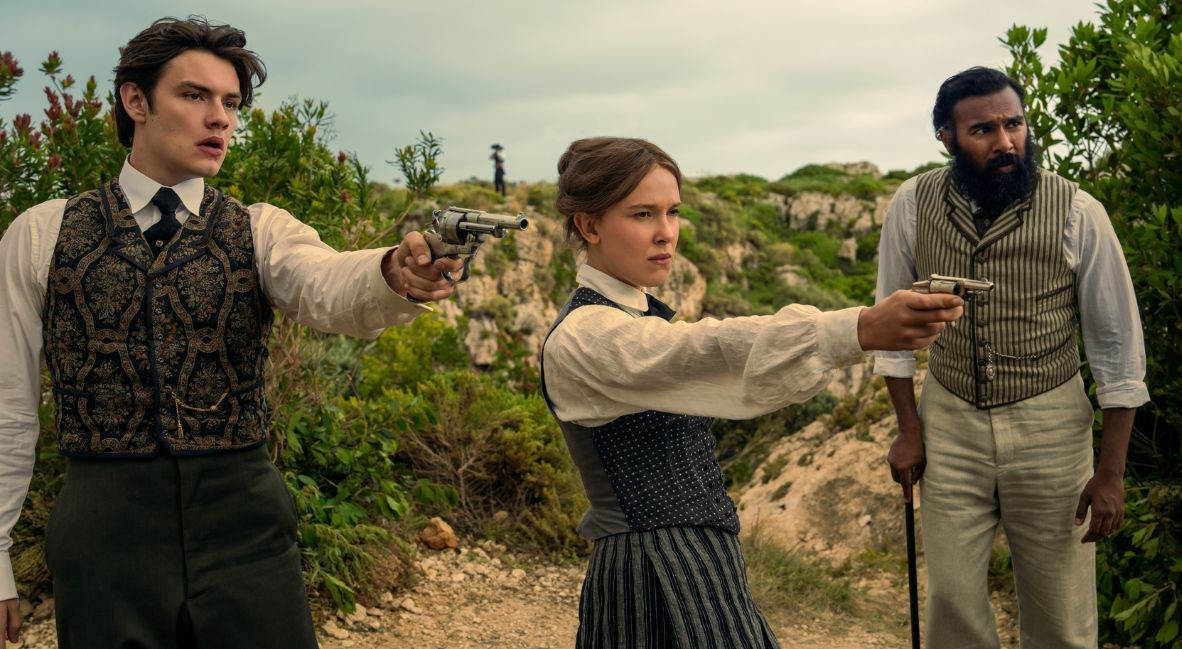
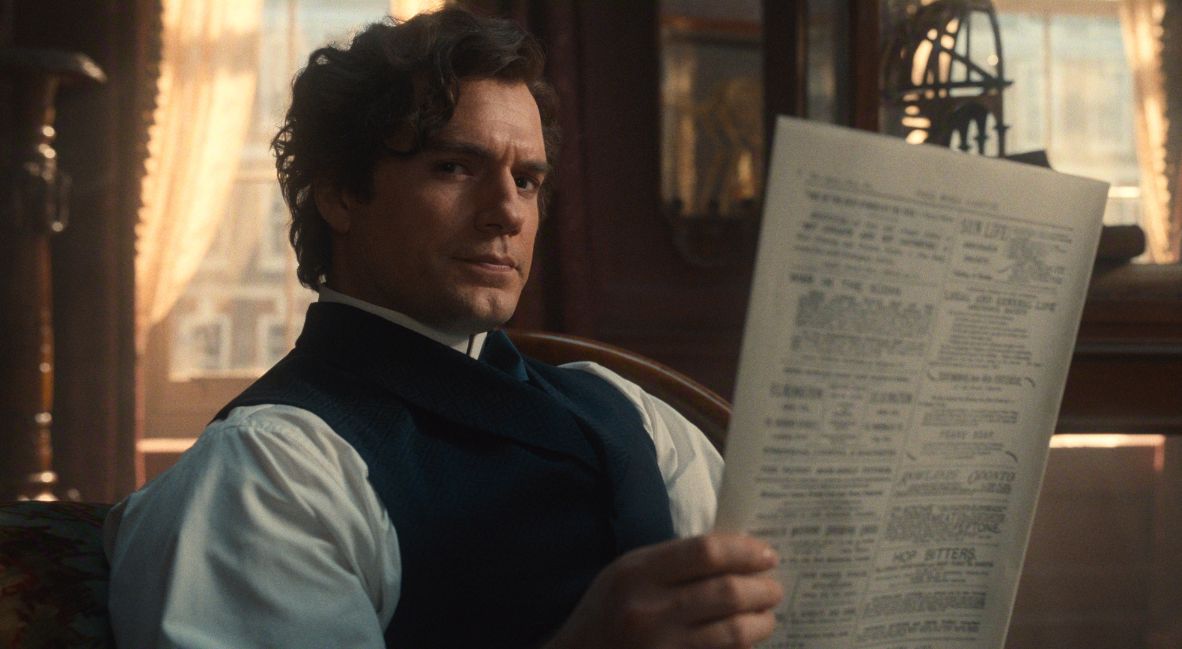
Henry Cavill still performs as one of my favorite versions of Sherlock Holmes, a family man who is a brother first. Only the rough edges of the character’s personality remain as he oversteps with his family, leaving Enola questioning who she is now that she is going to become a Tewkesbury. Still, he works in the film by doing everything that he did in the first two.
Sherlock also stands as a focal point in Enola’s maturation as she races to rescue him from Moriarty’s plot. Throughout the attempts to save him, Enola is also pushed to confront the question that has taken root in her heart, even when she’s successful: Is she as good as her brother?
While Enola Holmes 3 pushes Enola forward, it doesn’t remove her from the familial pressures she still feels. The film opens by letting the audience know that Enola has made a name for herself in line with her brother. The way that people ask for Sherlock, they now ask for Enola, and yet, getting out from under his shadow still shapes her experience.
Enola Holmes 3 shows how the Netflix Original films have grown with its young actress.
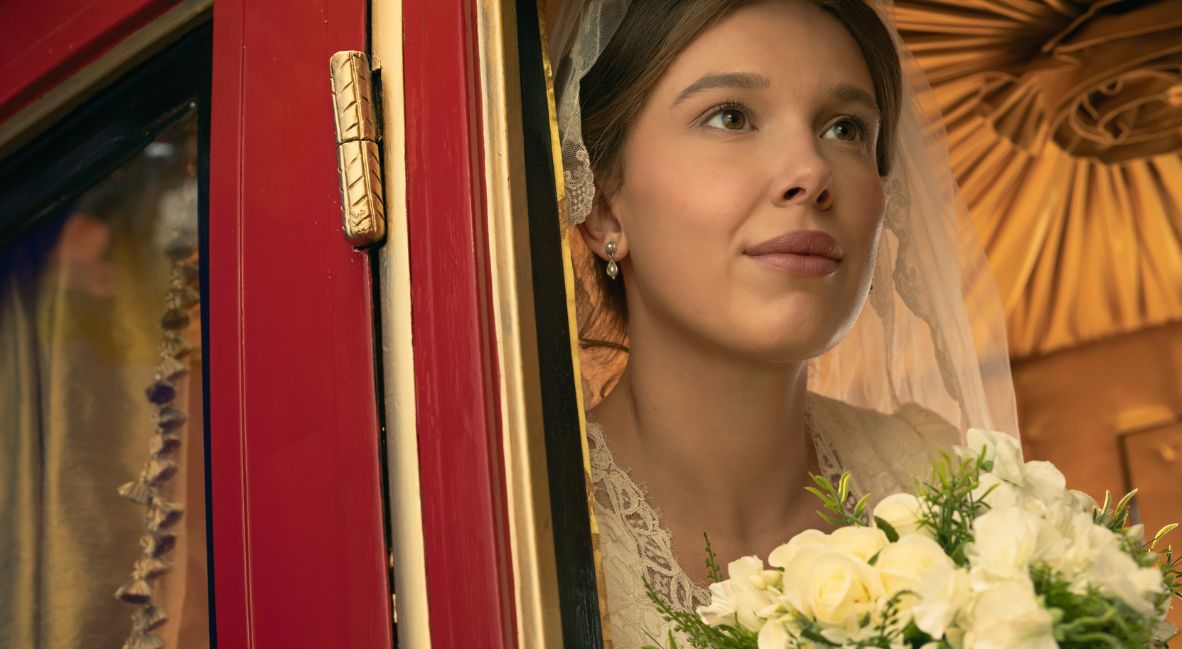
Only this time, the fact that she questions herself in relation to her brother has less to do with her capability and everything to do with becoming Enola Tewkesbury. While her mother, Eudoria, is largely supportive, if only in the “choose your own path” type of way that offers little help, the crime that Enola finds herself at the center of pushes her to define who she is as a Holmes. And more importantly, understanding that she gets to define that.
Throughout Enola Holmes 3, we see a woman who is deeply in love. But love is a complex emotion. The trust she shows Tewkesbury throughout the film offers a bit of respite for the audience and for Enola. The romance in the film is sometimes better done than its action, as it leans into how Enola is beginning to understand adulthood and start a new life.
More mature in nature, Enola Holmes 3 contributes to the trilogy effortlessly. Tracking Enola’s growth and Millie Bobby Brown’s in tandem is difficult. While Stranger Things’ final season squandered its potential, this film embraces it, meeting the young actress where she is instead of freezing her in amber to fit a narrative that long production cycles have decimated.

Enola is Brown’s best role because she has been allowed to be a woman. Enola is a character who has seen the world, has changed, has fallen in love, has felt grief, and she is allowed to. As Hollywood consistently tries to keep Brown in her Eleven box and the youth that comes with the character, Enola Holmes 3 feels like a declaration for the actress. An adventure film at its heart, Enola means as much to Millie Bobby Brown as it does to the young people who have grown up since the film’s first release.
That said, where Enola Holmes 3 fails is in its hamfisted approach to discussing the British Empire, its racism, and the colonial exploitation it was built on. While approaching these subjects is now a common feat in most Victorian-era stories, that is squandered here.
What’s added here reads more like an ill-informed social media post that refuses to take a solid stance than an immersive look at the time. Enola consistently stands against the prejudices held by those around her, as you would expect, but she always seems to be staring in opposition, with enough loopholes to not be culpable herself.
Using history as a narrative device is good, but doing so without any nuance is Enola Holmes 3’s biggest issue.
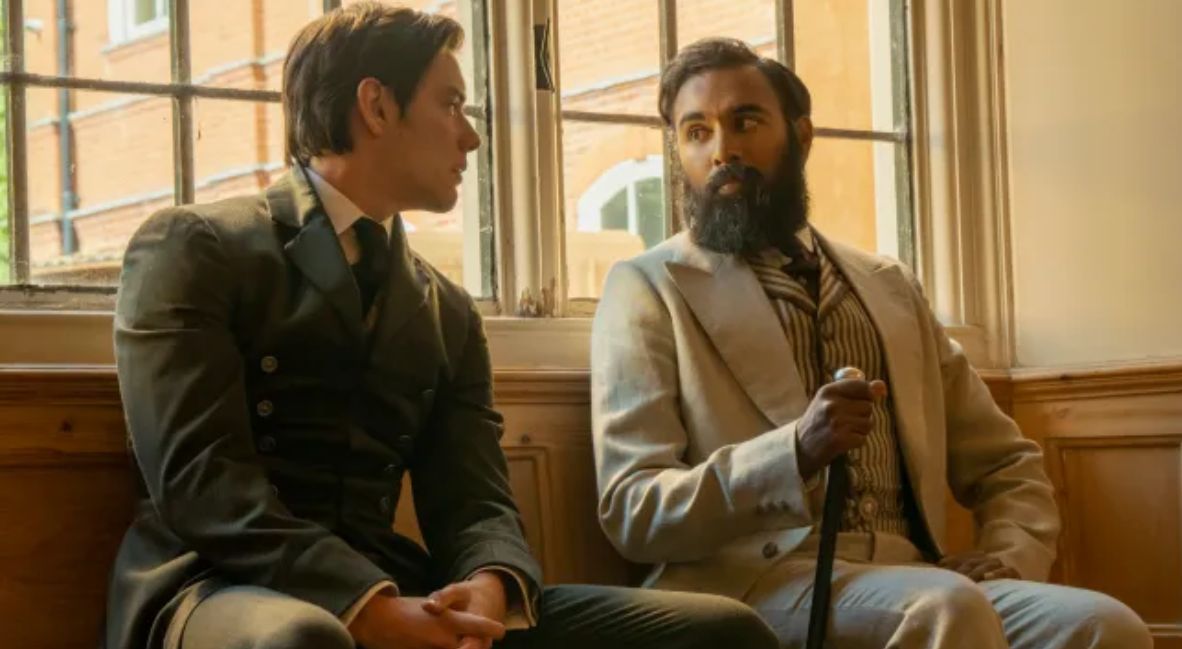
Add in that Moriarty (Sharon Duncan-Brewster) is now played by a Black woman and painted as an abject villain, and Enola Holmes 3 seems to be cashing in on ticking off boxes rather than having a clear message. One of the core elements of any Holmes story is the connection shared by James Moriarty and Sherlock Holmes, and in some cases, his family. The mirror that Moriarty is for Sherlock does more to reveal his growth than just to curl a mustache.
In Enola Holmes 3, the audience and Enola know that Moriarty isn’t coming from the wrong place. Throughout her time in Malta, Enola experiences consistent moments that highlight that her identity as a British woman offers her favorable status with the law and, more importantly, is hated because of the violence the Crown has inflicted on the country.
Duncan-Brewster is phenomenal in her role. Her line delivery, her emotive acting, it all works so well. This is not me saying that she should not have been cast as Moriarty, only that the screenwriters owe it to her not to lock her into a position and role in the story that does more to undercut her goals and the importance of decolonialization than to bolster them or even to change Enola in the process.
Enola even works with Mikiel to help push resistance. But she’s pushing the “right kind” of resistance that involves authorities casually learning that colonialism is bad, actually. It’s a hollowed-out takeaway in which Moriarty’s dedication to a more direct-action-focused revolution under the crown is seen as vitriolic and unfounded.
That’s the takeaway. Moriarty could be on the right side of this if only she didn’t work directly with people in Malta who are fighting back outside of specific organizations. And in her confrontations with Enola, her focused push toward violence runs directly against how the aristocracy and well-read British subjects are purposefully blind to the atrocities committed by the Crown in Malta and beyond.
As their hero-villain relationship deepens, the figure that Moriarty becomes to Sherlock is one of rage and danger, and for the life of me, I can’t understand why they had to take one of Sir Author Conan Doyle’s most charismatic antagonists and strip them bare in the name of casting. Moriarty is a woman who has survived violent imperialist boots on her neck, and I’m supposed to side with Enola?
Enola Holmes is Millie Bobby Brown’s best role because it respects who she has become.
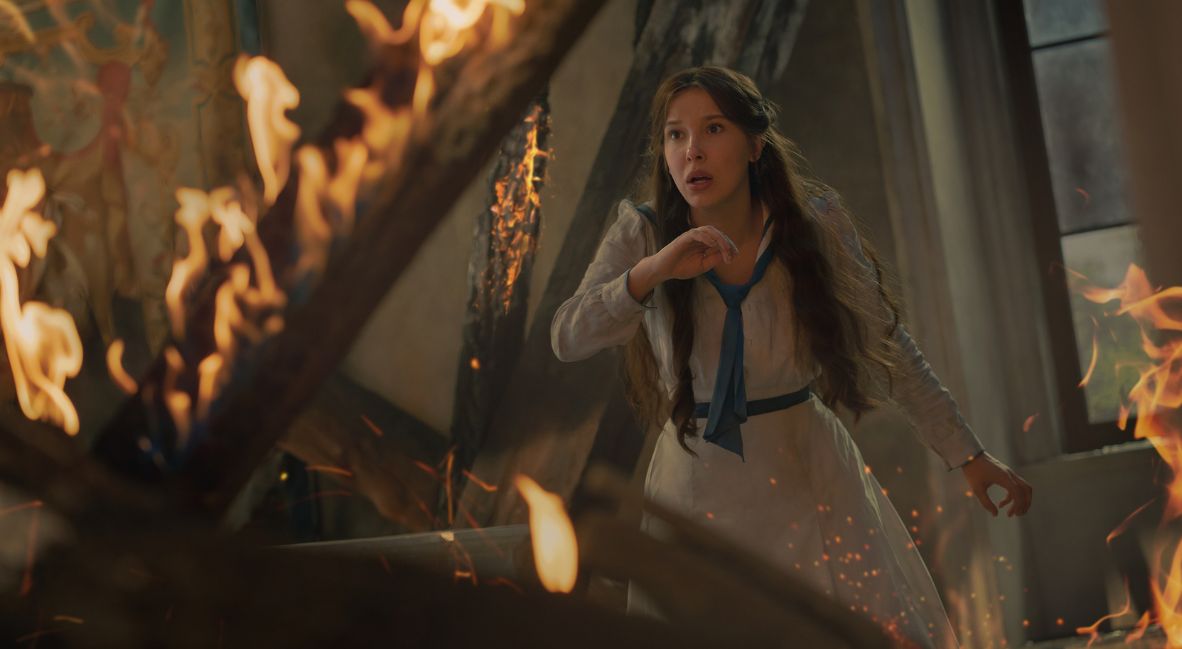
Enola Holmes 3 is at its strongest when Enola confronts who she was, who she is, and imagines who she will be. While the sequel film highlighted Enola’s embrace of love and coming of age, this third film in the trilogy shapes a woman from the experiences she’s had up to that point. With flashbacks and thoughtful writing that gives the audience a look at Enola—who is moving forward while also looking back—the film works as the culmination of a young woman’s life.
While Enola Holmes 3 does feature some rather large action set pieces, the action is second to its titular character. The film may have struggled to land its anti-colonial theming by choosing a milquetoast path that exploits its casting of Moriarty rather than letting her thrive beyond that, but it succeeds in creating a portrait of a woman deciding who she wants to be. And for that, it works.
Netflix’s Enola Holmes 3 still manages to eke out a past middling thanks to Enola herself. When you focus on the larger fear of losing yourself when you get married or Enola’s relationships with her family, it thrives. But the insincere look at Imperialist Britain feels more like someone at Netflix said it had to be the focus than like what suited the character.
Enola Holmes 3 is streaming now, exclusively on Netflix.
Enola Holmes | Enola Holmes 2
Enola Holmes 3
-
Rating - 6.5/106.5/10
TL;DR
Netflix’s Enola Holmes 3 still manages to eke out a past middling thanks to Enola herself. When you focus on the larger fear of losing yourself when you get married or Enola’s relationships with her family, it thrives. But the insincere look at Imperialist Britain feels more like someone at Netflix said it had to be the focus than like what suited the character.