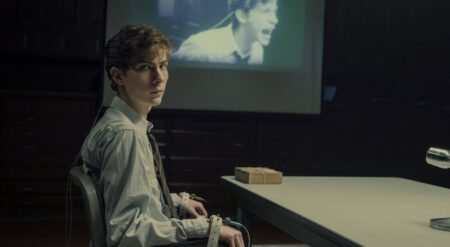
Gothic horror resonates with me in a way that’s distinct from other subgenres. It’s atmospheric, often cold, and always twists romantic visions to highlight the decay and violence of society. Mārama, which celebrated its US premiere at Fantastic Fest 2025, employs gothic revenge horror to craft a historical horror story that examines one woman’s life to explore the violent history of imperialism.
Written and directed by Taratoa Stappard, Mārama takes place in North Yorkshire, 1859. There, we meet a young Māori woman from Aotearoa named Mary. She’s traveled to England alone in an attempt to meet a man who claims to have information on her biological parents. With nothing more than a letter from a man named Boyd, she shows up at the estate, where a man named Nathaniel Cole, a wealthy benefactor who speaks her native language, tells her that Boyd died of pox.
But instead of sending Mary on her way, Cole bids her to become the Governess to his daughter. With the promise of a future that she can’t achieve outside the estate, thanks to good old 1800s racism, Mary agrees. I mean, what could be wrong with a man who is so fascinated by the Māori culture that he is raising a Māori and speaks their language?
Taratoa Stappard’s Mārama is a revenge story that resonates.
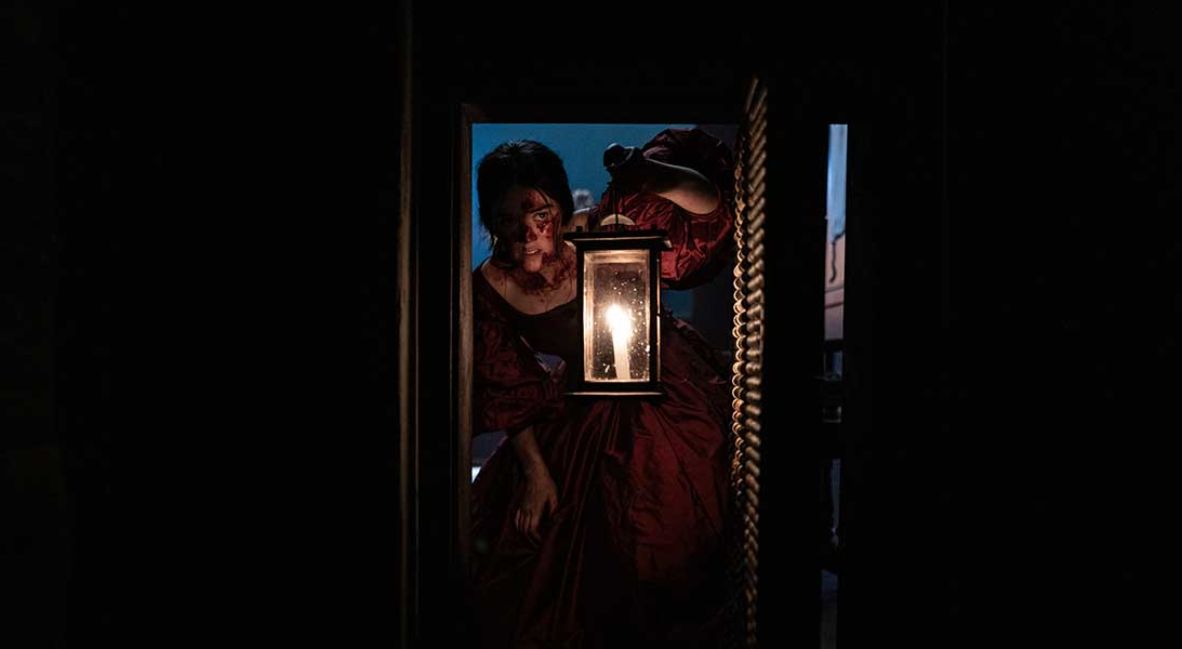
What begins as an attempt to have his daughter learn her culture reeks of fetishistic obsession, a stench that any person who has been on the other end, regardless of culture, can recognize. But the line between appreciation and obsession is thin. For Mary, a woman who has abandoned her Māori name (Mārama, the title of the film) and been forcibly assimilated after being ripped from her family, the job as a governess seems like the only way she can connect to her past.
Living among her ancestors’ appropriated treasures, Mary finds herself washed by a cavalcade of disturbing visions and dreams. These overlap with a growing understanding that Cole has been gaslighting her all along, playing a cruel game to get her to stay with him in England.
But it’s not long after Mary begins to settle into this foreign world that she starts to sense something darker beneath Cole’s fascination with her culture, and with her. As she observes the perverse display of her history, she begins to realize that he is an obsessive, fetishistic collector of Māori artifacts, and as she looks at his daughter and herself, of people. But as she begins to discover even more about Cole, his gruesome secret history from his years spent “harvesting,” as he calls it, the waters off New Zealand.
The power he seeks over Native women becomes clear, and his sinister obsession slowly comes to light as Mary begins to experience visions of the past and guidance as well. As Mary unravels the full reality of her colonial heritage, she embraces the spiritual Matakite powers, which allow her to see the world for what it is. Inherited from her Māori female predecessors, her powers as a seer connect here to her true identity as Mārama.
As the darkness swells around her, Mary is compelled to reclaim her heritage and her true name. She uncovers Cole’s connection to her past, and ultimately begins to seek vengeance against the man who defiled her, her family, and her culture.
Ariāna Osborne’s performance is the heart of this gothic horror story.

Ariāna Osborne‘s performance is wholly emotive. There is not a single scene where Osborne is on screen that doesn’t reach you. She is a period vision in beautiful gowns, but the pain she carries from the first moment we see her against the Yorkshire landscape, to the moment she lets it all out during a Haka in the film’s third act, is mesmerizing.
Mārama is a historical horror story that captures the unique pain and burden women face under colonial systems. It captures the way that they become objects for white men to possess, and how their bodies become the sites of violence. This is a Māori story, yet it is also a universal one. It is a shared trauma that other women face under imperialism, and that collective trauma is what makes the film a stunning and cathartic exploration that offers those of us with pasts connected to and shattered by imperialism a space to see our anger, pain, and triumph on display.
While this is a period piece set squarely in the 19th century, the pain that Mary carries and her embrace of her history resonate today. Historical horror is a powerful window into the trauma of a people, but it is also a way for us to see how colonial systems, regardless of place or time, have stolen women’s histories, bodies, futures, and legacies even into today.
Ariāna Osborne’s performance as Mary speaks volumes. In the moment that she reclaims her identity by performing a Haka in a room full of white men who are looking to abuse her, it is hard not to feel gutted. Mary knows that this moment is all she has left of her people, and through that performance, she is taking her identity away from these men. The devastation of that moment grows as she begins to get her revenge and uncovers that she is not the first to be treated like a Cole’s doll.
Historical horror is a powerful window into the trauma of a people.
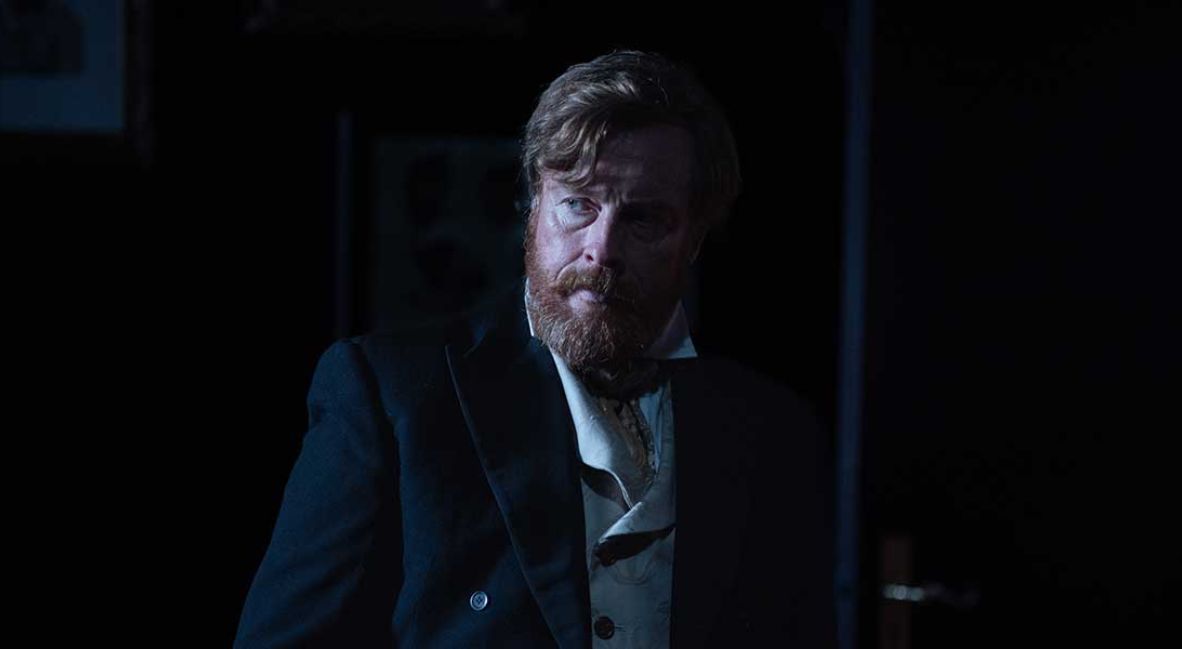
Cole fetishizes her resilience, and in the film’s third act, she aims to reclaim it. Throughout the film, Mary’s forced assimilation is interjected with visions that connect her to her culture. This connection reassures her that no matter how far she has been pulled away from her people, she will always be Māori, and she alone gets to control that.
For his part, Toby Stephens as Cole is terrifying. His insidious kindness paints every interaction, and as we see more of him, we realize that there is nothing in his life that is not an abhorrence. His art, his kindness, his “love.” Everything exists to exert control and destroy.
A perfect film to double feature with Jayro Bustamante’s Rita or La Llorona, Mārama’s production design and costuming are sublime, doing a great deal to maintain the film’s atmosphere and tension at a peak. However, even with its beauty, it is Ariāna Osborne that makes this film essential to watch. Taratoa Stappard’s debut film, Mārama, makes it clear that he has a strong future. Anti-colonial horror at its finest, Mārama is a moving, cathartic film that stands out as one of my favorites to come out of Aotearoa, New Zealand.
Mārama was screened as a part of Fantastic Fest 2025 in Austin, TX. The film is now available on streaming services.
Mārama
-
Rating - 9/109/10
TL;DR
Anti-colonial horror at its finest, Mārama is moving, cathartic, and one of my favorite films to see come out of New Zealand.