


Unlike many of my fellow critics, I loved Supergirl (2026) coming out of the theater. I was convinced it had done one of my favorite characters cinematic justice, with a story and presentation worthy to match Milly Alcock’s superb performance as Kara Zor-El, especially given the sublime source material of writer Tom King, artist Bilquis Evely, and colorist Matheus Lopes’s Supergirl: Woman of Tomorrow.
A space epic taking our depressed superhero to an intergalactic bar on her birthday and an epic adventure to save her dog and help the young Ruthye (Eve Ridley) avenge her family, King’s majestic narrative and Evely’s stunning art make Woman of Tomorrow one of the best modern comics, if not of all time.
I had initially thought the 2026 film had done a solid job adapting it, and yet, upon further reflection after seeing the film a second time, I realized where the attempt at adaptation may have instead been to its detriment. I now see the flaws, and would dial down my initial all-out glowing reaction. While Craig Gillespie and Ana Nogueira do their best directing and writing the film, the monumental task of adapting this specific story for Kara’s first solo film in the DCU ultimately led to its subpar critical reception.
Woman of Tomorrow is not an introductory story to the Supergirl character.
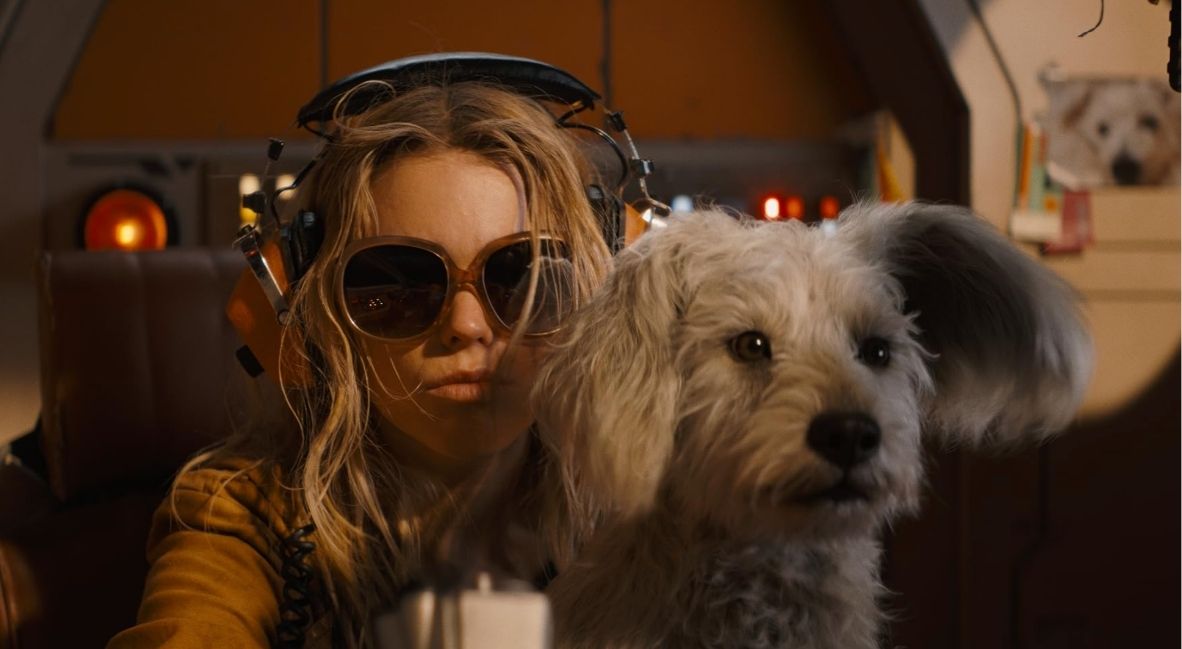
Now, I still respectfully disagree with fellow good-faith critics who highly disliked or outright hated the film as a whole. But film criticism is about fostering a constructive dialogue on the medium we all appreciate so much. And in thinking of my own attachment to the source material and separating that out upon a second watch of the film, which I still very much love for what it is, I understand why it wasn’t able to hold together as well on its own.
It’s important to recognize that Woman of Tomorrow works in large part because of Kara’s preexisting history and her subsequent baggage. She has been on Earth for about 5 years before her 21st birthday; she’s insecure about her place in DC’s superheroism, and she continues to grieve deeply for her entire planet. These are aspects of Kara explored in depth in her comic appearances through the years, which Woman of Tomorrow takes place after and builds upon, unlike what we have in this film universe.
Woman of Tomorrow is not an introductory story to the character. Despite its universally critical acclaim, this makes it a perplexing choice to adapt for her Kara’s first solo film outing in James Gunn’s DCU. The film was thus dealt a tall task of introducing audiences to this version of the character and incorporating that baggage into the story’s emotional throughline. Just because it is widely considered, and with very good reason, the iconic Supergirl story does not mean DC Studios should have rushed to adapt it.
Woman of Tomorrow deserves a full-length adaptation, which Supergirl, regrettably, is not.
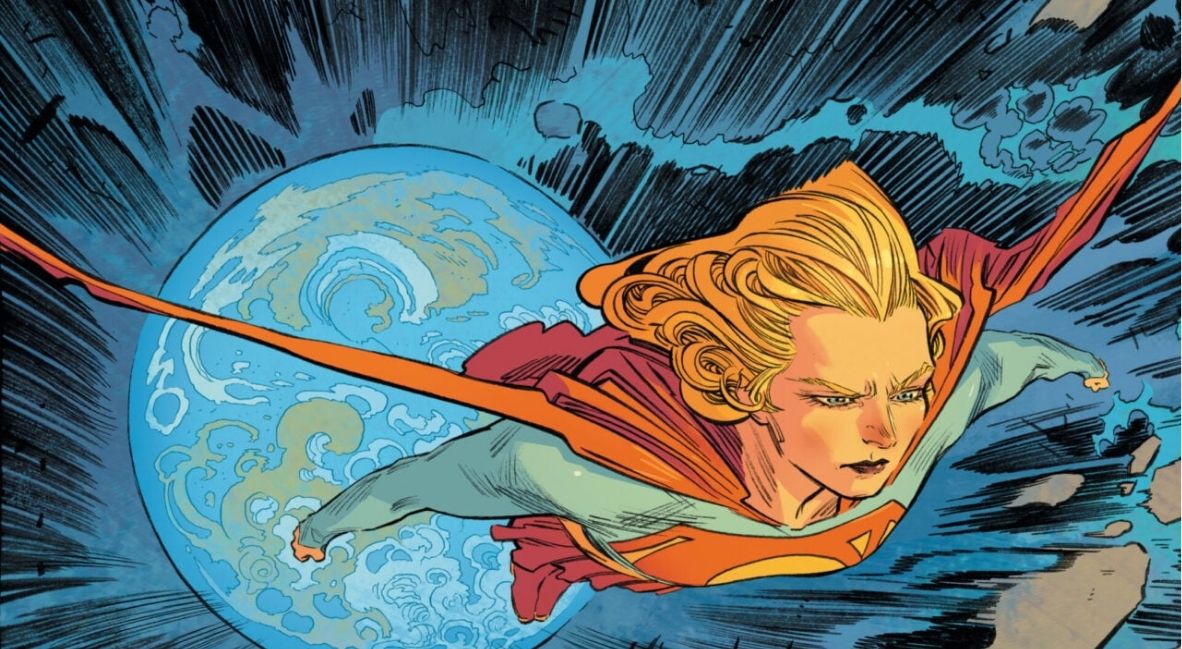
Woman of Tomorrow is a sprawling space epic across many planets, taking place over months in-universe. This gives Kara and Ruthye the time they need to develop a deep bond while hunting for Krem. Meanwhile, Ruthye sees Kara save many civilians, deal with moral quandaries, and impart her wisdom born of grief to the young girl. Coupled with Evely’s sublime art, it is a magnificent story that deserves a full-length adaptation, which, regrettably, Supergirl (2026) is not, by its very setup.
Instead, the film has to function as a proper introduction for Kara into the DCU and have her form this bond with Ruthye, in a race against time across planets to save Krypto’s life, while saving civilians from Krem and his Brigands, and explore Kara’s grief at losing Krypton, while throwing Jason Momoa’s Lobo in the mix, all in a time frame of only three days. And in a 1-hour-45-minute movie, which has to remember it’s still a superhero movie with the apparently requisite big climax, at that.
And Gillespie is clearly more interested in portraying the messy, angry, rough, and downright problematic aspects of complicated women, as has become his forte. He excels at directing the scenes of Kara’s origin, and seems more interested in her character when she’s an emotional mess still trying to do good despite her initial reticence. He wanted to tell a raw story about Kara’s struggles to adjust after Argo.
A great Woman of Tomorrow adaptation would treat the entire supporting cast excellently.
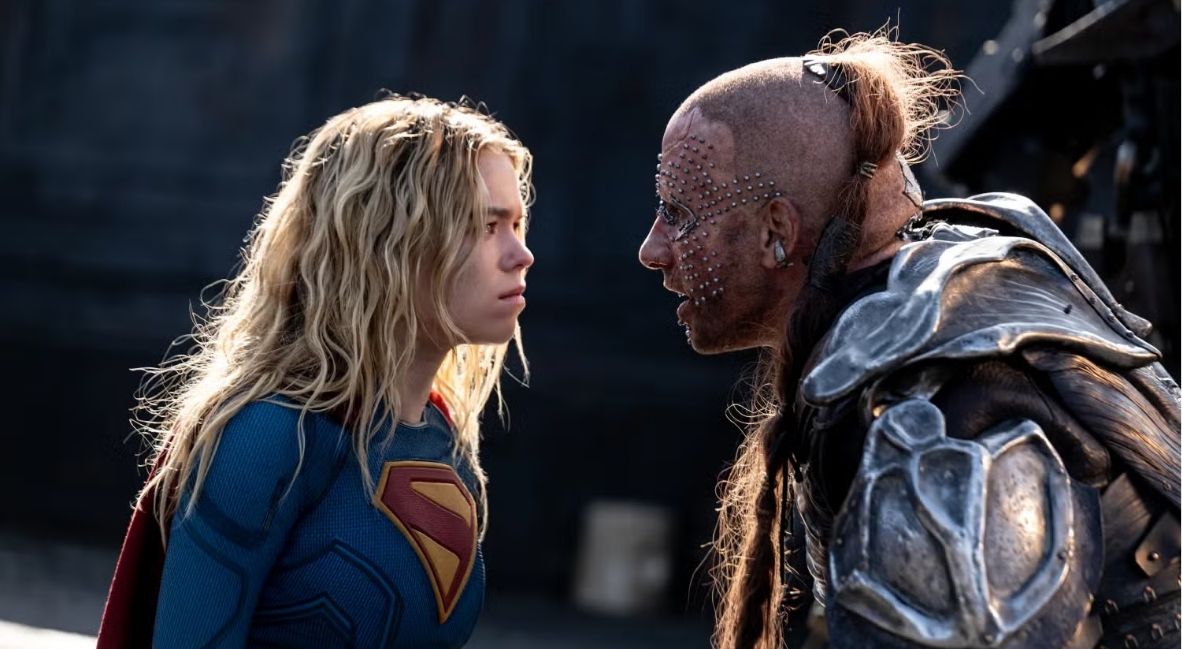
Instead, the film feels saddled with the space adventure and the monstrosity of Krem that he is evidently less interested in. If he were able to explore and expand upon Kara’s arrival on Earth, her grieving process, raging out, and learning to come to terms with the loss, rather than only inferring it by the end of the movie, she would very likely have had a stronger story and film.
And many critics have sensed the dichotomy in the care given to Kara as a character versus the rest of the cast (both Ridley and Momoa are still very good in their performances), who are there to support her. In Woman of Tomorrow, the entire supporting cast receives excellent treatment and care, fully engrossing you in the story even when we’re not seeing Supergirl on the page.
It also didn’t help that Gillespie’s interpretation involved so many brown and sandy locations, which of course exist on the page, but are complemented with beautiful valleys, forests, space dragons, stars, dinosaurs, and other gorgeous drawings by Evely.
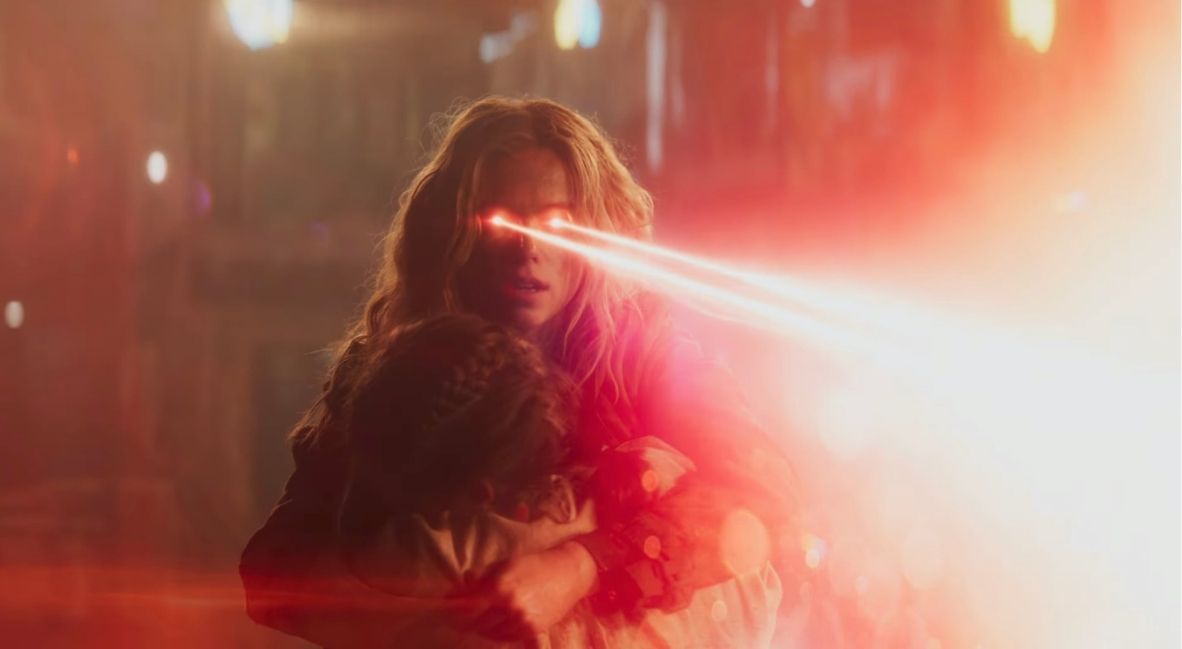
Gillespie clearly wanted to do something in the style of True Grit or Mad Max: Fury Road, which didn’t mesh well with the comic’s aesthetics. All of this isn’t to say that Gillsepie shouldn’t have directed Supergirl, but that he needed a script that would allow him to unleash his creative vision for Kara’s first solo outing, and not one based directly on such a beloved visual splendor.
Additionally, Woman of Tomorrow is exceedingly dependent on Ruthye as the narrator. The crux of the arc is how Kara teaches Ruthye to handle her need for vengeance. The film, to its disadvantage, needs to balance that with Kara’s internal monologue and origin story as the two embark on their space adventure within, again, a 1-hour-and-45-minute runtime.
It was a tall task for Nogueira, a solid writer who can pack an emotional punch, but not one she had the capacity to do on the canvas she and Gillespie worked with. Either the film needed more time to develop these dynamics, or it should have been adapted as a limited TV series instead to reach its full onscreen potential.
The flashbacks are the most interesting part of Supergirl (2026).
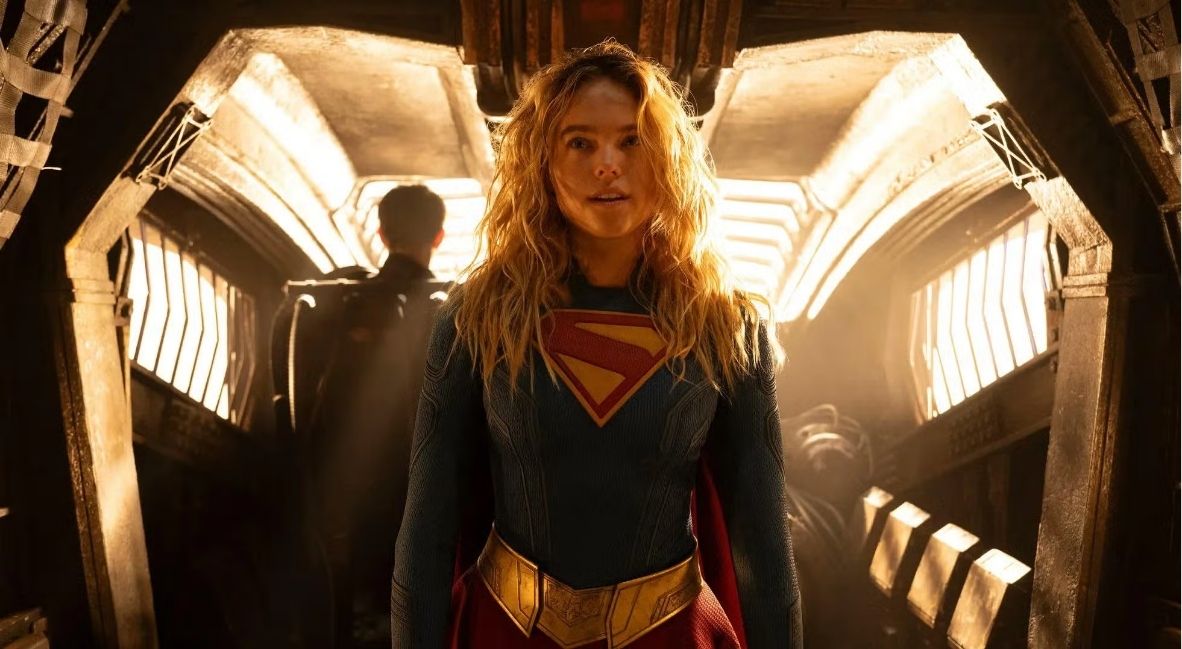
The source material is simply so heady, making it a monumental task for any seasoned writer to adapt successfully. There are many moments of pathos scattered throughout the film that will tug at the heartstrings for any viewer, but as a cohesive whole, it fell short in the face of every other check box it had to tick.
As such, perhaps it would have been better to give Kara a narrative in her first DC film that better establishes her origin story and struggles on Earth, rather than flinging her into an epic space adventure contingent on struggles readers already know about.
Indeed, the best and most emotionally resonant scenes in the film were when Kara was telling her origin story to Ruthye, and we see flashbacks of her life on Argo City and her arrival on Earth. This is what intrigues the audience: having the time to see how Kara adjusted and her trials and tribulations before we jump forward years later to her meeting Ruthye.
I still love Supergirl (2026) for giving our heroine a big-screen debut in the DCU.
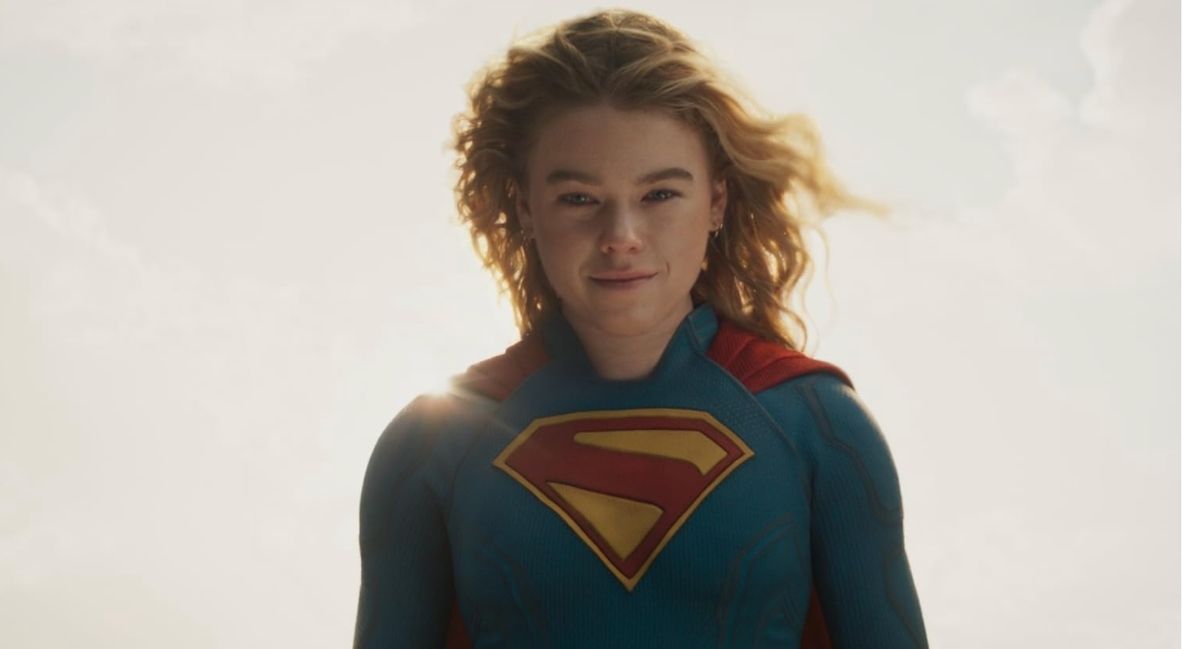
A key part of the DCU’s success so far is that it is incorporating the source material and its very creators in a wonderfully direct way. It magnificently did so in Superman and Peacemaker, and there was abundant promise to do so with Supergirl. The former projects were directed and written by Gunn himself, whereas this was the first outing in which he had a different director and writer for his universe.
And to Gunn’s credit, it’s good that he is giving other writers and directors the chance to tell distinct stories rather than forcing connections across projects like the MCU does. However, in this first instance of adapting this specific story, Gunn and the rest of DC Studios should have paused to consider whether this would be the best course.
I still love Supergirl (2026) for giving our heroine a big-screen debut in the DCU and for Milly Alcock’s pitch-perfect performance. I’m so happy to see her be a grieving and emotional mess and still kick ass when she needs to. I recognize the film as a bit of a linear and visual pigsty, but maybe for me and others, that’s simply part of its charm.
Hopefully Milly Alcock’s Supergirl has a chance to appear in many more DCU projects.

However, I hope that next time, James Gunn and DC Studios take ample time to think of a story for Supergirl, still drawing from the source material, but not necessarily beat for beat. This way, they can craft a story in which Kara continues to learn lessons to help her grow past her grief, while never forgetting it. And it should, above all, showcase how she grows into her own as a hero. Gunn’s Superman already provides the skeletal template for this type of story approach to build off on.
No matter what, Milly Alcock as the title character is superb in the face of Supergirl’s faults. She deserves not only to appear (and thankfully she will) again in the Superman sequel Man of Tomorrow, but in another solo outing and team-up films, and perhaps in DC TV shows. M,eanwhile Supergirl: Woman of Tomorrow deserves a lengthy adaptation allowing all of its richness to come to screen, which would most likely be in animation. Not just Alcock and Kara, but also their fans deserve it.
Supergirl is now playing in theaters. You can purchase Supergirl: Woman of Tomorrow from your local comic book shop or read it on DC Universe Infinite.