

Milly Alcock plays a great Supergirl in director Craig Gillespie and writer Ana Nogueira’s follow-up to Superman (2025). Eve Ridley even grows on you pretty well as Ruthye. But Supergirl (2026) is a rushed and messy visual failure with a mediocre story and none of the charm of its predecessor.
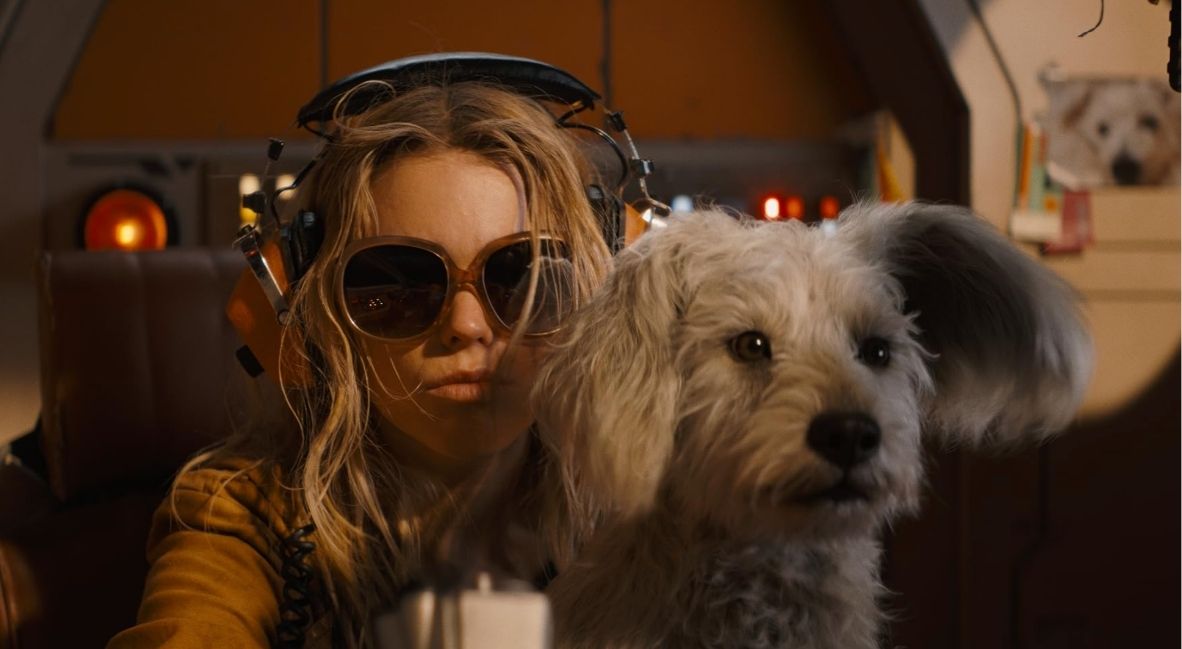
Supergirl wants to make it abundantly clear from the first shot that this isn’t Superman. Krypto pees in the middle of Kara’s mess of a ship while she’s waking up with a hangover. It’s worthy of an eye roll for being so on the nose, but thankfully, Alcock doesn’t overplay it. She nails the balance between rude, gross, tough, and kind. It’s an impressive formulation in a movie with little else that can be called the same.
Supergirl’s visuals are inexcusably poor.
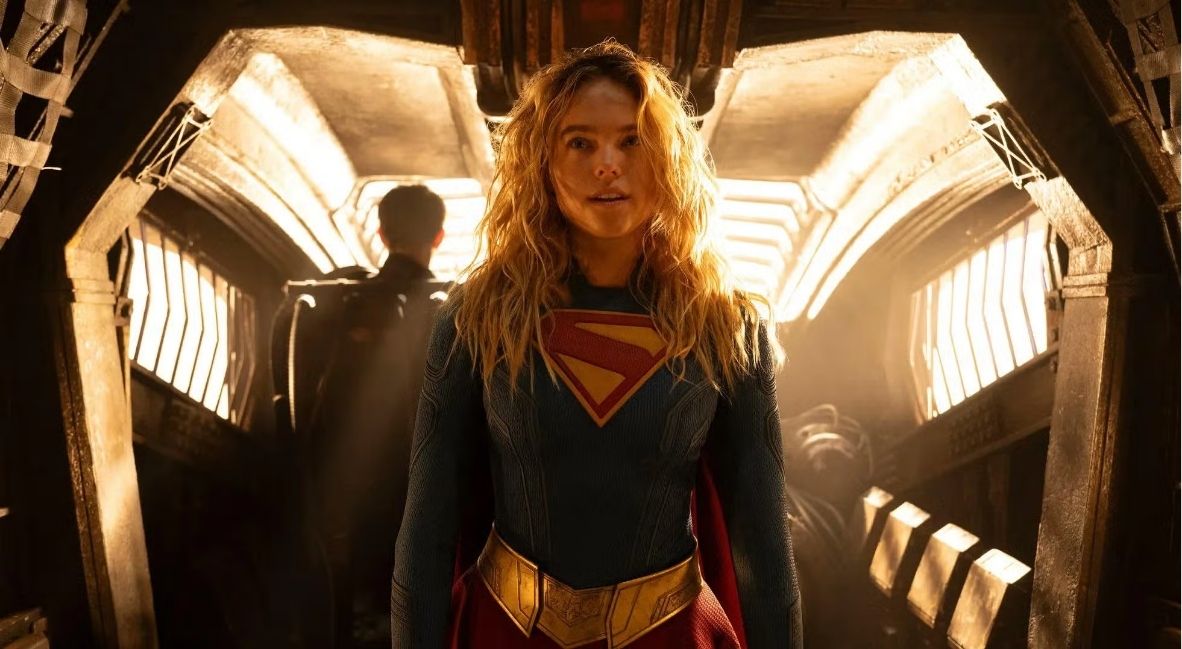
Everything is very generic and bland. The score, for instance, is very slight with no memorable motifs. Even the occasional needle drop feels too timid for a movie trying so hard to tell you that it’s the real punk cousin to Superman. Supergirl avoids making too many ill-fated, pointed jokes of the sort, at least. But even the fight scenes, while cool in theory, are often so chopped up, if not completely held off-screen, that only a few feel like they reach their potential.
The worst of Supergirl’s maladies, though, is its visuals. They are inexcusably poor, save for Krypto, who is completely innocent and blends perfectly. Perhaps he only blends, though, because the entire movie is shot inside a cheap CGI bubble. Not a single external shot looks or feels like it was shot in a real location.
From the very first wide shot through to the end of the film, the focus of every outdoor shot is pulled tight onto a single object or character in the foreground, and everything else clearly and frustratingly looks like it exists on a completely separate plane of reality. The backgrounds and mid-grounds look fully divorced from the foreground and from each other in terrible digital composites of uncanny, colorless worlds. The effect sort of looks like a comic book panel in this way, but even if it was intentional, it’s not at all befitting an IMAX screen.
The villains are quite bland, and their brand of villainy is pretty predictable.
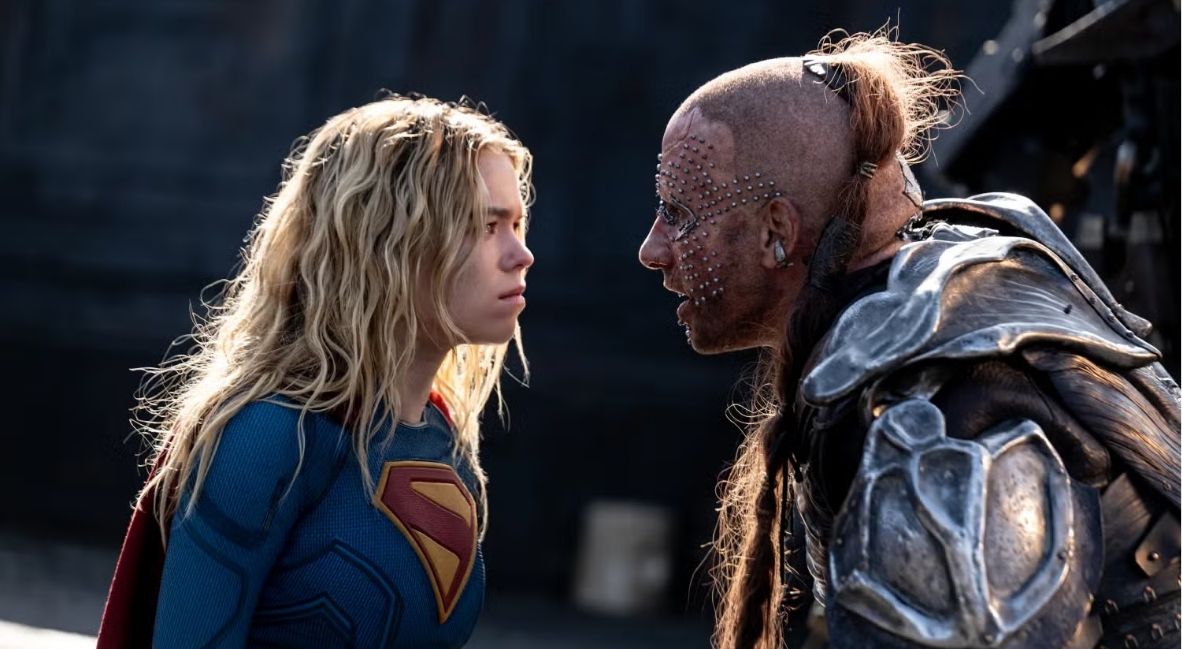
This isn’t balanced by any interesting indoor locales, either. They’re rendered equally poorly in mostly digital environments with sludgy backgrounds and boring scenery. All of the locations blend together, except for the one or two brief scenes with some color. Some flashback scenes add a bit of differentiation throughout Supergirl, but they often feel misplaced in the flow of the plot or the characters’ emotional arcs.
Kara does have a satisfying arc, at least. It’s straightforward and predictable, but Alcock manages to make you really like her character, despite the movie not doing enough to connect you to her from the outset. The entire first half of her character arc revolves around an absurd plot contrivance that completely sidelines half the reason you come to see Supergirl: Krypto. What they do to him is borderline offensive, not only for how he’s treated by the movie, but because it assumes the audience is dumb, which lowers the stakes to just about the ground.
Since the villains of this movie, the Brigands, are just as generic as the rest of the movie, there are pretty few other stakes to be driven in Supergirl. They’re just a bunch of bedazzled jerks who steal little girls. The main baddie, Krem (Matthias Schoenaerts), has almost half a personality. He eats a lot and is nonchalant about his violence. But were there not numerous scenes of young girls in peril, the Brigands would hardly feel like adversaries. They still barely do.
Kara and Ruthye carry this movie, while Lobo singlehandedly tries to take it down.

Their main reason for being is less to be worthy foes of the nearly invincible Supergirl and more to pose a moral quandary for Ruthye. Ruthye wants revenge in blood, but Kara is concerned that if Ruthye kills for revenge, her pure heart will be soiled—or something vaguely patronizing like that.
Ruthye is far too verbose for her young age, which is aggravating when it’s used to turn her into an exposition machine. Supergirl isn’t as guilty of talking to the audience as if they’re doing dishes while watching as some other blockbusters are of late, but it has its moments, and most of them are at Ruthye’s expense. But when she’s not being misused this way, her character takes on enough of the movie’s emotional weight with success. Eve Ridley is asked to do a lot to make up for Kara’s lack of initial characterization, which isn’t fair to her character.
Where Kara and Ruthye succeed as characters, Lobo (Jason Momoa) fails miserably. This character quite simply does not belong in Supergirl. His visual style is ugly and makes the already undersaturated movie feel even bleaker; his gross and sexist one-liners aren’t offensive so much as they just aren’t funny whatsoever, and Momoa does the characters no favors by making it feel like it’s just grayscale Momoa playing himself in the movie. The character adds almost nothing to the plot or either character’s growth that couldn’t have been fulfilled by a different character.
Supergirl is a total mess.
Supergirl is altogether a mess. It feels like a rushed production whose strong characters could have carried a better film with equally interesting villains, a better-developed script, and any amount of authenticity in its visuals. Supergirl doesn’t need comparisons to Superman; they’re different kinds of movies attempting to do different things with their characters and action.
But it’s impossible not to recall how beautifully colorful and well-scored that movie was, and how well developed all of the characters were, when judging how this spinoff and second building block in a supposed cinematic universe fares. Supergirl could be much worse; Milly Alcock single-handedly ensures that it isn’t, but it deserves to be much better, too.
Supergirl is playing in theaters everywhere June 26, 2026.
Supergirl (2026)
-
Rating - 4/104/10
TL;DR
Supergirl could be much worse; Milly Alcock single-handedly ensures that it isn’t, but it deserves to be much better, too.