

When Thick as Thieves was announced by publisher Megabit Publishing a year and a half ago, it was revealed as a game of a slightly different nature. Players would be tasked with infiltrating well-defended strongholds, attempting to circumvent security measures to find a rare, valuable treasure, all while competing against another team of players.
Now, after over a year of work, developer OtherSide Entertainment has done away with the game’s competitive aspect, leaving a stealth-action heist game that can be enjoyed cooperatively. It’s impossible to say how the original concept would feel to play, but in its current state, Thick as Thieves feels like an incomplete experience. Instead of daring capers or bombastic heists, it feels like a chore to run through the same environments repeatedly.
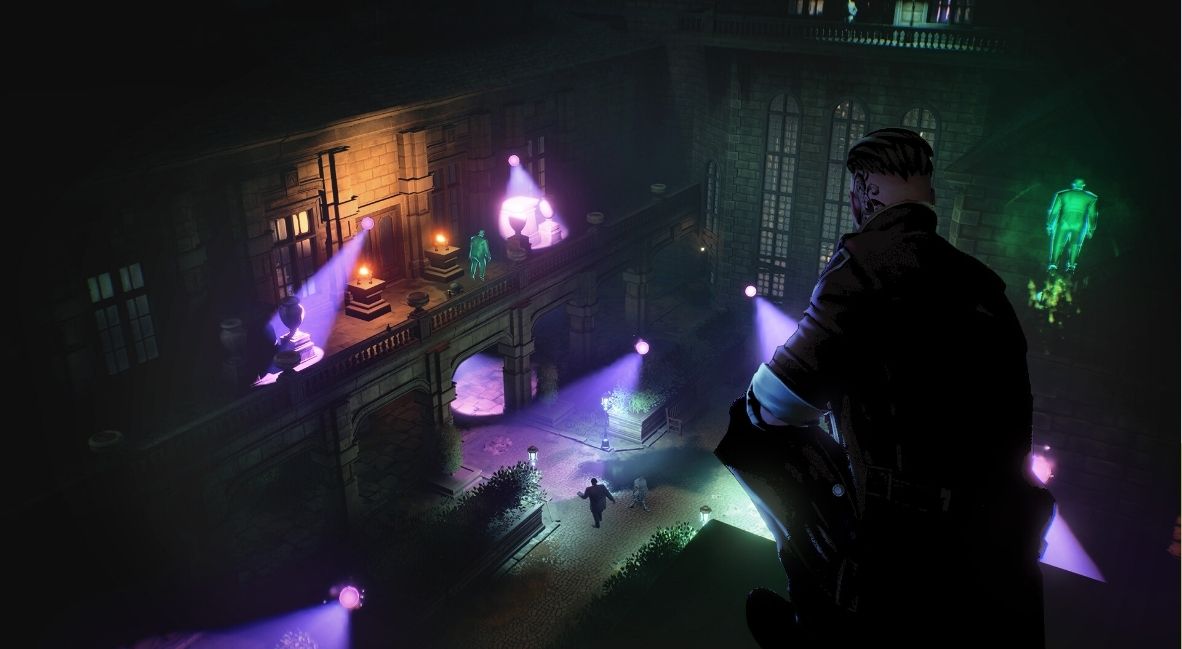
After a brief tutorial explaining the intricacies of stealthing around, players take the role of the Spider, one of two thieves currently available. Armed with a grappling hook, she can get around or over most obstacles, making infiltration a simple task.
With a few extra tools, like smoke bombs that limit visibility, or the pickpocket fairy, which can flip switches or pick pockets at a distance for you, players can enter one of the two locales. Each step of the story will send you to one of these two venues, giving you a unique goal on top of your usual target. This extra goal does little to mitigate the feeling of repetition that sets in quickly.
Heists follow a fairly simple loop in Thick as Thieves.
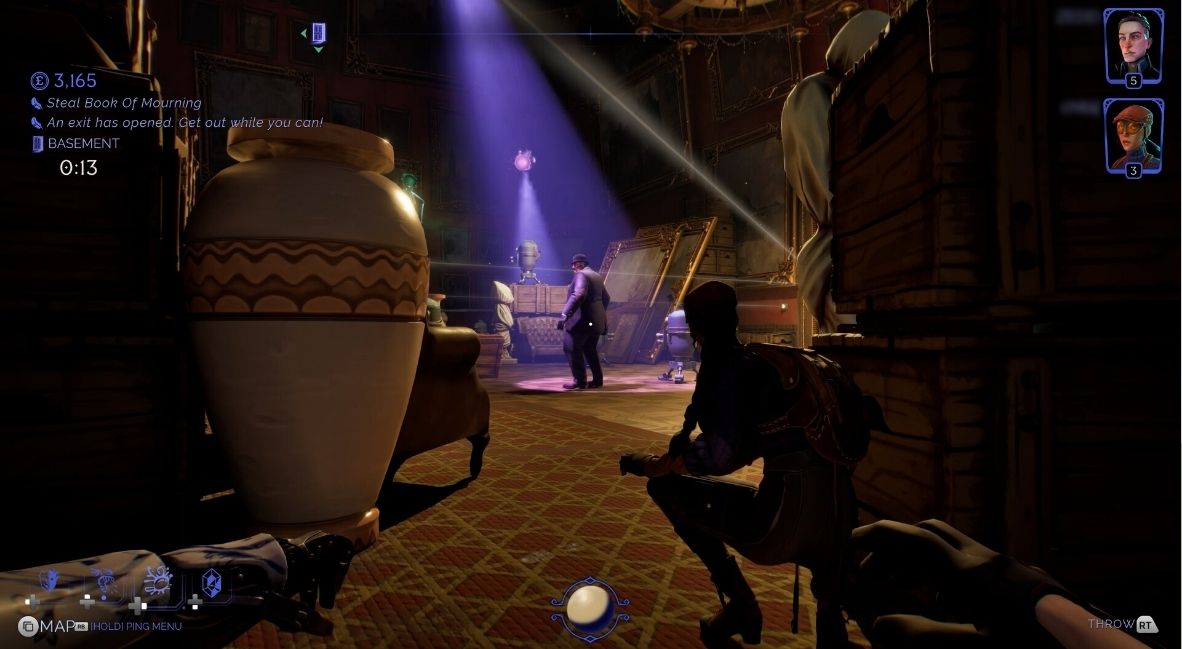
To its credit, Thick as Thieves isn’t all bad; the first few runs in each stage are exciting. Exploring a new location, breaking in, and discovering all the secret shortcuts is a lot of fun on the first few runs. But when you only have two maps to learn, it quickly drains the excitement out of the job.
The same applies to the new tools you can earn. It’s fun to experiment with them and see where and when they’re most effective, but in the end it’s much easier to stick to what you know best and get in and out as quickly as possible.
Heists follow a fairly simple loop: Players spawn in a randomly selected location around the edge of the map, pick their favored infiltration route, and skulk through the venue, avoiding guards, turrets, and other traps, picking up loot along the way. Eventually, they’ll come across clues that will lead to the treasure, or they’ll happen upon the treasure itself, and then they simply need to reach the magical extraction point that appears at the end of the heist.
The exact details of any given outing will vary, based on a few randomly changing parts, blocking off different paths, or, understandably, changing up the location of the target treasure. There are even higher difficulties to explore once players have mastered a tier, but this simply activates more of a location’s defenses, which in turn slows down the pace at which a player can advance to their goal.
The tools available quickly trivialize the game’s difficulty.
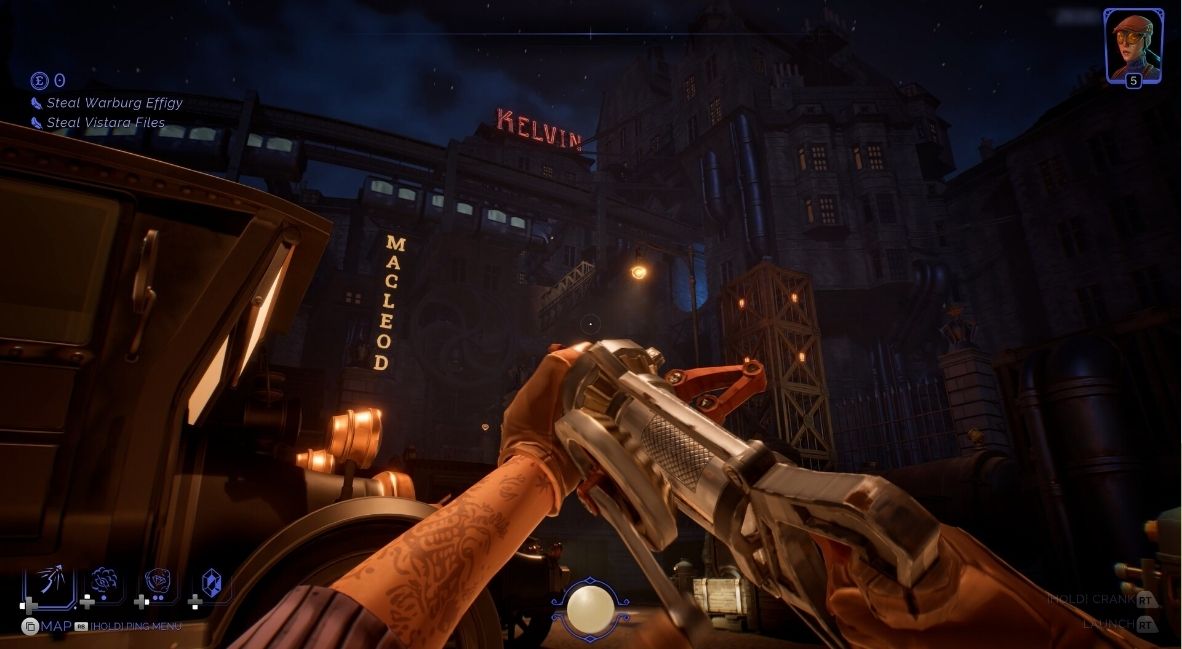
Simply put, two locations is not enough for Thick as Thieves. By your second or third trip to each stage, you’ll likely have committed the maps to memory, turning what should be an exciting adventure into ‘just another trip’. The tools you can bring along do little to shake things up; the Pickpocket Fairy, Slither Sap, and others simply change which hazards you can handle from a distance.
The final part of your toolkit further trivializes the difficulty: the Vistara Diamond. This narratively important gem can be wielded to highlight guards, hazards, clues, and even treasure through walls.
It’s vital to equip any time you’re not immediately using another item. Instead of methodically searching every room in a manor, you’re now acting as a metal detector for clues, broadly sweeping through the main structures.
Another issue is with your goals. While following the story, each heist will have two goals, one of which is generated for the stage you’ve chosen, with a contract making up the other goal. Contracts are more closely related to the overarching narrative for Thick as Thieves. It is possible, whether by accident or not, to complete the stage goal without completing the contract.
Currency exists, but is also quickly trivialized in Megabit and Otherside’s heist game.
Once you’ve fulfilled the stage task, the extraction process is triggered, giving players only minutes to leave the stage. If they have no clue where the contract goal is, it’s unlikely they’ll discover it in time at this point. This makes the entire heist feel like a waste of time, despite the money and experience earned in the process.
While you can still earn money and experience from failed heists, there’s little incentive to work for them. Cash rolls in with every heist, but there’s very little to spend it on. There are a few cosmetics available for each character, and you have to use your money to unlock harder difficulties, new tools, and even the second thief, but they’re also gated by your progression through the story or your level. Further, since the game is played entirely in first-person view, any cosmetics are useless unless you’re playing with someone else.
This accumulation of wealth is further exacerbated by the absolutely careless storage of valuables in each stage. Every room you enter may have extremely valuable artifacts carelessly strewn about, making them seem like worthless trinkets and baubles. By the time you have to buy a new tool, you’ll be extremely rich, turning the accumulation of digital wealth into a somewhat even more abstract concept.
The AI is lacking and inconsistent in Thick as Thieves.
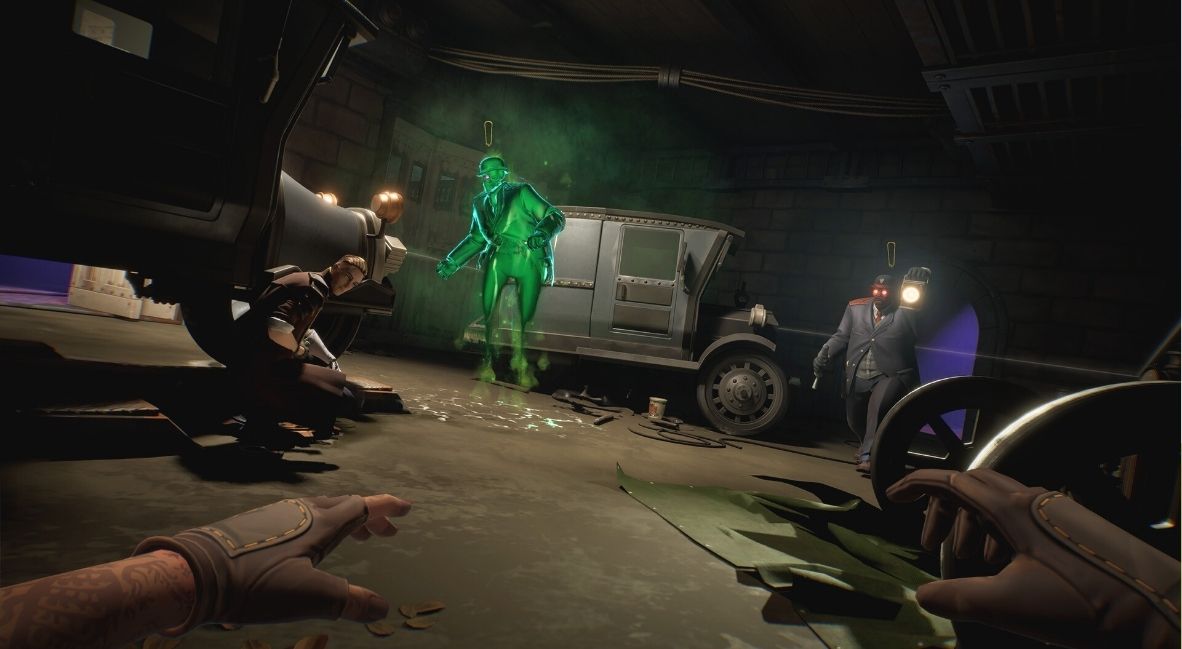
On top of all this, the guards’ AI is lacking. One guard caught a glimpse of me in the dark somehow and sprinted over, making it his life’s mission to catch the person who dared approach his patron’s manor. Even though I was well hidden, he was relentless in his search.
Conversely, I’ve knocked out my fair share of guards in the process of infiltrating buildings, and not a single one raised the alarm when they eventually woke up. These inconsistencies make it hard to treat Thick as Thieves with any seriousness. It ultimately contributes to the feeling that the game is incomplete.
With updates, Thick as Thieves has the potential to deliver a more exciting heist simulator, but it won’t do that with just two characters and two maps to choose from. For now, all it provides is mindless repetition and half-baked stealth.
Thick as Thieves is available now on Xbox Series X|S, PlayStation 5, and PC.
Thick As Thieves
-
Rating - 5.5/105.5/10
TL;DR
With updates, Thick as Thieves has the potential to deliver a more exciting heist simulator, but it won’t do that with just two characters and two maps to choose from. For now, all it provides is mindless repetition and half-baked stealth.