


We all start off life surrounded by strangers, not knowing which ones we’ll connect with and which ones will pass us by. Some may say that those meant to be in our lives are chosen by fate, much like soulmates. In writer/director Shunki Hashizume‘s Soul Mate (Sourumeito), we see how such a thing might be possible in a slow-burn romance between two men that spans time and country borders. And while the impact of its final episodes is quietly devastating, the hope that remains as the credits roll is worth the time spent.
At the start of Soul Mate, Ryu Narutaki (Hayato Isomura) is living a normal life. He lives and breathes ice hockey, playing for his university’s team alongside his best friend, Arata Oikawa (Koshi Mizukami). However, a private vulnerable moment between the two triggers a series of events leading to Arata’s life collapsing in shambles. Unable to cope and taking on the burden of responsibility, Ryu flees to Berlin to stay with his childhood friend, Sumiko Shinonome (Ai Hashimoto). He’s unable to let go of his guilt until one night, he finds himself in a church.
Little does he know that fate has special plans in store for him. A fire breaks out, and just as he’s about to pass out, Johan Hwang (Ok Taec-yeon) protects him. This chance encounter leads to the two running into each other at Johan’s boxing match and during the subsequent police investigation following the church arson. A spark forms between them, and the two begin to connect. It is then, over eight episodes, that we watch them go through life, battling their own demons, yes, but also learning to heal and grow together.
Fate brings two lonely men together in Soul Mate, and we watch as they learn to connect again.
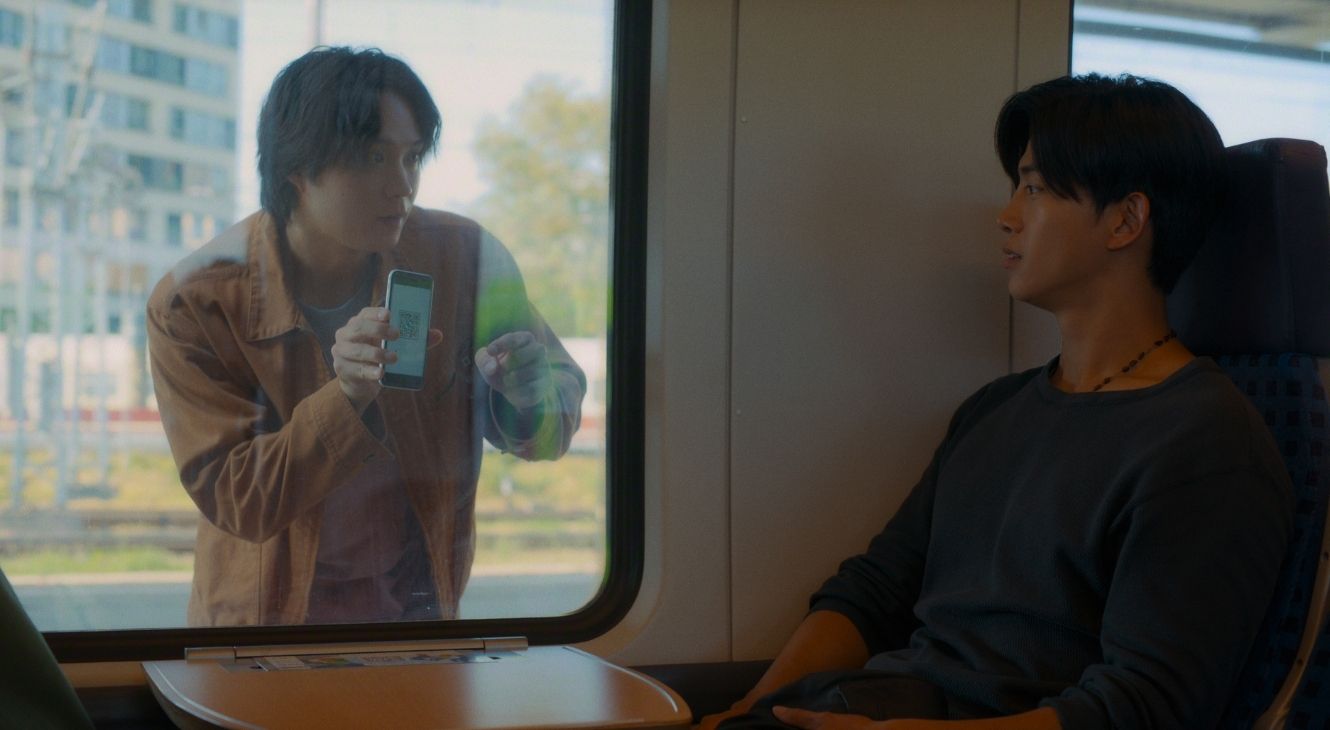
For Ryu, his journey initially centers on his guilt over how his reactions might have ruined his best friend’s life. He is unsure of himself and his desires, but he is a good person. He is a light that shines bright, whether or not he realizes it. That light draws Johan to Ryu like a flame, yet for Johan, that light represents danger. It represents a hope that he has learned to believe he doesn’t deserve. It is this dynamic that makes the two so endearing to watch, but when things get turbulent, it’s easy to see how they might fall apart.
As Ryu, Hayato Isomura captures his boyishness well in the beginning. There’s no sharpness or edge in his performance. Isomura encapsulates that innocence that Ryu needs to contrast with the more cynical Johan. As time passes in Soul Mate, Hayato Isomura subtly adjusts Ryu’s body language and persona as Ryu enters adulthood, but Ryu’s experiences never harden him, and this shows in how Isomura uses his gaze.
Ok Taec-yeon is expressive in both his face and physicality as Johan. At times earlier in the series, this clashes with the given direction, resulting in unintentionally awkward and cheesy line deliveries. But as Johan’s journey progresses in Soul Mate, the character transitions from hard edges to a mature sense of calm; you can see how Taec-yeon infuses that sense of safety and confidence into Johan’s interactions. And when things become too much for Johan to bear, Ok Taec-yeon gives everything in those moments.
How the series dissects loneliness and connection transforms our understanding of love.

A surprising addition to the story is Ai Hashimoto’s Sumiko, who initially comes across as a side character. However, this is far from the truth. Her journey and relationships with Ryu and, eventually, Johan open up new pathways to how soulmates can be perceived. Soulmates can be more than romantic; they can be platonic. And the latter is reinforced in the events of the second half of Soul Mate when life throws its curveballs at all three of these characters.
Life is full of the trials and tribulations that come with living. It’s easy enough to feel lost and desperate when the harshest edges of life start ripping us to shreds. That’s where loneliness is at its most dangerous, and why the relationship fostered between not just Ryo and Johan but also Sumiko in Soul Mate emerges as a necessary testament to connection and to how it keeps us going when hope seems fleeting. This becomes all the more clear in the series’ final episode.
While at times the exploration of theming isn’t subtle, there’s much Hashizume bakes into the screenplay that is ripe for discussion. Loneliness is a big element, with each character afflicted by it in some way throughout the series, and through discussions and monologues, we see the message fleshed out. Finding someone to treasure is a path to freeing oneself from loneliness, but once that treasure is gone, the absence is undeniable. That’s what makes these treasures, well, treasure.
It’s easy to watch life pass by, and the slice-of-life nature of Soul Mate reminds us to be present.
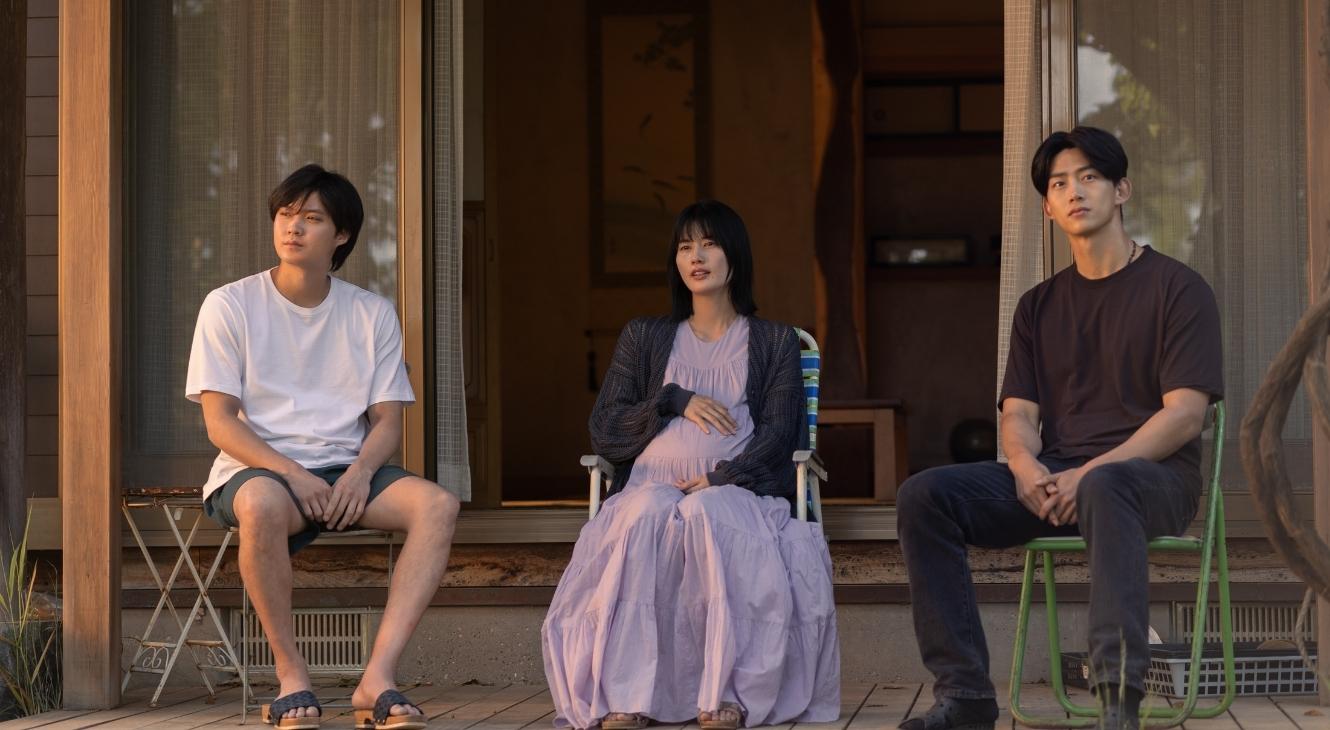
Similarly, the slice-of-life focus in Soul Mate reinforces how easy it is to forget to live in the moment. As our characters navigate the turbulence of their twenties, there is lots of understandable drama that makes up some of the series’ most memorable story beats. Yet, it is in the quiet moments, whether sitting outside on a porch, fishing with parents, or even walking a child home from school, that it becomes clear what also needs to be remembered. It’s not just the emotional extremes, but it is in the mundane, day-to-day that reminds us we are living.
Whether for the sake of time or ease of storytelling, Soul Mate drops specific story threads in the series’ first half that admittedly seemed like they’d have more staying power. For the second half of the series, there are minimal callbacks to these moments. Given the impact on both characters’ lives, there needed to be a stronger ripple effect. Similarly, Hwang’s sister (Lee Jae-yi) sort of disappears in the second half of the series until the end, despite playing a huge role in his life.
This leads to the series’s use of flashbacks in its storytelling. At certain moments in Soul Mate, it is used to flesh out relationships between characters in an economically effective way. However, at times, particularly during a major reveal involving one of the three characters, it came across as a cheap storytelling device to point out where audiences might have missed the clues leading up to it. If a reveal requires going back to make sure the audience saw the breadcrumbs you laid, the breadcrumbs weren’t big enough to be seen in the first place.
At the end of the day, Soul Mate thrives when it’s not trying too hard.
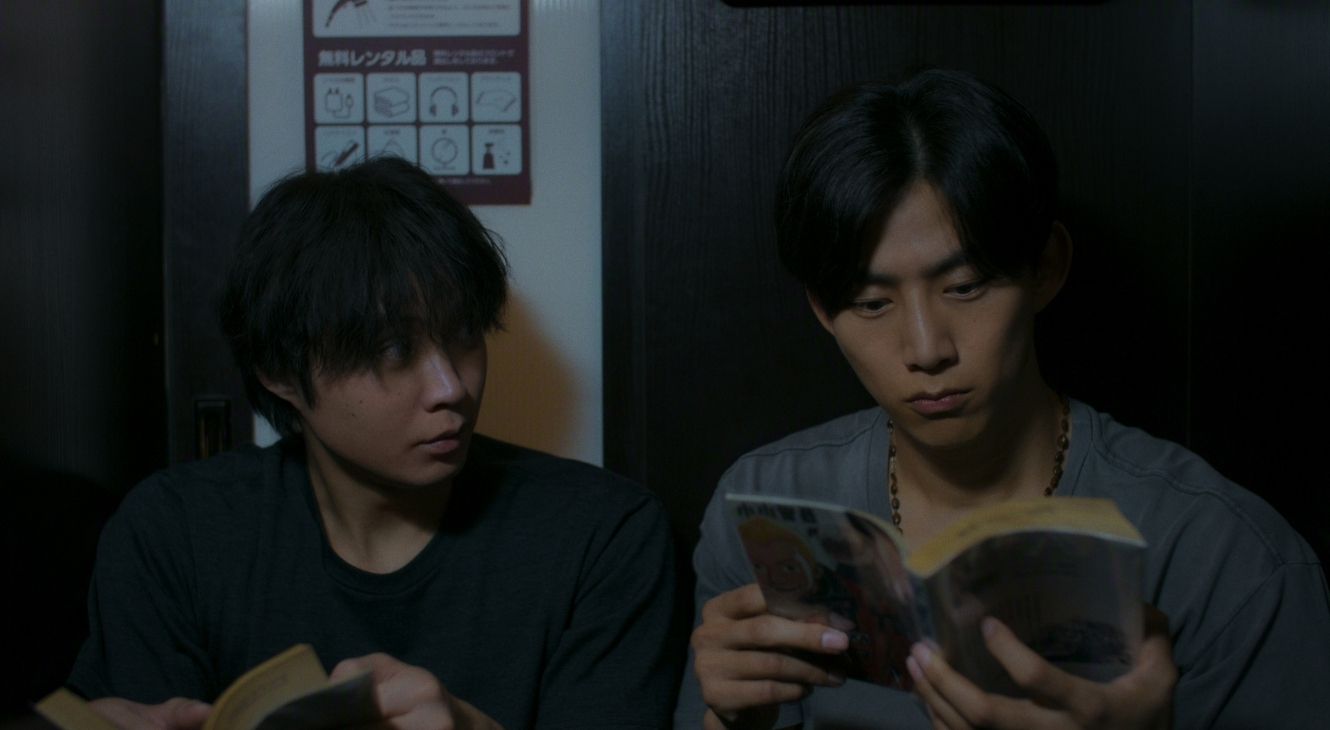
As much as Soul Mate relishes embracing the mundane and day-to-day life, there were times when the score felt disconnected from that feeling. For example, there were scenes featuring a joyous, triumphant tune that was more fitting for a celebration, when they should have been more subdued or quiet, matching the tone of the conversation. In a series that features a fair amount of drama, the score needed to assist in the tonal balancing act and did not entirely hit that mark.
Where Soul Mate ultimately thrives is when the storyline isn’t trying hard. It soars in the unspoken truths, the little ordinary moments that might pass us by if we aren’t paying attention. These punctuate the bigger onscreen life moments, making the eventual sleeper punch of emotional devastation all the more impactful. And in the end, we walk away with the idea that love doesn’t always have to be brash and loud. Sometimes, it can be quiet, and the weight is all the greater for it.
Soul Mate is now streaming exclusively on Netflix.
Soul Mate (2026)
-
Rating - 7/107/10
Summary
Where Soul Mate ultimately thrives is when the storyline isn’t trying hard. It’s in the unspoken truths, the little ordinary moments that might pass us by if we aren’t paying attention.