The cozy survival genre has become crowded over the years. Farming sims and base builders have been stacking up, and, at this point, it takes more than a pretty world and a crafting menu to carve out your own space. Square Glade Games’ Outbound changes the formula by putting your entire life on wheels.
Rather than staking a claim on a plot of land and building outward, you’re constantly moving, turning an empty electric camper van into a rolling home as you drift through a bright, idealized wilderness. It’s a simple idea that works. With a packed van, a stretch of open road, and a sunset rolling across the hills, Outbound is one of the most inviting games I’ve played in a long time. The road just stretches a little too far between the good stuff sometimes.
Everything in Outbound revolves around the camper van, and it’s the part of the game that kept pulling me back in. You start with a bare-bones shell and slowly transform it into a real mobile workshop. Craft stations slot into the interior, storage fills up the trunk, and before long, you’re stacking platforms on the roof to create this absurdly tall, modular treehouse on wheels that somehow collapses neatly when you break camp.
Outbound asks that you slow down and take in the scenery.
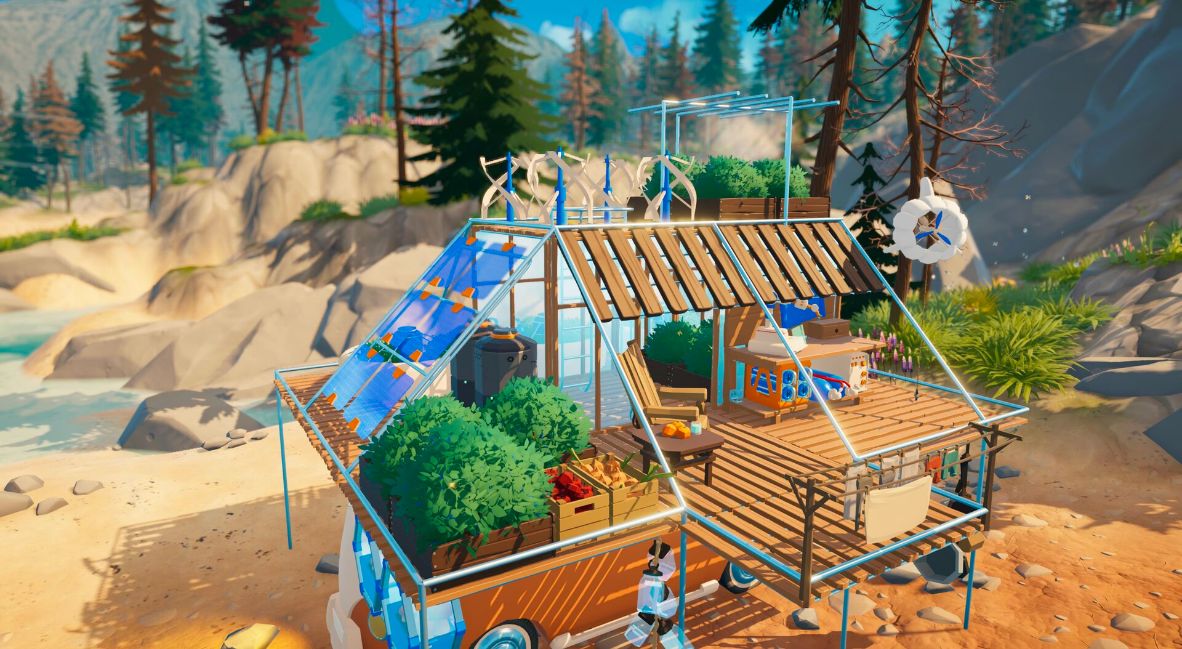
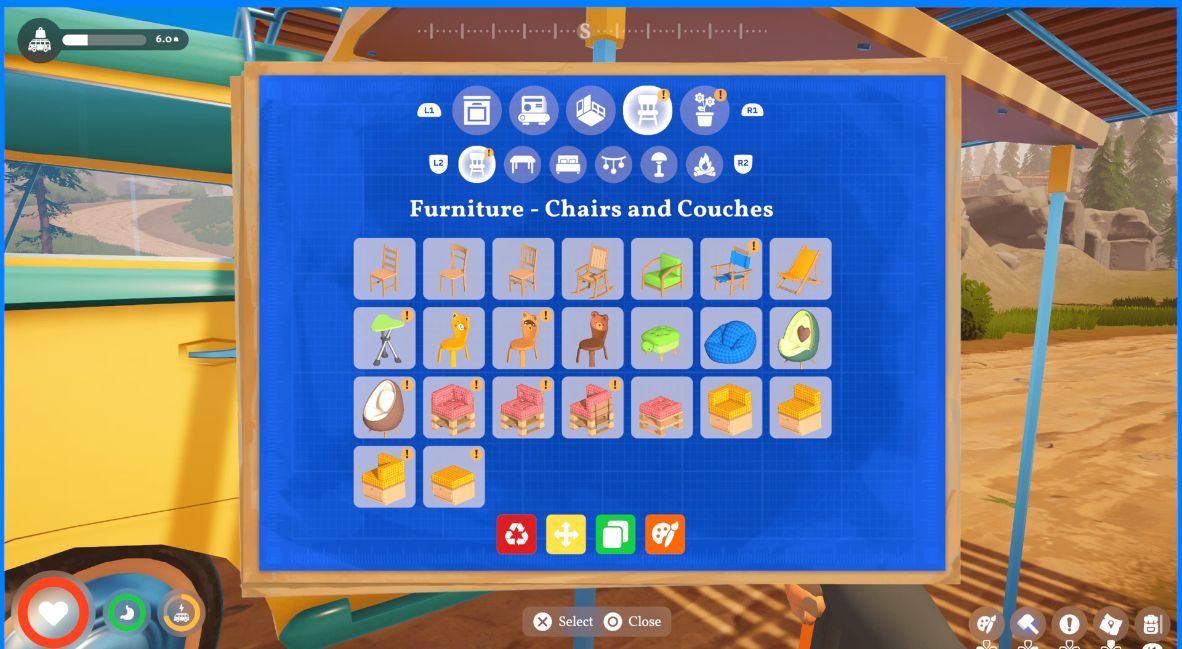
Watching the van go from an empty box to something that actually feels like yours is what kept me tinkering long after I had everything I needed. Every upgrade connects back to blueprints you’ve hunted down at radio towers across the map, so nothing shows up for free.
Energy management complicates things in a good way. The van runs on electricity, so power is always on your mind. Early on, you’re burning wood and plant fibers in a bio-burner to keep the wheels turning. Eventually, you unlock solar panels and small wind turbines, and the constant scramble for fuel starts to ease up. You stop surviving and start actually living off the grid.
It feels like busywork at times, especially when you’re managing hunger, health, and battery charge all at once. But there’s a purpose baked into the tedium. Outbound wants you to slow down, to plan your next stretch of road instead of blasting through it.
The game crafts a warm ambiance that helps even in the slower moments.
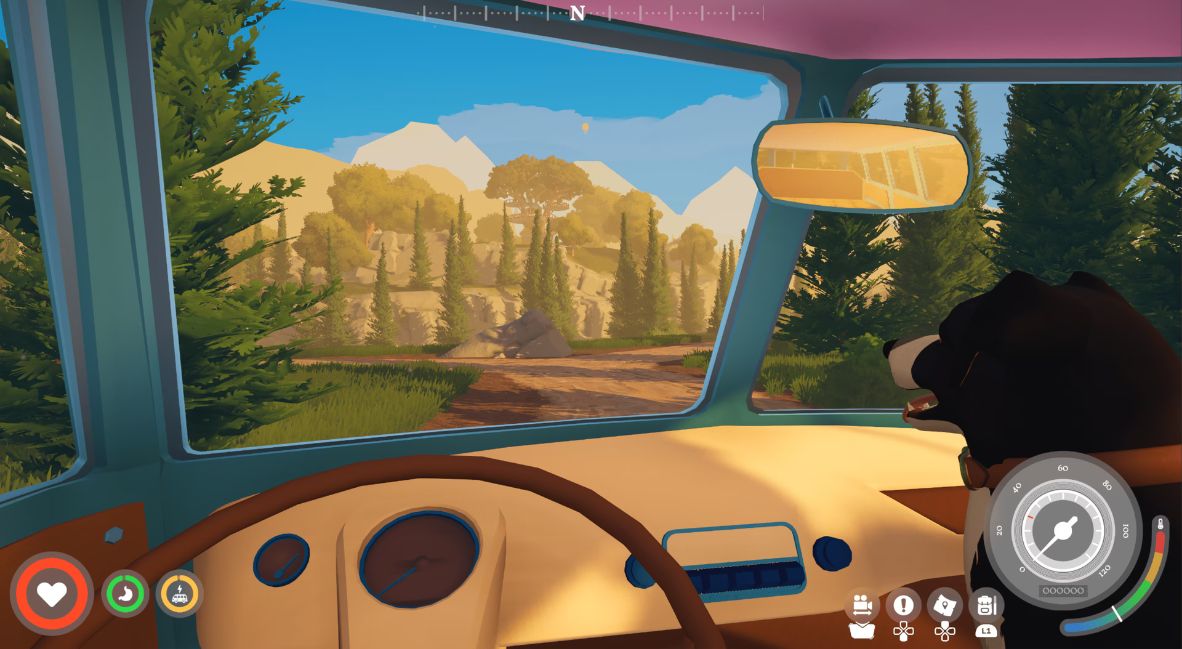
Outbound looks phenomenal from start to finish. The art direction has a soft, hand-placed quality. Every winding trail, every cluster of trees, feels like it was positioned by someone who cared about where your eyes would land when you make your way into a new area.
The soundtrack does the same thing, warm ambient tones that settle in without demanding your attention. I lost track of time more than once, just pulling over to take in the scenery. For a game built around the idea of slowing down and soaking things in, that says a lot.
Actually getting around that world, though, can get frustrating. The van moves slowly, and there’s no meaningful way to speed up or fast-travel between landmarks. Early on, that pacing fits. You’re still discovering new biomes, still figuring out which materials you need and where to find them. After several hours, though, the crawl starts to wear.
Don’t expect a strong narrative pull. Instead, the charm of Outbound is unexpected discoveries.
Some objectives send you back across the map hunting for specific materials, and at a certain point, those return trips feel like chores. Outbound isn’t trying to be a racing game, and I get that. But even a handful of fast-travel stations would have kept the late-game from dragging the way it does.
If you’re coming to Outbound expecting a narrative to pull you forward, temper your expectations. The “story” is little more than a loose framework: you’ve left society behind, you’re visiting landmarks, so go explore. It’s thin, and it knows it’s thin. But that’s not really what’s driving the experience. The actual draw is what you stumble into along the way. You crest a hill and spot a lighthouse on the coast. You find a kayak club tucked between two waterfalls, or a windmill that turns flower petals into paint for your furniture.
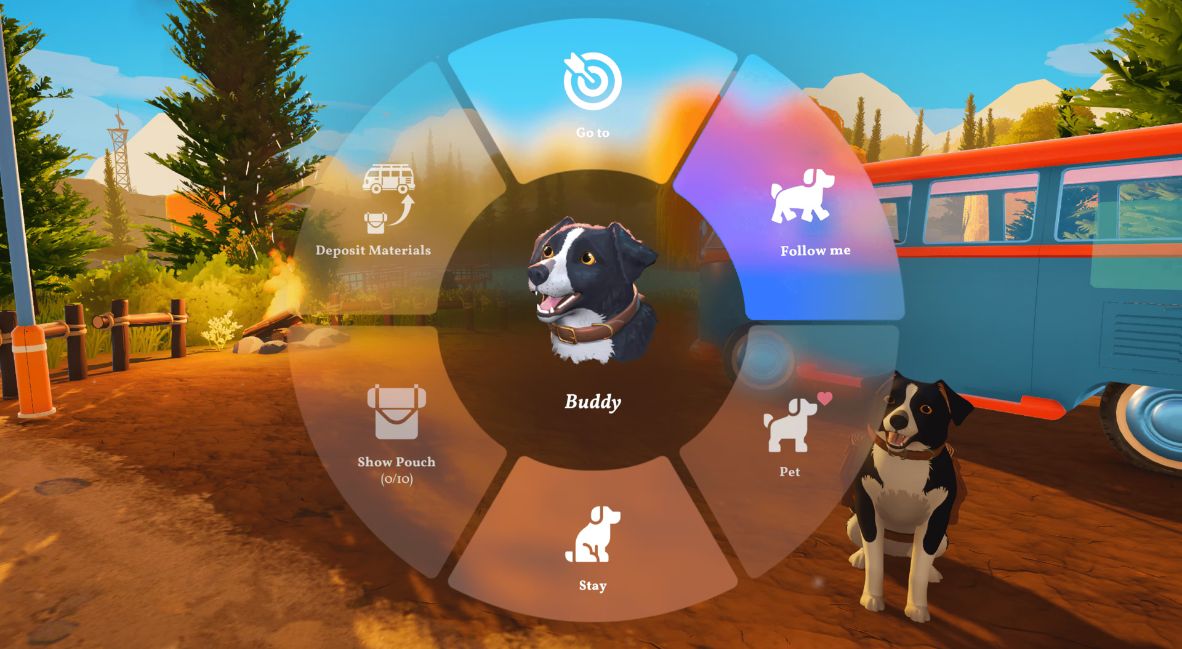
Outbound lives and dies on those discoveries, and they show up often enough to keep the open road feeling worthwhile even when the story gives you nothing to grab onto. Oh, and you can adopt a dog. It rides in the van with you, follows you around on foot, and yes, you can pet it. Non-negotiable highlight of the entire game.
In just their second game, Square Glade Games has built a world worth getting lost in.
On PS5, Outbound runs clean. I didn’t encounter any meaningful bugs during my time with it. There were occasional visual hiccups, a texture loading in late or a brief stutter, but nothing that actually mattered. For a small indie studio’s second game (their debut, Above Snakes, came out back in 2022), it’s a clean showing.
Outbound also supports online co-op for up to four players, though I played through it solo. Honestly, this feels like a game that was made to be shared. Splitting up resource runs with a friend, building out the van together, just cruising through the countryside with someone riding shotgun. I can see co-op turning a good experience into a great one, even if I can’t speak to how it actually runs.
Outbound is a road trip that rewards patience over speed. Square Glade Games has built a world worth getting lost in, with a van customization system that keeps you tinkering and a presentation that always makes the next horizon look worth chasing. The pacing stumbles when the game asks you to backtrack, and the story is barely there. But if you want to park on a hillside, crack open the canopy, and just exist in a beautiful place for a while, this is your game.
Outbound is available now on PS5, Xbox Series X|S, and PC. It is also available day one on Xbox Game Pass. Nintendo Switch and Nintendo Switch 2 versions launch May 14.
Outbound (2026)
-
Rating - 7/107/10
TL;DR
Outbound is a road trip that rewards patience over speed. Square Glade Games has built a world worth getting lost in, with a van customization system that keeps you tinkering and a presentation that always makes the next horizon look worth chasing.