

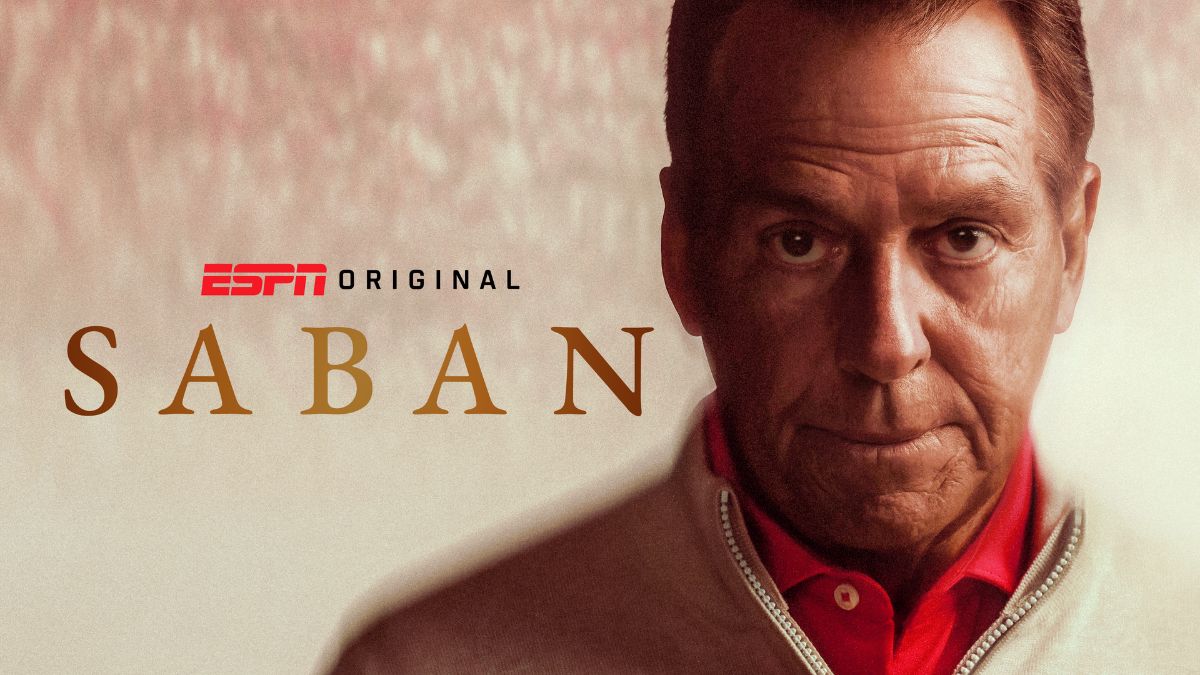
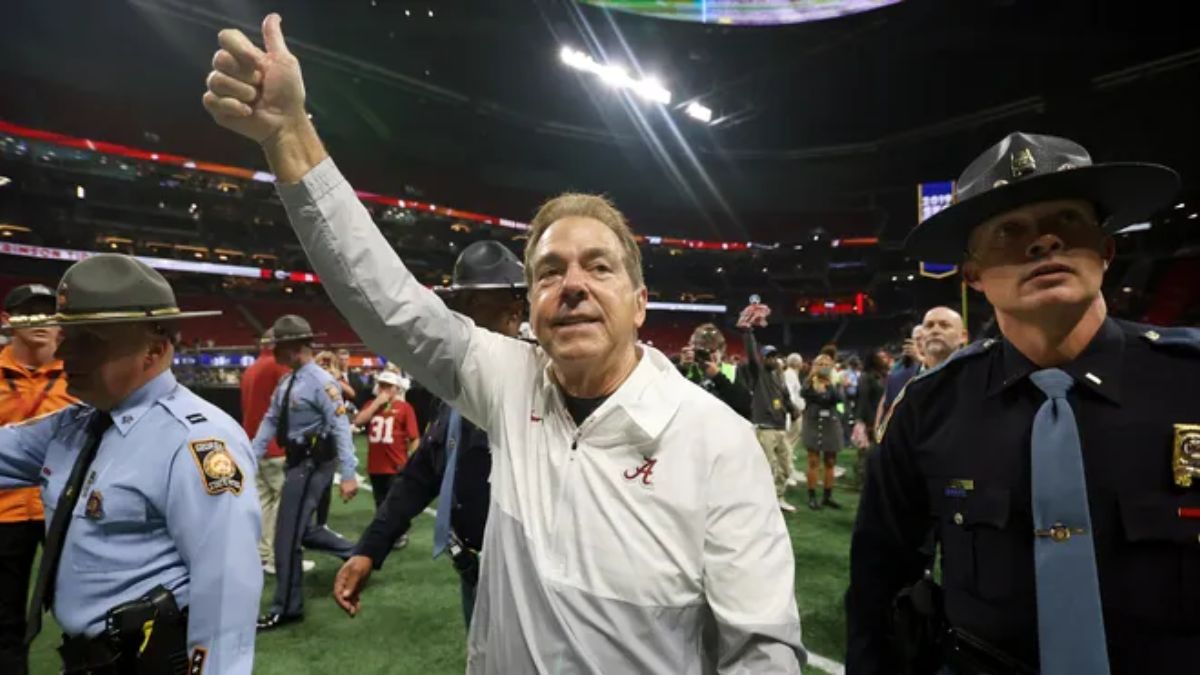
ESPN’s Saban is a six-episode documentary chronicling the legendary life and career of the eponymous former Alabama football coach Nick Saban. Inducted into the College Football Hall of Fame in 2025, after his 2024 retirement, the Saban documentary explores what it took to become widely regarded as the greatest college football coach of all time.
When you look at Nick Saban’s career just a s coach, you’ll see that some of the biggest names in football were on his teams. Bryce Young, Jalen Hurts, Derrick Henry, and DeVonta Smith just to name a few. And while these players have shaped and are still shaping the NFL today, even Nick Saban’s impact on his coordinators and assistant coaches has shaped the college football landscape from Kirby Smart, Steve Sarkisian, and Mario Cristobal to Lane Kiffin and Curt Cignetti. His tutelage is dominating the sport no matter how you look at it. But why?
Directed by Russell Dinallo, the Nick Saban documentary series makes it very clear from the beginning that its subject is an icon with a legendary career. Still, the career, for as much as it’s in focus, comes second to showing audiences the man behind the playcalling and the process. The coach’s personal life is laid out in front of the audience, from his relationship with his father to his 60-plus-year-long marriage to Terry Saban, better known as Miss Terry.
Saban is a look at a man, as much as his legend.
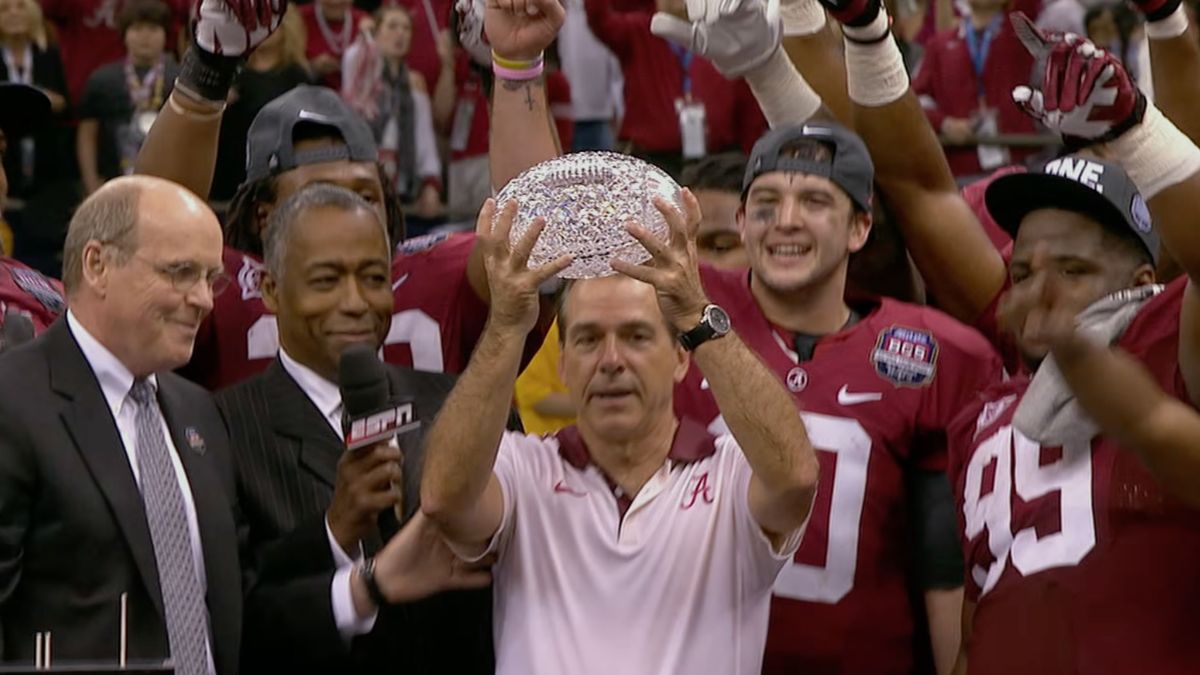
The documentary series may crystallize Saban’s legacy for the future, but it doesn’t do so by mythologizing the man. Instead, the Saban documentary series is more concerned with showing the audience the man we didn’t see on the sideline of the football field. Known for his angry outbursts on the sideline even when up by three scores, the series goes beneath the professional and passionate layers of his personality to show the audience someone more vulnerable than you’d expect.
Saban starts the timeline with Nick Saban’s own college career before going into his time on the Cleveland Browns as a coordinator under friend Bill Belichick, then his time at Michigan State, Louisiana State University (LSU), the Miami Dolphins, and then finally, his longest tenure as a coach for the Alabama Crimson Tide (Bama). But the approach to telling this story isn’t focused on a true linear story.
Instead, the ESPN series is more focused on tackling larger concepts behind Nick Saban’s coaching philosophy and personal life. This is a story about milestones in Saban’s growth as a leader and mentor as much as it’s chronicling his success. In doing so, the series can be sometimes hard to follow along with, but ultimately the approach is a more human painting of Coach Saban than you’d expect from most 30 For 30 ESPN documentaries.
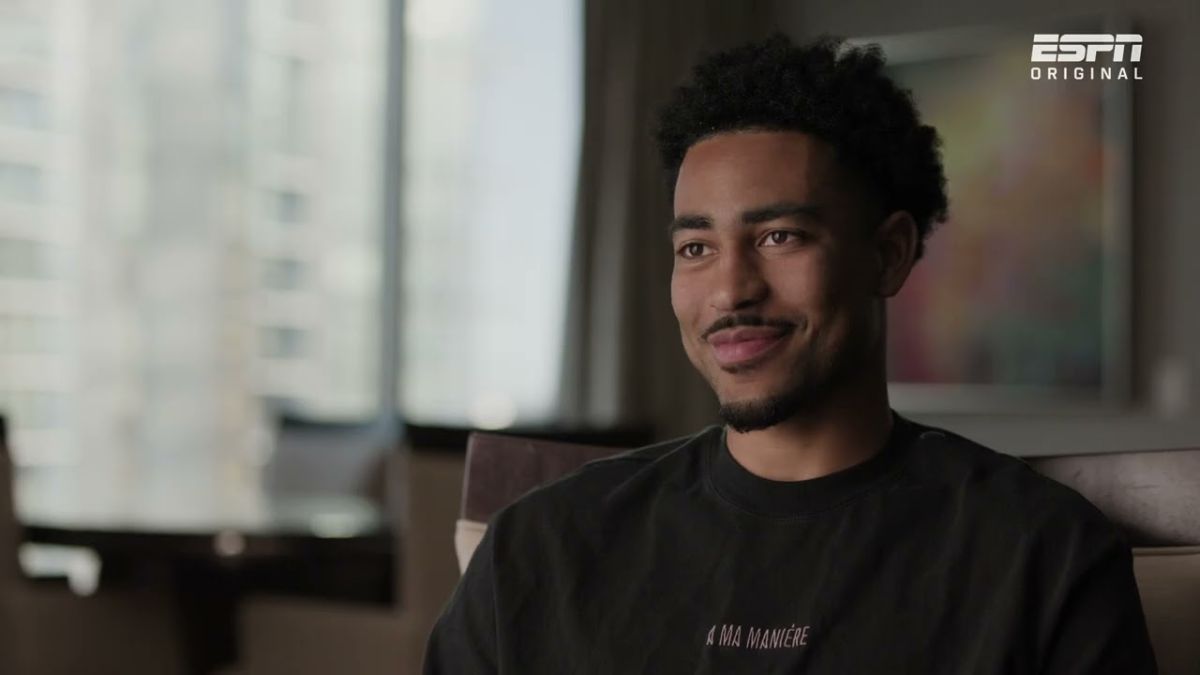
The crux of accomplishing this across the Nick Saban documentary series is focusing the history on something other than just the wins. Instead of looking at Coach Saban’s life at just the high points, the storytelling involved is more concerned with recounting the choices that were made in those big moments.
For the 2018 SEC Conference Title Game against Georgia, the documentary looks at one of the toughest decisions that Coach Saban had to make at Bama: benching his starting QB. The series isn’t focused on the call, so much as the ripples it causes. It’s looking at something deeper: his players.
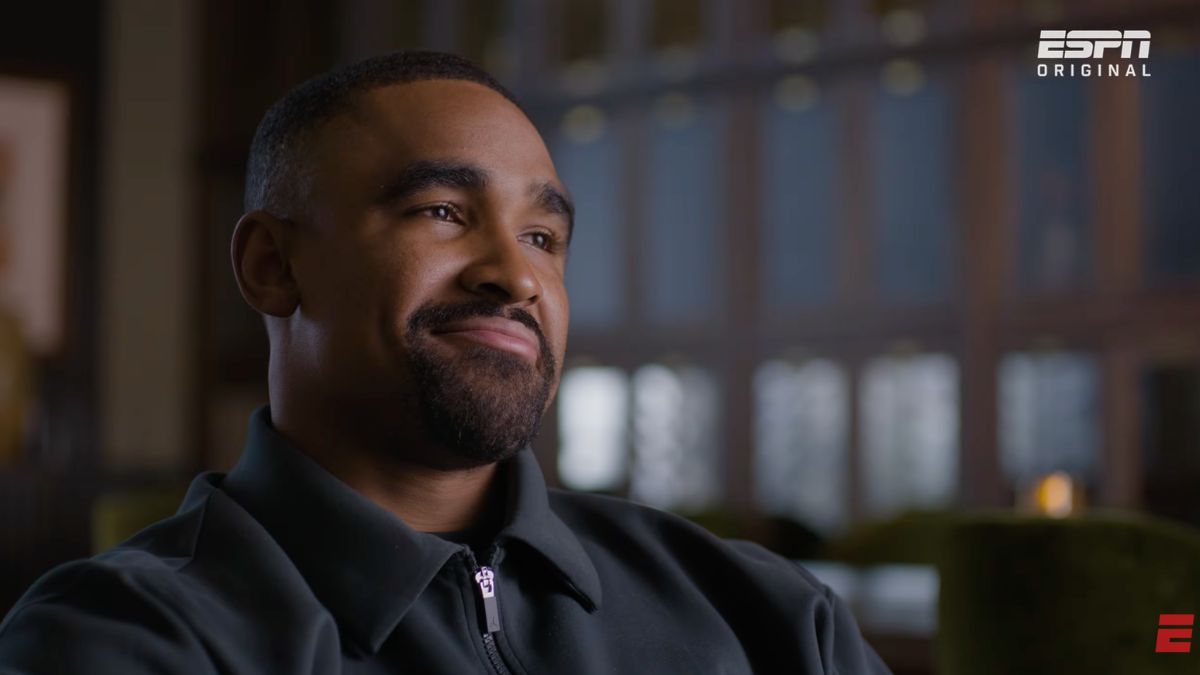
The choice to bench Jalen Hurts for Tua Tagovailoa is well known, but with never-before-seen locker room footage, the audience gets to see inside that moment. While Hurts may have two Super Bowl rings now, in the moment, the future was beyond uncertain.
The Nick Saban documentary focuses on choices and big moments thoughout the coach’s career.
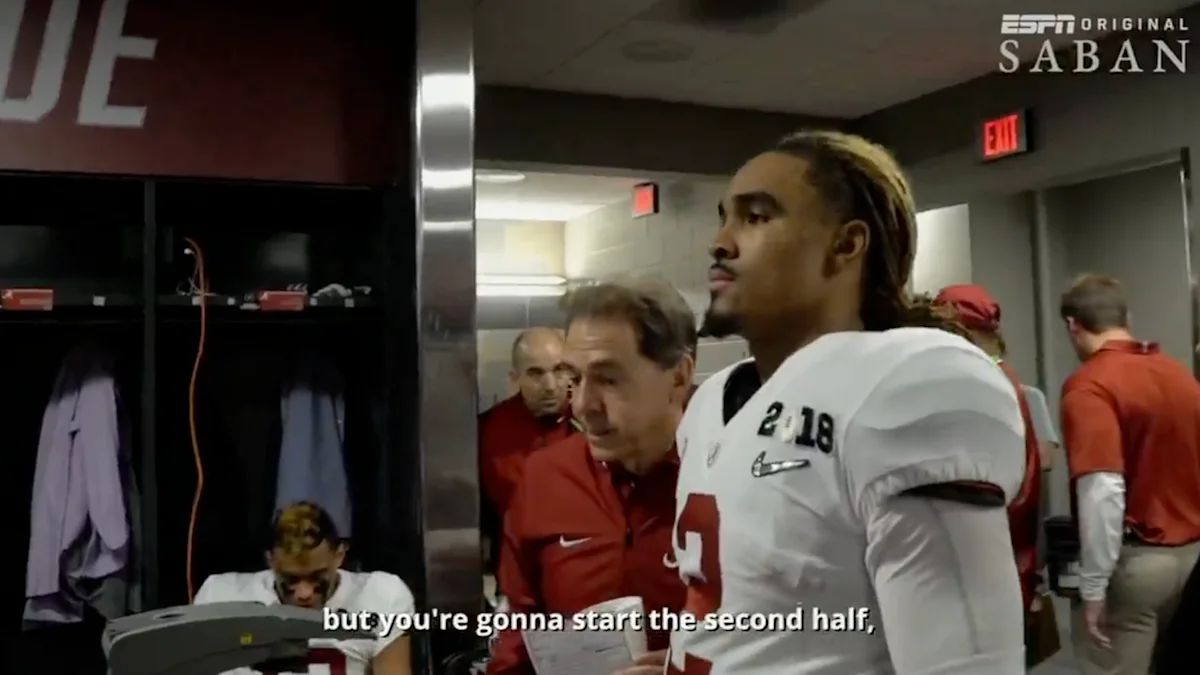
It was a difficult decision where Coach Saban needed to put the team above one person’s feelings. And it also cemented Hurts as a team player in his response to the media after the moment and his choice to sit behind Tagavoloa instead of transferring schools.
The moment showcased just how much Saban thought about the decisions that he made, with the commentary adding that benching Hurts had been on the table for some time, and wasn’t a knee-jerk choice to a bad half. But in the fallout, Saban built trust with his players. Saban’s Process, which Saban’s successful players (Hurts included) still credit as something they think about to this day, is front and center here, and so is the fact that it came with compassion.
Instead of transferring like everyone had advised him to, Jalen Hurts stayed at Bama before being drafted by the Philadelphia Eagles. He chose to be QB2, in order to develop as a player, and not just get some playing time. Hurts trusted Saban as a coach, but more importantly trusted his word that he would get better under him.
As an example of how the Nick Saban documentary series looks beyond just good choices in his career, we also see the moments where he made mistakes. One of Saban’s major mistakes in his career can be summed up by just pointing to his time with the Miami Dolphins and their choice to take Dante Culpepper over Drew Brees.
But what the documentary reveals is that it was never Saban’s choice to take Culpepper; it was the GM’s. And it’s confirmed by Brees, effectively throwing the Dolphins organization under the bus. We see the regret he feels for his time with the Miami Dolphins, a place he left after being unable to pull things together (and for more money). With Dan Le Betard’s commentary, we also see the anger from the famed sports caster and Dolphins fan, but the understanding that Saban is just one of a long line of coaches over the last 25 years who left, absolving Saban of some guilt.
Additionally, while we get to see just how impactful Saban was for LSU and its return to being a powerhouse, we also hear from his former players at LSU who are still holding a grudge for him leaving them to go to the NFL. And more importantly, leaving before the rebuild was over only to come back to collegiate football at one of the biggest competitions in the SEC.
And finally, we hear from coaches he didn’t work well with, like Lane Kiffin. And even if the negative feelings could have gotten even more of a spotlight, their inclusion at all makes Saban stand out.
Nick Saban’s investment in his players is clear through the series’ interview segments.
That said, even in his mistakes, it’s clear just how much his coaching was focused on more than just making winners; he was focused on trying to make good men. The Nick Saban documentary makes sure that the audience understands the sense of discipline that Saban instilled in his players. Outside of that, it was also clear that for the coach, winning was a byproduct of a Process that focused on fundamentals, respect, compassion, and discipline.
As the series details Coach Saban’s rebuild of each program (in different detail given the length of time he spent at the school), the audience learns that the coach respected the advice from sports psychologists at Michigan State, and still sought consultation while he was at different schools. We learn that he valued educational facilities as much as practice ones, a focus of his when literally rebuilding LSU’s football facilities.
That is even more clear when the audience makes it to the title cards at the end of Saban and see the statistics that ESPN highlighted. Sure, we see the number of wins to losses for his time at Bama, and his stat lines for how many NFL draft picks his program developed and how many were in the first round. Then, we see the real impact driver beyond the field: we see how many of his players graduated from Bama, and how he maintained one of the highest graduation rates in college football.
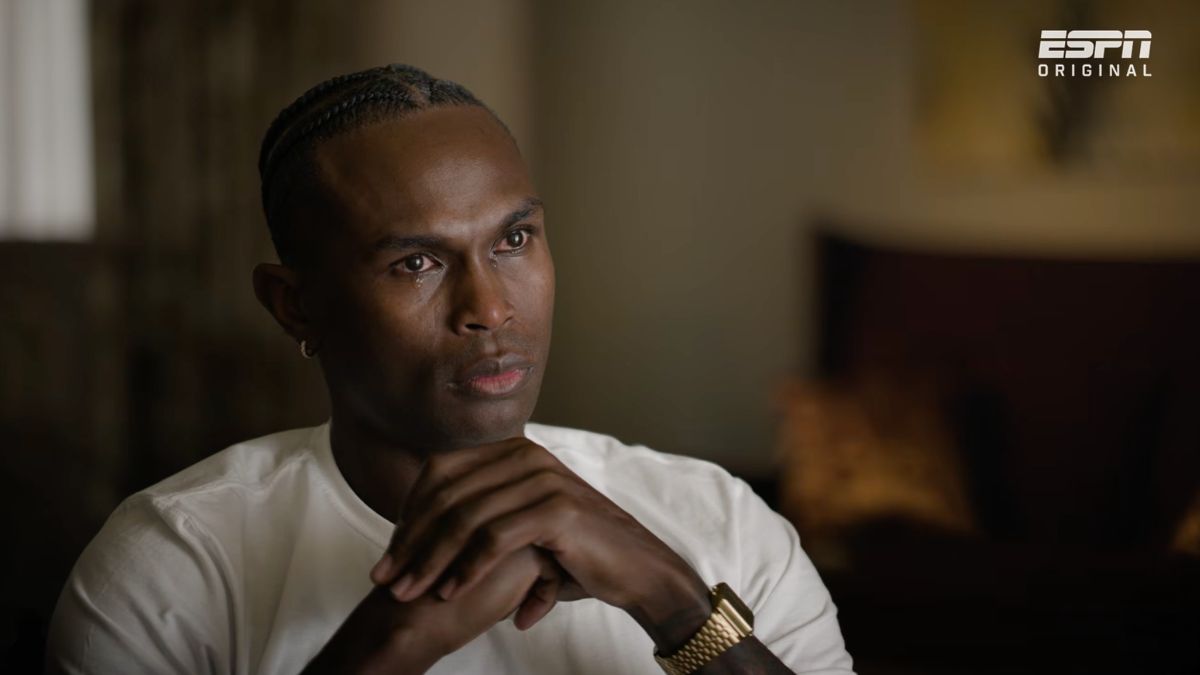
The Nick Saban documentary series isn’t trying to be a Wikipedia page; it’s instead trying to be a history of a man and a program, and the enduring impact of his time coaching. Impact is what matters in Saban. The conversations we see from former players are emotional at times, with players like Julio Jones sharing his teary-eyed gratitude to Coach Saban as a coach, but also as a father.
Not only that, but as much as NIL became untenable for Coach Saban, it seemed less about paying players and more about being able to manage his program in its entirety, as he has done. And that was clear thanks to how much the series showcased Coach Saban and Miss Terry investing in the players and hoping to build a future for them.
We see it in how much they invested in the team well after the recruiting was done. And more importantly, the series also takes time to show the audience how he supported students while they were in school, like he did marching with them during the Black Lives Matter protests his team led on campus.
Saban does dodge some thornier questions about NIL and his retirement, but what does come through is how much climbing a ladder meant to him. You can read it in his career trajectory, but you can also hear it in his voice when he details what he was feeling when he kept winning championships. “Is this it?”
Nick Saban and Miss Terry share their romance and partnership with the audience to great effect.
When Coach Saban discusses his retirement, it’s clear that he was tired, but that he had also given the sport and Bama all that he had. Miss Terry explains as much as well. But there was a tinge of sadness to Nick Saban in the last episode of the documentary that goes into the end of his career. But as much as there is sadness, you can also see that there was no regret, just a man whose time was over, and on his own terms.
Still, Nick Saban didn’t make the choice to retire on his own; he did it with Miss Terry. What is really striking about Nick Saban is how sure of himself he is, without ever veering into bigheadedness.
It’s an endearing quality, but more importantly, the way he shares credit with his wife, Miss Terry, shows how Coach Saban views his life. A man with his unprecedented success could be arrogant to a fault. He would be within his right to only ever use “I” when speaking about his accomplishments. But he doesn’t. It’s always “we.”

In fact, Saban, in no uncertain terms, credits his success to his wife, and so do the people around him. It isn’t just that the renowned coach knew the work that his wife did; it’s that the Nick Saban documentary series spends much of an early episode explaining just how much she did for her husband’s career, but also for Bama football. She knew all of the recruits just like he did; she understands the game, as he does, and she is a grounding force in his life.
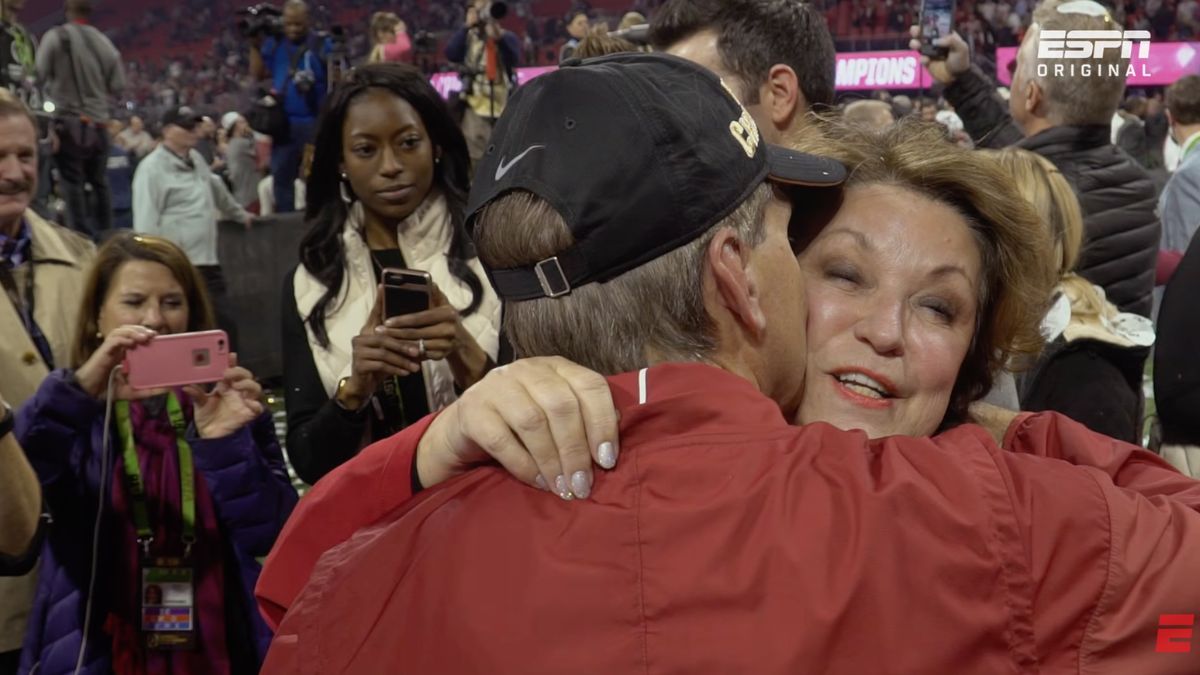
Miss Terry and Coach Saban’s love story is one for the ages and shines on screen. They’re funny and even more so, their charm is the same. Funny, direct, and both deeply in love with each other, it’s amazing how much of the documentary defines Saban by his wife, but not the other way around. As much as Miss Terry is spoken about in relation to her husband, she’s also referred to in her own right.
The Saban documentary series shows how often Nick reaches for Terry in every moment of celebration. They’re a couple that supports and loves each other, but more importantly, we see just how much of the coach’s success was only possible because of the woman, not standing behind him, but at his side.
Saban is a documentary series that may not have a lot of bite, but it does have immense depth.

All in all, there is a softness to the Nick Saban documentary series that is immediately endearing. For all his success, sideline outbursts, and ass-chewing, something more compassionate about the famed coach is almost indescribable. Add in how much his wife means to him, and how much credit she gets, and you get the side of the coach I didn’t think we’d see.
Saban is a film about a man, his myth, and his impact. It’s a documentary about the greatest college football coach of all time, his love, his life, and the compassion and drive that it takes to not just win championships, but to change lives.
What floored me about Saban wasn’t just about football. It was about life and, more importantly, it’s a time capsule of an era of football that we may never see again with today’s transfer portal. Legendary is how we all describe the former Bama Head Coach, and the series wastes no time making sure that we don’t forget the man underneath it all.
All six episodes of Saban are streaming now, exclusively on ESPN (available in the app and via Hulu and Disney+).
Saban
-
Rating - 9/109/10
TL;DR
Saban is a film about a man, his myth, and his impact. It’s a documentary about the greatest college football coach of all time, his love, his life, and the compassion and drive that it takes to not just win championships, but to change lives.