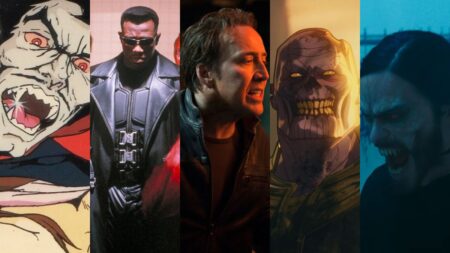

Marvel’s new Midnight Universe offers horror-centric twists on classic Marvel superheroes, but it’s far from the publisher’s first foray into the genre. Atlas-era series like Tales to Astonish and Strange Tales—now primarily known for introducing superheroes like Thor and Doctor Strange—originally began as ’50s horror anthologies before the creation of the anti-horror Comics Code Authority (CCA) drove the publisher to pivot to other genres, minus occasional forays in the less-moderated magazine format.
Thankfully, DC attempted to make horror work throughout the late ’50s and ’60s in their series House of Secrets and House of Mystery. This meant frequent scuffles between DC and the CCA over content, culminating in one particularly stupid 1970 debate when the CCA attempted to nix the inclusion of the term “Wolfman” despite it being in reference to the actual name of writer Marv Wolfman. But these fights seemed to move the needle, both in the CCA’s approach to horror and in how DC handled crediting its writers.
Many of Marvel’s greatest horror icons were born from the 1972 Monsters Unleashed anthology.
In January of 1971, the CCA announced a series of reforms that included the allowance of previously forbidden supernatural creatures “…when handled in the classic tradition such as Frankenstein, Dracula, and other high-caliber literary works…” This was a huge change, and Marvel immediately jumped at the opportunity to get back into the horror game. Spider-Man met the “living vampire” Morbius in October of that year.
1972 saw the introductions of series starring Ghost Rider, Werewolf by Night, and Marvel’s version of Dracula. In 1973, they continued with a Frankenstein series, the Monsters Unleashed anthology, and new series for older characters Man-Thing and the zombie Simon Garth. These series also saw the initial introduction of supporting characters like Blade, Moon Knight, Jennifer Hale, and Daimon Hellstrom.
Most of these characters were able to fit nicely alongside the superhero side of Marvel once the initial boom in enthusiasm for horror died down to normal levels. But Dracula and Frankenstein had to balance not only the expectations of comic books but the expectations of 75+ years of literary history. For both characters, that meant passing the events of Bram Stoker and Mary Shelley’s novels off as historical documents. It also meant an utterly unique tone.
Marvel’s Frankenstein started as an adaptation, but eventually would meet Spider-Man.
For Dracula, that was a jumping-off point. His series The Tomb of Dracula moved the character to the modern day, where he faced off against vampire hunters Quincy Harker (son of the novel’s Jonathan and Mina), Rachel van Helsing (granddaughter of Abraham van Helsing), and Frank Drake (the last surviving descendant of the child Dracula had before becoming immortal).
This made it easy for the series to maintain the vibe of gothic horror while still crossing paths with Doctor Strange and the X-Men. And it was a huge success, spawning other Dracula series like Giant-Size Dracula and Dracula Lives!
Frankenstein opted for a more roundabout approach, adapting Shelley’s novel in its original time period in the early issues of The Monster of Frankenstein. Stories in the follow-up series The Frankenstein Monster and then appearances in Monsters Unleashed would then move the Creature forward in time, first to the turn of the twentieth century and then to the modern day. He would then meet Spider-Man, but would mostly end up interacting with Dracula and Werewolf by Night.
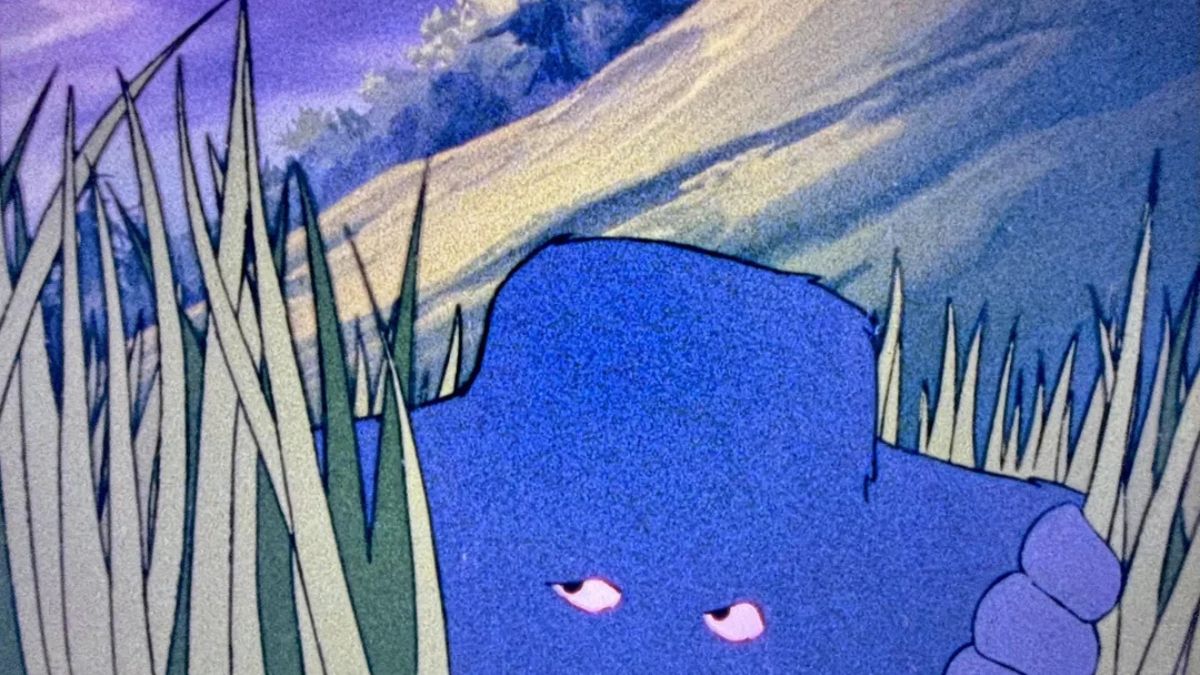
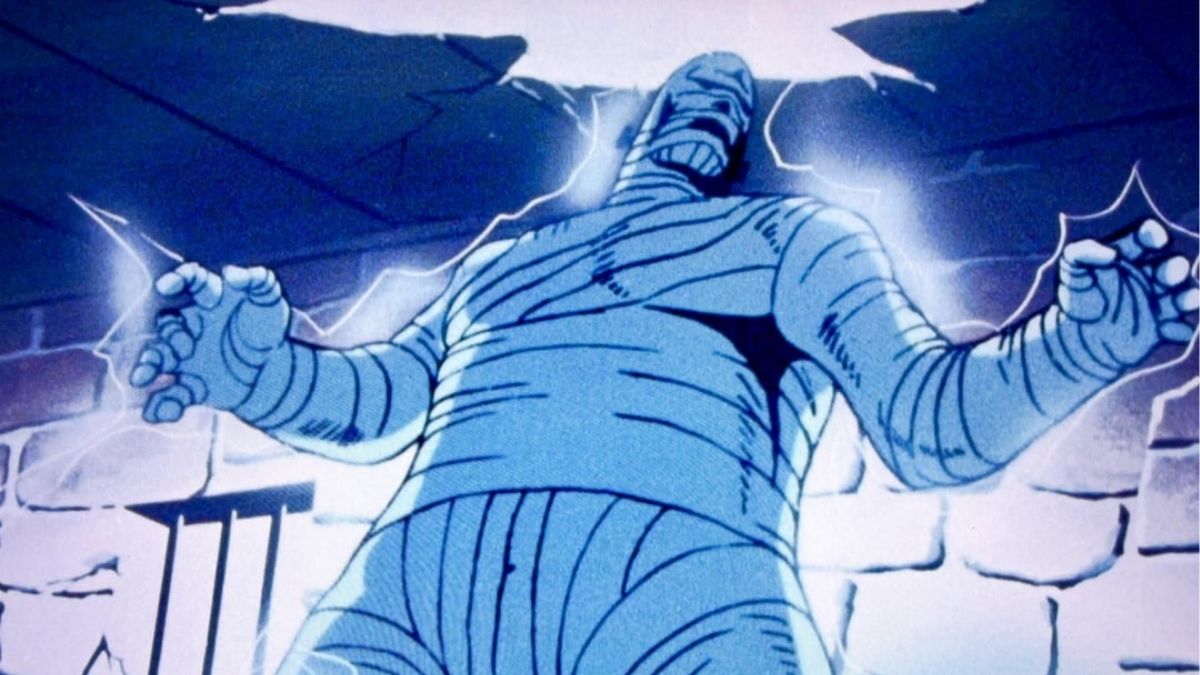
Toei’s Dracula and Frankenstein were unlike any Marvel adaptations at the time, or even still.
A few years later, these series were beginning to wind down, and Marvel was experiencing its first real television success in the form of the 1977 live-action Hulk and Spider-Man series. That meant attempts at other series, most notably in television movies for Captain America and Doctor Strange that never actually went anywhere. But it also meant international licensing. Marvel signed a deal giving Toei the right to adapt Marvel properties in Japan, leading to the infamous 1978 tokusatsu series where Spider-Man rides a motorcycle and pilots a mech.
Spider-Man ran for 41 episodes and a theatrical film, which was enough to make Toei want more. An attempt at a Captain America adaptation became the unrelated series Super Flying J. And then Toei turned to horror, adapting The Tomb of Dracula and The Monster of Frankenstein into the anime television movies Yami No Teiō: Kyūketsuki Dracula and Kyoufu Densetsu Kaiki! Frankenstein in 1980 and 1981, respectively.
These films were unlike any Marvel adaptation produced up to this point, and still unlike much of what has been made today. First, the content standards for television movies in Japan were significantly different from those of the United States. This means that while Reb Brown’s Captain America found himself chasing down criminals stealing old people’s Social Security checks, Dracula and Frankenstein weren’t shying away from gore, violence, suicide, and child death.
Second, being produced in a country with such a small Christian population meant less concern about how audiences respond to the Christian themes of the original novels. This is not necessarily done in a sacrilegious way; it’s just done with far more nuance than is often seen in the West, where Christianity’s wider presence in society typically leads art to take a more veritably pro- or anti-Christian stance.
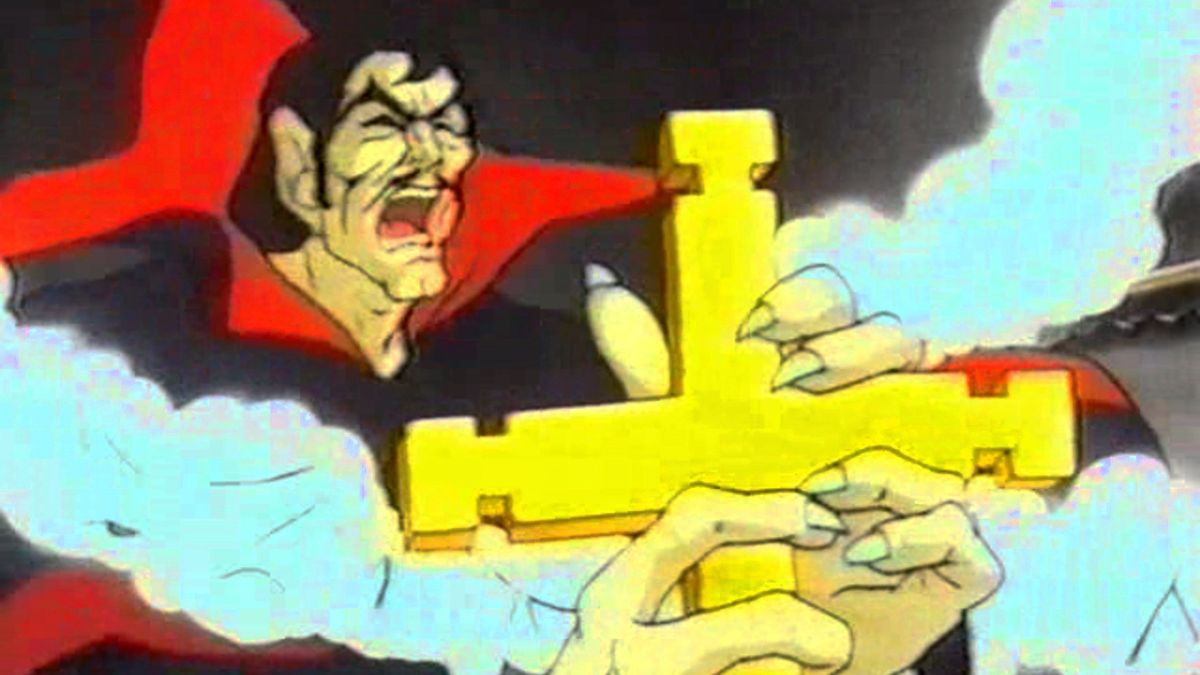
In Yami No Teiō: Kyūketsuki Dracula, a grieving Dracula decides that a just God cannot possibly exist, and by losing his faith overcomes his weakness to Christian iconography. In Kyoufu Densetsu Kaiki! Frankenstein, the Creature takes refuge from a mob in a chapel and has a tender moment when he notices similarities between his wounds and those portrayed in a statue of the crucifixion.
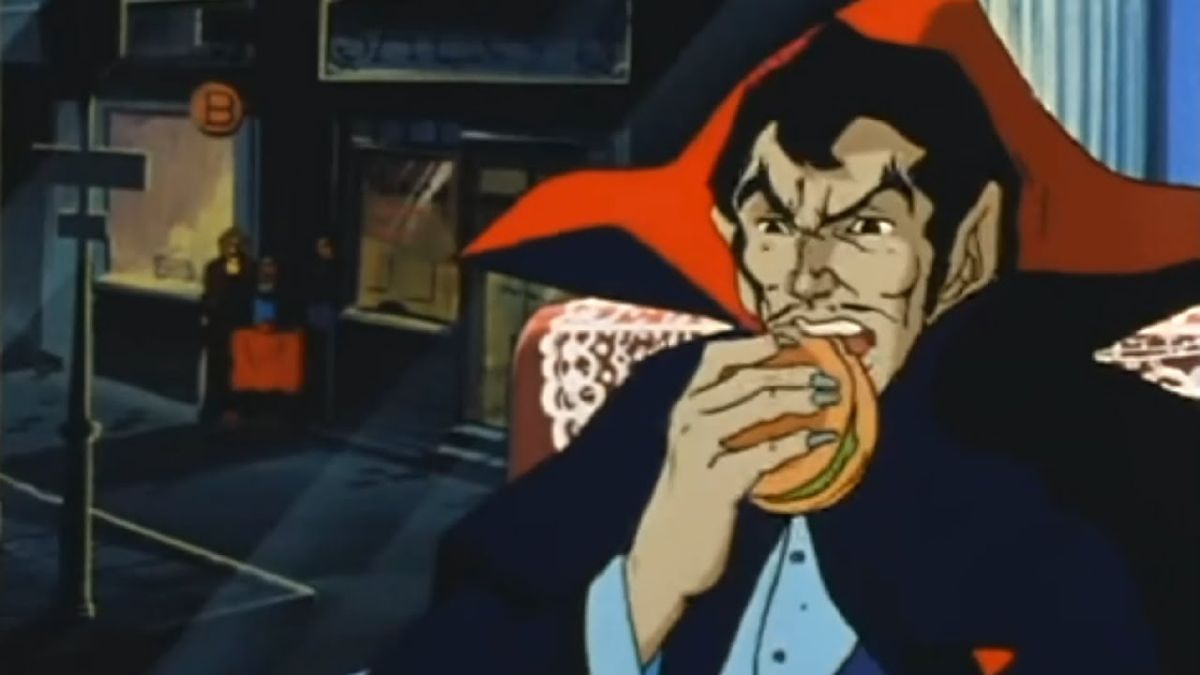
Yami No Teiō: Kyūketsuki Dracula acts as a straightforward adaptation of Marvel’s The Tomb of Dracula comic, with Quincy Harker (Yasuo Hisamatsu), Rachel van Helsing (Mami Koyama), and Frank Drake (Keiichi Noda) pursuing Dracula (Kenji Utsumi) in modern-day Boston. But the bulk of the story is centered on Dracula himself, who is attempting to get revenge on Satan (Hidekatsu Shibata) for having turned him into a vampire in the first place.
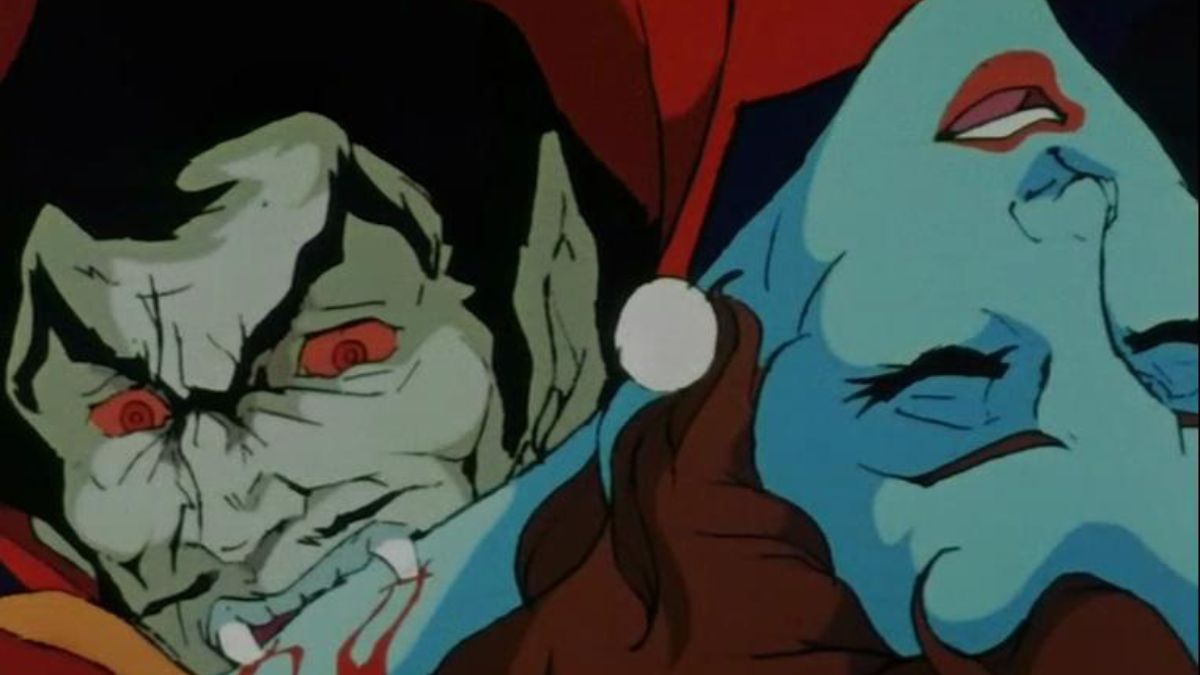
Yami No Teiō: Kyūketsuki Dracula showcases a one-of-a-kind take on Dracula.
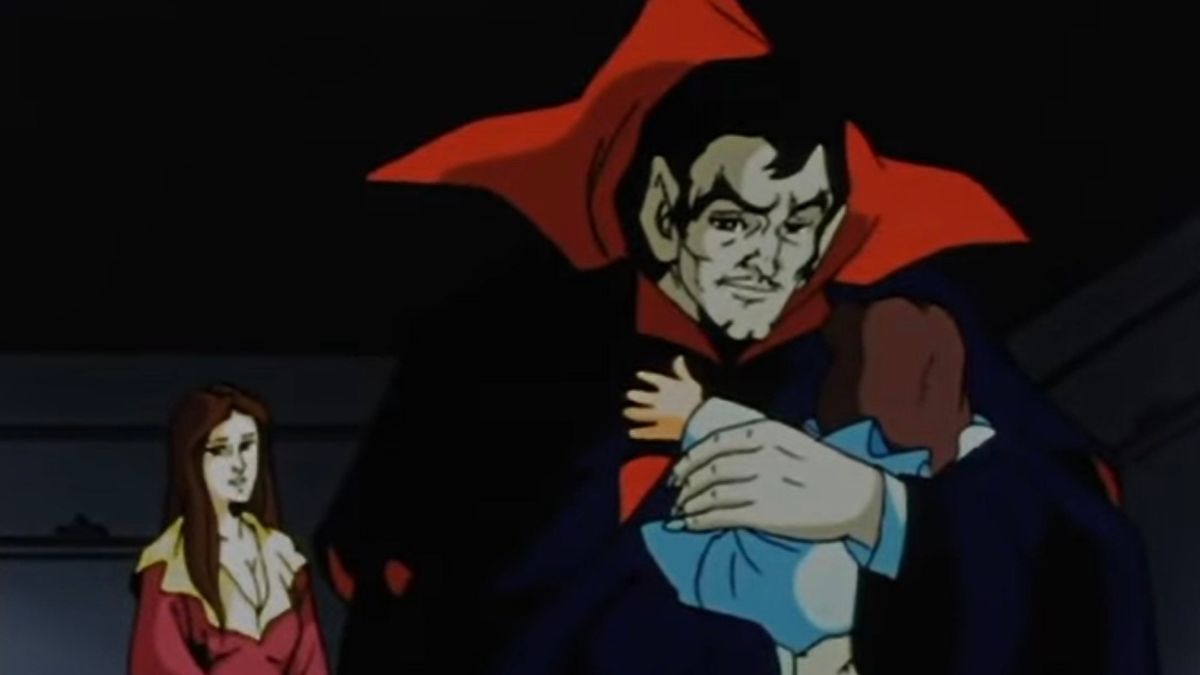
He does this by infiltrating a cultic ritual and kidnapping Satanic bride Domini (Hiroko Suzuki) before her marriage to Satan can be completed. Satan’s response is an intricate retaliation that involves waiting for Dracula and Domini to fall in love and have a mortal child, then tricking one of his acolytes into murdering that child so it can be resurrected as a vampire-slaying adult superhero that can be pitted against his father.
These plot points are all taken straight from the Marvel comics, because comics are often very weird. It also clearly bites off more than it can chew when it comes to how much comic book can be squished into ninety minutes. But the animation’s horror atmosphere does wonders when paired with Seiji Yokoyama‘s score, and it showcases a one-of-a-kind take on Dracula that shows just how fun horror comics can be. At the very least, it’s a big step up over the character’s appearance as the big bad in the utterly forgettable Blade: Trinity.
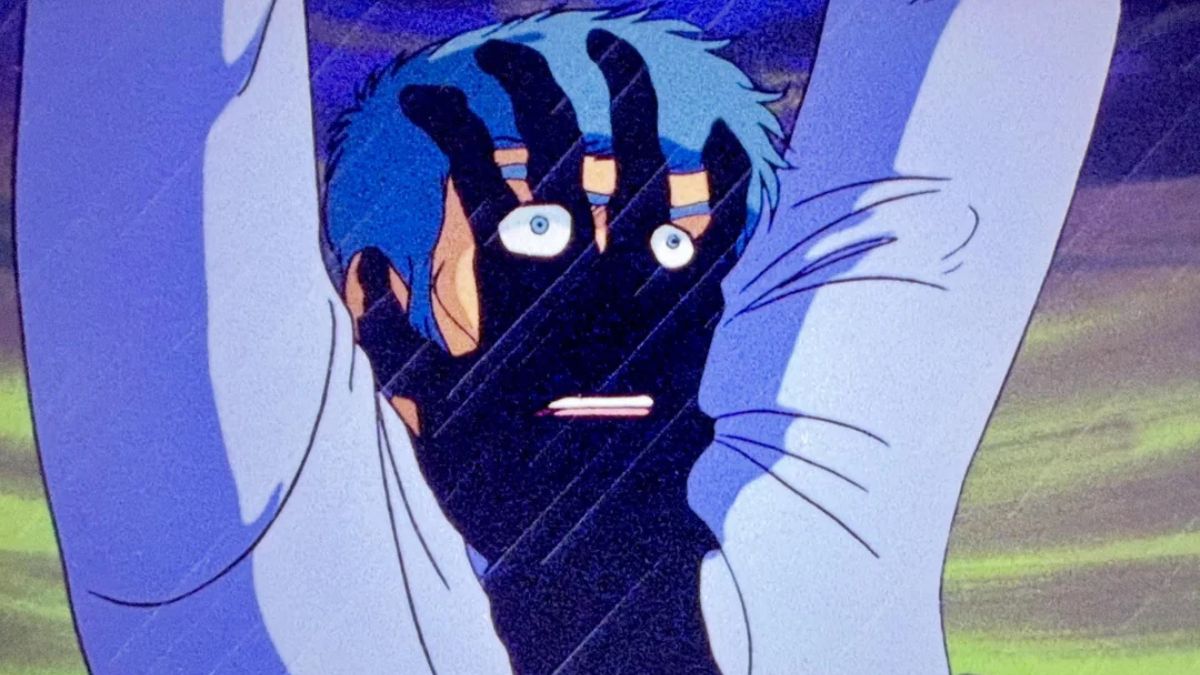
Kyoufu Densetsu Kaiki! Frankenstein takes a different approach entirely, instead sticking closer to the plot of the original novel. The vocal and intelligent Creature seen in the novel and when Marvel adapted the work in The Monster of Frankenstein is now closer to the mute, somber characterization that would define him in Monsters Unleashed. And there are elements of the Marvel character design, even if that design (like most post-1931 Frankenstein adaptations) was largely based on Boris Karloff anyway.
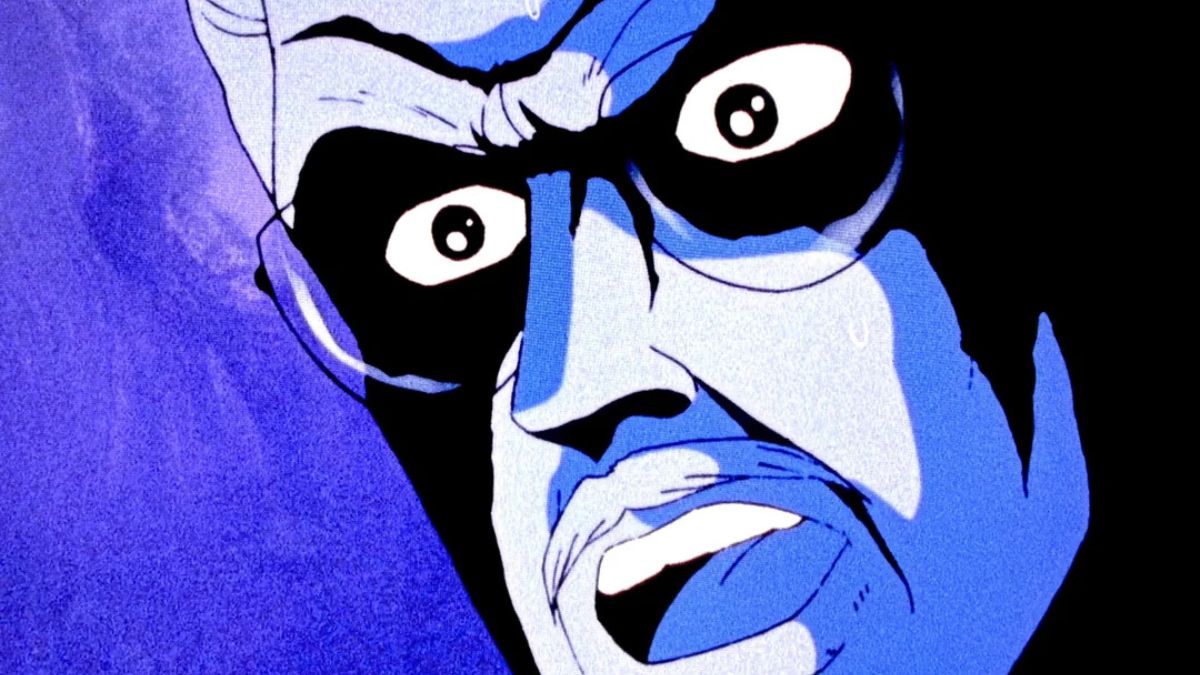
But most of the changes to the novel storyline aren’t from the comics at all. The film discards Victor Frankenstein’s backstory (Nachi Nozawa), opening instead on the experiment that brings his creation (Masao Komatsu) to life. Interestingly, Victor immediately greets the Creature as his son, only to later be overwhelmed by the potential ramifications of the successful reanimation. And that son, named Franken in reference to his continued failed attempts to say “Frankenstein,” is portrayed in an exclusively sympathetic fashion.
The blind man who treats the Creature with kindness is now amalgamated with Victor’s father (Ichiro Nagai), who lives in seclusion after repenting of his own scientific obsession and encourages his son to not repeat his father’s sins. Victor faces threats not from Franken but from an inquisitive police detective (Joji Yanami), the lab assistant he left for dead (Kei Tomiyama), and his own rapid descent into paranoid delusions.
As a result, Kyoufu Densetsu Kaiki! Frankenstein lacks the comic book feel that was obvious in Yami No Teiō: Kyūketsuki Dracula. But it’s also very obviously the stronger of the two films. The contrast between the Creature’s gentle nature and Victor’s obsessive guilt makes for one of the more nuanced takes on the relationship to be set to screen. And the film never strays from its source material in an uninteresting way.
As Marvel recommits to horror, there’s never been a better time to revisit these unique pieces of history.
Both films would eventually find home video releases in the United States under separate distributors, both with English dubs of questionable quality and both with the title card removed to facilitate the then-common practice of distributing dubbed animation under multiple titles.
Harmony Gold would release under Yami No Teiō: Kyūketsuki Dracula as Dracula, The Tomb of Dracula, and Dracula: Sovereign of the Damned. Vestron Video would release Kyoufu Densetsu Kaiki! Frankenstein as Frankenstein, Monster of Frankenstein, and Frankenstein: Legend of Terror.
Both releases would eventually go out of print, and Yami No Teiō: Kyūketsuki Dracula remains officially unavailable to this day. Kyoufu Densetsu Kaiki! Frankenstein only became available again this month, with Deaf Crocodile releasing a Blu-ray under the Legend of Terror subtitle. As Marvel recommits to horror with its new Midnight Universe, there’s never been a better time to revisit these unique pieces of the publisher’s history.