


There is no shortage of excellence in South Korean horror. Think of films like Bong Joon-ho‘s The Host (2006), which tackles environmental issues and follows a working-class family. I Saw the Devil (2010), from Kim Jee-woon, dives into what it means to get revenge and how that changes you as a person. Na Hong-jin’s The Wailing (2016) follows the destruction of community paranoia and xenophobia, while Gonjiam: Haunted Asylum (2018) explores how obsession with achieving fame can be deadly.
Train to Busan (2016) builds on the genre’s excellence, highlighting how to make a zombie horror film into something special with its effective emotional beats and zombie horror action. Directed by Yeon Sang-ho, the film presents horror audiences with a superb zombie film that also hits people in their gooey centers.
The film follows workaholic father Seok-woo (Gong Yoo), who is taking his daughter, Su-an (Kim Su-an), back to his ex-wife by train. What starts as a normal trip becomes a struggle for survival as a mysterious zombie outbreak spreads across South Korea. Rather than stick to themselves, Seok-woo and Su-an join other passengers on the train to try to escape the perils of the outbreak.
The film gives its audience a range of characters to either root for or against. Rather than feature entirely unlikeable characters like Yong-suk (Kim Eui-sung), who leans into the conversations surrounding class as well as selfishness. The decision to provide an array of characters makes it more realistic, as not everyone would bother to play the hero in a zombie outbreak. Nor would they bother helping people when they need it the most.
Train to Busan hits emotional peaks with strong, complex characters.
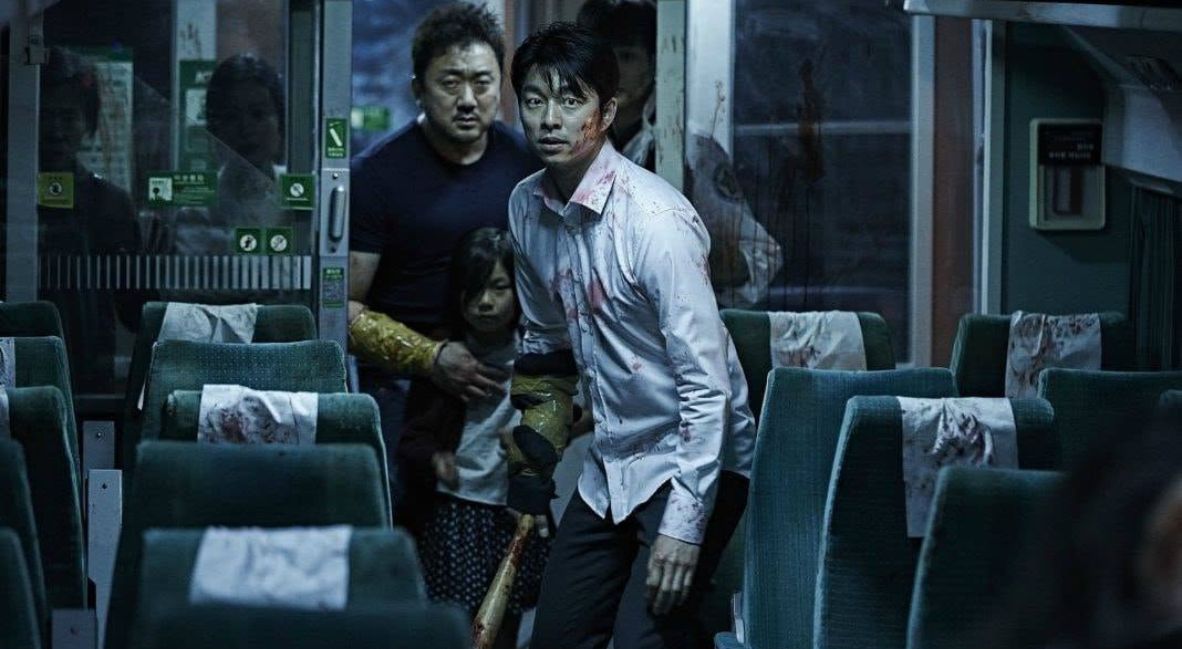
One of the more selfless characters is an unnamed homeless man. Meanwhile, Yong-suk is a wealthy businessman who prioritizes his own preservation throughout the film. Both of these men contribute to the conversation about how people view folks in lower classes and how the upper class can be incredibly selfish in how they operate in the world. This is best exemplified at the start of the film when Seok-woo is at the height of his selfishness.
As the protagonist, Seok-woo is presented as a father who has failed in many respects, and in this harrowing reality of fighting to keep Su-an and himself alive, he confronts the truth about the kind of father he was before. This is a key part of the emotional core of this gory, fast-paced, and stressful zombie horror film. The combination of the pulse-pounding action, as well as the strong and memorable characters, reminds us that not one character is safe.
There are plenty of deaths throughout the course of Train to Busan. You won’t mourn all of them. But when it comes to the main crew, which consists of Seok-woo, Su-an, and the married couple Seong-kyeong (Jung Yi-Mi) and Sang-hwa (Ma Dong-seok), who are anticipating their first child, you care a lot.
The film continues the trend of South Korean horror films denying us easy happy endings.

Stellar performances help build our emotional connections. Gong Yoo delivers a complex protagonist who doesn’t display typical heroic qualities from the start. Meanwhile, Ma Dong-seok provides the audience with an immediately endearing character due to his incredible charisma.
Their performances makes their anticipated fates more devastating. Borrowing from many zombie horror films such as Night of the Living Dead (1968) and 28 Days Later (2002), there is no cookie cutter happy ending for these characters. Train to Busan delivers an unforgettable, tear-inducing finale, stomping on the hearts of movie goers.
Because, spoilers, Seok-woo, after fighting for survival, doesn’t get the chance to find safety alongside his daughter. Instead, he’s bitten by a zombie and has to fight to keep Su-an and Seong-kyeong safe until they reach their destination point in Busan. Before he succumbs to the zombie infection, Seok-woo experiences flashes of the memory of Su-an’s birth and the happiness he felt holding her in his arms. Train to Busan manages to keep this from feeling corny or forced and the results are heartbreaking. about whether
Train to Busan has no shortage of strengths, from Gong Yoo’s performance to the relentless pace.
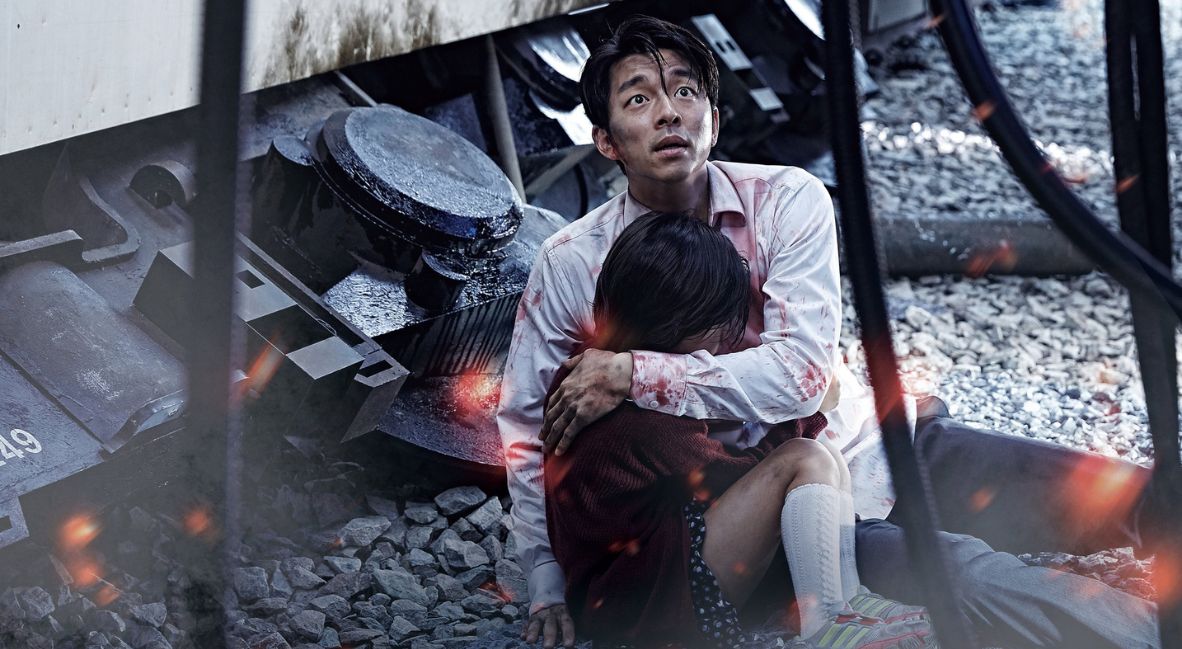
Both Su-an and Seong-kyeong are left to continue surviving after everything they endured throughout the film’s runtime. There’s no guarantee that either of them will truly be okay, and the ambiguity as to whether or not Su-an reunites with her mother adds another level of tragedy. What’s left for both of these characters? We’ll never know for certain.
There’s no shortage of things to love about this hit horror film, from its characters, the acting, relentless pace, the violence and gore, as well as the action sequences. The popularity of Train to Busan spawned a series that includes an animated prequel, Seoul Station (2016), and a standalone sequel, Peninsula (2020).
Train to Busan could’ve easily been a standard zombie film, devoid of heart or well-written characters. But without Seok-woo and company, it wouldn’t be the same film. We wouldn’t feel something when watching the worst imaginable outcomes. There’s nothing wrong with enjoying yourself with a straightforward zombie film, but Train to Busan sets itself apart because of the richly drawn characters at the center.
There’s so much to love about this properly hyped gem. Train to Busan deserves all of the acclaim and love it receives. Regardless of whether or not the delayed American remake titled Last Train to New York ever sees the light of day, it won’t be able to touch the masterpiece that is Train to Busan.
Train to Busan returns to theaters on August 14, 2026.