

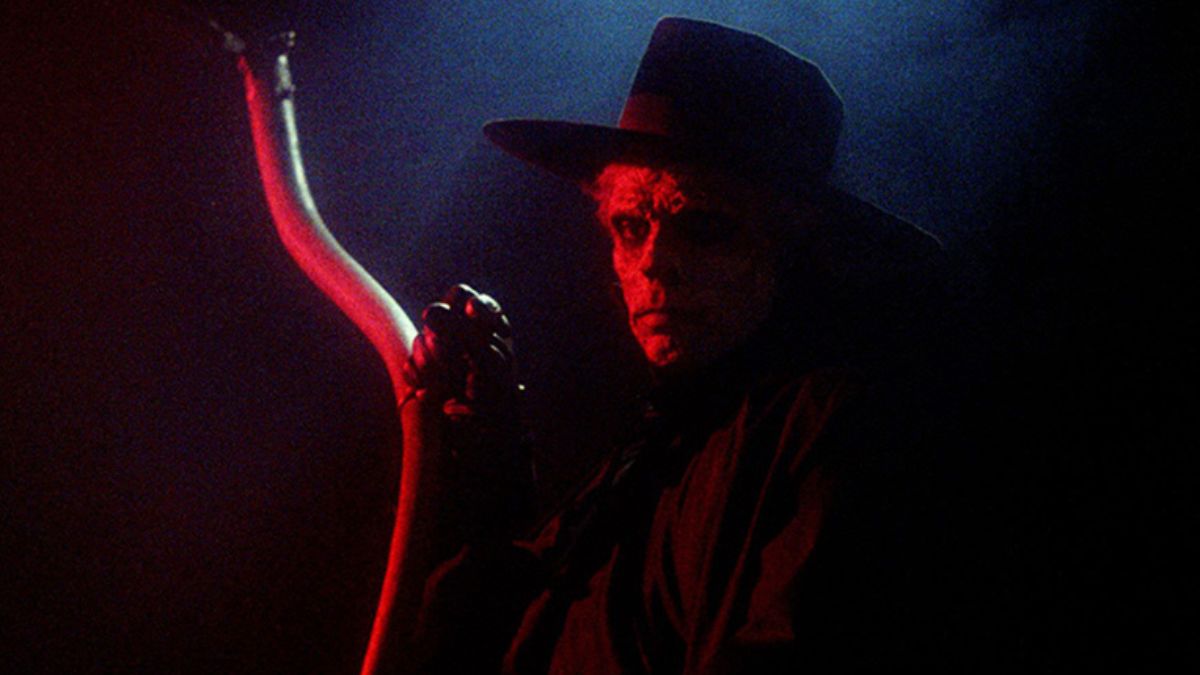
A Day of Judgment was the 1981 directorial debut of Charles Reynolds, who had cut his teeth doing lighting and acting work for films like Frederick R. Friedel‘s Axe and Ray Dennis Steckler‘s Sinthia: The Devil’s Doll. Hungry to helm his own film, it was the Golden Age of Slashers, meaning anyone with a shoestring budget and a modicum of talent could find themselves on the receiving end of box office success.
Enter Earl Owensby, head of North Carolina-based Earl Owensby (or E.O.) Studios. E.O. Studios had spent the better part of a decade producing highly profitable exploitation films, many of them starring Owensby himself. And Owensby was willing to give Reynolds a shot at making his own horror film.
The problem? Owensby was a devout Christian, a stark contrast to Reynolds’ atheism. The exploitation films that E.O. Studios released tended to be of the PG variety, minus the X-rated Christian Death Wish knockoff Dark Sunday. The more success Owensby found, the more explicitly Christian he made his work.
Owensby was only interested in letting Reynolds make his horror movie if it could include explicitly Christian themes. And Owensby, Owensby’s friends, and church congregations were providing the funding that would get the film into production. Reynolds had a choice: walk away, or let the slasher film he dreamed of become a Christian movie.
The victims of A Day of Judgment are those who go against traditional Christian values.
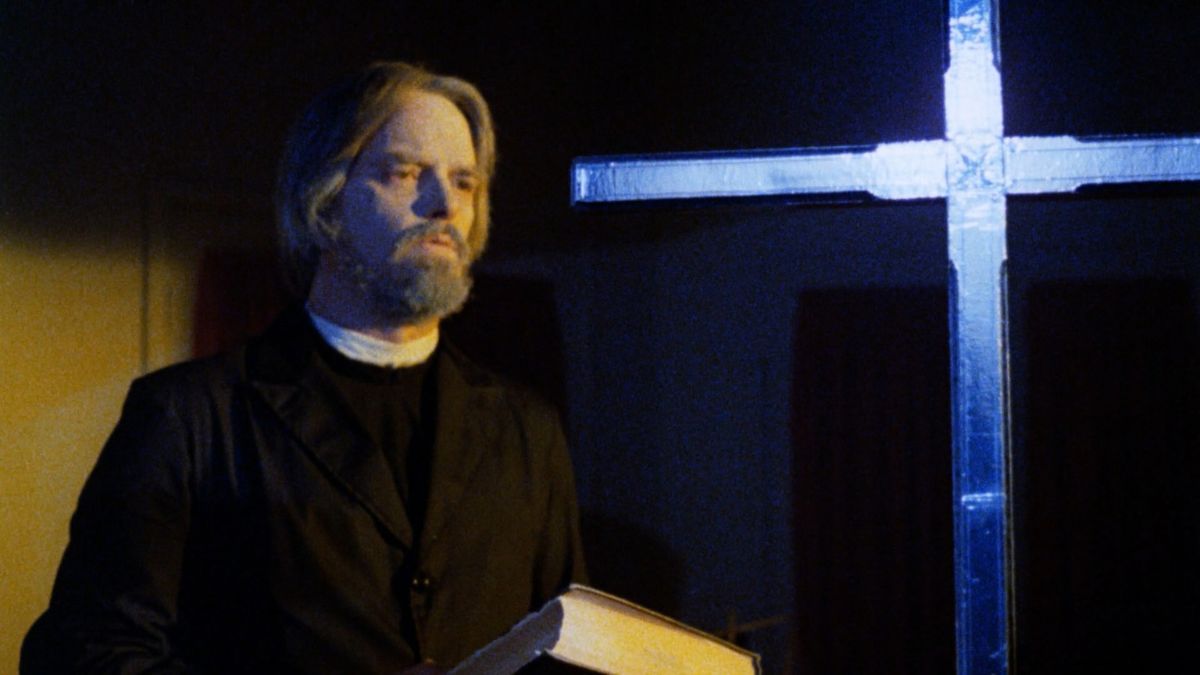
A Day of Judgment opens with a relatively picturesque view of the 1920s American South. The nation has largely recovered from World War I, and the horrors of the Great Depression haven’t yet begun to take form. This is bad news, at least according to local preacher Reverend Cage (played by Reynolds). The nation’s prosperity means the townsfolk are no longer reliant on God. Cage’s congregation has dwindled to just three members, a trio of silent old women who haunt the background of the film like a mute Greek chorus.
Devastated by his lack of progress in bringing the townsfolk back to Christ, Cage resigns. And he does so in the most ominous way possible, saying, “I have failed. It is out of my hands. I have prayed that God’s retribution fall upon me, but I cannot pay in full for His lost children. For the breaking of the Lord’s commandments, they must pay. And — we ask God’s mercy — pay they shall.”
Cage — the only member of the town to still travel by horse and buggy — bids farewell to some residents, and thus introduces viewers to the film’s victims. Craig (Bart Heavner) has been driven to paranoia by alcoholism. Ruby (Careyanne Sutton) fleeces her devoted but much older husband Harvey (Carlton Bortell) for cash while carrying on an affair with his employee Kenny (Larry Sprinkle).
Banker Mr. Sharpe (William T. Hicks) traps residents into predatory loans. Veteran George (Toby Wallace) resents his parents (William Gillespie and Ann Powers) for leaving him a successful business that takes him away from his girlfriend Missy (Inga Dennis). Embittered widow Mrs. Fitch (Helene Tryon) is cruel to the local children.
This is not your standard slasher film.
The new Reverend (Fred Roland) arrives in town just as Cage leaves. He’s a cloaked, scythe-wielding figure, and Cage catches a glimpse of his heavily scarred visage. And Cage is once again the most ominous priest ever. “I could not open your hearts to grace. Mercy upon us both.”
In most slasher films, this is where the killer would make quick work of a victim or two to build momentum. But A Day of Judgment is not trying to be a slasher film. It’s trying to be a Christian film, and it’s not going to start piling up the bodies until it’s told audiences why it thinks they’re deserving of God’s wrath. There is a whopping nineteen minutes between the first appearance of the Reverend and the film’s first death, all of which is devoted to showing more insight into the townspeople’s various sins.
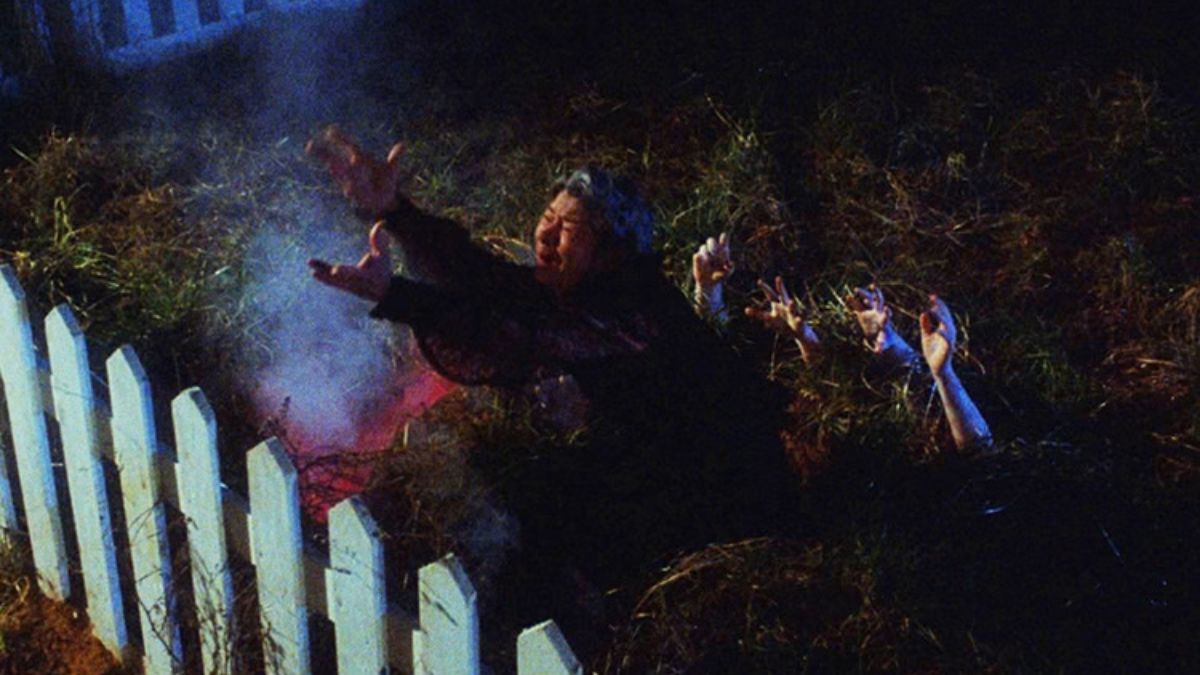
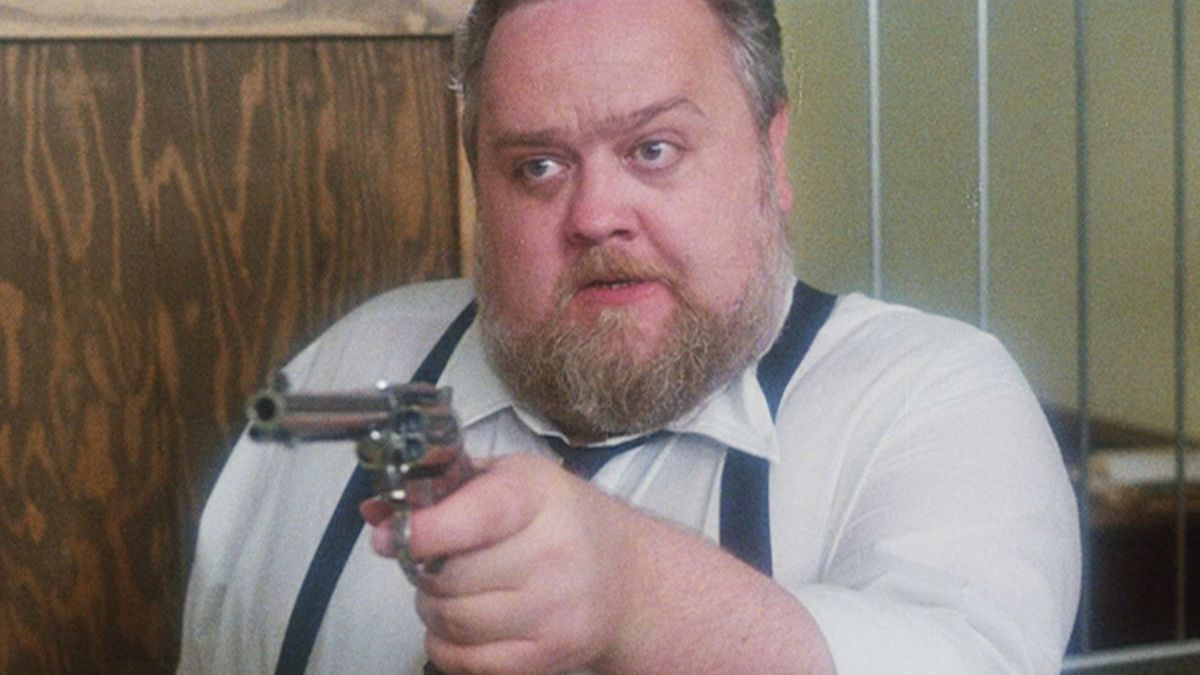
Mrs. Fitch is the first to go. She constantly calls the sheriff (Jerry Rushing) to accuse the local children and their pet goat Doodles of destroying her garden despite them doing nothing of the sort. She also falsely accuses her housekeeper Alma (Clara Lowry) of theft. Both clear violations of commandment no. 9 (thou shalt not bear false witness).
As if that weren’t enough, she also comes afoul of commandment no. 6 (thou shalt not kill) when she poisons Doodles in a scene featuring some legitimately excellent goat acting. The Reverend appears at Fitch’s house, his mere presence enough to kill her garden. As she mourns her plants, she’s dragged through a portal to Hell that appears in her yard.
Instead of going straight for the kill, A Day of Judgment spends time with each victim.
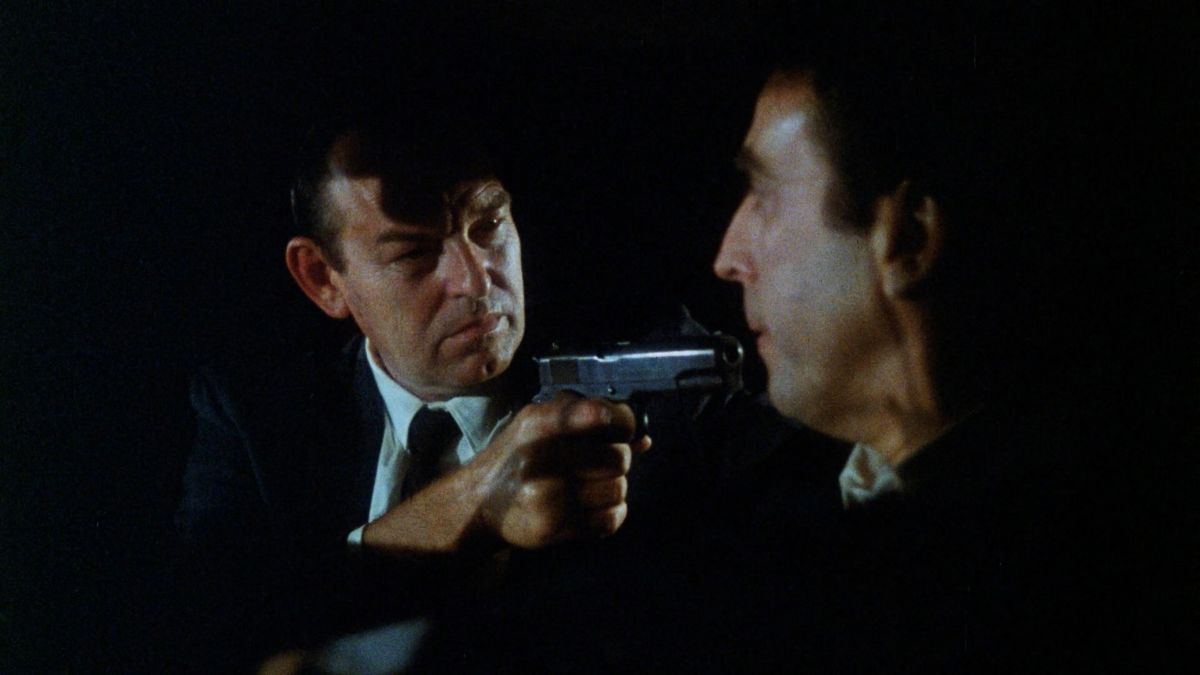
George conspires with lawyer Grigg (Richard Dedmon) to gain power of attorney over his parents so he can force them into a retirement home and squander his inheritance à la the Prodigal Son. The mere sight of the Reverend is enough to drive him mad, and he dies in an asylum.
Sharpe forces bank employees to work on Sundays and boasts that his “church” has more attendance than the local congregation. When his attempts to foreclose on a local farm drive farmer Morgan (Hanns Manship) to suicide, the Reverend locks Sharpe in the farm’s ice house and kills him.
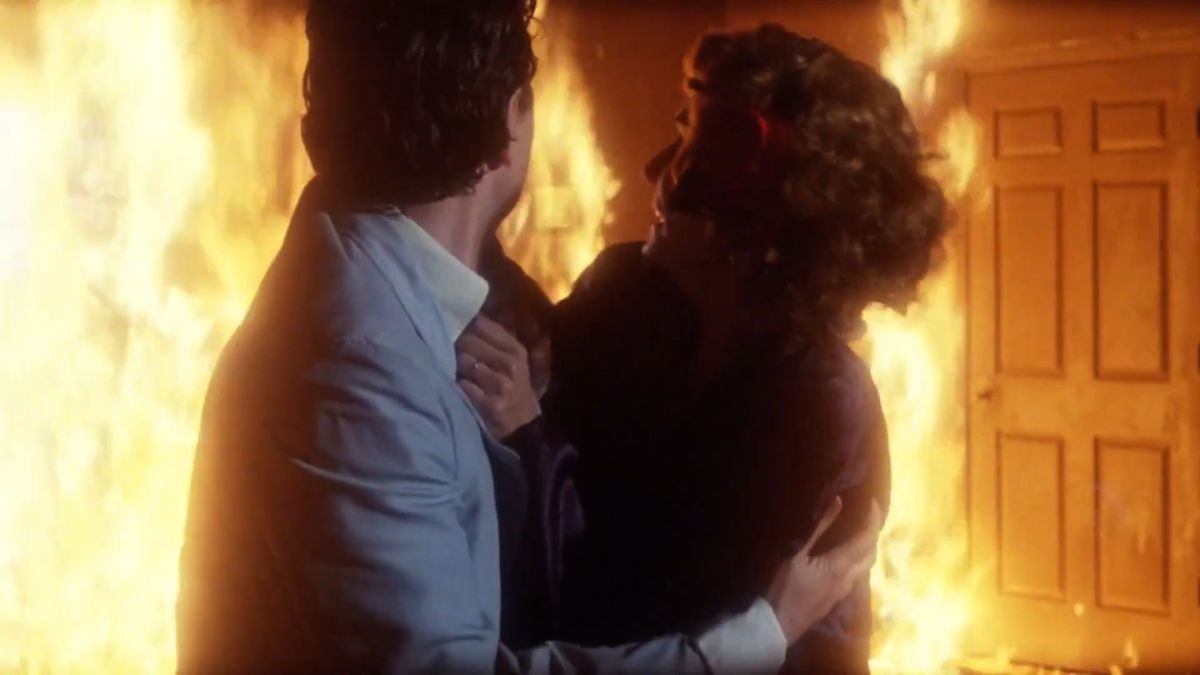
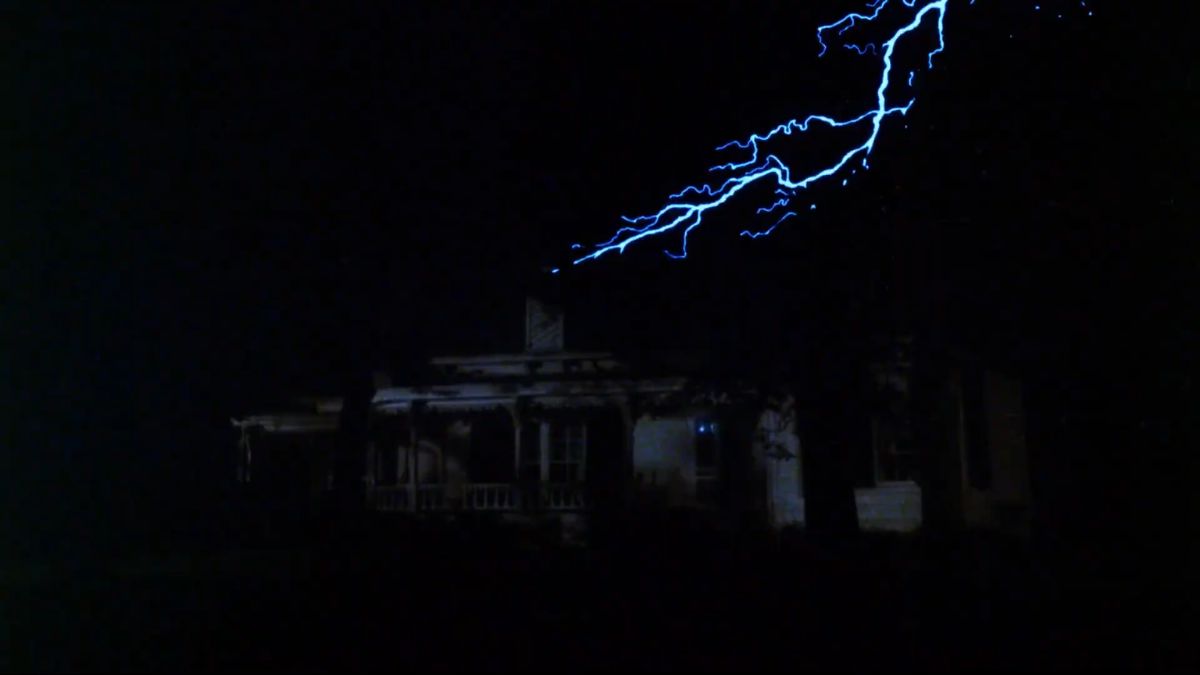
Ruby and Kenny are caught in their adultery when Harvey returns home early from a business trip, and Harvey is accidentally killed when he confronts them. The Reverend locks them in the house, which is struck by lightning and burns with them trapped inside. Craig, falsely convinced of a plot against him, sabotages the reputations of his ex-wife Grace (Denise Myers) and ex-boss Sid (Harris Bloodworth) and then executes them both. The Reverend pursues Craig into the woods and decapitates him.
Fittingly, the film closes out on a crawl of The Ten Commandments.
The Reverend personally escorts the souls of his victims through the afterlife. They glimpse Heaven, then, via some Terry Gilliam-esque visuals and a drastic shift in Clay and Arthur Smith‘s score, arrive in Hell. The Reverend closes in on them with the scythe, then…
…they wake up screaming. The climax of their sins and subsequent deaths has been a cautionary nightmare. The next Sunday, the repentant lot turns up for church. They’re horrified to see the cloaked Reverend waiting for them, only for him to reveal himself now as an ordinary man. He greets the congregation smugly. “I feel as though I know many of you already… Our sermon is: As ye sow, so shall ye reap.”
It is tempting to compare A Day of Judgment to other slasher films. And there are certainly sequences that feel like they could be right out of something like Hellraiser, Final Destination, or Friday the 13th. But this comparison will inevitably do the film a disservice.
Despite a bloated runtime and questionable morality, A Day of Judgment is fascinating.

The ensemble of this film is overstuffed, leading to a bloated runtime. The efforts to show why each death is justified often leads to overly complex backstories and a confusing morality. Some characters, like Craig and Mrs. Fitch, are over-the-top evil caricatures.
Others are accidentally given more nuance than was intended, such as when George’s actions are explicitly stated to be the result of wartime PTSD or when Ruby and Kenny struggle to reconcile their obvious admiration for Harvey with their betrayal of him and his clearly accidental death. Sharpe, interestingly enough, ends up as both. He is diabolically evil yet much of the condemnation he faces is for things like offering basic business advice or charging any loan interest at all.
Slasher films aren’t traditionally concerned with bloated runtimes, overly complex backstories, or confusing moralities. To that end, this appears lacking. But A Day of Judgment is not a horror film. It is a Christian film. And through that lens, it becomes one of the most fascinating films of its kind.
If more Christian films were like A Day of Judgment, more people would be moved by Christian films.
There is far more nuance here than in something like God’s Not Dead, another film where people are killed for not being Christian. Unlike many Christian films, the sinners here are not antagonistic towards Christianity. There’s never anything harsher than indifference or even admiration for Christianity, with some claiming the label for themselves outright.
The film posits that everyone is capable of redemption, not just the hero. The film is preachy, yes, but so unfocused in its message that it will not serve as the vehicle for pride that many religious films are specifically designed for.
Acknowledging A Day of Judgment as being primarily a Christian film also allows one to appreciate better how it nails some of those slasher elements. The film is an over-the-top morality play, as are many slasher films both of that era and today. The need to punish sinners severely results in some very fun kills. The inconsistent performances common in Christian film also feel right at home in horror. Much of this was certainly accidental on Owensby’s part, but it’s great to see a peek of that original vision shining through.
Not so much a success as a single note in the history of the genre.
Charles Reynolds worked on a few more films after its release, most notably Al Adamson‘s cult hit Carnival Magic. But he never directed again, eventually getting his PhD and becoming a teacher. Earl Owensby made a few more Christian-adjacent horror films, though never one so overt as A Day of Judgment, then hit paydirt when the abandoned nuclear power plant he had converted into a film studio became the filming location for James Cameron‘s The Abyss.
He used that money to leave horror and exploitation behind forever, focusing his efforts entirely on films with names like The Agony of Christ and The Story of Jesus the Christ. He built a Christian museum and art gallery on his studio lot and devoted years to a Christian theme park — Bibleland — that never materialized.
The Golden Age of Slashers is generally considered to have ended in 1984 with the release of A Nightmare on Elm Street. But, like many of the killers it features, the genre has refused to die. Now-classic series like Scream, Child’s Play, Hellraiser, Candyman, and Terrifier have continued to be created, and it’s been one of the most dependable sources of new talent and original properties in Hollywood.
Christian films also continue to be produced. Unfortunately, they have rarely come close to being this interesting.
A Day of Judgment is available to stream on Tubi and Youtube TV.