
I remember a friend showing me Attack on Titan in high school and thinking it’d make for a great video game. Giant, horrifying enemies, a universe with overly complex yet fascinating lore, and characters equipped with swords and Omni-Directional Mobility (ODM) gear that lets them swing around like Spider-Man immediately looked like something I’d want to play. When Koei Tecmo’s Attack on Titan games eventually arrived, they didn’t feel quite right to me, with their clunkier movement and haphazard adaptation of the source material.
After going hands-on with two hours of Attack on Titan 3 at a preview event, Koei Tecmo’s latest game seems poised to fix my issues with the gameplay. While I didn’t love some of the ways it adapts the anime that I saw during my preview, at its best, it’s the Attack on Titan game I imagined playing when I first watched the anime over a decade ago.
Attack on Titan 3’s approach to adapting the anime
Previous Attack on Titan games were released before the anime concluded, so they could only adapt part of the story. Development Producer Hideo Suzuki tells But Why Tho? That Koei Tecmo decided to take a beat and wait for the entire anime to finish so they could create a game that encompassed everything.
“If we just picked up at those new seasons of the anime, it wasn’t good enough as a game, as a volume, and as a product,” he explained. “That’s also when we found out that anime was coming in the end. So we were like, ‘Well, we might as well just wait and cover everything from the beginning to end, and that’s got to be more satisfactory to the fans.’”
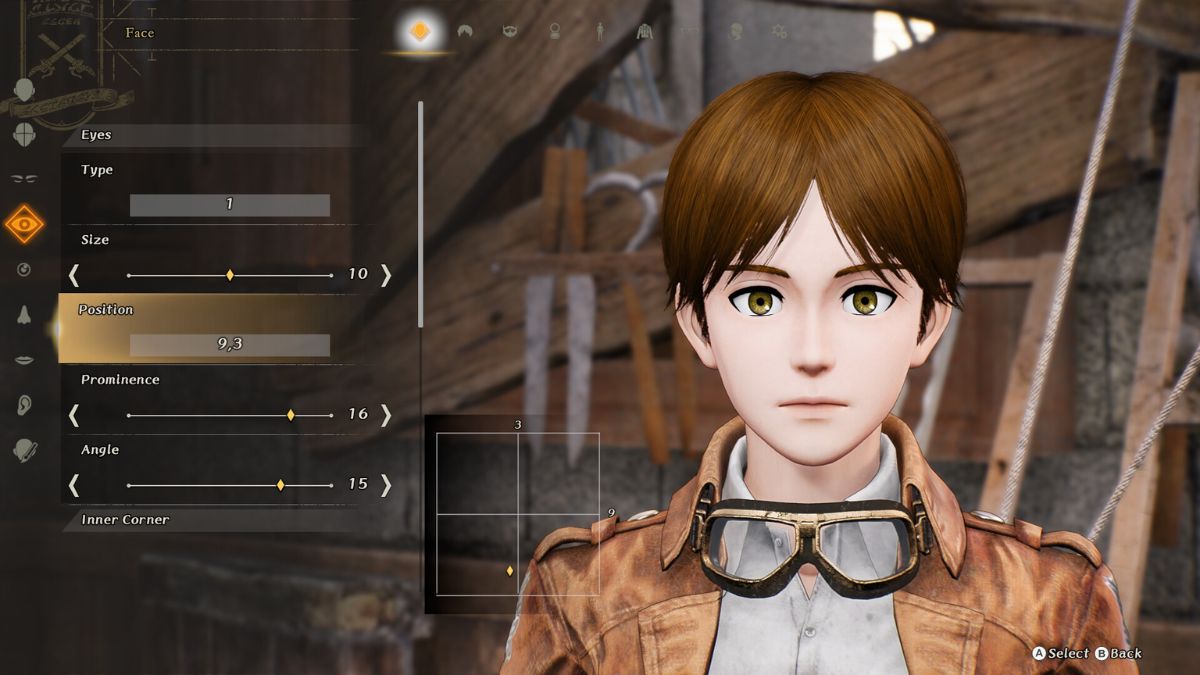
I spent most of my playtime on the opening of the game, from the Survey Corps training through the end of the Titans’ initial attack on the Trost District. In Attack on Titan 3, you don’t actually control Eren, Armin, Mikasa, or any of the franchise’s other cool characters. Instead, you create an original character who just so happens to be training all the anime’s main characters and then gets wrapped up in the events of the story as it goes on.
Attack on Titan 3 tries to give the player’s original character some depth, as they deal with the trauma of being the sole survivor of an annihilated squad. That said, I also find this approach devalues my personal investment in the narrative and makes it clunkier for me to observe events I already know are going to happen, rather than participate in them. Suzuki ultimately finds this trade-off worth it because it’s what Omega Force did in the last game and expands what events this game can follow.
“In the latter half of the story of the anime, [the events] are told from not just Eren’s perspective, but other countries, other unions, other powers,” he pointed out. “So having an original character go in and explore all the events and the story, I thought the players can really deepen their understanding of the world, and having this as a really fresh and new experience.”
Attack on Titan 3 nails the ODM movement
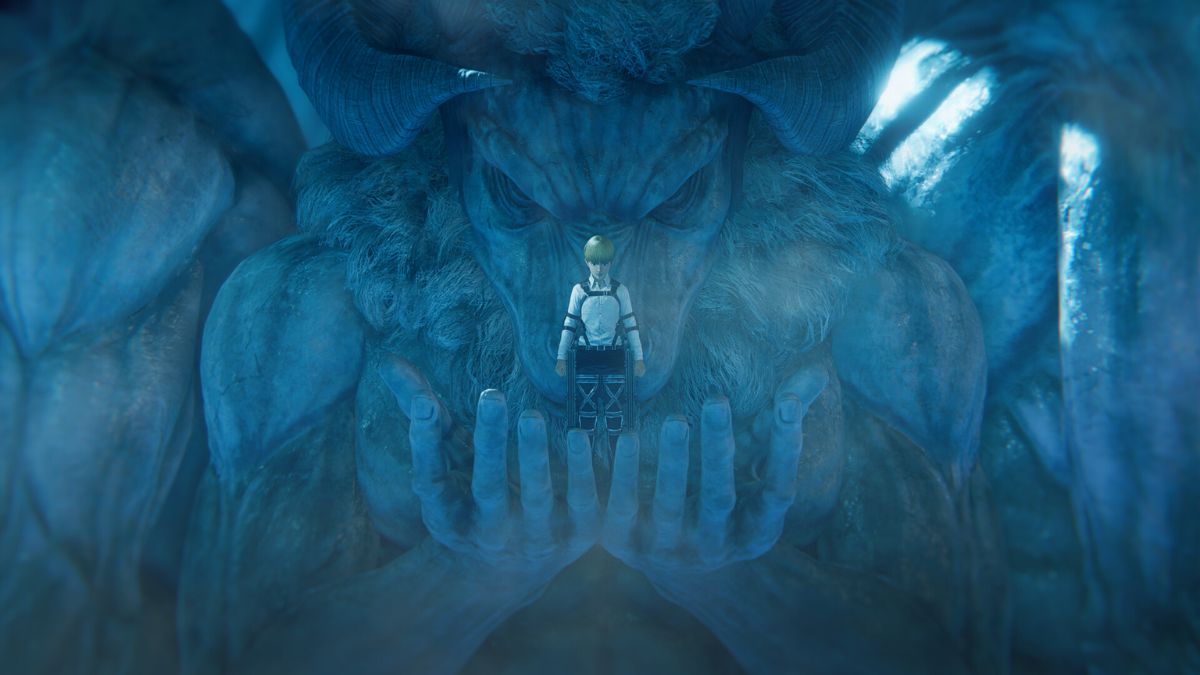
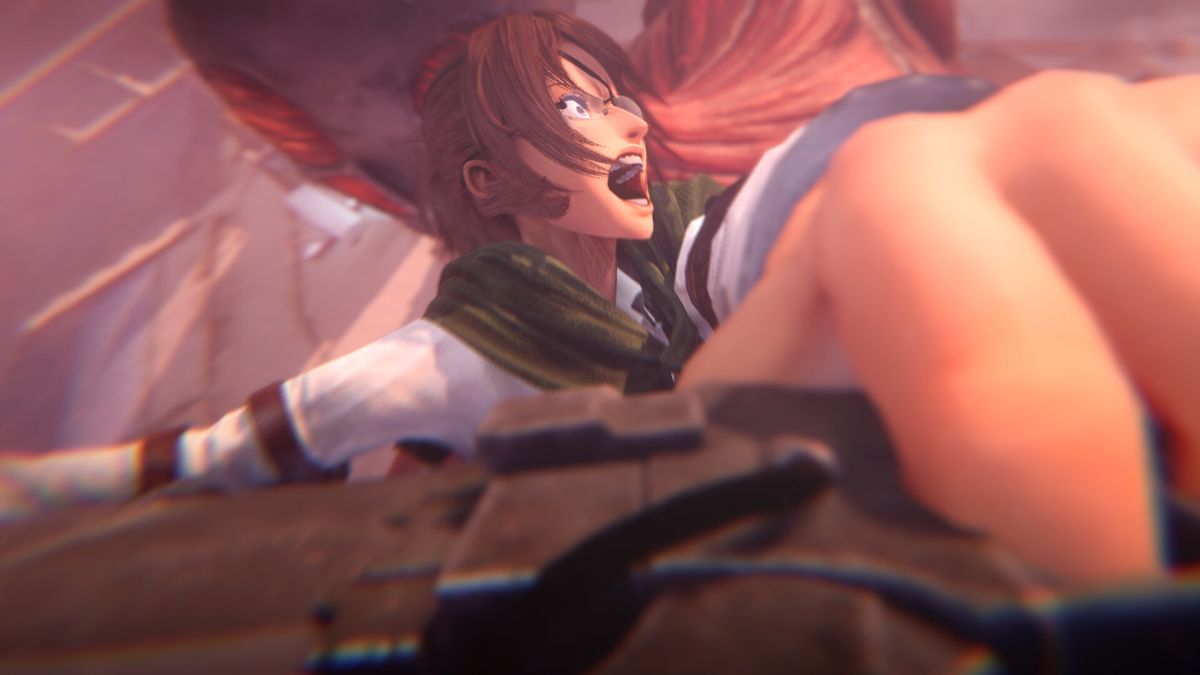
While I wasn’t a big fan of what I experienced in regards to the anime-to-game narrative adaptation, I had a blast any time the bevy of cutscenes stopped, and I got to play Attack on Titan 3. The momentum of the ODM in the previous games had some oddities to it, especially when you tried to constantly swing around or hit a wall. Suzuki affirmed that Omega Force really wanted to refine the game feel for this sequel, and from combat to movement, it pays off.
The trigger-driven controls take a little bit of getting used to, but once I did, I was swinging around the Trost District in Attack on Titan 3 like it was NYC in Marvel’s Spider-Man. I consistently found myself trying to take down Titans in the flashiest ways just because each strike felt so good to execute. It feels seamless as a player, but Suzuki pointed out this is the case to do some new gameplay features, like being able to manually aim at particular parts of Titans’ bodies, and a lot of behind-the-scenes math.
“When you use ODM, there are anchors of the ODM, and it’s already decided where and at what angle and how high the anchors are going to go,” Suzuki explained. “We do a lot of math to simulate what kind of movement it’s gonna produce, and we did a lot of that this time. A lot of pre-calculating all those different scenarios, different situations. So if [ODM] was aiming for some kind of obstacle, a wall or whatever, then we will do the fine-tuning, a little bit of fixing, so that the character won’t bump into those obstacles.”
After playing through the opening of the anime (which makes up the game’s first chapter), I jumped forward to Chapter 9, which was set around the events of the raid on Liberio in season 4. During this part of the game, I actually got to fight human enemies. Striking them from a distance wasn’t quite as fun as swinging around and taking down a titan, but Suzuki seemed to be particularly enthused about having implemented this.
Attack on Titan 3 leaves its mark on the franchise
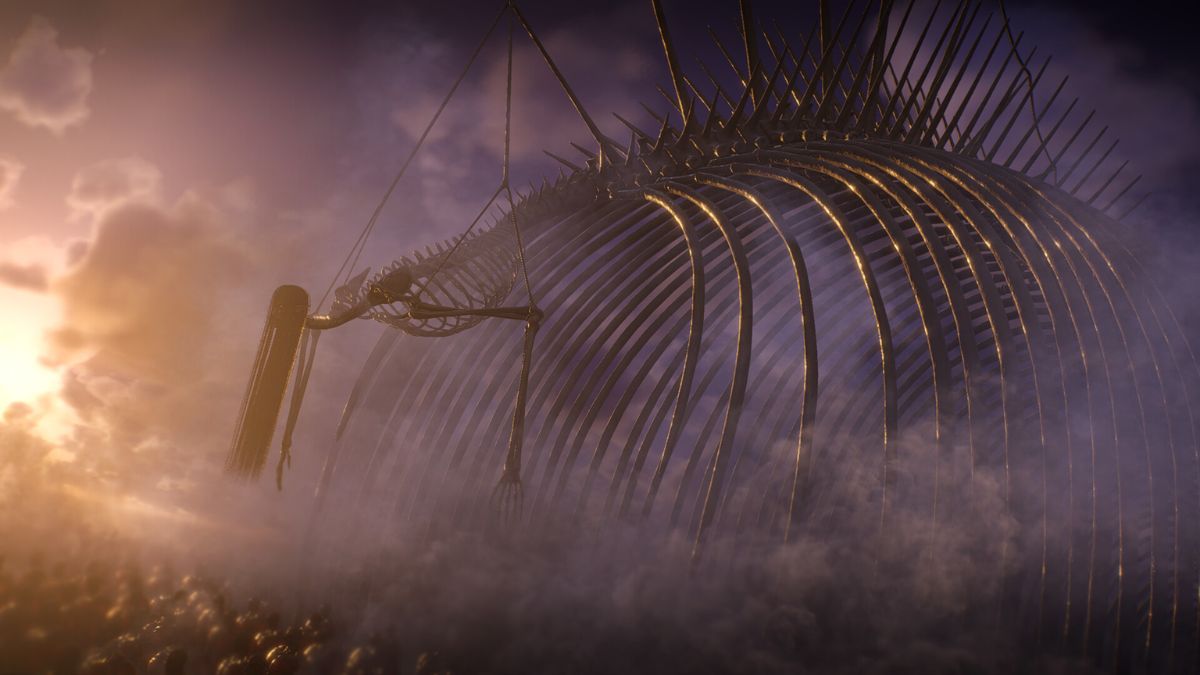
I came away from my time with Attack on Titan 3 thinking I had a strong understanding of what to expect from the game. But Suzuki teased that there are some bigger, open-field areas of the game that he’s particularly proud of, even though I didn’t get a chance to spend much time in them.
He was also proud of Attack on Titan 3’s open-field areas, which I did not get to spend a lot of time in during my demo. He teased that Omega Force and Koei Tecmo’s originality really shines through, as they were free from the constraints of the anime in these areas and could work with Kodansha to leave their own stamp on the Attack on Titan universe with that part of the game.
“It was fun and hard to do at the same time because there are a lot of depictions in the game that are not in the anime or the manga in detail,” he explained. “Since we’ve already created three previous games, we have a trust relationship with Kodansha and a deep understanding of the universe of Attack on Titan. I can’t really think of any ideas that we suggested and they said no to; rather, some of the suggestions we had, they made them happy. They were like, ‘You guys can do that? Oh my God, that’s so cool.”
I can tell that there are certain aspects of Attack on Titan 3 I won’t be particularly fond of: Namely, its approach to adapting the events of the anime through an OC and the constant interruption of gameplay for cutscenes. Whenever I had the chance to dash around a city and fight titans using the ODM, though, this is the best an Attack on Titan game has ever felt. I’m eagerly waiting to play more for that reason, even if I may be skipping some cutscenes recounting the parts of the anime I watched while daydreaming about this kind of game adaptation over a decade ago.
Disclaimer: Koei Tecmo and One PR paid for But Why Tho?’s travel to and accommodation at the preview event where we played Wo Long 2. They had no input on the opinions expressed in this editorial coverage.