One way or another, aren’t we all playing some kind of role? The hardworking husband, the devoted housewife, the reserved senior citizen—all these masks can obfuscate who we truly are, slotting us into digestible, prefabricated molds. Perhaps it’s only by taking on someone else’s perspective, by assuming another identity, that we can finally discover the one we were meant to play. This idea reverberates through each kooky, heartfelt moment of Jesse Eisenberg’s surreal exploration of community theatre, performance, and identity in The Debut.
One of the funniest films of the year, The Debut pokes, prods, and transforms the familiar performer-Pygmalion plot into a surreal dissection of the classic tenets of acting. The familiar principle of drawing on one’s own memories, traits, and experiences to connect the self to the fictional character being played—and thereby make the performance feel authentic—spirals into something increasingly surreal, heightened, and confrontational.
What does it mean to truly get into character, to lose yourself in someone else’s psyche? And what happens when you get too lost? Especially when the aspiring thespian has nothing to draw from in the first place, as if a blank slate has been thrust onto the stage, left to clatter and clamor beneath the blinding lights.
While not all these themes are woven together with equal intricacy or depth, and the film occasionally struggles to juggle its shifting tones and ideas, The Debut consistently unfolds as an absorbing, fascinating exploration of the self, illuminated through the artificiality of the stage.
The Debut explores the roles we play and what it means to lose yourself in them.
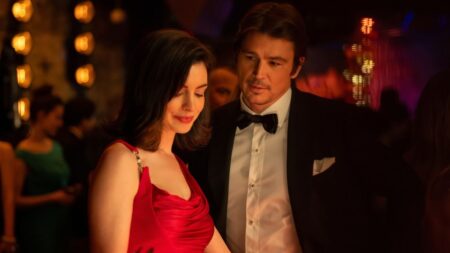
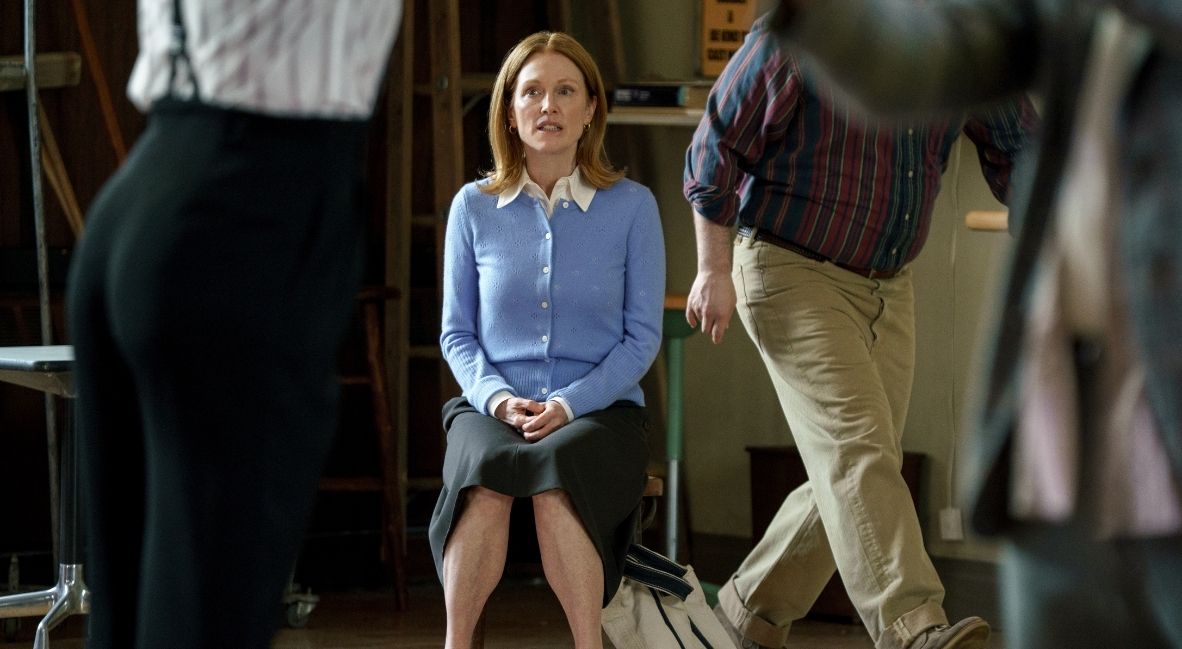
Julianne Moore does some of her most textured yet heightened work as Mona Friedman, a New Jersey housewife who, on a whim, auditions for a local production of Nosy Neighbours, an entirely original musical penned by Eisenberg, complete with original numbers that feel both authentic and silly—the kind of play that would believably go gangbusters at a school production.
After securing the role through a stroke of luck, Mona sees an escape from the suburban malaise and neglect that have defined much of her life. Eisenberg captures her suffocating home life in a manner that is both hard-hitting and verges on cartoonish: her tight-lipped husband barely utters a word to her, while her twin children often seem to forget she exists.
That dynamic comes to an emotional, heartbreaking head when Mona shares a childhood memory of regularly being left outside with the dogs while her parents went out for dinner. It’s one of several potent emotional beats in The Debut that reveal just how thoroughly she has been ignored throughout her life, making the new environment of acceptance and attention from her fellow castmates feel all the more warm and endearing.
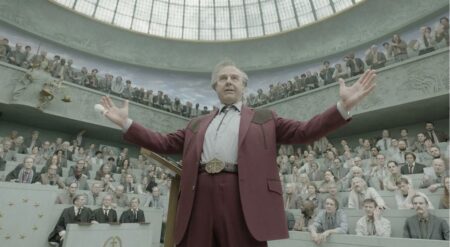
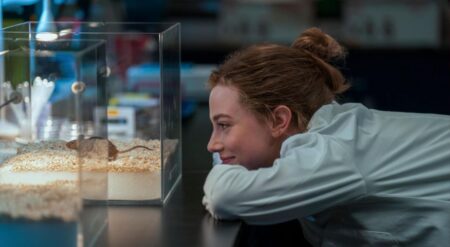
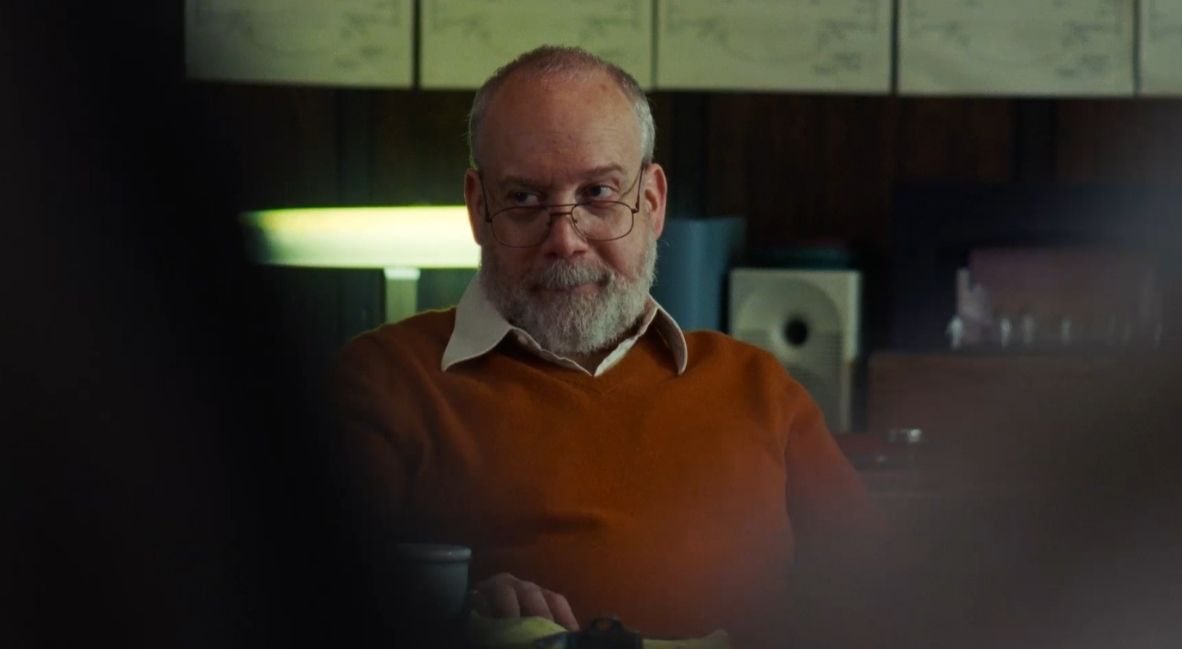
Halle Bailey is among the many performers who ham it up both on and off the stage—a heightened approach that can be both delightful and at odds with the film’s attempts at sincere character work. Yet, that newfound sense of belonging is tested when the intense, no-nonsense director Jerry Blankenbuehler (Paul Giamatti) pushes Mona beyond her bottled-up demeanour and into the strange, outsized world of her tertiary stage role.
Setting this identity crisis within the theatre scene is a brilliant take.
Eisenberg and his director of photography, Drew Daniels, luxuriate in their theatrical trappings. Long, winding takes mirror the unbroken feel of the stage, tracking and circling the ensemble as they move through tense discussions with assistants, wardrobe fittings, and engrossing rehearsals. All the while, exaggerated chiaroscuro spotlighting, dramatic musical stings, and quick zooms invade bedrooms and moments of private revelation.
Such creative inflections break down the barrier between performance and identity, rendering the entire world a stage, where we’re all hoping someone will give us a meaty monologue or star-making moment.
It all coalesces in the film’s greatest scene: a private, one-on-one character workshop in which Giamatti’s director attempts to break Mona from her coy, bottled-up demeanour through a rat-a-tat exchange that gradually and seamlessly sees her open up, grow more confident, and confront demons both personal and underpinning her character.
What begins as an acting exercise becomes something stranger and more profound—a real-time exemplification of theatre as therapy, as performance becomes the very mechanism through which Mona begins to understand and reinvent herself, before sending her spiralling into the madness of go-for-broke method acting—much to the chagrin of director Blankenbuehler.
Juliane Moore and Paul Giamatti’s natural chemistry is riveting to watch onscreen.
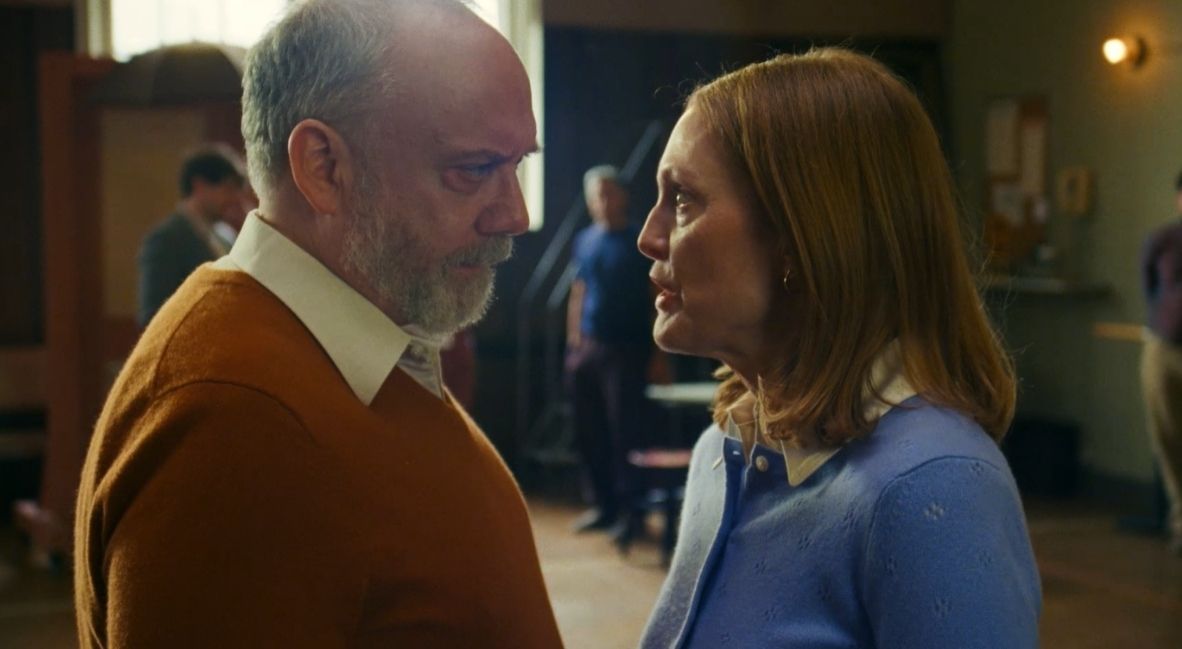
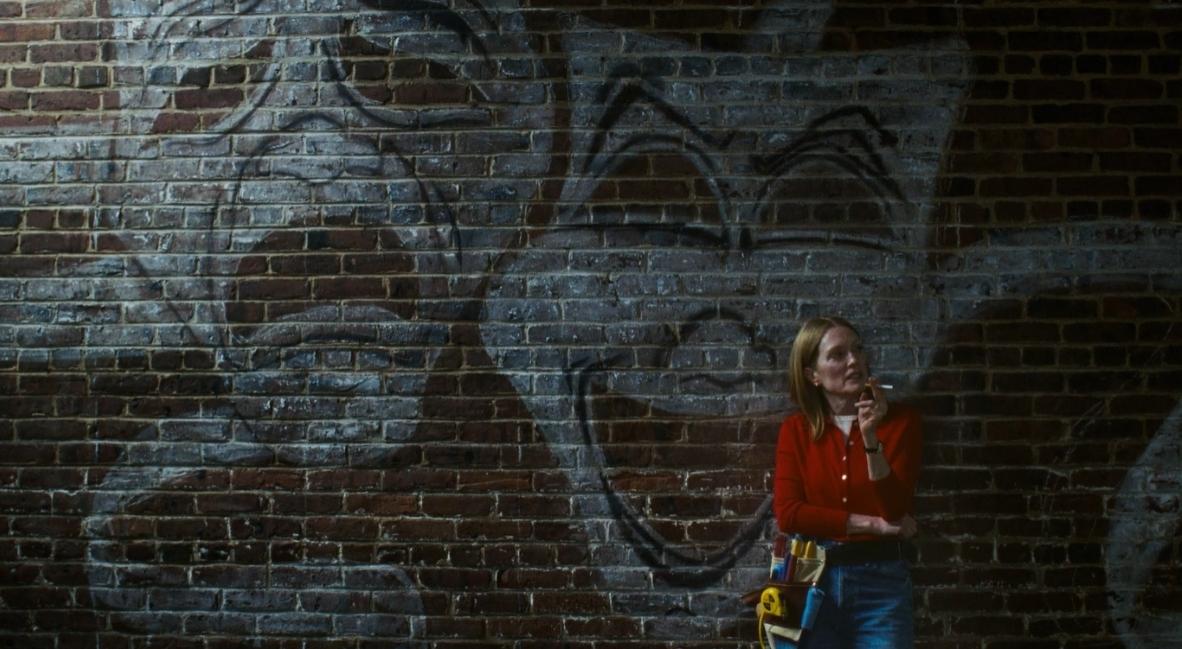
Moore’s dynamic performance is at once internalized and expressive, authentically shifting from Mona’s earlier, wooden stiffness—amusingly mouthing and puffing away at unlit cigarettes—to a boozing, delirious, increasingly damaged woman who goes off the deep end in her attempts to embody the characters she’s playing.
It’s engrossing to observe every detail of her descent into her character’s reality, to the point that she begins challenging the director’s writing and directorial choices, demanding bold rewrites to make her character more believable—while Jerry screams at the top of his lungs to stick to the script. These clashes make up much of the film’s second act, and while hilarious and riveting to watch Moore and Giamatti’s natural chemistry navigate their shifting power dynamic and interplay, The Debut eventually enters more repetitive, increasingly on-the-nose territory.
In making Mona’s psychological unravelling increasingly explicit, the film loses some of the subtler, more psychologically probing elements that made its earlier sequences so compelling. Its struggle to balance its myriad tones and themes ultimately results in a somewhat undercooked, if rousing, final act.
Though, for all its foibles, Eisenberg crafts a complex, daring portrait of a specific milieu and community that embraces the challenges of finding one’s voice. As Mona gets lost in her character, so do we in her struggle to not only forge an identity but finally bring something wholly her own to the table. As she finally gets a handle on her character, delivering the line in a way that Jerry declares “couldn’t be more perfect,” we’re left excited to imagine all the ways we might finally make our debut.
The Debut screened as part of the 2026 Edition of the Toronto International Festival.
The Debut
-
Rating - 7.5/107.5/10
TL;DR
For all its foibles, Eisenberg crafts a complex, daring portrait of a specific milieu and community that embraces the challenges of finding one’s voice in The Debut.