

Every year, the NBA 2K series faces the same question: how do you make a two-decade-old formula feel worth buying again outside of a roster update? NBA 2K27, the latest basketball simulation game from developer Visual Concepts and published by 2K, answers that question on the hardwood. This is some of the best on-court basketball the series has offered in years. Off the court, in the modes built to keep you playing (and paying) all season, the answer is a lot more of the same.
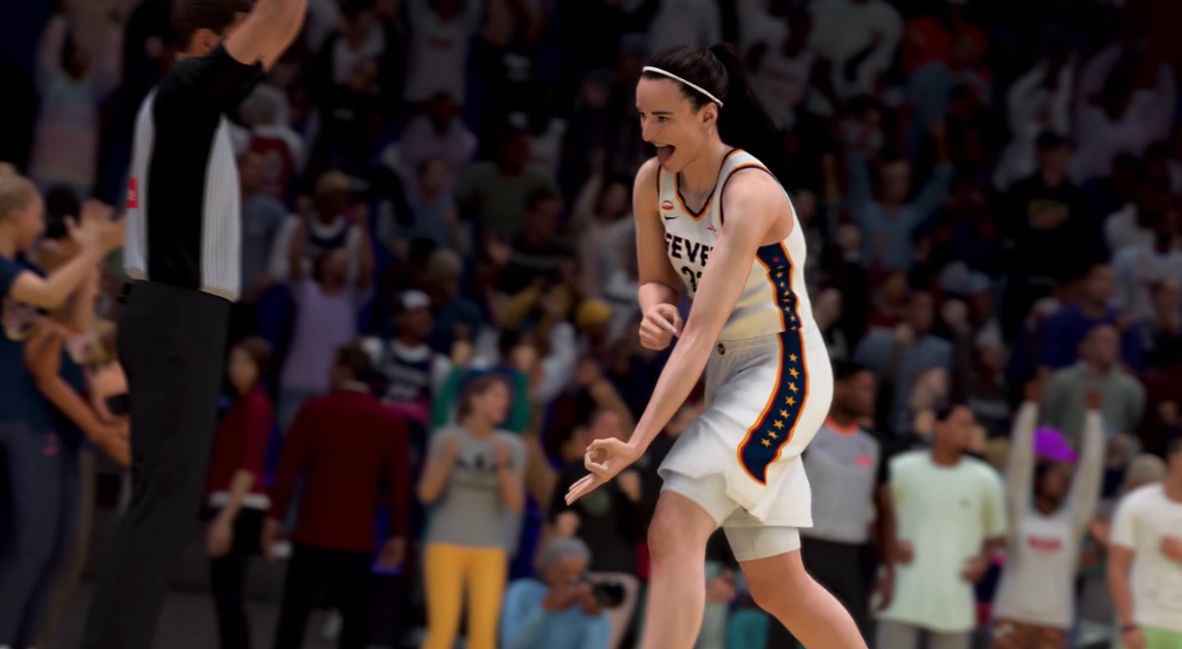
The broadcast presentation in NBA 2K27 remains some of the best in any sports game. The arena detail and natural lighting look phenomenal, and the commentary work sells the illusion of watching a real NBA game. It’s not flawless. Background characters still pop in awkwardly, and occasional graphical glitches break the spell, but when everything clicks, this is the most convincing presentation the series has put out yet.
Gameplay received just as much attention. Visual Concepts expanded ProPLAY with over 7,000 new animations, and the difference shows up in how players move rather than just stats and abilities. Controlling a shifty point guard feels distinct from controlling a power forward.
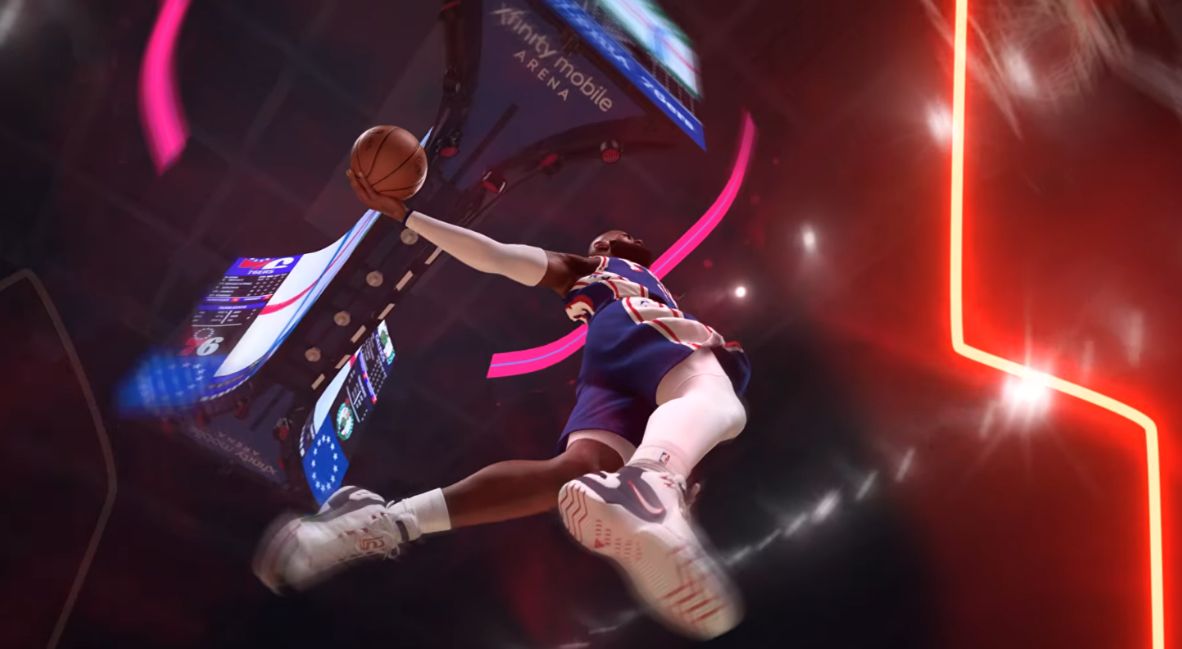
Dribbling transitions flow into each other more naturally, and the new Dynamic Layup Engine reads defender positioning on every drive, producing awkward, adjusted, human-looking finishes. The days of seeing the same handful of canned dunk packages are fading. A few animations still feel unstoppable, a holdover from past entries, but those moments are rare.
Defense is the defining upgrade to gameplay in NBA 2K27.

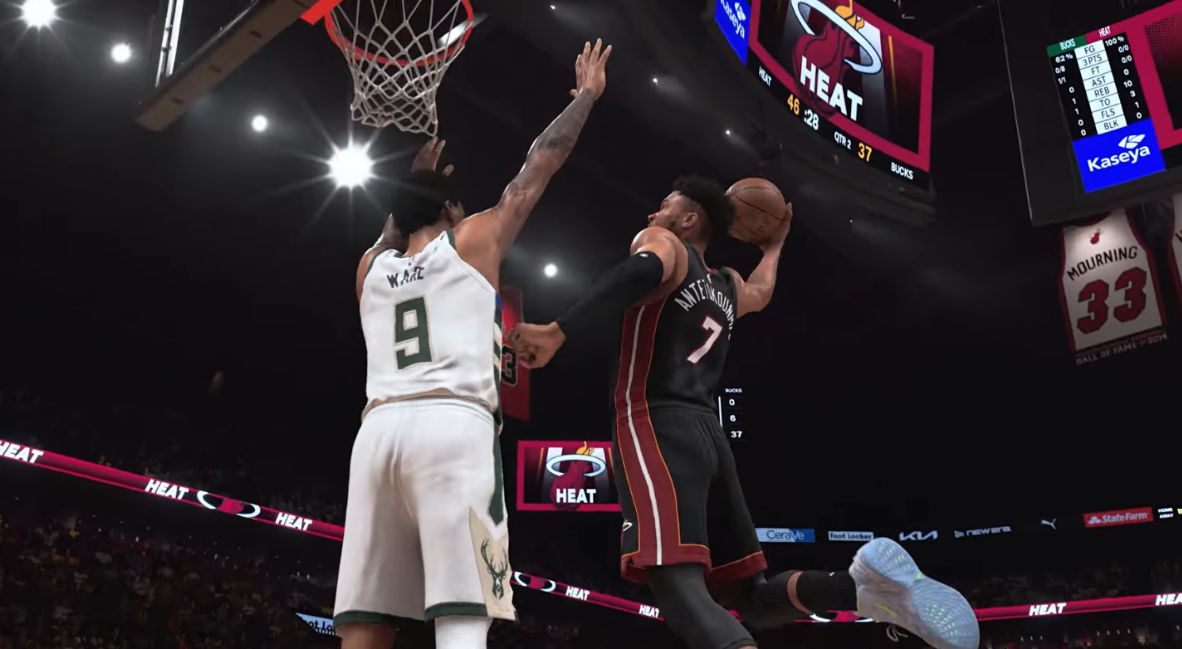
Defense is where NBA 2K27 makes its biggest leap. Visual Concepts reworked hands-up contests and shot pressure across the board, and the expanded defensive cutoffs give on-ball defenders real tools to stay in front. For the first time in years, staying in front of a ball-handler genuinely changes the outcome of a possession. I found myself struggling to get open shots against the Hall of Fame CPU, which felt much easier last year.
Shooting has tightened up, too. Rhythm Shooting requires you to hit the green window now. Getting close won’t cut it. The redesigned Dunk Meter weighs defender positioning on every drive to the rim, and it applies to all finishes, from contested layups to poster dunks. It’s been a learning curve for me, with more missed jumpers and stuffed layups while I’ve relearned the rhythm, but once it clicks, every possession feels earned.
The revamped Takeover system rounds out the on-court overhaul with five separate disciplines (Shooting, Finishing, Playmaking, Defense, and Rebounding) that each have their own meters that rise and fall based on in-game performance across six tiers. Max out a discipline and it fires your equipped Takeover Ability automatically. It rewards well-rounded play, and the constant tracking keeps every quarter meaningful from tip to buzzer.
The headline new mode is MyCareer Eras, which drops a created player into one of five historical NBA periods to compete against legends. The eras span from the Magic vs. Bird Era (1984) to the Steph Era (2016), and Visual Concepts went out of its way to make each one feel distinct. Era-specific locker rooms, HUDs, score bugs, and broadcast filters all pull you into the time period. This goes well beyond a roster swap with a sepia tone filter.
The downside is that every Eras build starts at a 60 overall, and there’s no way to bring a leveled-up MyCareer player into the past. That character stays locked to the modern era. For players who want to grind out builds and take them into the parks, that’s a real disadvantage. But this mode isn’t built for them. It’s for the players who want to see what their created player could look like going up against Michael Jordan or Kobe Bryant.
This year’s MyCareer campaign, Fire and Concrete, follows the MP character across an eleven-chapter arc from high school ball to the pros, now playable in co-op for the first time. It’s the longest story Visual Concepts has built for the mode, though the extra chapters don’t always earn their runtime.
MyCareer’s big upgrades stand out in NBA 2K27.

An early, important plot point gets rushed through in a brief animated vignette instead of a full motion-captured cutscene, and MP himself is a tough character to root for early on. Vince Staples voices and motion-captures MP’s cousin Cam, a central figure throughout the story, and brings real personality to the role.
Co-op MyCareer is a welcome, long-requested addition. Players invite a friend through a Running Mate named Trace Miller, though the non-host player can’t use their own MyPLAYER during those sessions. It feels like a first step toward something bigger rather than the finished version of the feature.
The City returns as MyCareer’s social hub, largely unchanged from previous years aside from one meaningful addition: for the first time, players can create female MyPLAYERs. All builds use the same attribute framework regardless of gender, keeping competition level across the community. It’s an overdue update for a player base that’s kept this mode alive for years. Beyond that, The City still feels like it’s coasting on momentum rather than growing into something new.
MyTEAM returns with a unified auction house across platforms, making it easier to build and fine-tune a dream roster. VC still drives the mode for anyone who wants competitive players out of the gate, and grinding through different modes to earn currency and packs remains the alternative.
My biggest gripe with NBA 2K26 was the collections system, and NBA 2K27 hasn’t really fixed it. Earning collection player rewards still requires spending potentially hundreds of real dollars on packs or an insane amount of luck. For a mode that already leans on VC spending, that’s a frustrating holdover.
MyNBA gets the most interesting new wrinkle with MyNBA Legacy, a player-locked mode that puts you in charge of both the front office and a single Legend’s on-court career. Pick any active player, keep their current attributes or revert them to rookie form, and build their legacy while running the franchise around them.
NBA 2K27 delivers great on-court basketball in an excellent visual package, even with faults.
The franchise window has expanded to 100 years, and the real hook is the multi-generational system: descendants inherit their parents’ rookie profile as a template, pass down hereditary traits, and earn permanent bonuses across a family tree. It’s an ambitious swing at something the NBA 2K franchise has never attempted, and it gives the management-focused crowd a reason to be excited about the mode again.
NBA 2K27 delivers great on-court basketball in an excellent visual package but still has some work to do off the court. The on-court experience took a real leap, led by a defensive rework that finally makes stopping the ball feel as rewarding as scoring it. MyCareer Eras and MyNBA Legacy prove Visual Concepts can still build something new and surprising. The off-court modes need to match that energy.
NBA 2K27 is available now on PlayStation 5, Xbox Series X|S, Nintendo Switch 2, and PC via Steam.
NBA 2K27
-
Rating - 8/108/10
TL;DR
NBA 2K27 delivers great on-court basketball in an excellent visual package but still has some work to do off the court. The on-court experience took a real leap… but the off-court modes need to match that energy.