

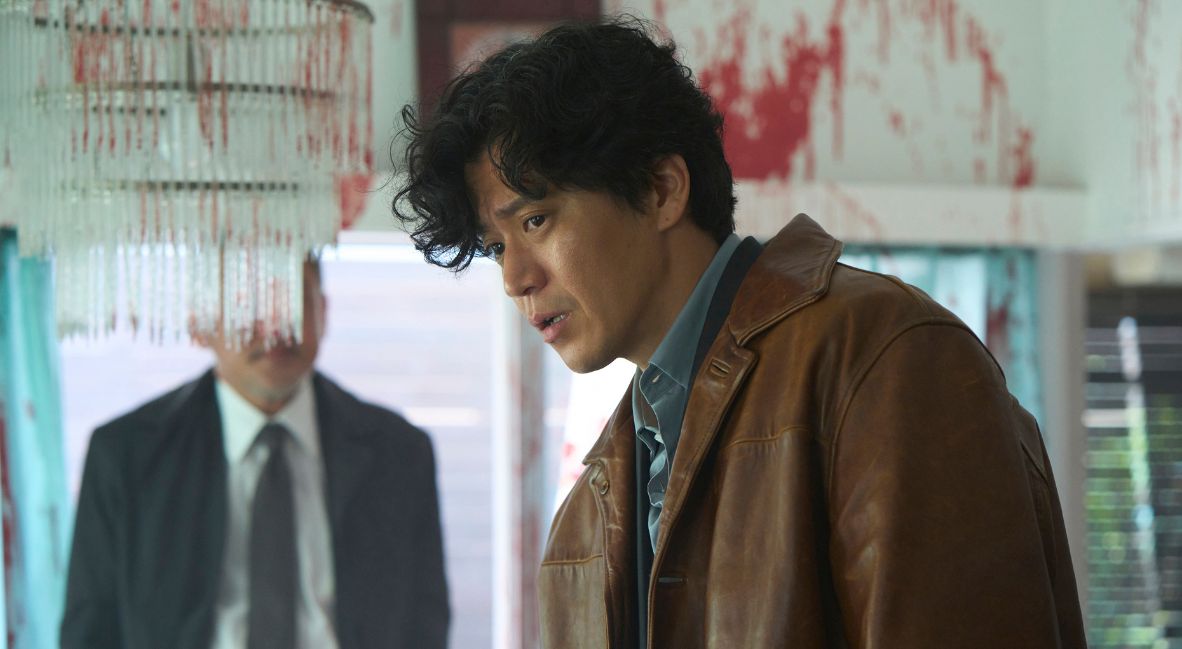
If there’s one thing the loosely connected, similarly titled Bad Lieutenant franchise can’t be accused of, it’s a lack of style and vision. Abel Ferrara’s original was unflinching and unvarnished in its depiction of a morally depraved, drug-addicted cop, while Werner Herzog’s Nicolas Cage vehicle, Bad Lieutenant: Port of Call New Orleans, dialed up a similar exploration of spiritual rebirth with surreal, kooky verve (“There ain’t no Iguana”). With Takashi Miike at the helm of the third entry, aptly titled Bad Lieutenant: Tokyo, one would be hard-pressed to find a more perfect match between material and auteur.
Yet, for a filmmaker as stylistically bold and distinct as Miike, this entry shockingly cements itself as the blandest, most generic, and sedated outing yet. Manifesting as little more than a familiar detective tale of corruption and redemption, Miike’s film never feels pulpy or aesthetically hard-hitting enough to evoke the best of his gory, revered canon, nor dramatically layered enough to make its familiar, noirish mystery the least bit biting or resonant.
Formally rigorous yet strangely inert, Bad Lieutenant: Tokyo feels caught between the stylistic obsessions of its singular filmmaker and the trite narrative scaffolding of its multiple-serial-killer mystery. The result is a film that, despite its oddly charming twists, turns, and detours, emerges as the most visually tame, emotionally stilted, and thematically unconvincing entry in the franchise.
Shun Oguri makes for an arresting protagonist in Takashi Miike’s latest.
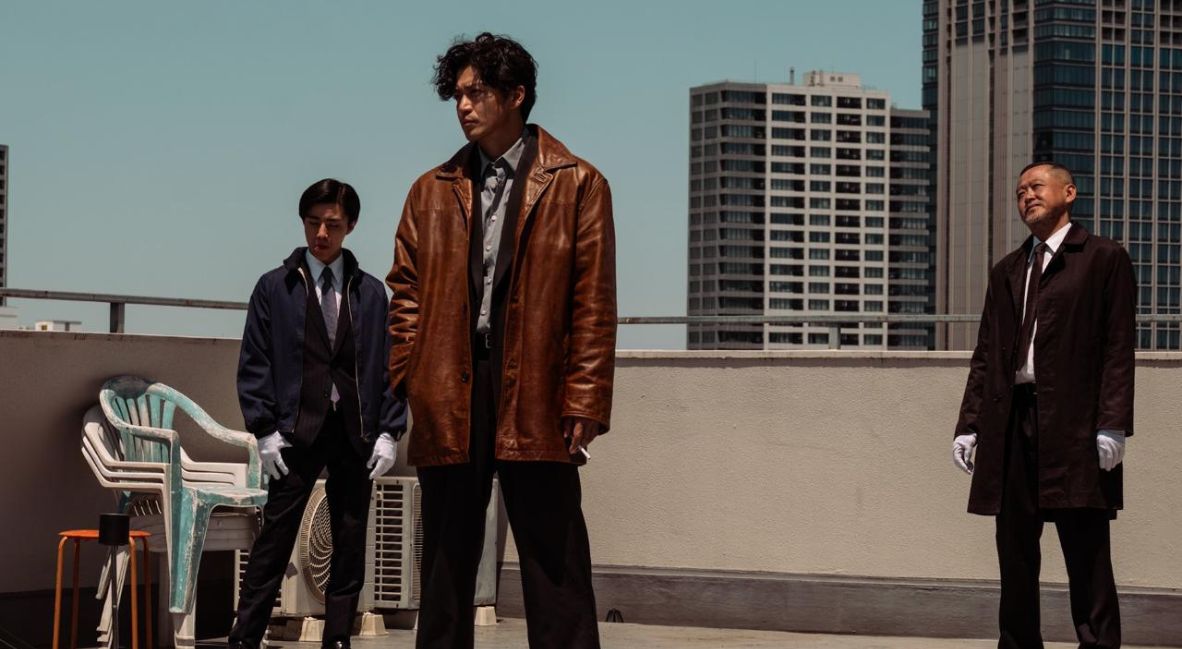
Immersed in a myriad of bizarre wrinkles, Daisuke Tengan’s surprisingly tame screenplay follows Yabuki (Shun Oguri), a former Yakuza task-force operative turned gambling- and drug-addled Tokyo Metropolitan detective, who finds himself firmly entrenched in a downward spiral after his wife leaves him, taking their kids with her. When a former Yakuza colleague begins dispatching his enemies in a grisly fashion that continually attracts a murder of crows, Yabuki is tasked with cracking the case, even as his Baccarat debts continue to pile up.
Meanwhile, he’s forced to team up with an FBI agent, Gwen (Lily James), who is hunting for a politician’s missing daughter (a criminally underused Liv Morgan)—a woman who is also leaving behind her fair share of mutilated bodies. As the case drags the two through a cavalcade of twists, brawls, and revelations, Yabuki is forced not only to reckon with his past with the Yakuza, but to confront the possibility of finding a way out of the spiral he’s fallen into—or, at the very least, some notion of redemption.
Oguri’s Yabuki is captivating in the early moments. His expressive yet lived-in turn settles into an earnest, spirited current when he’s making the wrong bets with other people’s money, building a vibrant rapport with a pair of endearing sex workers, or hilariously forced to fill in for their kid during a bring-your-dad-to-school activity.
Bad Lieutenant: Tokyo shows early promise before going off the rails.

Coupled with Miike’s lush sense of composition, framing, and color—including a dream sequence that transforms a dirty alley puddle into an ethereal, guilt-ridden natural spring—Bad Lieutenant: Tokyo’s first act unfolds as a rich spread of formal and creative choices. Choices that, at first, seem to be hurtling toward something narratively explosive and thematically expansive.
Yet, when it turns its attention to its two grisly cases, Miike’s film quickly concedes to contrivances, emotionally stilted undercurrents, and lazy plot points that come to mollify Miike’s signature arterial spray. Even as flesh is pounded into mincemeat for scavenging city fauna, the entire affair feels restrained and toned down, indicative of a film that continually pulls its punches and loses its stylistic nerve in service of a mystery that’s fuller of hot air than piping plasma.
It’s an unfortunate effect. It comes to a head during a second-act club brawl that retains Miike’s gonzo silliness—with distorted, disorienting camerawork and blinding lens flares—but none of its shocking, dramatic impact.
With a mismatch of tones, Bad Lieutenant: Tokyo coasts on the franchise’s legacy.
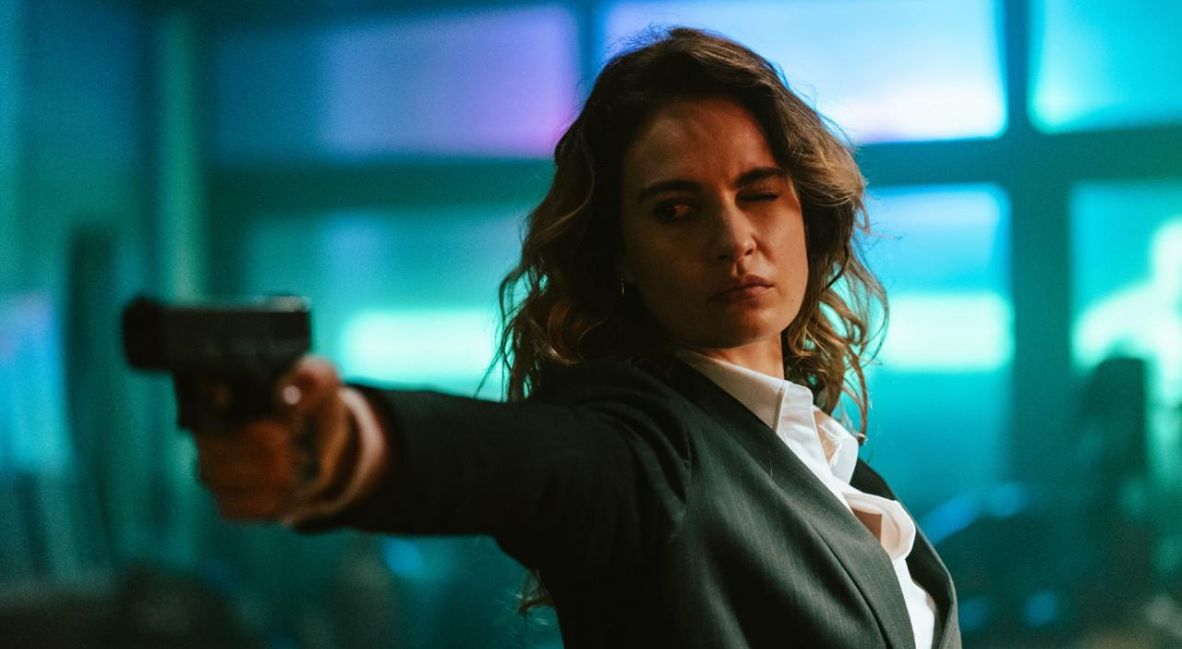
The fatal blow comes in the form of Lily James’s awkward, flailing performance, whose overcooked Southern drawl zaps each scene of nuance or tension. A product of the film’s American investment, James’s turn woefully overcorrects for the pulpier aspects of Miike’s film while relinquishing the natural, emotional edge that makes Oguri’s performance so engrossing.
When the two share the screen, Bad Lieutenant: Tokyo feels like two very different films unfolding at once. Neither is scintillating nor sensational enough to keep us hooked into its listless murder plot.
Its final sequence hits with a sudden, emotional wallop, but it’s too late to salvage a thinly sketched film that never taps into the cogent emotional chaos of Ferrara or Herzog, or the guttural formal rigor of its heralded filmmaker. As it slinks off screen, Bad Lieutenant: Tokyo feels more like an exercise in cinematic branding than a genuine expression of Miike’s singular sensibilities— a film content to trade on the name of its cult-favorite franchise and the reputation of its esteemed auteur without possessing enough of either’s unruly, visceral spirit.
Bad Lieutenant: Tokyo played as part of the 2026 Toronto International Film Festival.
Bad Lieutenant: Tokyo
-
Rating - 5/105/10
TL;DR
As it slinks off screen, Bad Lieutenant: Tokyo feels more like an exercise in cinematic branding than a genuine expression of Miike’s singular sensibilities.