

High school is turbulent enough as it is, but Don’t Say Good Luck, Netflix’s stirringly poignant drama by Julia Hart, pits the best moment of its teenage protagonist’s life against the worst thing that’s ever happened to her. Sophie (a luminous Sunny Sandler) is a high school sophomore eager to land a role in the school musical, Waitress. She dreams of playing Waitress‘ lead, Jenna, but upperclassmen typically are cast as leads, so Sophie aims for a supporting role instead.
Her warm, supportive mother, Elizabeth (Melanie Lynskey), tries to wish Sophie good luck ahead of auditions, but Sophie groans, “Don’t say good luck,” reminding her that to say so is a superstition in the theater community. The common term for “good luck” in theatrical parlance is “break a leg,” but Elizabeth jokes, “But I don’t want you to break your leg.”
Good luck or broken legs aside, Sophie’s nervous enough leading up to the audition. But on the big day, Sophie overhears a conversation between her father, Ted (Max Greenfield), and Elizabeth that rocks her world. Elizabeth’s cancer, long in remission, has returned.
Don’t Say Good Luck shows the extreme ups and downs of adolescence.
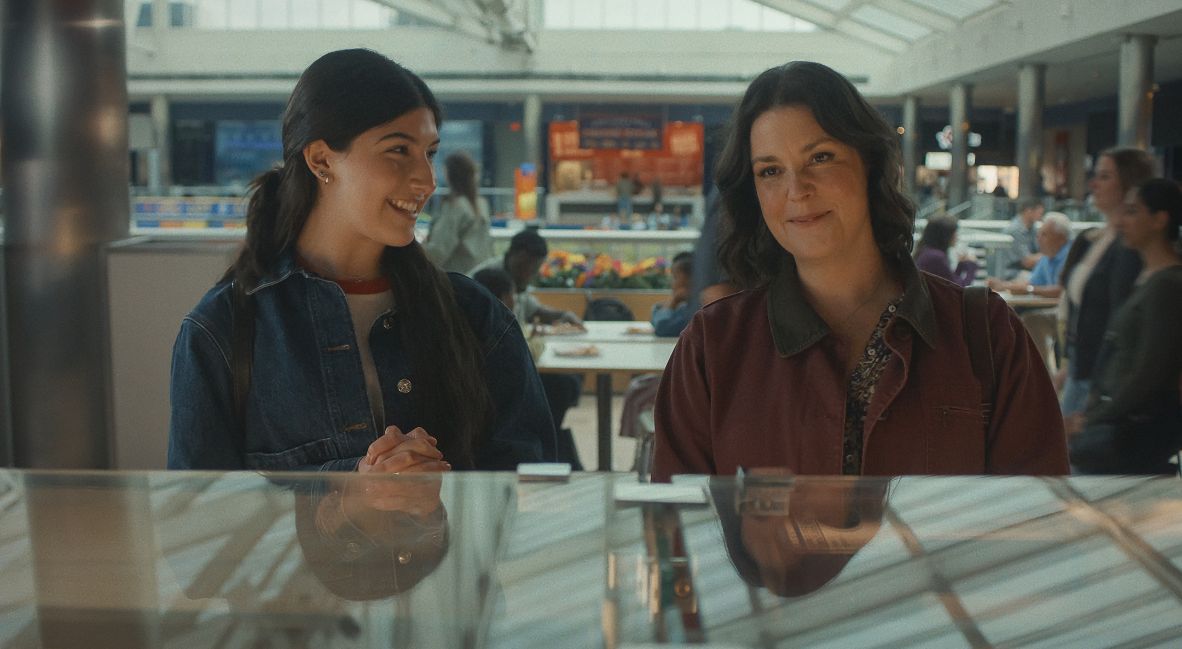
It’s wildly unexpected news, much like the results of the audition. Sophie is cast as Jenna, whom she explains to her family is like “playing Annie in Annie.” And so, the best and worst times of Sophie’s life collide.
Her teenage years are already fraught with hallmarks of adolescence, from driving lessons to fighting with her best friend (Scarlett Estevez) to figuring out her feelings about the cute boy (Jack Champion) cast as her love interest in Waitress. But as rehearsals progress, so does Elizabeth’s cancer, and Sophie is torn between her obligations as the star of the show and her limited time left with her mother.
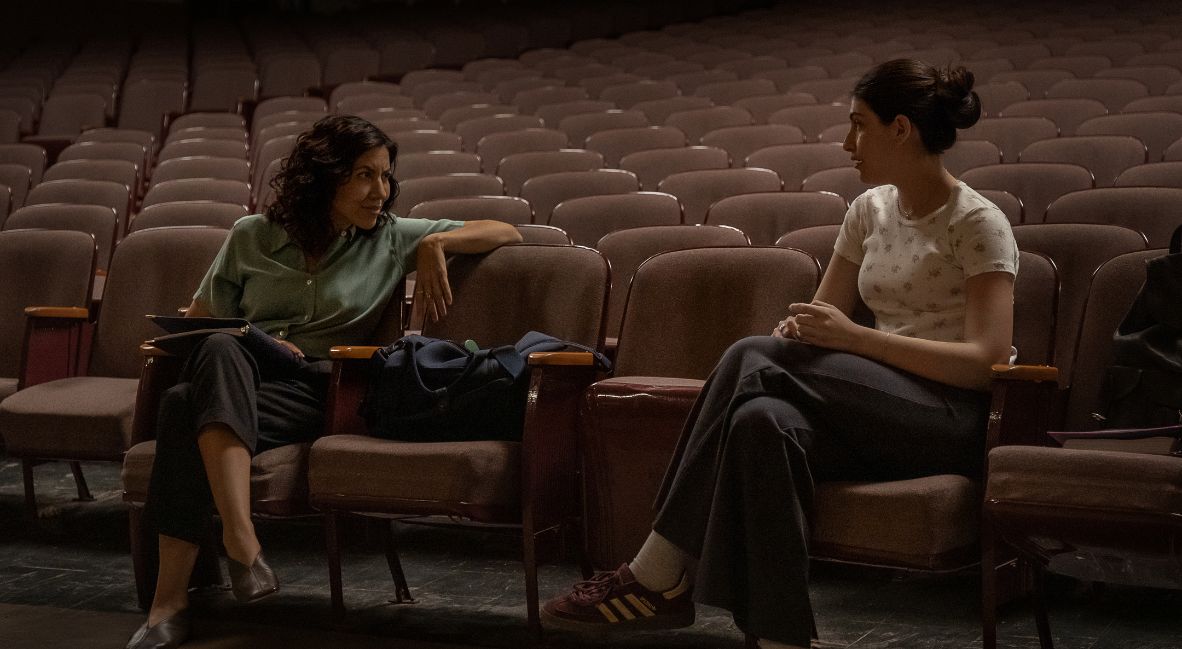
Julia Hart’s screenplay, cowritten with Laura Hankin and Jordan Horowitz, has an authenticity to its theatrical scenes that only a true theater kid could write. Stephanie Beatriz, as the teacher directing Waitress, leads Sophie and her classmates in warm-ups that any hallowed theater kid will recognize, even beyond films like Camp or Theater Camp.
Julia Hart anchors the story with refreshing realism.
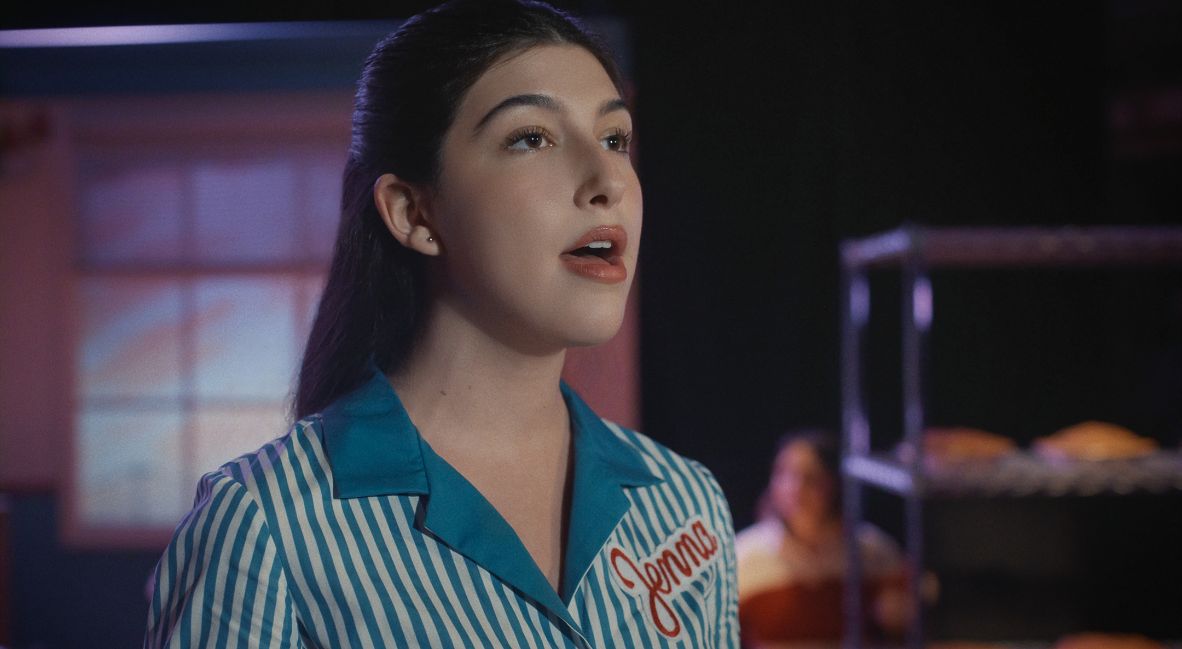
Waitress, the Sara Bareilles musical based on the 2007 film of the same name, takes center stage in Don’t Say Good Luck. Sandler and her costars have the voice-cracking earnestness you’ll find in any local high school drama club. Glee this is not, and thank goodness for that. These are real teenagers, with their sweet enthusiasm and impressive-for-amateurs vocals, not 25-year-old Broadway alumni.
Lynskey and Sandler are a winning pair as mother and daughter, convincingly bouncing between familial tenderness and emotionally-charged arguments. Their bond is palpable, which makes Elizabeth’s progressing illness all the more devastating. Hart’s gentle, realistic direction, sharply honed in her underseen but excellent dramas Miss Stevens and Fast Color, is at its best here.
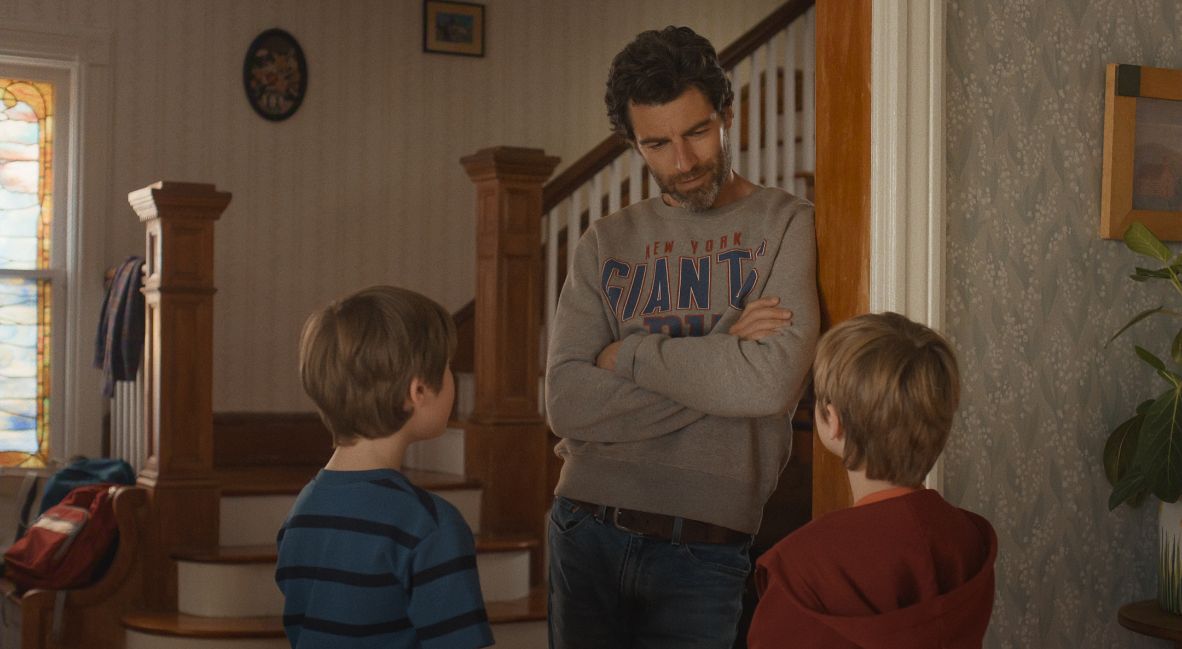
Less developed, but no less welcome onscreen, are the supporting cast of Don’t Say Good Luck. Greenfield’s Ted is a supportive husband and father, taking on the family’s restaurant while taking care of Sophie’s younger brothers (Matan Friedman, Eitan Friedman), but only given glimpses of that same tenderness the film spends so much time devoting to Sophie and Elizabeth. Bebe Neuwirth and Steve Buscemi, always welcome presences, have minimal screen time as Elizabeth’s parents, and Jon Lovitz, as an employee at the family restaurant, is onscreen so little that one wonders if he is contractually obligated to appear in every Happy Madison film, even for five minutes.
Sunny Sandler finds new layers to her potential in a more dramatic turn.
Much has been made of “nepo baby” discourse over the years, and it will likely follow Don’t Say Good Luck. Sunny Sandler is Adam Sandler‘s daughter and the film is the third of Adam Sandler’s Happy Madison/Netflix films to star one of his children. (Sunny starred in 2023’s You Are So Not Invited To My Bar Mitzvah; older sister Sadie starred in Roommates.)
But like her father, Sandler, previously known for roles in her father’s comedies, like Happy Gilmore 2, has a dramatic range that shines when utilized. She’s a delightfully compelling protagonist in Don’t Say Good Luck, balancing Sophie’s enthusiasm for performing with the gravity of her situation at home. Her chemistry with Lynskey soars, and her performance-within-the-performance as Sophie rehearses for Waitress is charming.
To the uninitiated viewer, one wonders how Waitress‘ music and plot will make sense given their centrality to Sophie’s story. To a newbie, only the musical’s ballad “She Used to Be Mine” might drive real emotional resonance, drawing parallels between Sophie’s emotional turmoil and Jenna’s loss of self. Sandler is radiant when performing this song, which is the closest thing 2010s musicals have to a standard, as “She Used to Be Mine” has had a second life in piano bars and covers.
Don’t Say Good Luck is a win for theater kids, past and present.
But what seems most puzzling about Don’t Say Good Luck will be glaring to those most intimately familiar with the plot of Waitress. Don’t Say Good Luck seems reluctant to engage with the thing it has most in common with the musical at the heart of its story. In Waitress, Jenna spends a good deal of time reflecting on the bond she shared with her deceased mother, who passed away long before the events of the musical. Sophie has such limited time left with Elizabeth that it’s a wonder she doesn’t have a stronger sense of despair at appearing in a musical with such an undercurrent of maternal loss.
Perhaps drawing such a parallel would be too on the nose for the casual viewer. But Don’t Say Good Luck has such a brisk runtime, running under 90 minutes before credits, that there is more than enough room to draw even stronger parallels to Waitress.
Regardless, Don’t Say Good Luck is a sweet, weepy drama for theater kids and teenage girls who refer to their mother as their best friend. There’s a plethora of mother-daughter dramas out there, from Gilmore Girls to Lady Bird, ranging from duos who are close-knit to those who are constantly at one another’s throats. Don’t Say Good Luck belongs to the former category. It’s so driven by heart-forward performances that it’s a worthy, tearjerking addition to the genre, good luck, broken legs, musical ballads, and all.
Don’t Say Good Luck is now streaming exclusively on Netflix.
Don't Say Good Luck
-
Rating - 8/108/10
TL;DR
Don’t Say Good Luck is a sweet, weepy drama for theater kids and teenage girls who refer to their mother as their best friend.