


Lestat de Lioncourt (Sam Reid) has always been a polarizing character, embodying the best and worst traits of humanity at times, but never reneging on being extra at all sense. It makes perfect sense, then, that The Vampire Lestat would match that energy, doing the absolute most.
With a shorter episode order and Lestat at his most existential post-release of Daniel Molloy’s (Eric Bogosian) Interview With The Vampire, the season flounders at times, buried under the weight of its many interweaving plotlines and general chaos. The ending, designed with a not-so-perfect cliffhanger after a season of edging, sours what goodwill was fostered in its final moments.
That said, The Vampire Lestat finally centers the “Brat Prince” after two seasons on Louis de Pointe du Lac (Jacob Anderson), and the energy shift is incredibly noticeable. Rather than the slow, steady, and meditative vibe of the previous seasons, The Vampire Lestat comes out swinging for the fences.
The vampire oscillates from manic to despairing to contemplative, and that’s what is so engrossing about it. With the pursuit of that high that comes from adoration, the vampire spends much of the season on the road with his assembled band, hoping to create his masterpiece.
Hovering over the entire storyline is the narration of “The Failures,” Lestat’s recorded secret set of albums that shares intimate details of his life, but more so recollecting his time in making the album and the disastrous aftermath that followed.
This disaster, initiated by the one big concert that Lestat is supposed to perform, is the proverbial carrot on the stick that Lestat (and showrunner Rolin Jones) dangle throughout the seven episodes, frequently referencing it in the build-up to the show’s finale.
Sam Reid is absolutely perfect as Lestat in The Vampire Lestat.

The opening of The Vampire Lestat Episode 1 lays down the breadcrumbs of this disaster, showing a mangled Lestat and an eyepatch-donning Armand (Assad Zaman) at an auction surrounding the disappeared Lestat’s most precious items.
Through these wrecked characters alone, accompanied by Lestat’s narration throughout, it’s clear that something bad happened. The introduction of the harbinger of destruction herself, the Queen of the Damned, Akasha, who is magnificently portrayed by Sheila Atim, only heightens this feeling.
In looking towards the future (and subsequent season renewals), the past and present storylines butt up against each other, fighting for dominance against a ticking clock. Whether it be Lestat’s own mortality or a shortened season, the different character focal points yank viewers’ attention around with little finesse.
It is through these choppier transitions and edits that the steadier calm of previous seasons stands out further in contrast. The biggest difference is that now there’s a future for the AMC Immortal Universe to try to carry out.
What keeps The Vampire Lestat tethered as best as able is its characters. The characters are the foundation of Anne Rice’s original works, and the character work from pre-established characters coming into The Vampire Lestat does wonders here. Sam Reid continues to be possessed by the titular vampire and has the surprising vocal chops to step fully into Lestat’s musicality. Even if his lyricism is questionable sometimes (here’s looking at you, “Long Face”).
Louis is forced to reckon with himself, culminating in a fulfilling arc by season’s end.
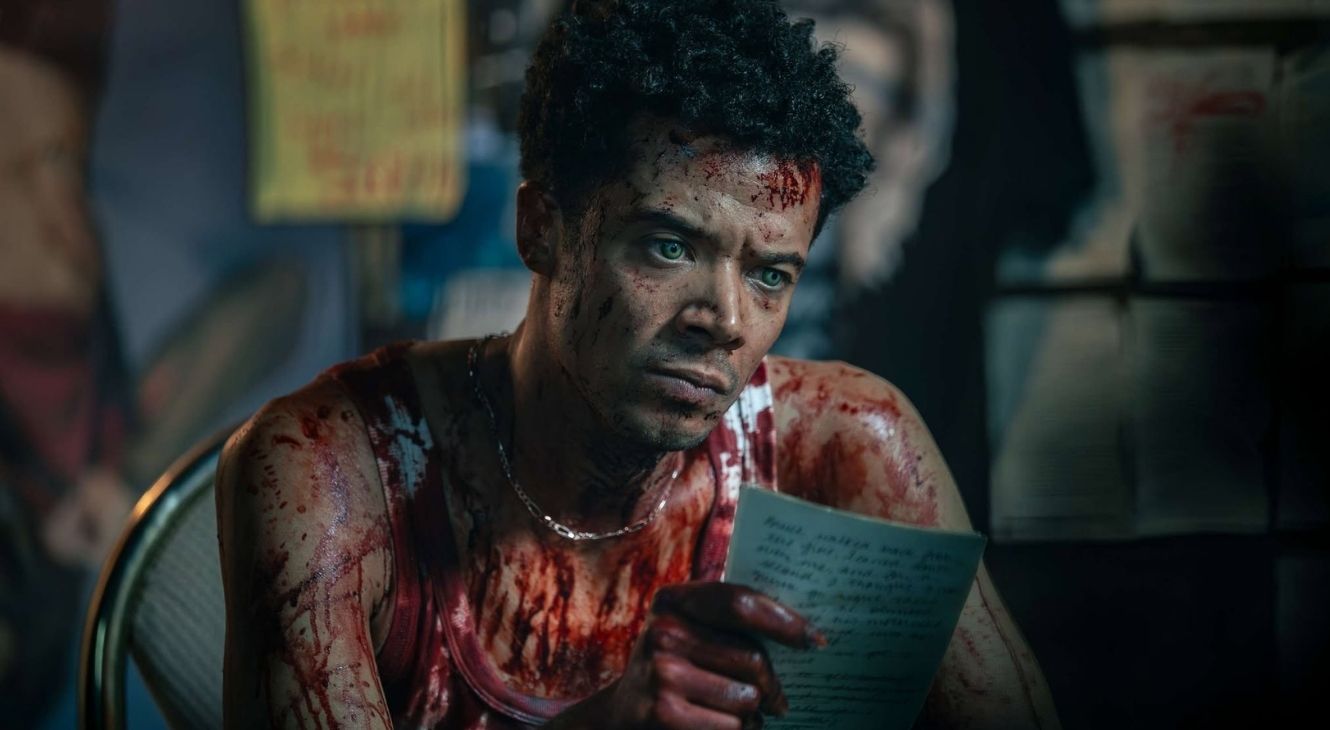
With music being central to Lestat’s journey in the present, each episode introduces us to new songs beautifully sung by Sam Reid. Everyone will have their favorites (mine is Stained Glass Eyes), but as much as the music is fun to listen to, the biggest takeaway in The Vampire Lestat is seeing how each song connects to a pivotal person or moment in Lestat’s life. Through art, one can heal, and perhaps, in the grander scheme of things, Lestat’s obsessive focus on his album is how he hopes to rid himself of his demons.
Previous seasons with Lestat only gave us one side, and here in The Vampire Lestat, the vampire is at his most vulnerable. His image has been tarnished thanks to Louis’ interview, and as he tries to pick up the pieces and make an album that represents him at his core, the wounds of his past are opened up.
Sam Reid runs the gamut of emotions as Lestat, fully slipping into the vampire’s skin and giving us everything in the process. Everything culminates for him as Lestat in the final two episodes, giving an Emmy-worthy performance of great intensity.
While Lestat is the main focus of the season, Louis, Armand, and Daniel get their due. Frankly, Louis goes through it in The Vampire Lestat, forced to face his own character weaknesses.
At the center of it all is his obsessive love for Claudia (Delainey Hayles), who comes back to haunt him in the form of Regina, a grifting waitress who looks eerily similar to Claudia. Jacob Anderson’s performance throughout the season matches a similar level of intensity to Reid’s, with grief and reckoning at the forefront of his journey.
Armand finally unleashes his full gremlin self, giving us peak antagonist energy.
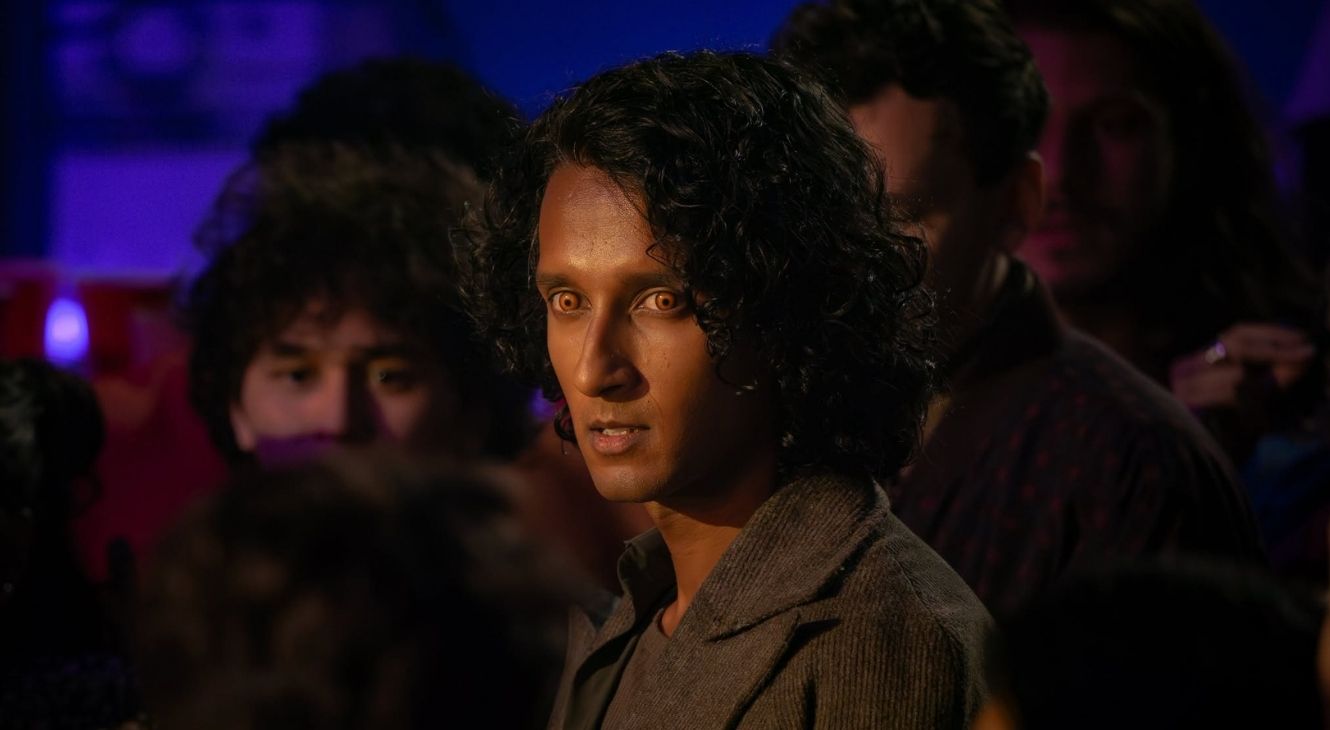
Part of that reckoning is delivered by Armand, who goes through his own therapeutic journey in The Vampire Lestat. Through his journey, he decides to fully embrace the sadistic gremlin he keeps denying at his core, stepping into the primary antagonist role once more when he comes face to face with Louis at the end of the season. Episode 7 gives Assad Zaman much to work with, and he goes above and beyond to portray not just the vengeful side of Armand, but the broken boy beneath once Louis homes in on what the vampire truly wants.
While she gets less to do in The Vampire Lestat, Delainey Hayles gets her big moment during Episode 6 when Lestat and Louis hold a seance with new character Merrick Mayfair (Sarah Afful) to bring forth Claudia. Hayles is wrath personified in this episode, with Claudia’s rage reverberating off her ghostly form. And when she screams for her lost love, her Madeleine, it is positively heartbreaking not just for Louis and Lestat, but for the audience as well, for a character that has been damned since she was born.
Devil’s Minion fans got a little sprinkle sprinkle of the relationship between Armand and Daniel this season, but separately, Daniel is going through his own existential crisis. Abandoned by his maker with no one around to teach him the ways of vampirism after his forced turning, the chip on Daniel’s shoulder only gets bigger.
And while he doesn’t get as much room to experiment and grow in The Vampire Lestat, Eric Bogosian gets some of the cattiest zingers the show has to deliver. That’s saying something considering Lestat’s levels of sass.
Lestat’s mother is a different kind of evil, with the character changing drastically from the books.
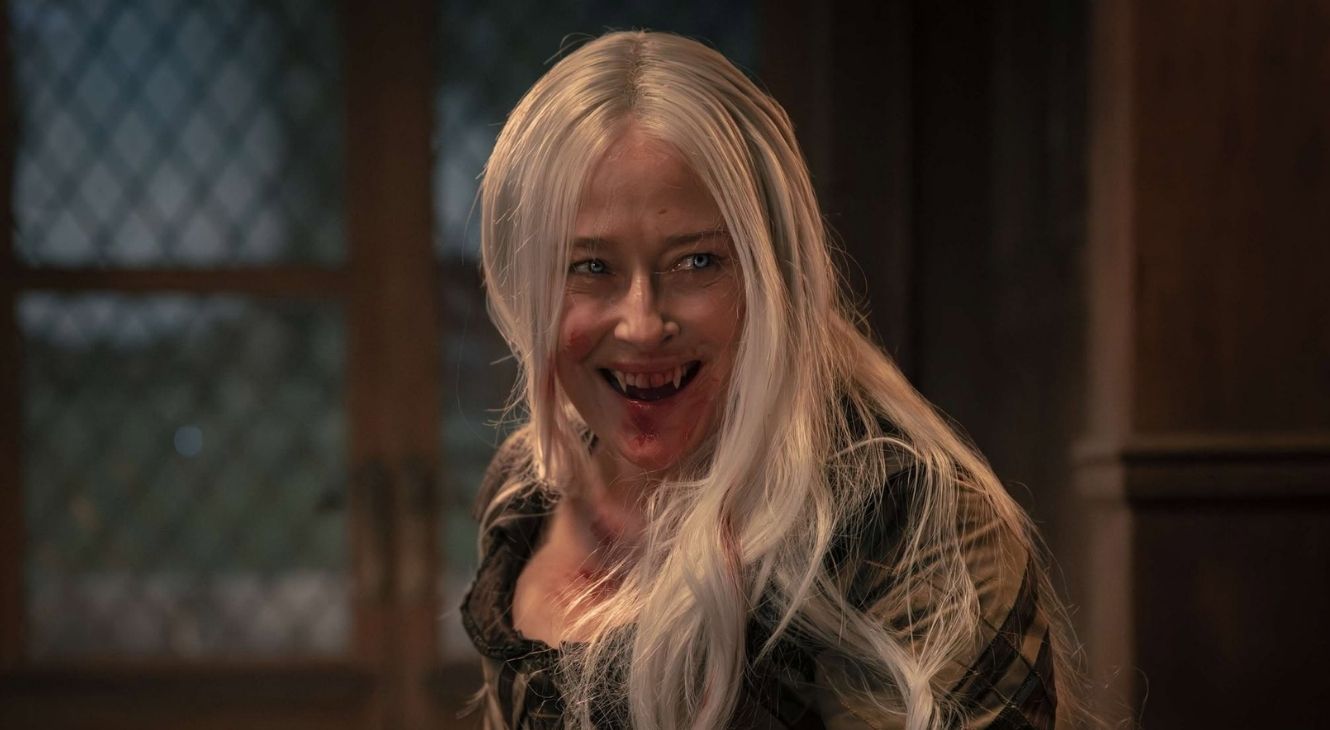
Newer characters to the Universe don’t fare as well. Gabriella (Jennifer Ehle), Lestat’s mother, is almost an entirely different person in The Vampire Lestat, and that’s not Ehle’s fault. Instead of what she’s given in terms of this new iteration’s cruelty and harshness, Ehle leans into it.
Ehle embodies a different kind of boy mom archetype. Bad wig and all. Her Gabriella is one to love to hate by season’s end, but to say that Lestat’s mom is done justice from the books would be a lie. It’s on the verge, if not entirely, of character assassination.
Flashbacks to Akasha and Marius (Christopher Heyerdahl) reveal a different kind of problem. This season, Akasha has the benefit of being more of a symbol than an actual person, giving Sheila Atim an opportunity in her big monologue to play around with the character’s projection of power. Her delivery sends chills and makes one look forward to seeing her again. Unfortunately, despite promises of wanton concert-related destruction, viewers never get to see that payoff in The Vampire Lestat.
Marius, on the other hand, is mostly forgettable. Heyerdahl, a frequent player in the genre space, mostly serves as an expositional mouthpiece in The Vampire Lestat Episode 5. As such, there’s not much one can glean of his character outside of his general disappointment once Lestat ultimately fails in the task that Marius has forced upon him. Perhaps this is a consequence of this recollection coming from Lestat, who never got a chance to get to know the man, but ultimately gives viewers little to hold onto in a growing cast of characters.
The Vampire Lestat delivers in some ways and underwhelms in others.
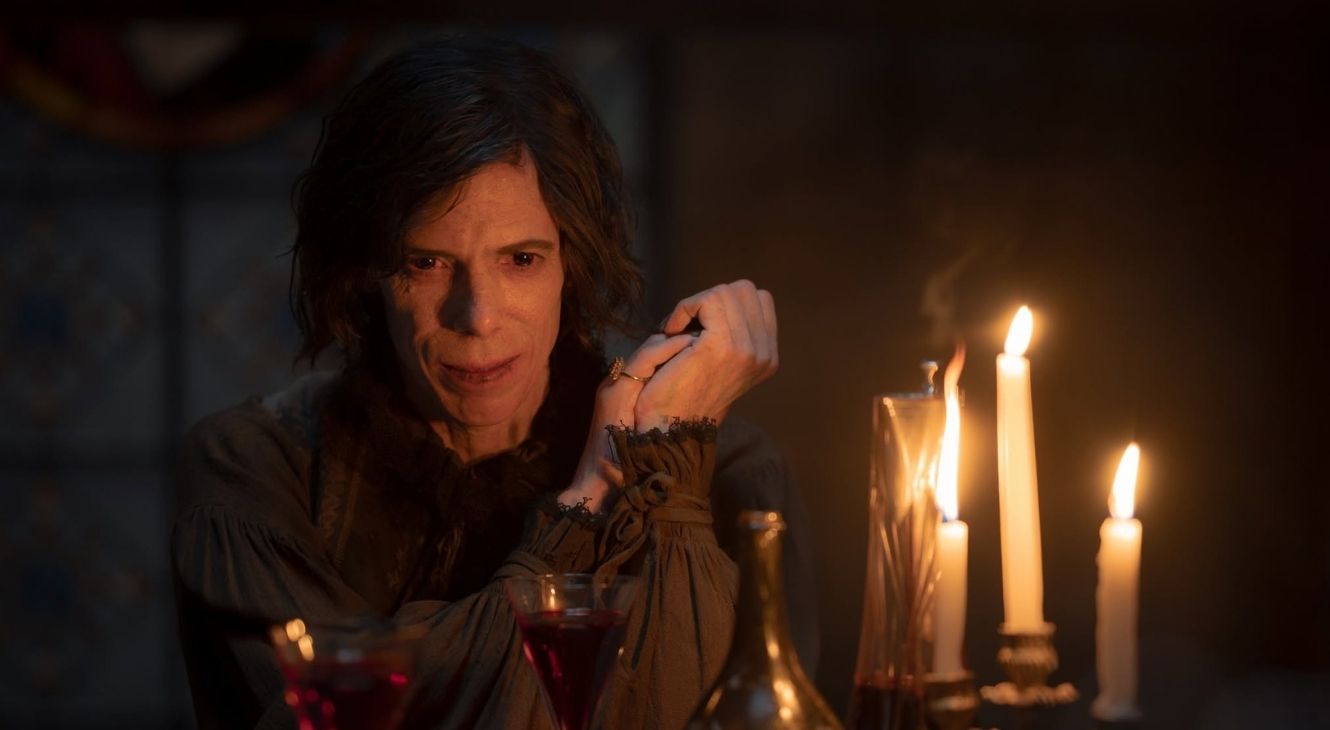
In contrast, the introduction of Nicky (Joseph Potter) and Magnus (Damien Atkins) is memorable. The difference is that they are not deliverers of exposition. Instead, they are characters who have made an impact on Lestat’s life and shaped him to be who he is today.
While we don’t get much of Magnus speaking in his introductory episode, the image crafted by Lestat’s voice and Damien Atkins’ embodiment is haunting long before we hear him speak in Episode 7. Nicky is a different kind of haunting as Lestat’s first non-incestuous love, and his frequent presence in episodes after his introduction tells us everything about his impact without doing much.
With these varying introductions and Lestat’s trips back and forth from the past, The Vampire Lestat is, without argument, chaotic, and it stands to reason that future seasons will likely be equally as chaotic as the Immortal Universe continues to expand.
The thing about chaos, though, is that eventually it needs to be wrangled. Similarly, when it comes to making promises, they do eventually need to be kept. The Vampire Lestat accomplishes neither, which makes this journey less successful compared to previous seasons.
Even still, The Vampire Lestat embodies what one would expect from the character. Sam Reid is perfection and does little to mitigate the rumors that he is, in fact, the Brat Prince incarnate. The rest of the cast gives it their all, sanding away the story’s imperfections as best they can with stellar performances. Unfortunately, the season did need an eighth episode, if only to fulfill the promise of finally showing us that apocalyptic concert. Without it, the season ends on an underwhelming note that sours the overall experience.
All episodes of The Vampire Lestat are streaming now on AMC+ and AMC.
Previous Season |
The Vampire Lestat
-
Rating - 7/107/10
TL:DR
The Vampire Lestat is, without argument, chaotic, and it stands to reason that future seasons will likely be equally as chaotic as the Immortal Universe continues to expand.