

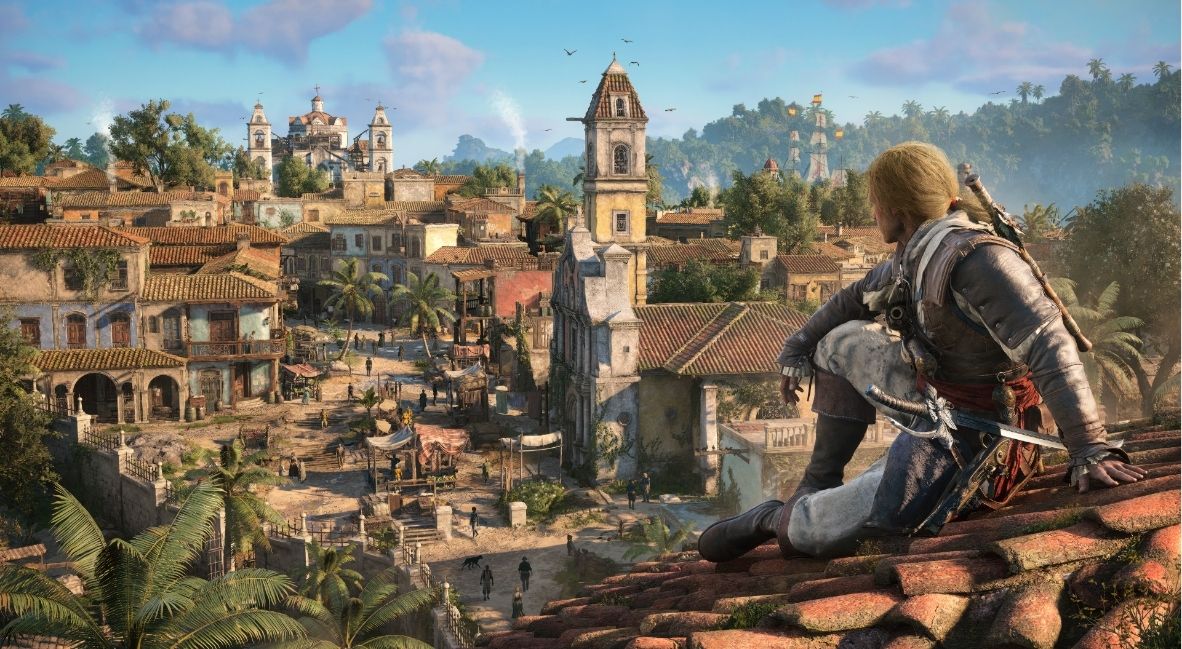
Assassin’s Creed has given the world dozens of iconic characters over its nearly 20-year history. Few are as beloved as Edward Kenway, the pirate captain and master Assassin of Assassin’s Creed IV: Black Flag fame. Fans and newcomers alike have the chance to meet Edward Kenway again in Ubisoft’s ground-up remake of the 2013 classic, Assassin’s Creed Black Flag Resynced. But whether you’ve sailed the Caribbean with Edward and his crew before, or Resynced is your first time meeting him, you still might be wondering: Who exactly is Edward Kenway?
The bulk of Edward’s story is told through Black Flag, but as one of Assassin’s Creed’s most beloved characters, Edward Kenway’s life and legacy also impacted future games in the series, especially Assassin’s Creed Syndicate. He was also the star of a long-running Webtoon, Assassin’s Creed: The Lost Temple, which told a sequel story of Edward’s exploits in the East Indies, a few years after the story of Black Flag.
Who is Edward Kenway?

Kenway’s journey began before he ever set foot on tropical soil, during the early 17th-century Golden Age of Piracy. He was a wayward soul in Bristol, England, by way of Welsh parentage. From his early childhood, the poor farm life never suited him. A life of adventure was his destiny: no matter the consequences. He married the love of his life, Caroline Scott, the daughter of a wealthy tea trader.
Edward’s lust for adventure and his embarrassment at being poor led him to leave Caroline and England behind. Caroline understood Edward’s ambition and loved him despite his drunken tendency to self-flagellate. Knowing he would never be satisfied as an indentured farmer, she at least wished he would join the King’s Navy and earn an honest living.
But Edward was never one to abide by servitude to people or causes he didn’t believe in. So instead, what began as a promise to take on privateering in the New World for no more than two years turned into nearly a decade of piracy across the Caribbean. Despite the ocean of distance and a broken promise, Caroline was always on Edward’s mind during his years in the Americas.
Edward Kenway’s pirate life in the Caribbean.
Edward was already well acquainted with some of the most famous pirates of the era by the time Black Flag begins: Ed “Blackbeard” Thatch, Charles Vane, Anne Bonny, Benjamin Hornigold, Jack Rackham, and James Kidd were among the real-life pirates with whom he consorted in a growing pirate republic based in Nassau. These pirates dreamed of a world free from the tyranny of any crown and free to anyone who would contribute.
They mostly warred against the Spanish in their early days, carving out liberated land for themselves and stealing from their vessels to supply their people and their coffers. But rumors of a pardon from King George I to any pirate who would accept were beginning to chip away at the pirates’ loyalties to one another. The question over who would take a pardon and return to England free but paupered, versus those who would stay and fight the crown for the hard-earned freedom, threatened to tear apart the already shaky pirate republic.
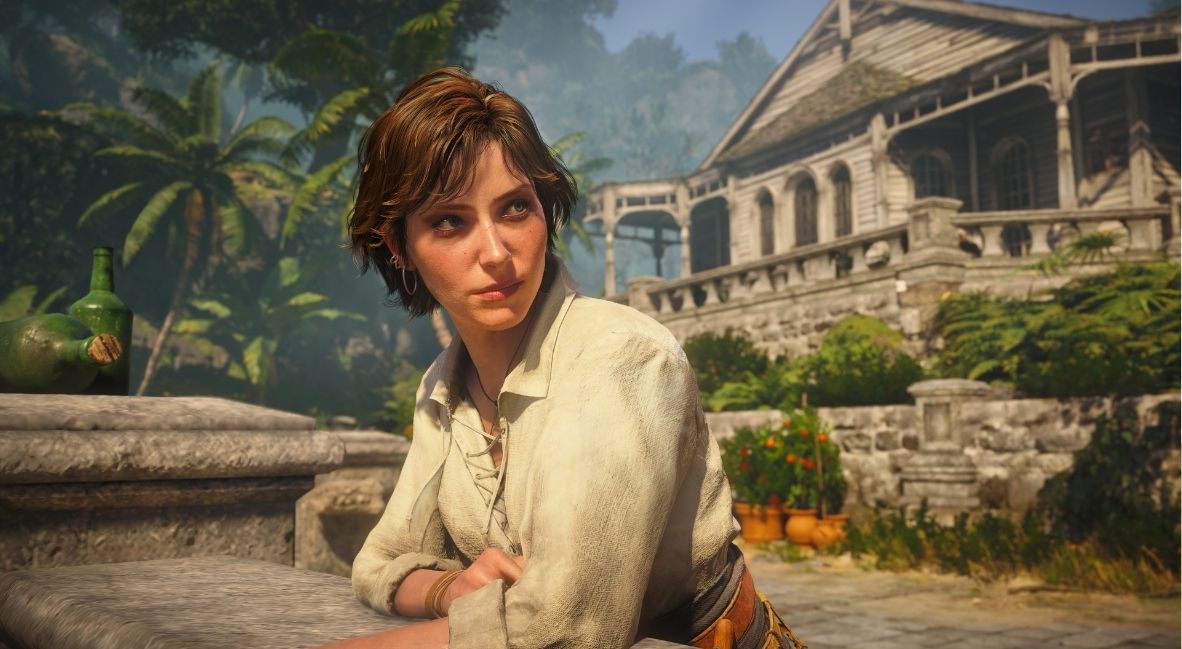
Of course, a pirate is nothing without a ship. He stole a vessel to call the Jackdaw and for years ruled the seas with his Quartermaster, Adéwalé, always at his side, as often providing a voice of reason as a voice of encouragement. With Adé at his side, Edward recruited a number of additional officers: The Padre, Lucy Baldwin, and Tobias ‘Deadman’ Smith. Each officer is newly introduced in Black Flag Resynced. Another staunch ally, Stede Bonnet, enjoys an expanded story in the remake.
Edward Kenway and the Assassins.
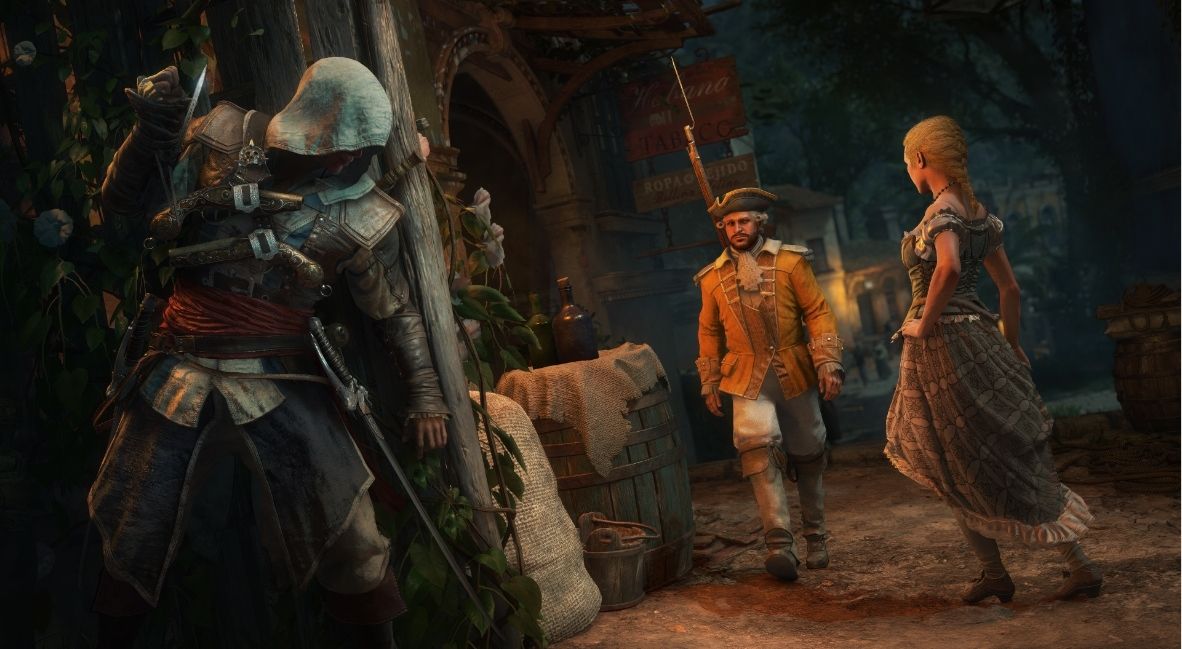
Just when Edward Kenway’s privateering was getting started, a fateful encounter with the Assassin Duncan Walpool found Kenway marooned. He killed Walpool and briefly assumed his identity, knowing nothing of the adventure he was about to be sucked into. Walpool was secretly a turncoat, providing information to the Assassins‘ sworn enemies, the Templars. Kenway soon found himself at a crossroads between the two ancient orders and their worldviews.
Templars sought world order through total control. While the idea of a world free from conflict and petty squabbles appealed to Edward, his resistance to authoritarianism was at odds with the Templars’ aim to crush all free will. And their willingness to betray, kill, and enslave people without a second thought was anathema to his moral compass.
The Assassins, led by the Mentor Al Tabai, on the other hand, were initially just as dubious to Kenway. He gelled with their quest for total freedom and liberation for all mankind, but clashed with their sense of self-righteousness and superiority. Ultimately, though, Edward Kenway would discover that his connection to the Assassins ran deep in his genetics and that he had an ancient ability to sense things in others through what they called the Eagle Vision.
He had this ability because he was descended from hybrids of humans and an advanced ancient race called Isu. In a sense, this lineage predestined Edward to become a key figure in the eternal war between Assassins and Templars, but more so, it was Edward’s keen sense of right and wrong that led him not only to join the Assassins Brotherhood but also to lead them in due time.
Edward’s return to England and adventures in East Asia.
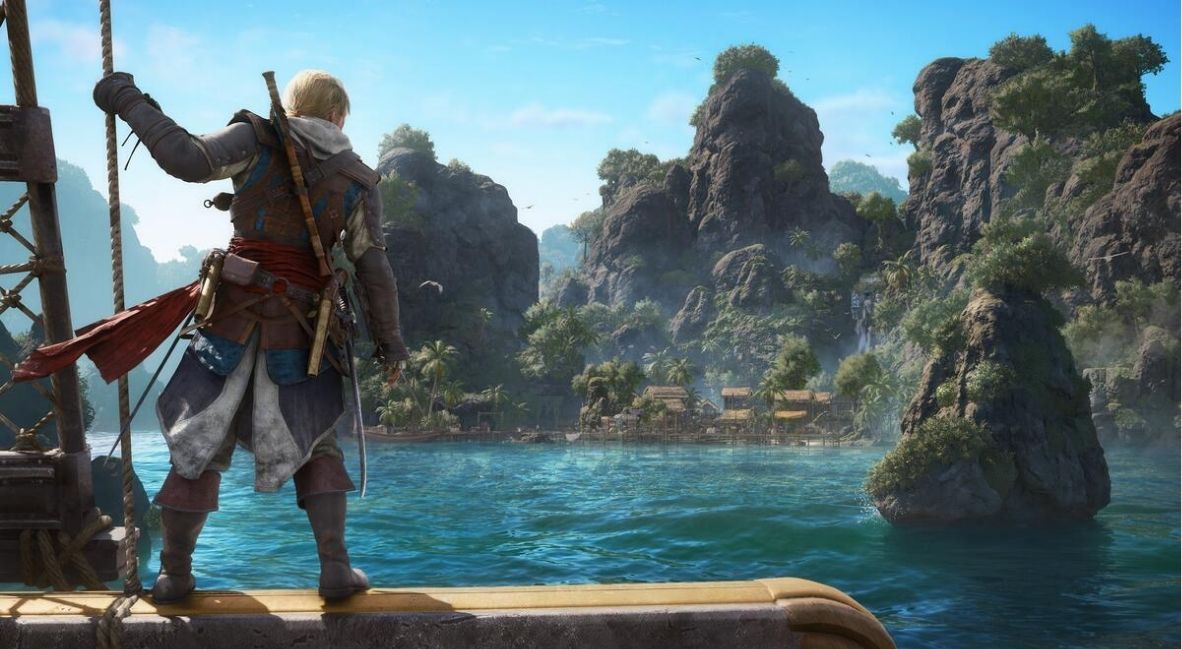
After Edward Kenway packed up from his homestead in Great Inagua and returned to England at the end of Black Flag, he was a changed man. Less arrogant and selfish, the Assassin’s Creed and his life of high highs and low lows in the New World led him on a path towards becoming a Master Assassin among the British Brotherhood. He settled down, bought a prominent manor in London, and co-led the bureau with an Assassin named Miko.
Edward and Miko spent years thwarting Templar plots to seize control of powerful Isu artifacts called Pieces of Eden, which Kenway had first encountered in a catastrophic way in the Caribbean. He swore never to let such weapons and devices fall into the wrong hands again, leading to a second life finding and either destroying or dispersing Pieces of Eden and Isu temples before Templars could get to them first.
This led Edward himself on a mission across East and Southeast Asia, chronicled in the 151 episodes of the Assassin’s Creed: The Lost Temple Webtoon series. But when his seafaring and swashbuckling days were finally done at the series’ end, Edward Kenway had a new adventure to turn towards: fatherhood.
Edward’s Legacy beyond Assassin’s Creed Black Flag.
Edward’s son, Haytham, was being trained to succeed Edward in mission and morals before Edward’s untimely death and Haytham’s conversion to the Templar Order. His own exploits are chronicled in Assassin’s Creed III, where Haytham is the antagonist to his own son, Connor, the game’s main character. Haytham’s perspective on Edward as a father is further expanded in the novel Assassin’s Creed: Forsaken, which is somewhat of a retelling of Assassin’s Creed III, but from Haytham’s point of view.
Edward Kenway’s legacy as an Assassin is felt retroactively throughout Assassin’s Creed III and the subsequent games, Unity, Rogue, and Syndicate. Unity and Rogue take place in the mid- and late-18th century, overlapping with Haytham and Connors’ timelines in different ways. Syndicate, which takes place in 19th-century London, sees its protagonists, Evie and Jacob Frye, infiltrate Edward Kenway’s long-abandoned manor and learn from his legacy about their own place in the history of the Assassins.
Edward Kenway has one of the richest, most involved stories in all of Assassin’s Creed. Thanks to his appearances in multiple projects and his connections to a litany of other characters, there is plenty to know and love about him. But most importantly, it is his deep sense of morality and enormous growth over the ten years that Black Flag is set that make him among the most beloved characters in the franchise.